Akasaka Tsuba — The Lineage and Highlights of Iron Sukashi Tsuba Passed Down Through Generations in Edo's Akasaka
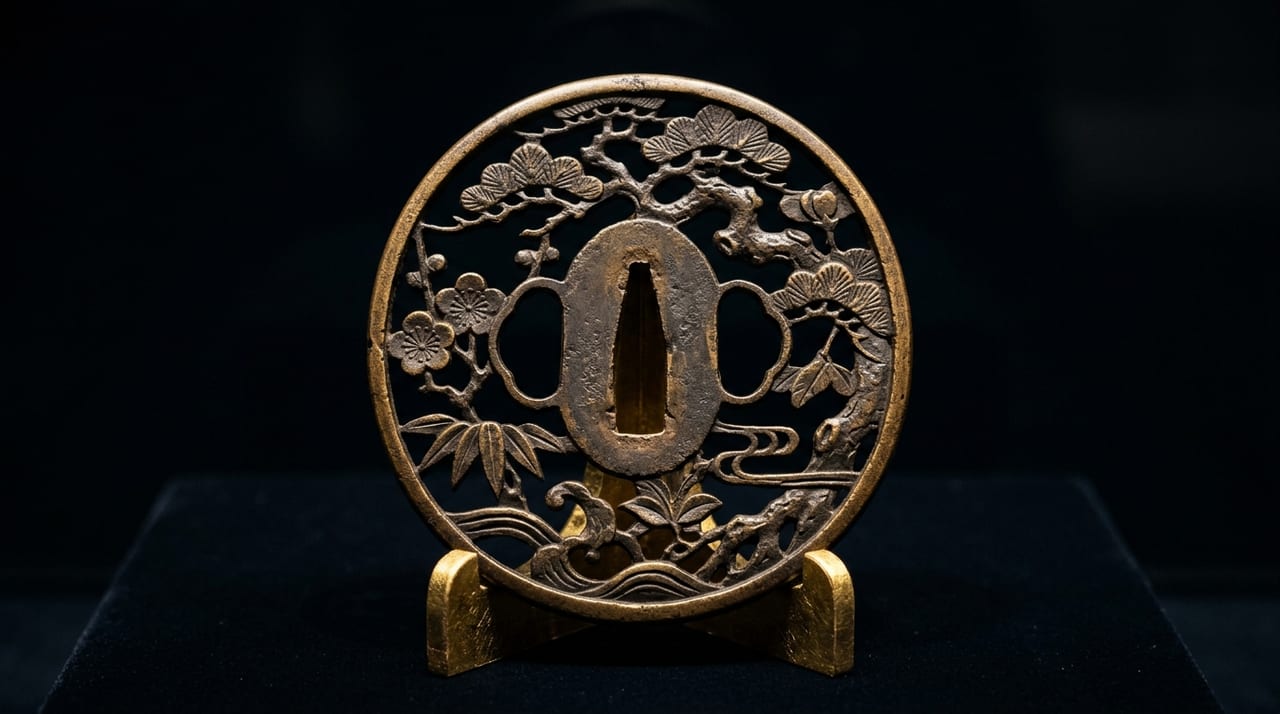 * Image is for illustrative purposes only.
Table of Contents
Among sukashi tsuba — tsuba (hand guard) made by cutting iron plates through in the shapes of patterns — there are several lineages known by place names or family names. On this site, Sukashi Tsuba Schools — Owari, Kyō, and Higo covered three sukashi lineages, but "Akasaka tsuba" — the line that continued through generations in Edo — had not been addressed. This article focuses strictly on what can be confirmed through encyclopedias and the national museum catalog, and organizes the origins, lineage, style, and clues for viewing Akasaka tsuba.
What Are Akasaka Tsuba — A School of Tsuba Craftsmen Named After an Edo District
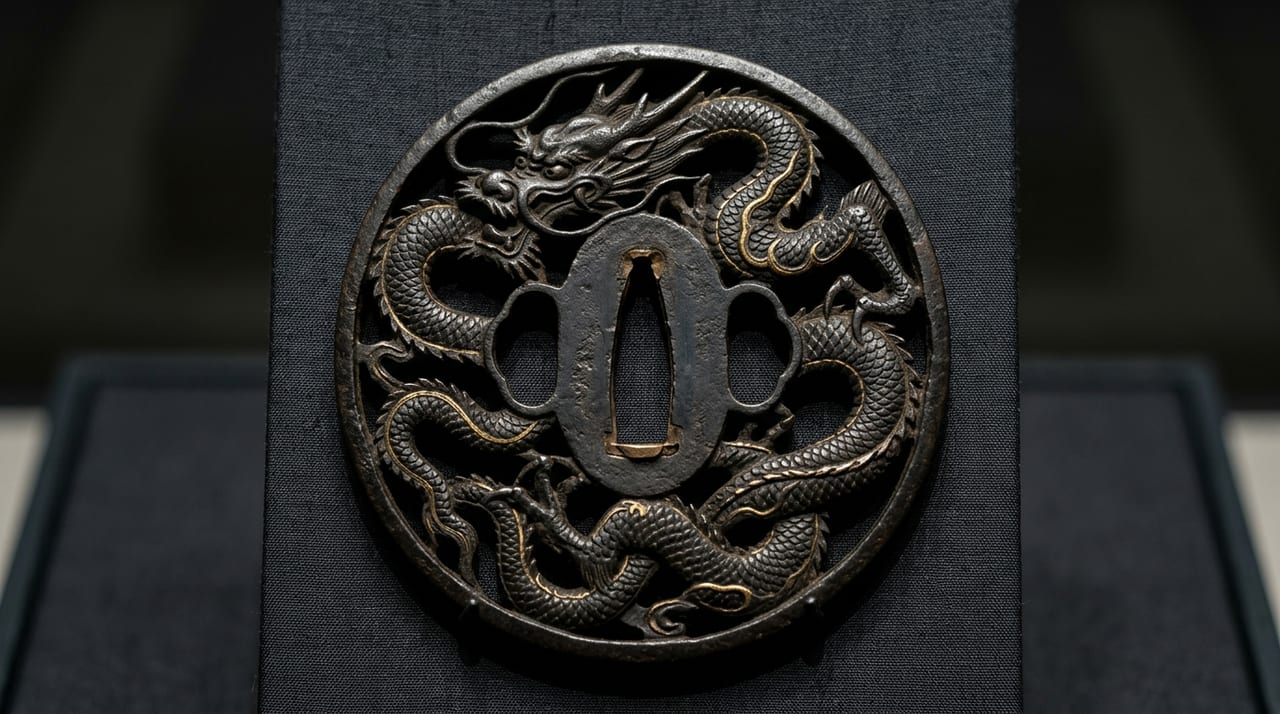
Akasaka tsuba is the collective name for tsuba made by a school of tsuba craftsmen who lived in Akasaka, Edo. According to the Digital Edition of the Nihon Jinmei Daijiten+Plus contained in Kotobank "Akasaka Tadamasa", the first generation Akasaka Tadamasa is said to have moved from Kyoto to Edo's Akasaka during the Kan'ei era and established a school of tsuba making. Their tsuba are called Akasaka tsuba, and the school is called the Akasaka school. The Encyclopaedia Britannica International (Concise Edition) on the same page records that the Akasaka tsuba family line was carried on until the Bakumatsu period and "flourished as one of the four major schools of iron sukashi tsuba."
One should also be careful not to confuse names. In the world of tōkō (swordsmiths), "Akasaka" can refer to kaji (smiths) who lived in Akasaka in Mino Province, as in this site's swordsmith encyclopedia entry for Mino Senjuin (Akasaka Senjuin). This is a lineage of kaji who forged sword blades, and is a separate matter from the school of tsuba craftsmen who moved from Kyoto to Edo's Akasaka.
From the First Generation Tadamasa to the Ninth Generation Tadatoki — The Lineage Verifiable Through Sources
The recorded achievements of successive generations as written in the consulted sources are as follows. All information is based on the entries in Kotobank "Akasaka Tadamasa" and Kotobank "Akasaka Tadatoki".
- First generation, Tadamasa: From Kyoto, he moved to Edo's Akasaka during the Kan'ei era. His common name was Shōzaemon (also given as Shōemon). His trade name was Kariganeya. Died in Meireki 3 (1657).
- Second generation, Tadamasa: Like the first generation, he took the name Tadamasa and was known as Shōzaemon.
- Tadatoki: Son of Kariganeya Hikobei, a tsuba merchant in Kyoto. He was adopted by the second generation Tadamasa and later succeeded as the fourth generation. His common name was Hikojūrō, and his later name was Tadamune. Died in Enkyō 3 (1746). He is said to have inherited the tradition of iron sukashi tsuba and laid the foundation for the development of the Akasaka school.
- Ninth generation, Tadatoki: From the fourth generation onward, the name "Tadatoki" was carried through to the ninth generation, and the family line continued until the ninth generation Tadatoki in the Bakumatsu period.
The names and achievements of the third generation, and of the fifth through eighth generations, are not individually recorded in the encyclopedia entries consulted. Since various theories tend to become mixed into school genealogies, this article does not supplement generations' names or years beyond the range listed here.
Stylistic Characteristics — Thick Jigane and Openwork That Leaves the Pattern and Cuts Away the Ground
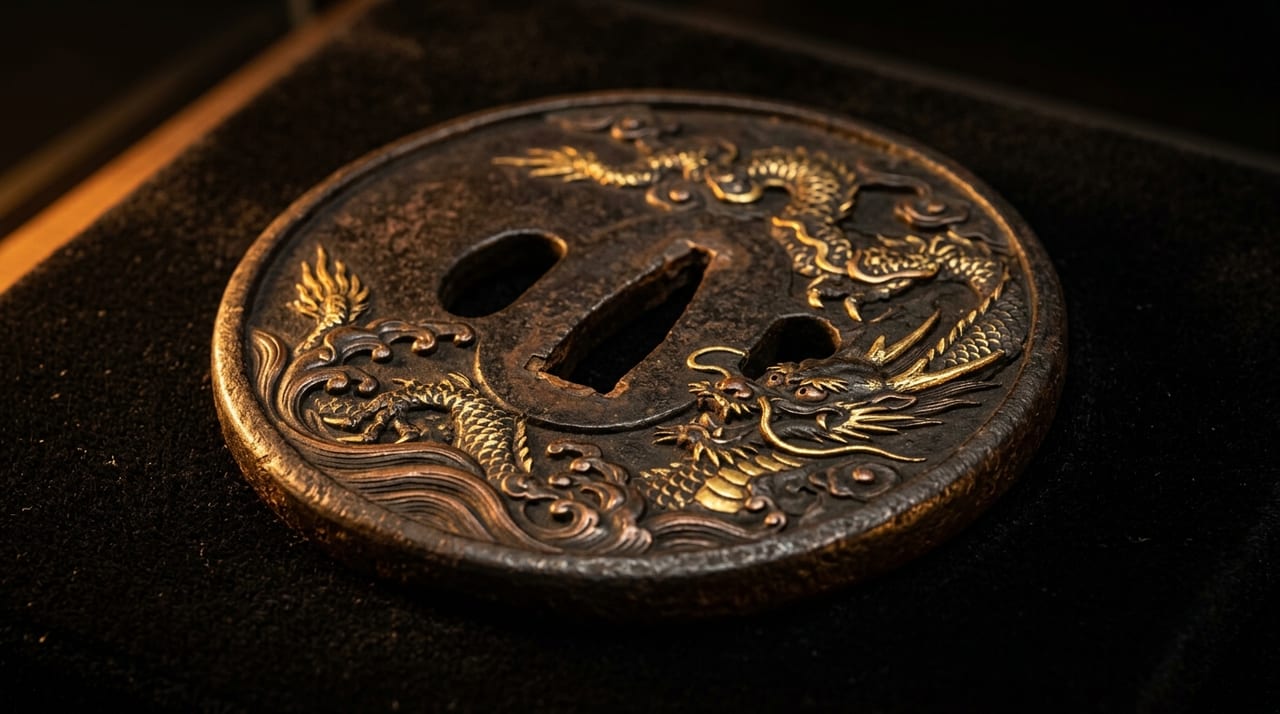
The entry on "Akasaka Tadamasa" in the Encyclopaedia Britannica International states of his works: "There are many round sukashi tsuba with thick jigane, and he favored the technique of leaving the pattern as iron and cutting the surrounding ground as openwork." The Nihon Jinmei Daijiten also states of the first generation Tadamasa that his iron tanren (forging) was excellent and he was skilled in openwork carving. In other words, the key axes for viewing Akasaka tsuba are the thickness and quality of the jigane, and the composition in which the pattern is left as iron while the surrounding ground is cut away to bring out the form.
There are several terms for openwork techniques, and terminology usage sometimes differs between sources. For an organization of terminology, see The Aesthetics of Sukashi Tsuba, but for Akasaka tsuba, rather than getting caught up in names, it is more reliable to follow with one's eyes where iron remains and where it has been cut away. Iron Tsuba Surface Texture Types is useful as a reference for how to read the color and surface of the jigane.
There is also one note regarding mei (signature). The same entry on "Akasaka Tadamasa" states that all works are "mumei (unsigned), and no zaimei (signed) examples exist." This is a statement written in the entry for the first generation Tadamasa, and cannot necessarily be said to apply to all generations of the Akasaka school.
Akasaka Tsuba as Seen in the National Museum Catalog
As a real surviving example, the Tokyo National Museum's image search lists "Sankaimatsu Sukashi Tsuba" (catalog number F-13601). The catalog entries are as follows.
- Creator: Akasaka
- Period: Edo period, 18th century
- Notes: mumei (unsigned)
- Images: full front and back views
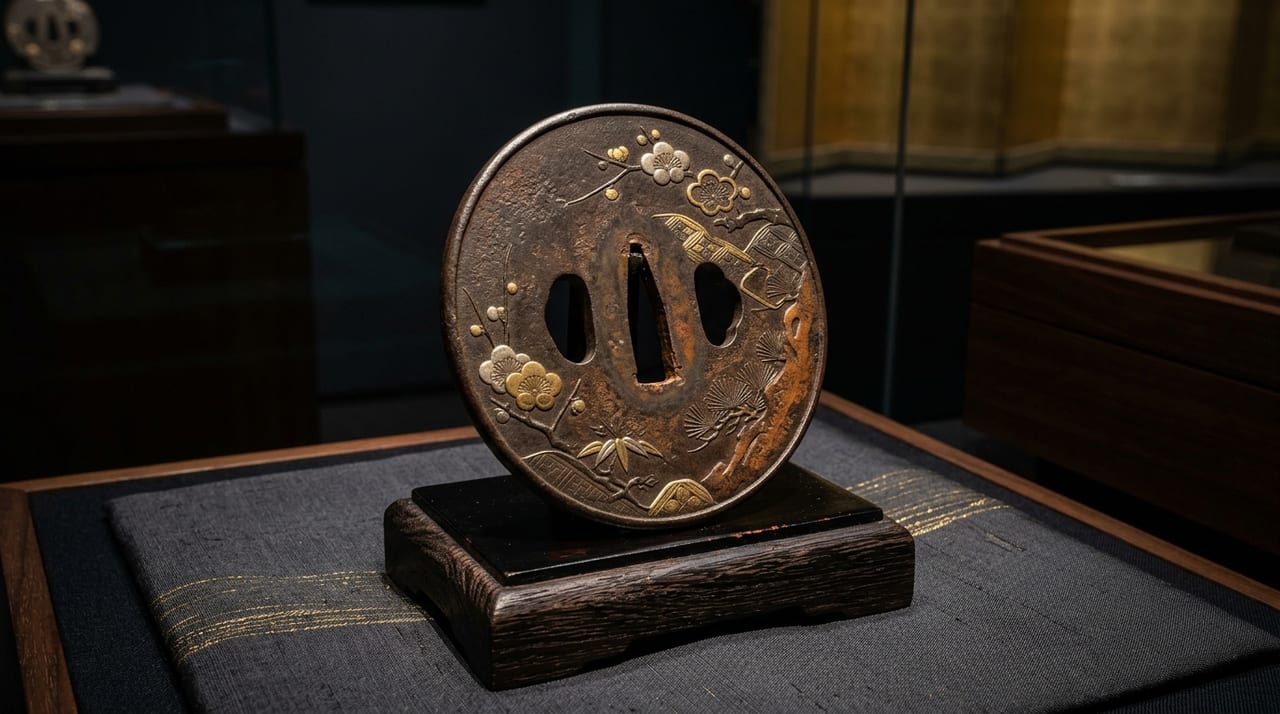
Note that the creator field records not an individual name but simply "Akasaka," and the notes say "mumei (unsigned)." Since there is no mei (signature), this "Akasaka" is not a name inscribed on the work but an attribution to a school based on style. This is one concrete example of how mumei Akasaka tsuba may be handled under the school name, without being attributable to a specific generation or individual maker.
Clues for Comparing with Other Sukashi Tsuba
The entry on tsuba in the Nihon Daihyakka Zensho (Nipponica), contained in Kotobank "Tsuba", places Kyō sukashi tsuba, Owari sukashi tsuba, Ko-Hagi tsuba, and other sukashi tsuba as belonging to the early Momoyama period, and states that as the Edo period began, Higo tsuba emerged first. It then notes that "among sukashi tsuba, Akasaka tsuba, Chōshū tsuba, Echizen Kinai, and others have many fine works." Akasaka tsuba, which began in Edo during the Kan'ei era, is a style of sukashi tsuba that came after Kyō and Owari sukashi, and that continued through generations as a family in the city of Edo.
When comparing, the following points are easy to focus on in order.
- Shape and thickness — Is it round? Is the jigane thick? These are the two characteristics the encyclopedia cites for Akasaka tsuba.
- Openwork composition — Is the pattern left as iron, with the surrounding ground cut away?
- Quality of the jigane — The quality of the tanren (forging) is praised in encyclopedias. Examine the density of the surface texture and the color.
- Mei and attribution — The name "Akasaka" assigned to mumei (unsigned) works is an attribution to the school, distinct from identifying the specific generation or maker.
Echizen Kinai, which Nipponica lists alongside Akasaka tsuba, is covered in Echizen Kinai School Dragon Tsuba, and the various Higo schools are covered in The Complete Lineages of Higo Metalwork Schools. Even within the same iron sukashi, the choice of subjects and the density of the openwork differ by school, so viewing them side by side makes the thick and substantial quality of Akasaka tsuba stand out all the more.
TOUKENZA is an online Japanese sword marketplace; swords currently listed can be browsed and purchased from the sword catalog.