The Lineages of Sukashi Tsuba — The Design Traditions of the Three Major Schools as Seen in Owari, Kyō, and Higo Sukashi
 * Image is for illustrative purposes only.
Table of Contents
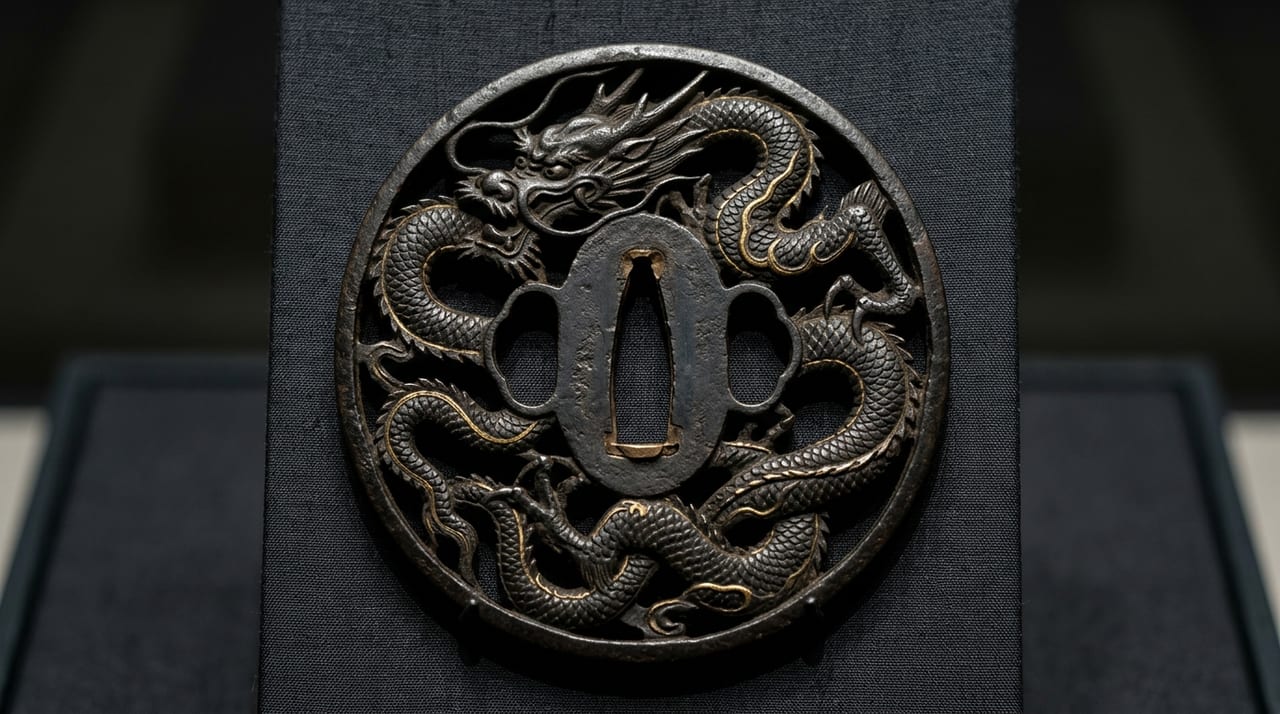
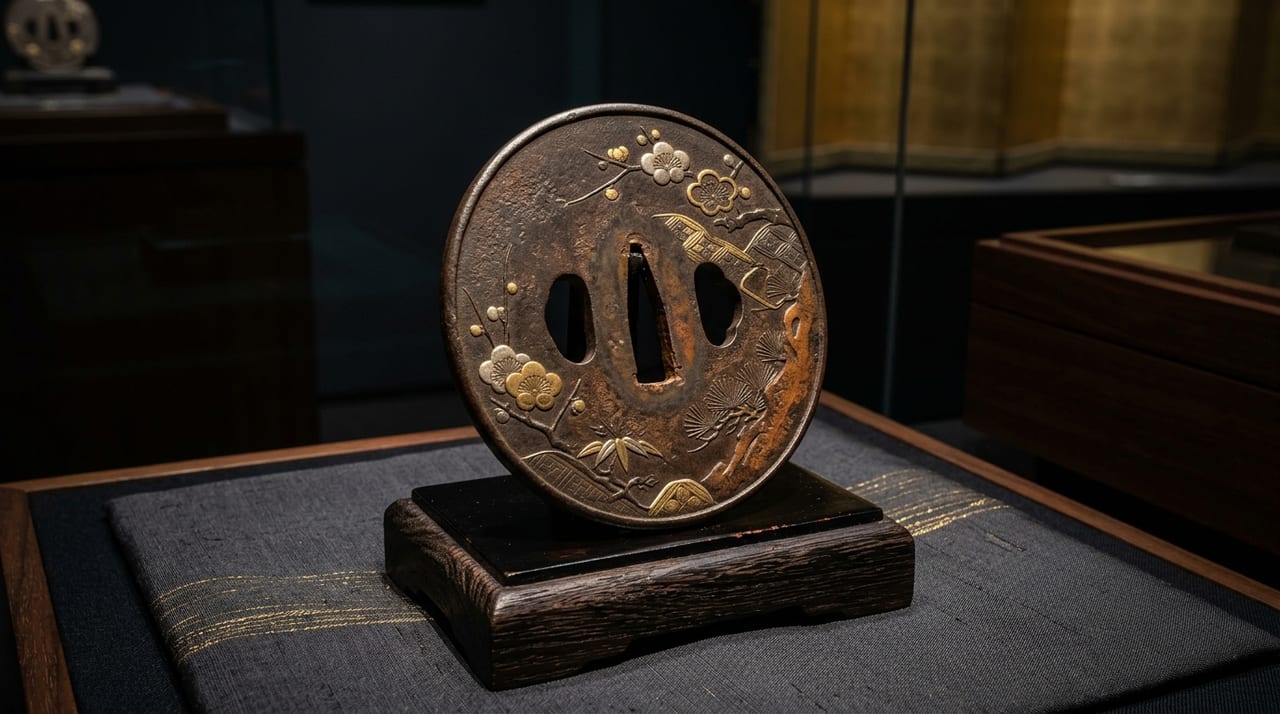
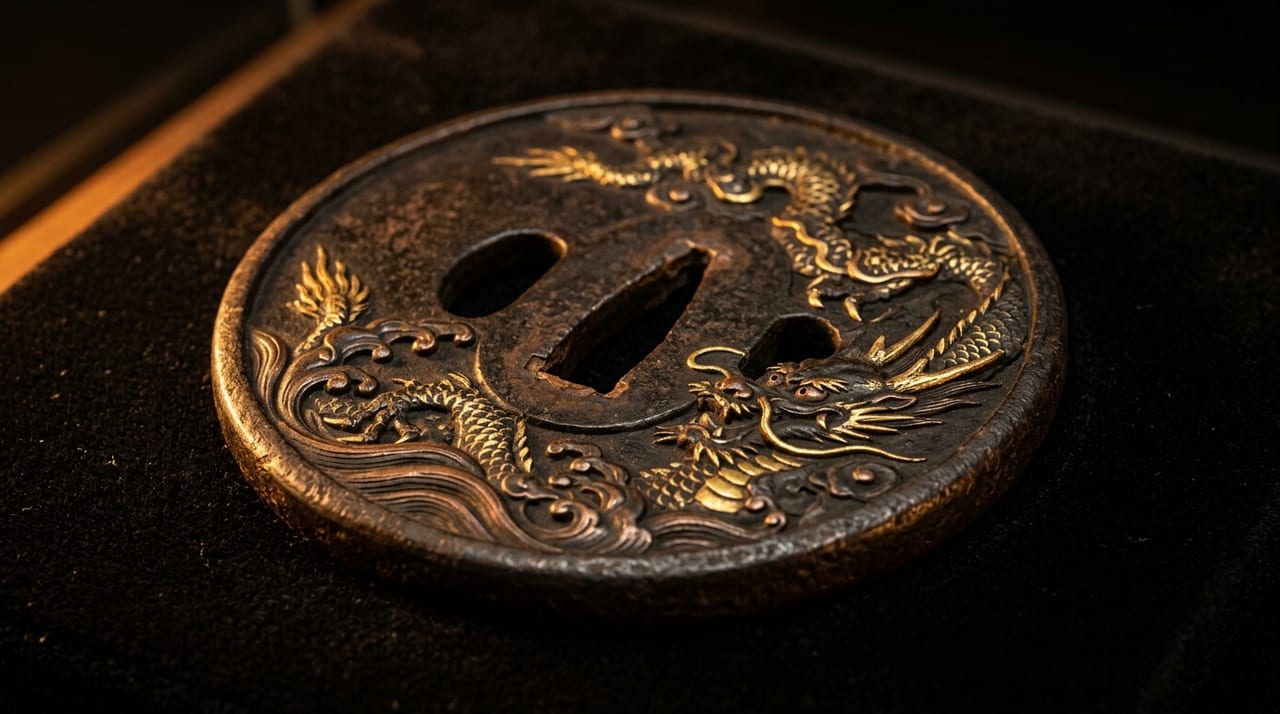
A tsuba (hand guard) is an important metal fitting placed between the blade and the tsuka that protects the hand while also governing the design of the sword's mounts. Among these, the "sukashi tsuba" — created by piercing the jigane (steel of the blade surface) into the shape of a pattern — is known for its distinctive sculptural beauty born from the contrast between the mass of iron and the open space, and has long attracted many admirers. Sukashi tsuba can be broadly divided into three representative lineages: Owari, Kyō, and Higo.
What is a Sukashi Tsuba?
A sukashi tsuba is made using a technique in which the iron ground is cut out with a tagane (chisel) or a saw to express a pattern. There are two types of sukashi: "jisukashi," in which the parts that form the pattern are left and the ground is pierced away, and "mon'yō sukashi," in which the shape of the pattern itself is pierced through the ground plate (Kotobank, "Sukashibori"); the preferred composition differs by school. The color and texture of the jigane — referred to as tetsuaji — and the treatment of the edges of the cut-out portions clearly reflect the individuality of the maker and the characteristics of the school.
Owari Sukashi
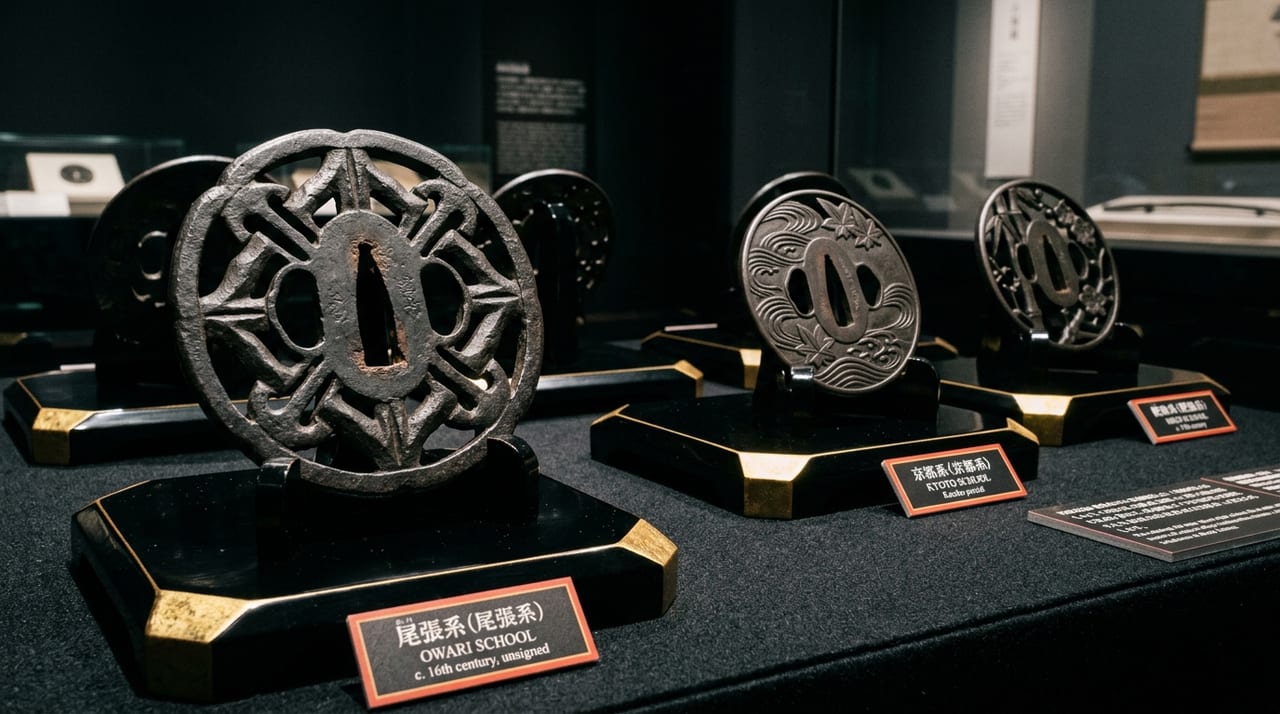
Owari sukashi, which developed centered in Owari (present-day western Aichi Prefecture), is known for its powerful and robust designs. The iron ground is dark in color with densely forged jigane, and patterns tend to be simplified geometric or plant motifs arranged boldly. Rather than decorative brilliance, it is a style that values the texture of the iron itself and the structural framework of the form, and is said to carry the austere taste favored by the samurai class.
Kyō Sukashi
Kyō sukashi, centered in Kyō (Kyoto), is characterized by refined and delicate designs. Intricate compositions making liberal use of fine lines and patterns that exploit graceful curves are favored, and it is regarded as an elegant style reflecting the culture of the capital. Even when handling the same plant motifs, where Owari shows them through mass, Kyō shows them through the fluency of the line — a distinction that serves as a guide to appreciation.
Higo Sukashi
Higo (present-day Kumamoto Prefecture) is a land where a distinctive metalworking culture flourished under the rule of Katō Kiyomasa during the Momoyama period, and where that culture continued to develop further under the patronage of the Hosokawa clan after they entered the domain in Kan'ei 9 (1632). Higo sukashi tsuba have been highly regarded for their excellence in compositional sensibility, achieving both the beauty of tetsuaji and refined form. They are characterized by a design that is simple yet dignified, resonant with the aesthetic sensibility of the tea ceremony.
What to Look For in Appreciation
When looking at a sukashi tsuba, first examine the tetsuaji — the color and texture of the iron ground — then observe the composition of the pattern and the treatment of the edges of the cut-outs. Even with the same subject matter, the thickness of the lines, the use of space, and the overall impression differ greatly by school, so comparing multiple works side by side gradually reveals the individual character of each lineage. Whether the inner edges of the sukashi are carefully finished, and whether the movement of the tagane is unhesitating, are also clues for judging the quality of a work.
Reading the Motifs of the Design
Sukashi tsuba patterns employ a wide variety of subjects: plants, implements, geometric designs, characters, and more. Subjects are not mere decoration but also reflect the preferences of the samurai class, auspicious meanings, and a sense of the seasons. For example, even with the same plant motif, whether the maker leans toward realism or boldly simplifies the form to the level of a graphic design clearly reveals the school's and maker's sense of form. Contemplating what the subject represents as you look at a piece makes the same form appear in a different light, and knowing the conventions of a motif is also a guide to thinking about period and lineage.
Checkpoints to Confirm When Acquiring
When actually seeking to acquire a sukashi tsuba, confirming the following points in order will aid in your judgment.
- Condition of the jigane — Check whether deep rust has roughened the surface texture, and whether later polishing has diminished the tetsuaji.
- Edges of the sukashi — Observe whether the edges of the cut-outs have been worn thin or chipped, and whether there are signs of repair.
- The finish of the seppada (the area surrounding the central opening through which the blade passes) and the mimi (the outer rim) — The presence or absence of sekigane and whether the nakago-ana has been re-enlarged tell the story of the tsuba's history of having been mounted and used on an actual sword.
These are not necessarily defects — they may serve as traces of provenance that add to the appeal — but they are points you will want to be aware of when considering the balance between condition and price.
Care and Storage of Iron Tsuba
Iron-ground tsuba do not require as much care as a sword blade, but moisture is their enemy. After handling them with bare hands for an extended period, wipe them with a soft dry cloth and avoid storing them in humid places. Keeping them in a paulownia box or cloth bag is a safe choice. If red rust appears, attempting to forcibly polish it away with an abrasive risks damaging the tetsuaji that has developed over many years, so it is best to refrain from amateur treatment; when concerned about the condition, it is advisable to consult a specialist.
The Eye Cultivated by Comparison
The differences between the three lineages of Owari, Kyō, and Higo are difficult to grasp through words alone. The shortcut is to look at tsuba with the same subject matter arranged side by side by lineage, using catalogues, exhibitions, or online product photographs. Comparing elements one by one — the thickness of lines, the breadth of space, the treatment of the mimi — gradually builds an intuition: "this robustness feels like Owari," "this flow of line feels like Kyō."
As tōsōgu (sword fittings), tsuba are an independent world of craft with a different charm from that of the blade itself. At TOUKENZA, the swords currently listed can be viewed in our online catalogue. If there is a piece that interests you, please feel free to contact us through the inquiry form.