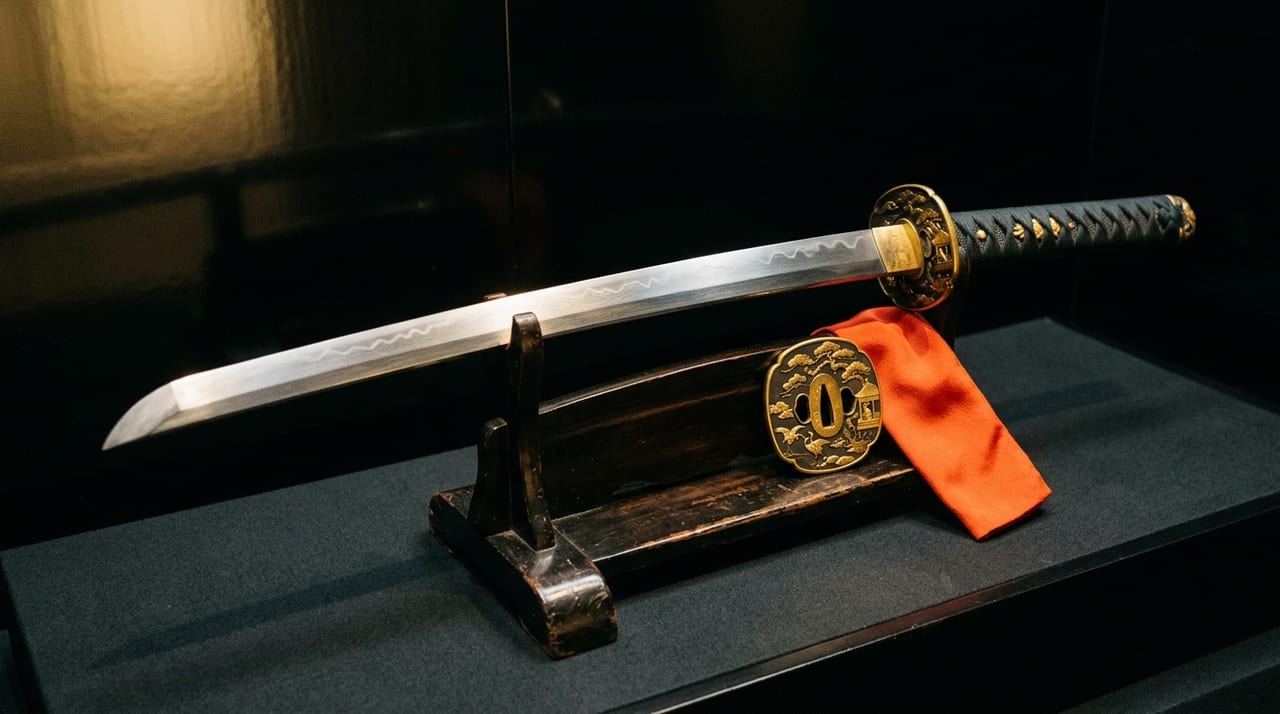
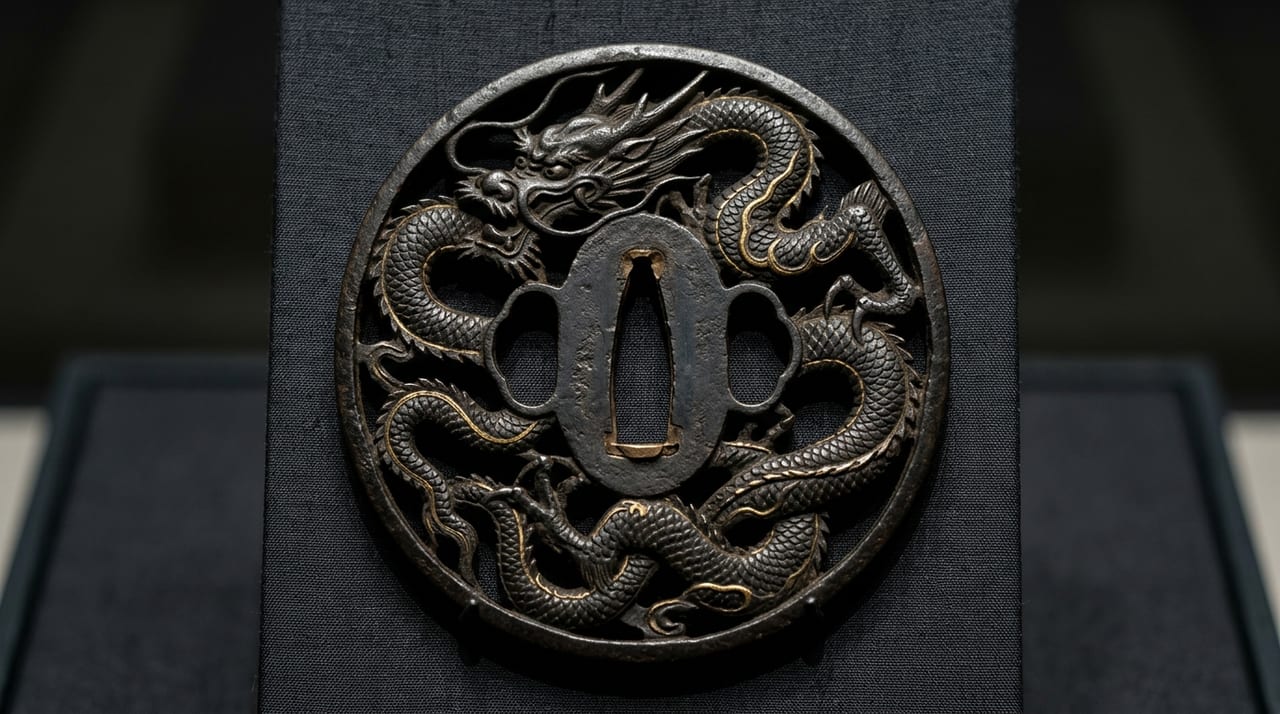
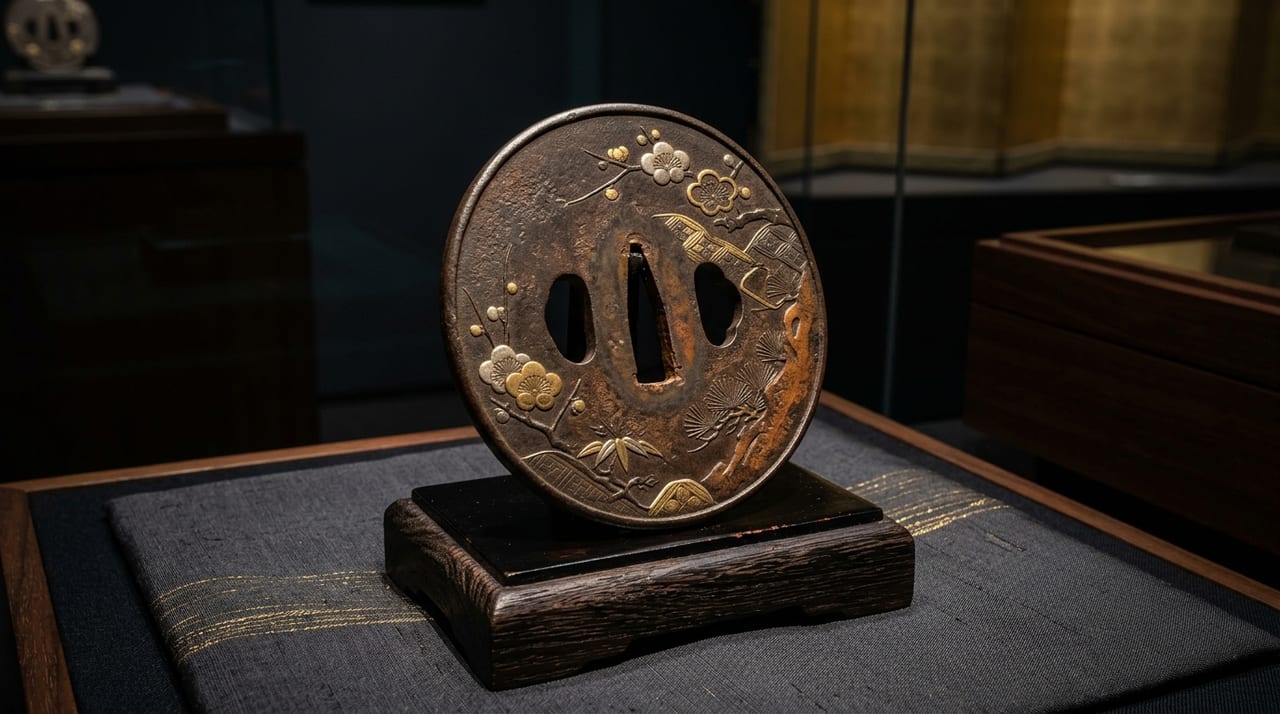
The World of Menuki — Small Carved Metalwork Housed in the Tsuka and the Functional Beauty That Supports the Grip
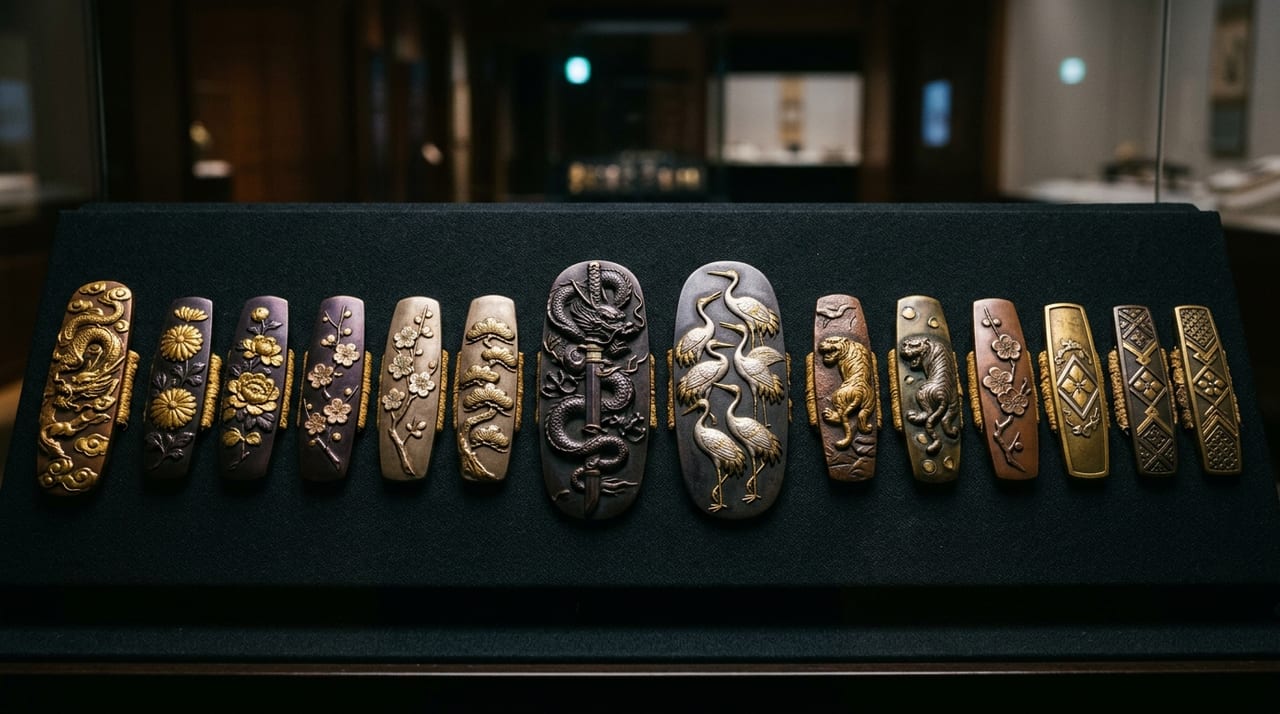 * Image is for illustrative purposes only.
Table of Contents
Among tōsōgu, menuki are small metal fittings that fit in the palm of the hand, yet they have long been cherished as the piece in which the craft of sword metalworking is most concentrated. Attached in matched pairs to the front and back of the tsuka, these small carved fittings that meet the eye above the grip reflect the aesthetic sensibility of sword mountings with remarkable clarity.
The Original Function of Menuki
Menuki were originally metal fittings associated with the mekugi, the pin used to secure the blade's nakago within the tsuka. Several theories exist regarding the etymology, but the name is said to be connected to the mechanism that passes through the tsuka to hold the nakago in place. In later periods, menuki became independent of the mekugi and came to be set in the tsuka purely as decorative fittings that also aided in gripping. Because they sit where the fingers touch, they also serve the practical purpose of preventing slipping.
Development as Decoration
During the Edo period, when peace prevailed, menuki developed remarkably as a showcase for the skill of sword metalworkers. Using the technique of katachibori — raising three-dimensional forms from small pieces of metal — an extraordinarily diverse range of subjects was expressed: animals, plants, human figures, and implements. Dragons and lions, horses, cranes, chrysanthemums and peonies, arms and musical instruments — the range of subjects was virtually limitless, with auspicious themes and those drawn from stories being particularly favored.
The Concept of Mitokoromono
Menuki sometimes form a matched set known as mitokoromono together with the kōgai and kozuka. When the same maker produces all three pieces in the same subject and technique, a unified dignity emerges throughout the entire koshirae. Sets that survive complete as mitokoromono tend to be valued more highly as a coherent work of craft than individual pieces sold separately.
Identifying Materials and Irogane
The materials used for menuki include, in addition to gold and silver, irogane (colored alloys) such as shakudō, suaka, shibuichi, and brass. Shakudō is an alloy of copper with a small amount of gold; treated with niiro finishing, it develops a deep purplish black color and is the representative base metal of sword metalwork. Shibuichi is an alloy of silver and copper that displays a subdued gray surface. By applying gold or silver overlays or inlay on top of these base metals, a rich contrast of colors is created within a small area. When appreciating menuki, observing what the base metal is and where gold and silver have been employed allows you to read the maker's sense of color.
Checkpoints When Examining Condition
When acquiring menuki, the following points are worth confirming.
- Whether the pair is an original matched set. Over the years one piece may have been lost and replaced with a different menuki, so check whether the subject, style, and base metal of the front and back correspond with each other.
- The construction of the reverse. Menuki customarily have attachment feet on the back, and the care with which the reverse is finished provides a clue for considering the period and school of workmanship.
- Wear and damage. As fittings that have been set in a tsuka and continually gripped, check whether the raised areas of carving have been rubbed smooth, and whether there are any chips or crushing.
Common Pitfalls
As small craft objects, menuki are not infrequently encountered as later copies or cast reproductions. While hand-carved katachibori displays sharpness and variation in the lines of its details, cast pieces tend to have soft outlines and blurred detail. Furthermore, unlike fuchi-kashira and kozuka, menuki themselves rarely carry a mei, so attribution to a maker relies increasingly on surrounding information such as box inscriptions, origami, and provenance as mitokoromono. It is important not to take unsubstantiated attributions at face value, and instead to evaluate the quality of the carving with your own eyes.
Pay Attention to How They Are Set in the Tsuka
Menuki are set beneath the tsuka wrapping and peek out through the diamond-shaped gaps in the wrapping cord. It is said that the conventions for the placement positions on the front and back differ between tachi koshirae and uchigatana koshirae, and the feel of the grip also changes depending on where they are set. When viewing the koshirae as a whole, rather than looking at the menuki in isolation, it is worth paying attention to how they appear within the harmony of the tsuka wrapping color and the ray skin beneath.
Basic Storage and Handling
Tōsōgu including menuki, as metal craft objects, are vulnerable to moisture and finger oils. After handling with bare hands for an extended period, the basic practice is to wipe lightly with a soft cloth before storing. Because the color of the niiro finish on shakudō and shibuichi results from a surface patina layer, polishing with metal polish or chemicals is strictly prohibited. The subdued luster that has developed over many years is itself part of the charm, and preserving the current condition should be the first priority. Simply storing pieces wrapped in a paulownia box or cloth and preventing them from coming directly into contact with other fittings will protect against wear on the raised areas of carving and against dents. Also, please take as much care with the box, bag, and any accompanying inscriptions from the time of purchase as with the menuki themselves, since they are documents that convey provenance. When in doubt about handling, it is safest to refrain from intervening and choose to preserve the current state.
Menuki are an intimate craft that resides in the familiar place of the grip within the total art of sword mounting. If a piece catches your interest, please feel free to contact us through the inquiry form.