Iron Tsuba of the Kotō Period: The Birth and Functional Beauty of Tsuba in the Heian and Kamakura Eras
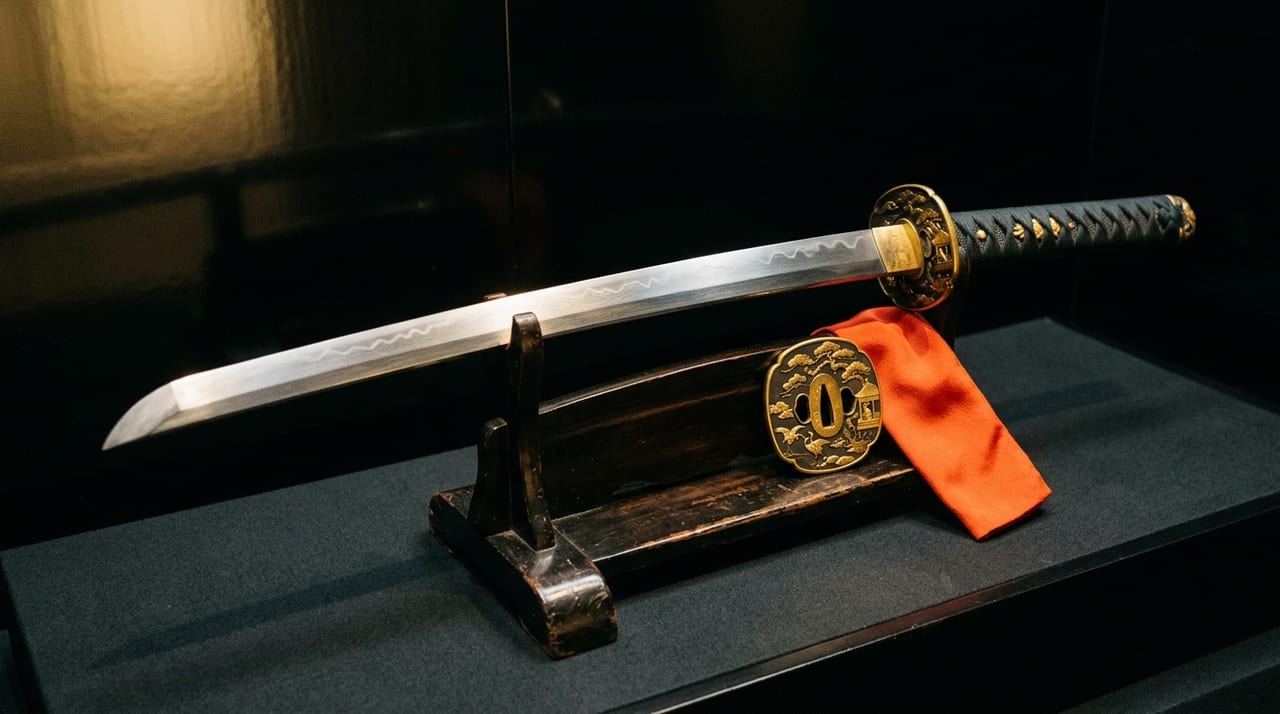 * Image is for illustrative purposes only.
Table of Contents
The Birth of the Tsuba: Origins as a "Tegaeshi" to Protect the Hand
The origins of the tsuba are inextricably linked to the birth of the Japanese sword. When the curved tachi was established in the late Heian period (10th–11th centuries), some form of partition became necessary at the junction between the blade and the tsuka. The first role of the tsuba was the "tegaeshi" — a guard function that prevents the hand from sliding toward the blade during combat, protecting against the enemy's edge and one's own fingers.
The earliest tsuba were extremely simple iron discs. Decoration was minimal, with only a central hole (nakago-ana) for the nakago to pass through, and a flat section called the "seppadai" that fixes the tsuba when sheathing it in the saya. This function-first form became the foundation of kotō-period tsuba.
The reason iron was chosen as the material is clear. Compared to copper or brass, iron is more difficult to work but combines hardness with toughness, enabling it to withstand sword blows in actual combat. The practical, utilitarian values of the Heian warrior were directly reflected in the choice of material.
Tsuba of the Late Heian Period: The Rise of Warrior Culture and the Transformation of Sword Fittings
In the late Heian period (12th century), as warrior society rose through the conflict between the Genji and Heike clans, the importance of sword mountings as a whole increased. Tsuba from this period are collectively called "kotetsu-tsuba," but very few survive intact, and most complete examples are carefully preserved as treasures in museums and shrines and temples.
The basic form is circular or oval, with most measuring roughly 6–8 cm in diameter. Thickness is relatively substantial at around 5–10 mm, the result of prioritizing battlefield practicality above all else. A thin tsuba risks splitting under the impact of a sword blow, while one too heavy would impair the overall handling of the sword. Years of accumulated experience produced an optimal "mold" for dimensions and weight, which was passed down to tōsōgu craftsmen throughout the country.
Distinctive approaches began to emerge in the form of the rim as well. Styles such as the "seppa-gata" with a thinly finished rim, and the "marumi-gata" with a rounded edge, began to take shape as regional styles, centered on sword-producing areas such as Kyoto, Yamato, and Bizen.
Tsuba of the Kamakura Period: From Functional Beauty to Sculptural Beauty
The Kamakura period (1185–1333) was a time of important developments in the form and techniques of tsuba. The stability of the warrior government and the refinement of the bushido spirit had a profound influence on the aesthetics of tōsōgu.
A concept particularly noteworthy in the tsuba of this period is "honebami." This refers to the technical and aesthetic refinement of narrowing the area around the rim and nakago-ana to reduce weight while maintaining strength. Here lies the process by which a mere lump of iron was elevated to a sculptural object possessed of functional beauty. The spirit of an era in which refinement was beginning to blossom within ruggedness is also present in the contours of the tsuba.
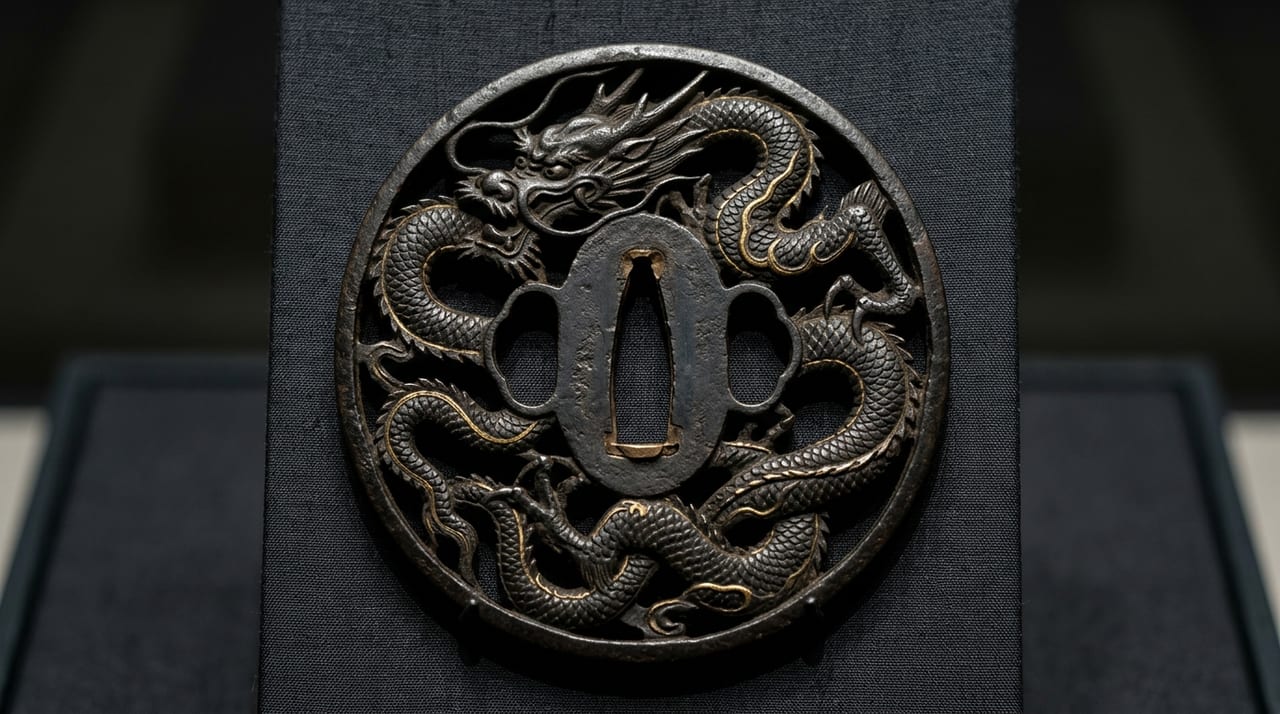
From the Kamakura period through the Nanbokuchō period, "sukashi" — a technique of piercing the iron ground to create patterns — began to appear on tsuba. The earliest sukashi were primarily round piercings (maru-sukashi) and elongated piercings (naga-sukashi), combining the practical aim of weight reduction with decorative effect. These eventually developed into complex pierced designs modeled on family crests and natural objects, such as the mokko-gata, ken-gata, kuruma-gata, and tomoe-gata forms, laying the foundation for Japan's distinctive art of metalwork.
It is also believed that the specialized profession of "tsubashi" gradually became independent during this period. The progression from an early stage in which tōkō also handled tsuba toward a division of labor, and the emergence of distinctive school-like styles at each production center, are also major characteristics of the Kamakura period.
Points of Appreciation for Kotō-Period Tsuba: Reading the "Period" in the Jigane
The greatest appeal when appreciating kotō-period tsuba lies in the "flavor of the jigane."
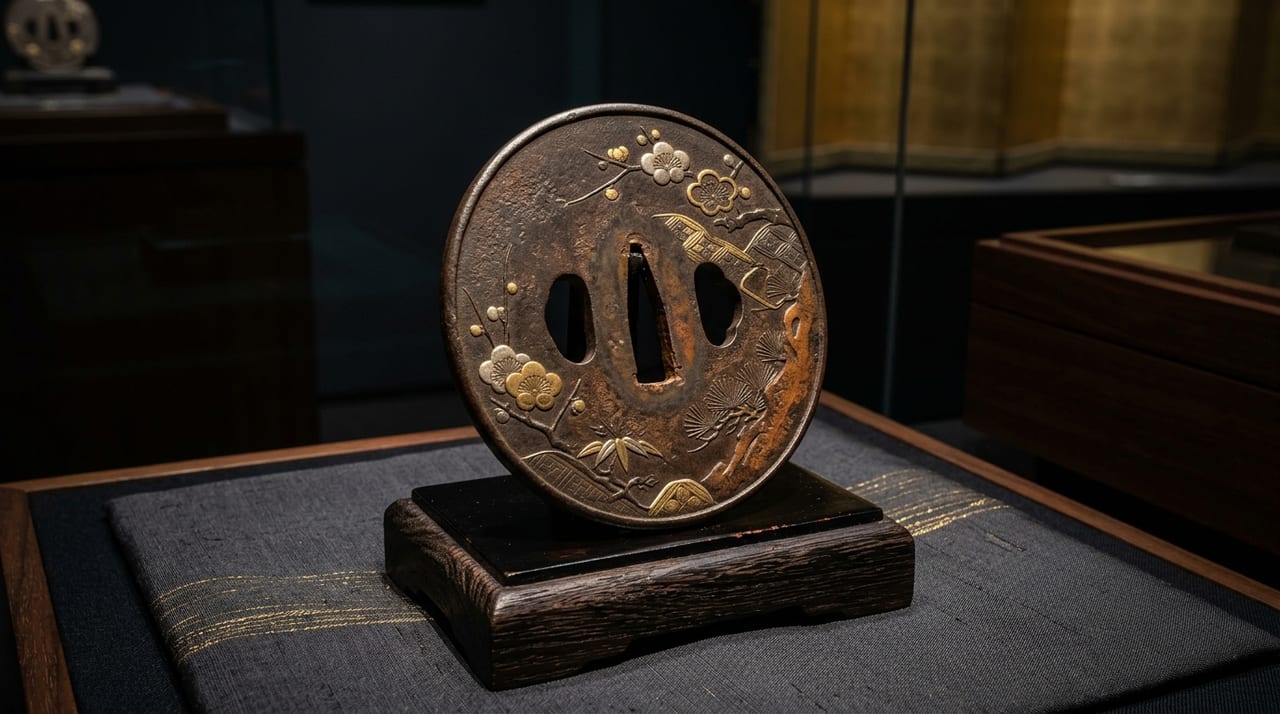
The ancient patina (koiro) formed over many long years has a complex coloration ranging from dark brown to reddish brown, showing varied expressions depending on the angle of the light. The iron ground displays a pattern called "chikei," in which internal structure appears on the surface — an aesthetic element equivalent to the jihada of a blade. Traces of orikaeshi tanren rise to the surface as "nagarehada" and "masamehada," making the tsuba itself a complete iron craft object in its own right.
The thickness and sense of weight of the tsuba, the finishing of the rim, the precision of the nakago-ana — all of these speak to the maker's intentions and skill. The nakago-ana in particular has been carefully adjusted to fit the nakago of the blade, and the precision of that fit is evidence of the metalworking standards of the day.
Many kotō-period tsuba retain minute scratches and strike marks from actual use. These are evidence that they functioned as tōsōgu on the battlefield, embodying historical reality. Among collectors, many place the greatest value on precisely these use marks as "witnesses of the era," and the absence of later repair or restoration is a condition for high appraisal.
Major Repositories of Surviving Kotō-Period Tsuba
Opportunities to see iron tsuba from the kotō period in person are limited, but the following are representative repositories.
- Tokyo National Museum: Swords and tōsōgu designated as kokuhō (National Treasure) and jūyō bunkazai (Important Cultural Property) are displayed in permanent and special exhibitions. Kotō-period tōsōgu are periodically shown to the public and can be viewed systematically with detailed commentary.
- Kyoto National Museum: Rich in materials related to sword culture centered on Kyoto. Old tōsōgu handed down from Kyoto shrines and temples are also held in the collection and displayed, making it an invaluable place for comparing differences in regional styles.
- Nezu Museum (Tokyo): Its collection of tōsōgu is among the finest in Japan. Kotetsu-tsuba from the Kamakura and Muromachi periods can be viewed systematically.
- Treasure halls such as Kasuga Taisha and Atsuta Shrine: Dedicated ancient swords and tōsōgu have been preserved for generations and can be seen on occasions of special public viewings. At the Kasuga Taisha National Treasure Hall, notable examples of old tōsōgu are displayed.
As of 2026, dedicated sword museums have expanded substantially, and the public display of materials including kotetsu-tsuba has advanced across the country. If at all possible, observing actual pieces up close and experiencing firsthand the color and luster of the jigane and the sense of weight is the best way to deepen one's understanding of kotō-period tsuba.
Conclusion: The Ancient Spirit Dwelling in Plain Iron
Iron tsuba of the kotō period possess a "plain ruggedness" not found in the decorative metalwork tsuba of later ages. In contrast to the lavish tsuba adorned with the intricate engraving and inlay of the Edo period, kotō-period tsuba carry nothing superfluous. Yet within that unadorned iron is concentrated the battlefield tension in which Heian and Kamakura warriors staked their lives, and the crystallization of the skill with which craftsmen forged them faithfully, one blow at a time.
What remains when decoration is stripped away — kotō-period iron tsuba answer that question in silence. The unadorned iron contour speaks across the ages to the essence of Japanese sword culture. Their rarity in terms of surviving numbers gives them high value, and for collectors, kotetsu-tsuba are considered one of the ultimate collection goals. This derives not from a mere desire for scarcity, but from a deep reverence for holding in one's hands the very history of iron in Japan.