Iron Tsuba and Kinko Tsuba — The Two Great Currents of Sword Fittings Divided by Material
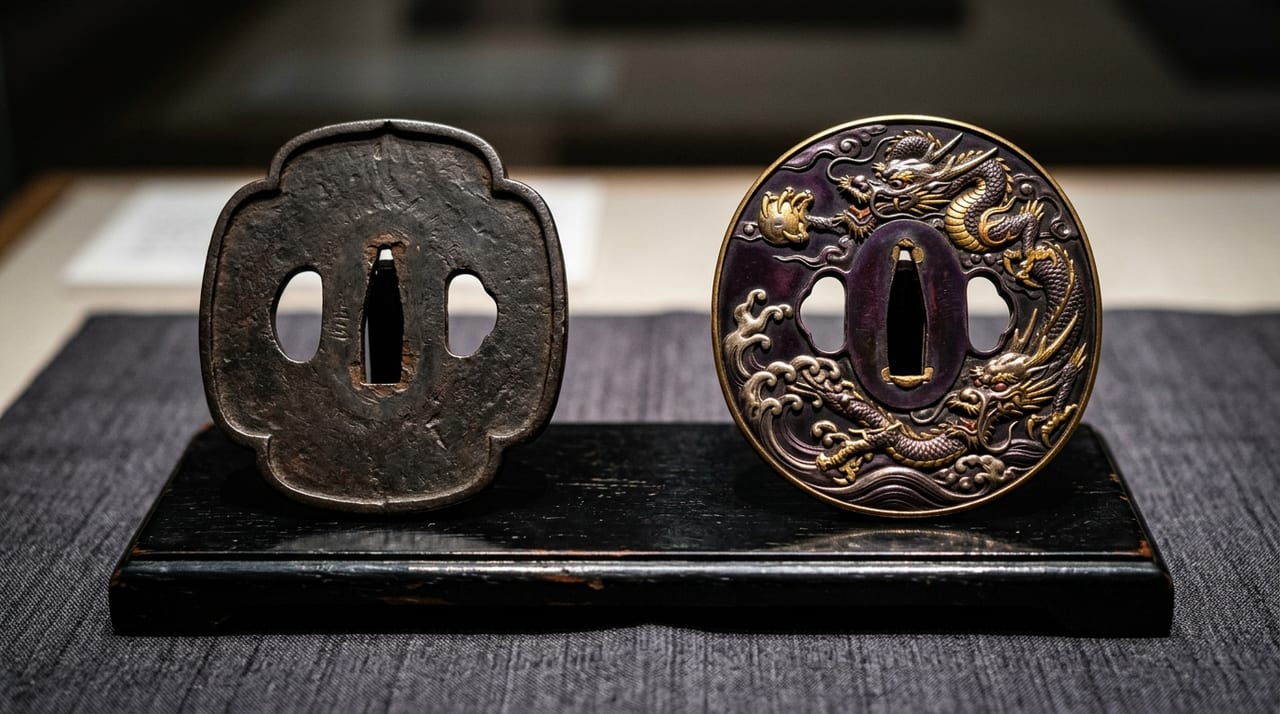 * Image is for illustrative purposes only.
Table of Contents
When seeking to understand the world of tsuba, the first thing to grasp is the broad classification by material. Tsuba are divided into two major categories: "iron tsuba," which use an iron base, and "kinko tsuba," which use soft metals such as shakudō and brass (shinchū), each having developed under distinct techniques and aesthetic sensibilities.
Characteristics of Iron Tsuba
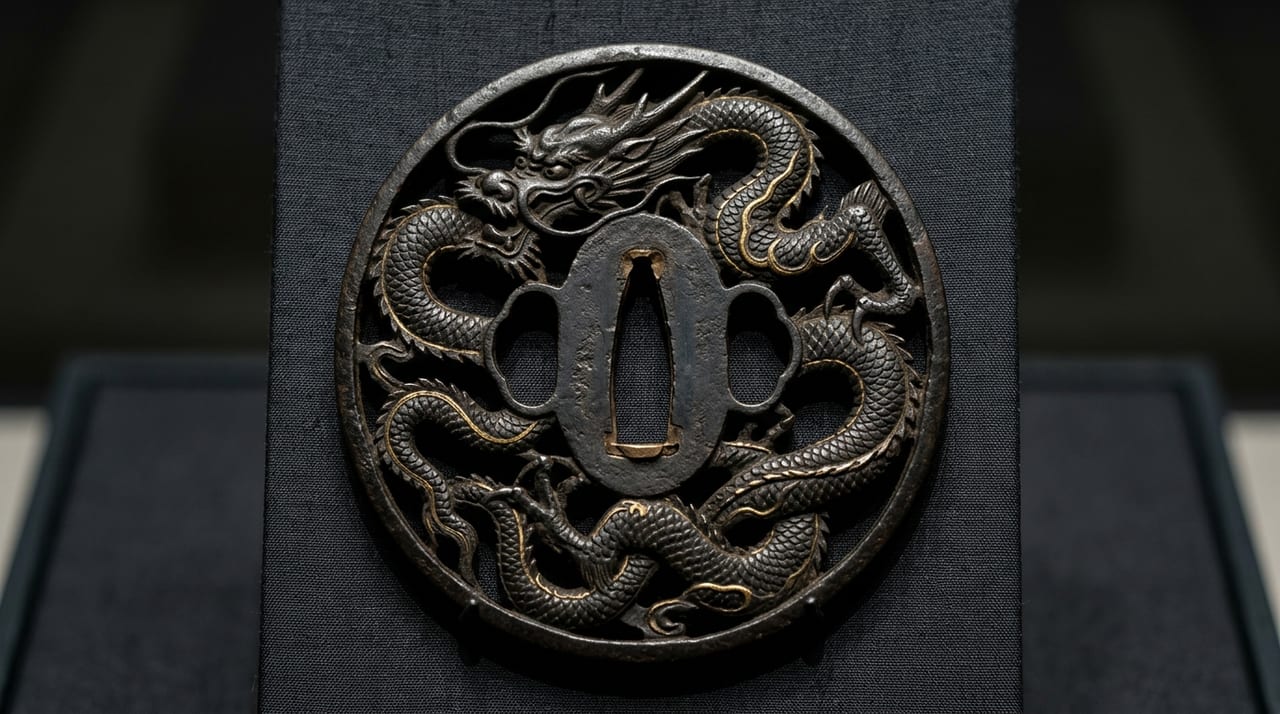
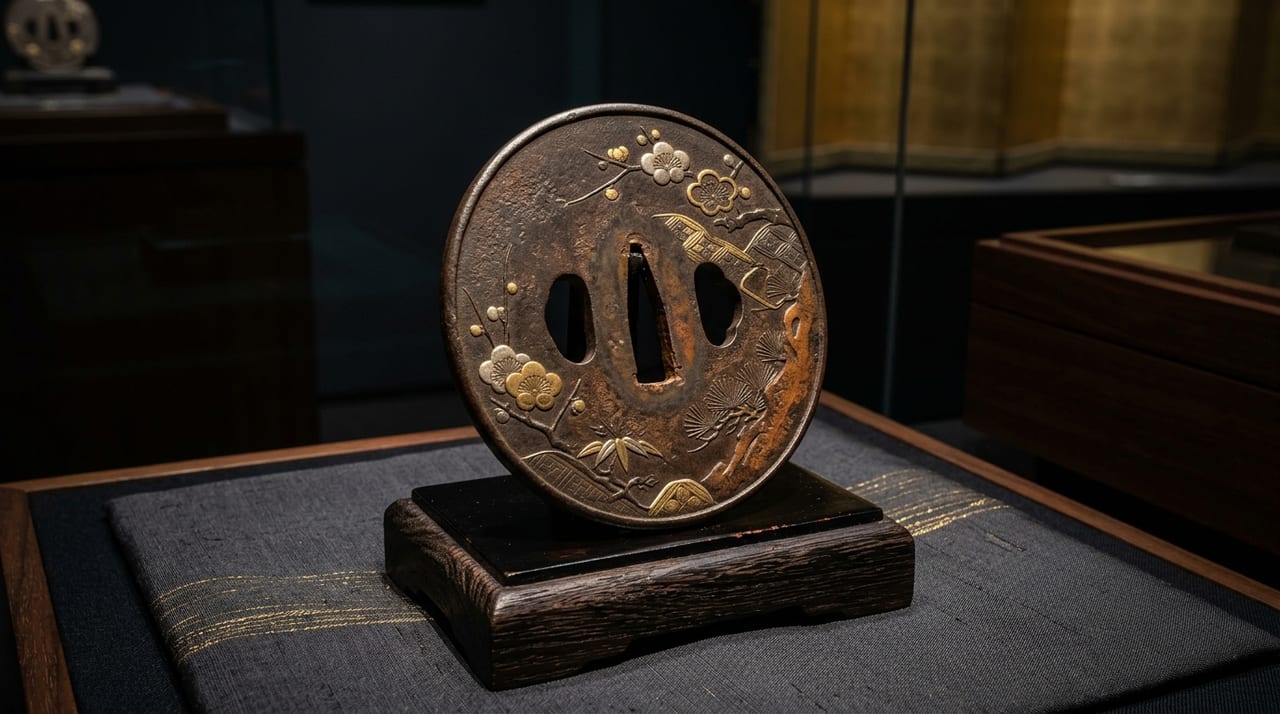
Iron tsuba are made by forging an iron base and applying techniques such as openwork (sukashi), zōgan, and carving. Their appeal lies in the hard and weighty texture unique to iron, and appreciation centers on "tetsuaji" — the color and surface quality of the jigane. In warrior society, where practical function and spiritual qualities were highly valued, simple and robust iron tsuba were widely favored. Most openwork tsuba also fall into this category. Tetsuaji changes with the quality of the forging and the state of preservation over the years; a tsuba that has been carefully tended over a long period acquires a composed luster.
Characteristics of Kinko Tsuba
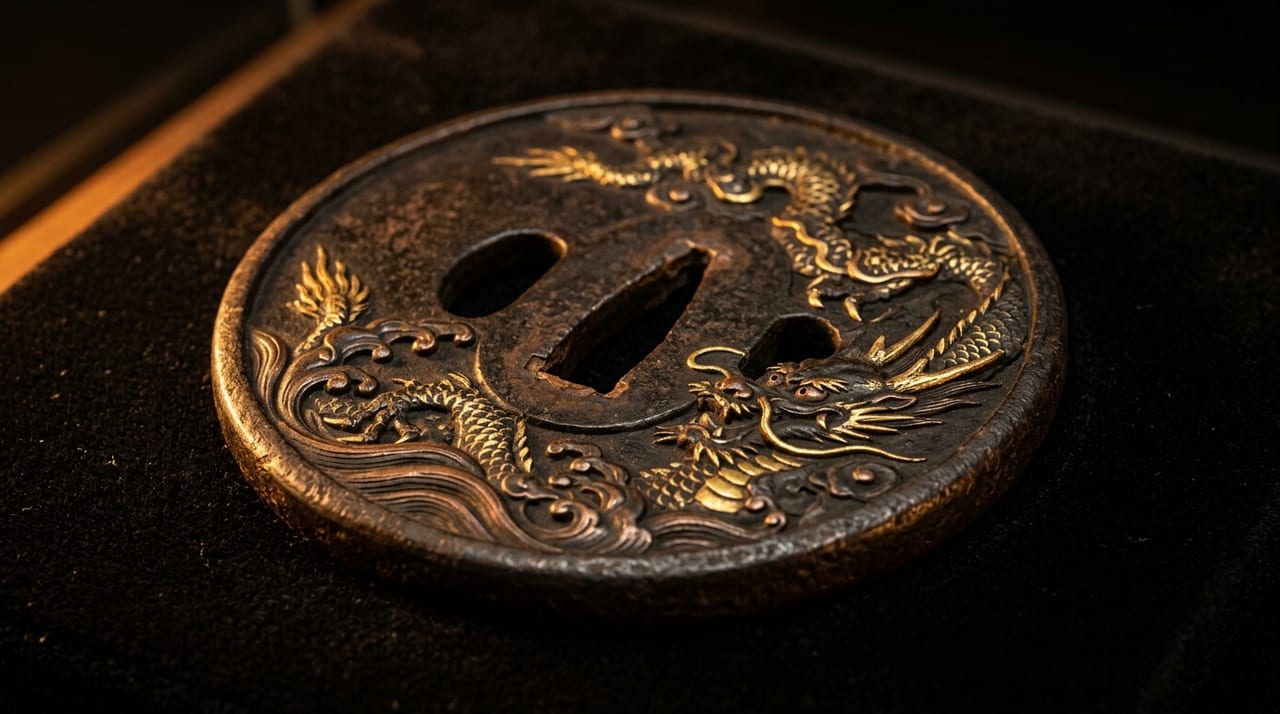
Kinko tsuba, on the other hand, use soft alloys such as shakudō, brass, and shibuichi as the base, and are decorated with ornate techniques such as takabori (high relief carving), iro-e (polychrome decoration), and zōgan. Because soft metals are easy to work, enabling three-dimensional and intricate expression, pictorial and lavish designs flourished. As the Edo period continued in peace, sword fittings grew stronger in character as works of fine craft rather than practical tools, and kinko tsuba bloomed greatly, reflecting the tastes of daimyo and high-ranking warriors.
Shakudō and Irogane (Colored Metals)
Central to understanding kinko tsuba is the concept of "irogane" (colored metals). Shakudō is a copper alloy containing a small amount of gold that, through a chemical treatment called niiro, develops a deep black-purple color. Shibuichi contains silver and displays an elegant grayish hue. By combining these irogane and adding gold and silver zōgan, tsuba made of soft metal achieved a rich, painting-like expression of color.
Changing Times and Demand
From the Muromachi through the Sengoku period, the tsuba was above all a practical tool for protecting the hand, and sturdy iron tsuba were the mainstream. As the samurai world stabilized in the Edo period, the aesthetic quality of sword fittings came to be valued as fitting attire for castle visits and ceremonial occasions, and demand for kinko tsuba grew. Meanwhile, the tradition of iron tsuba never died out; it continued to be refined within a spirit that revered simple sculptural beauty. The two great material currents are thus mirrors reflecting both the changes of the age and the aesthetic sensibility of the warrior class.
Learning the Names of Each Part of the Tsuba
Let us review the basic terms useful when appreciating a tsuba or considering a purchase.
- Seppadai: The flat area in the center surrounding the hole through which the nakago of the blade passes. It is often the place where the maker's mei is inscribed.
- Hitsuana: Holes opened to the left and right of the seppadai, for passing through the kozuka and kōgai. Those later filled in with metal are called "umebitsu" and serve as clues to the tsuba's provenance.
- Mimi (rim): The outer edge of the tsuba. There are various shapes such as marumimi (rounded rim), kakumimi (squared rim), and uchikaeshimimi, and in iron tsuba the forging character that appears on the mimi is also one of the highlights.
Checklist for Acquisition and Storage
- For iron tsuba, first check for the presence of red rust. Black, settled rust is respected as a mark of age, but advancing red rust damages the base and must be watched carefully.
- For kinko tsuba, the color of the irogane is everything. In some cases, later repolishing has stripped away the original subdued patina, so watch for any unnatural sheen.
- The condition of details — missing zōgan, wear on takabori, chipping around the hitsuana — also affects appreciation value. When examining photographs, it is ideal to check images of both front and back as well as the mimi.
- Basic maintenance is dry-wiping with a soft dry cloth. Applying heavy oil to iron tsuba or polishing kinko tsuba with metal polish is strictly to be avoided. The fact that the appropriate handling differs by material is precisely where the classification into two great currents proves practically useful.
Points of Appreciation
Iron tsuba and kinko tsuba call for different perspectives in appreciation. With iron tsuba, one looks first at the tetsuaji, the structural form, and the techniques of openwork and zōgan. With kinko tsuba, one savors the color of the base metal, the three-dimensionality of the carving, the intricacy of iro-e and zōgan, and the expressive power of the subject matter. Understanding that neither is superior to the other but that each is a craft honed under a different aesthetic sensibility is the first step toward deepening one's appreciation of tsuba.
Begin by Looking Closely at Just One Piece
The eye for appreciating tsuba is cultivated more by spending time with one piece than by glancing through many. How the design continues from front to back, what care has been taken in the treatment of the hitsuana and the mimi — within a size that fits in the palm of the hand, there are a surprisingly large number of points to observe. Since tetsuaji and the color of the irogane change their character with the lighting, try looking at different angles and light sources where possible. Because a sword and its tsuba are meant to be enjoyed as one, when considering a blade, paying attention to whether the tsuba on the attached koshirae is iron or irogane, and whether the design harmonizes with the period and atmosphere of the blade, adds a further layer of pleasure to the selection.
Knowing the stylistic differences between iron tsuba and kinko tsuba broadens one's view of a single sword still further. For any work that interests you, please feel free to reach out via our inquiry form.