The Goto Family and the Lineage of Sword-Fitting Metalwork — Tradition and Style of the Principal Kinko School Since the Muromachi Period
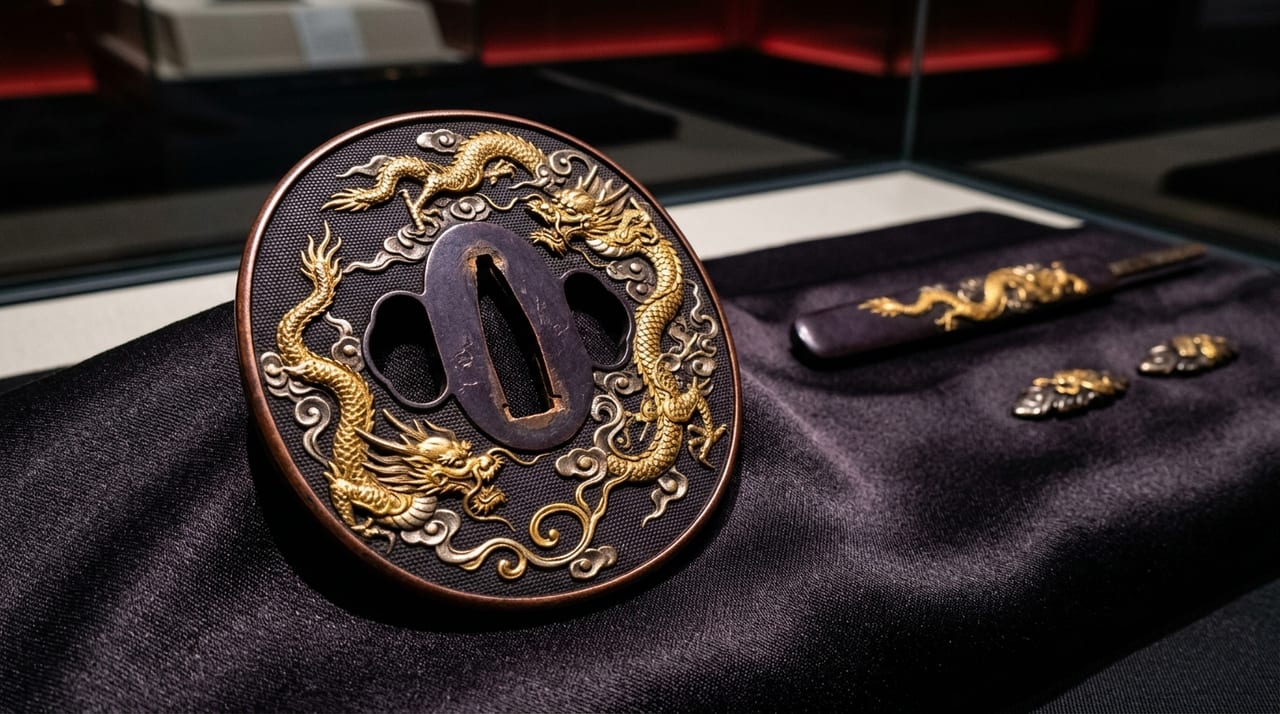 * Image is for illustrative purposes only.
Table of Contents
When discussing the metalwork of sword fittings, we cannot avoid the existence of the Gotou family (Gotou-ke). Beginning in the Muromachi period and reigning for a long time as the principal school of decorative sword metalwork, the Gotou family, with their elegant style, was called "ie-bori" (house carving), and shaped the standards of sword fittings in samurai society.
The Beginning of the Gotou Family
The founder of the Gotou family is said to be Gotou Yuujou, who was active in the Muromachi period. Yuujou is said to have served the Ashikaga shogun family, and left outstanding engraving work on sword fittings such as menuki, kogai, and kozuka. Thereafter, the Gotou family inherited their techniques and family traditions through successive generations, continuing to occupy the apex of the metalworking world as the principal school. The head of the household inherited the family name through succession ceremonies, and the tradition was preserved across many generations.
The Style of Ie-bori
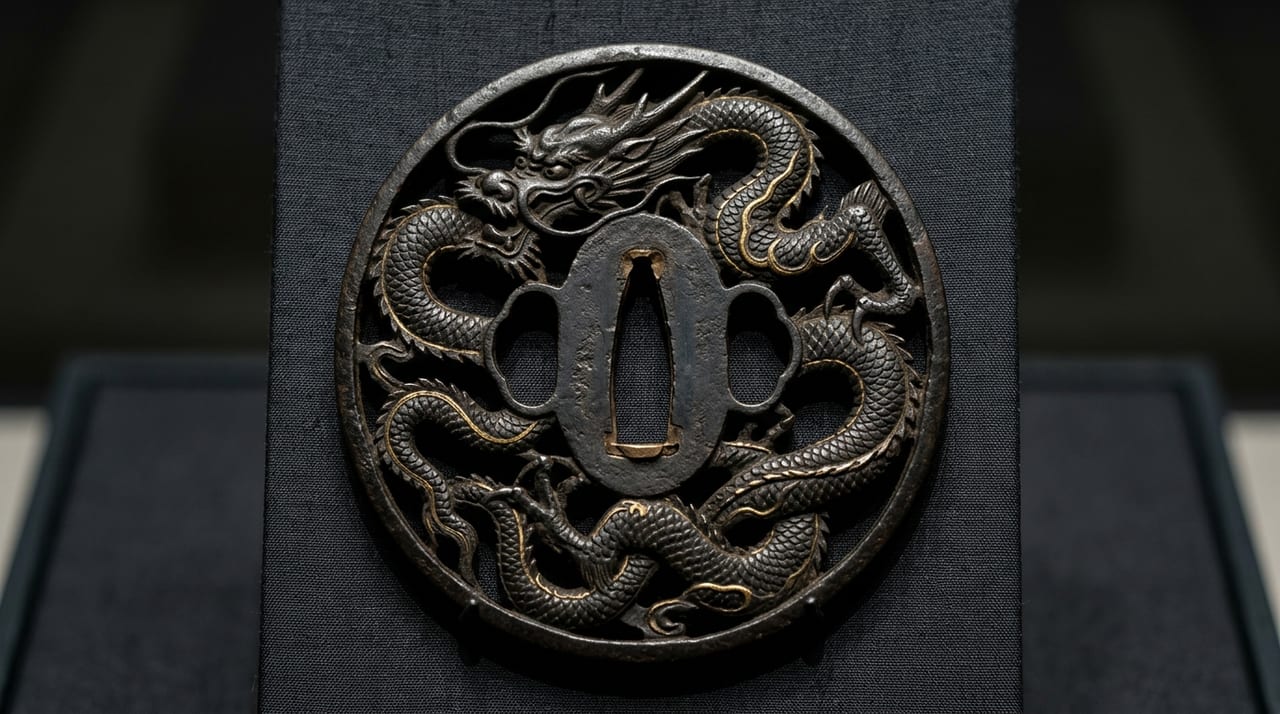
The style of the Gotou family was called "ie-bori" (house carving), characterized by an elegant style of high carving on a shakudo ground and the addition of colored gold. As subject matter, traditional and formal designs such as dragons, lions, and arabesque patterns were favored, and a style that maintained dignity and tension even amid ornamental brilliance was consistently pursued. Ie-bori was valued as befitting the formal sword fittings of the samurai class, and was also treasured in contexts of gift-giving and ceremonial occasions.
Materials and Technique Terms for Appreciation
How the "elegance" of ie-bori is concretely supported by specific techniques becomes clear when we learn a few key terms.
| Term | Explanation |
|---|---|
| Shakudo | An alloy made by adding a small amount of gold to copper, which exhibits a deep purple-black color through a treatment called ni-iro finishing. The base metal that forms the foundation of Gotou family works |
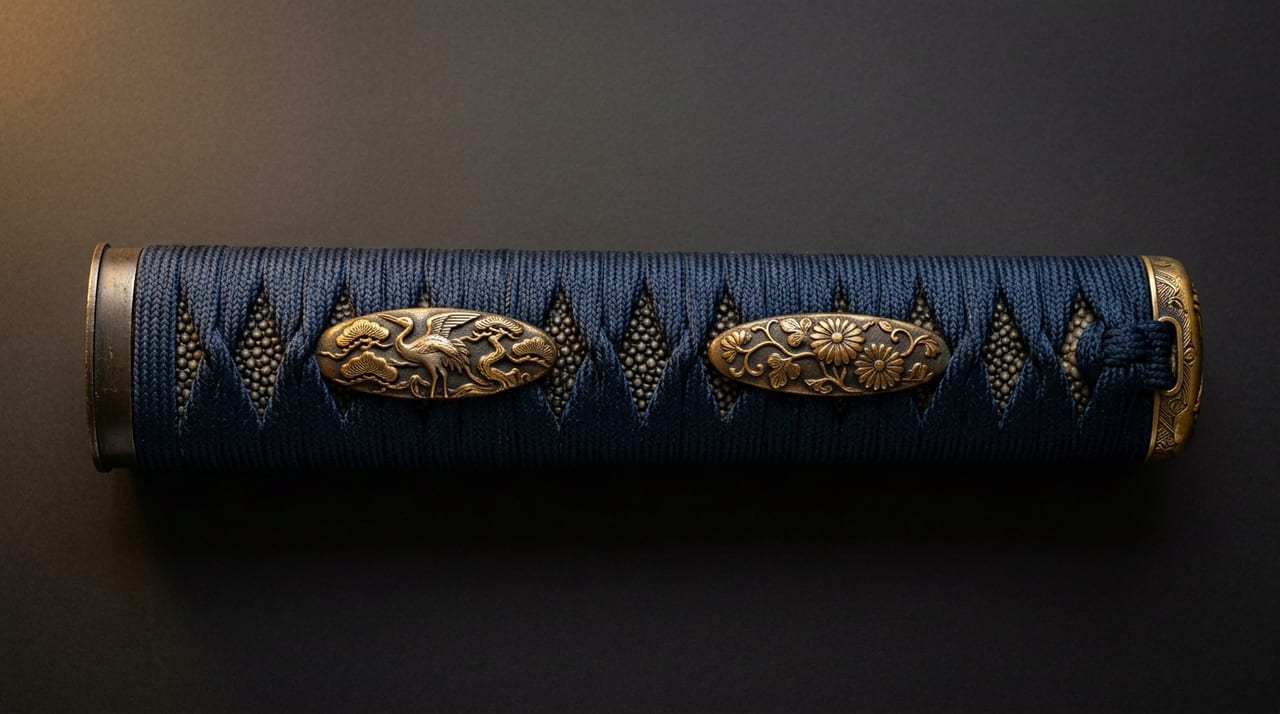
| Nanako | A technique using a punch (tagane) with a small hemispherical tip to neatly strike fine granules across the entire ground. The uniformity of the granule size and arrangement indicates the craftsman's skill level |
| Takabori | A carving technique that raises designs high above the ground |
| Iro-e | A technique of applying another metal such as gold to the surface to add color |
The deep black ground of shakudo with neatly struck nanako, and gold iro-e gleaming in the raised carving designs—this combination is the core of the ie-bori style and serves as a key point to confirm when observing actual pieces or photographs.
Misho-mono and Formality
What the Gotou family excelled at in particular was the "misho-mono" (three matched pieces), which consisted of menuki, kogai, and kozuka matched in subject matter and technique. Misho-mono that formed a harmonious set was highly valued as conferring unified formality upon sword fittings. Misho-mono created through Gotou family ie-bori also held significance as gifts and symbols of formality in samurai society, serving to demonstrate the status of the family.
The Gotou Family and Authentication—The Tradition of Appraisal
The Gotou family played a major role not only in production but also in the authentication of metalwork. The appraisals (kiwame) made by successive heads of the family carried weight in the evaluation of sword fittings and served as clues for later collectors tracing the provenance. It is also basic knowledge that all successive heads inherited names containing the character "jou," which is relevant when considering the era of works and appraisals. In modern times, an examination system for sword fittings has been established, and works related to the Gotou family on the market are now frequently accompanied by certificates of authentication.
Contrast with Machi-bori
In contrast to the ie-bori of the Gotou family, the Edo period saw the development of "machi-bori" (town carving), a free and diverse style created by independent metalworkers. While ie-bori valued tradition and formality, machi-bori pursued realistic and painterly expression as well as novel subject matter, bringing new currents to the world of metalworking. By viewing ie-bori and machi-bori in contrast, we can better understand the breadth of the history of sword fitting metalwork.
The Edo Period Samurai Society and the Gotou Family
In the samurai society of the Edo period, standards for sword fittings appropriate to ceremonial occasions were valued, and Gotou-style fittings were preferred for formal sword mountings. The ie-bori style was not merely a decorative tradition, but carried a social meaning of dress befitting one's status and occasion. On the other hand, as a long period of peace continued, sword fittings strengthened their character as objects of appreciation and collection, and together with the flourishing of machi-bori, metalworking matured as an independent field of fine craftsmanship. Ie-bori of the Gotou family continued to serve as a standard in this development.
Checkpoints for Appreciation and Acquisition
When considering sword fittings attributed to the Gotou family, it is helpful to confirm the following points.
- Presence and contents of authentication certificates — Whether the work is signed or has been authenticated as unsigned affects the nature of the evaluation.
- In the case of misho-mono, whether the three pieces are originally a set or were assembled later — The clue lies in whether the subject matter, color tone of the base metal, and character of the nanako match across all three pieces.
- Condition of preservation — Since the color of shakudo is impaired by scratching or improper polishing, resulting in the loss of the original color tone, the luster and color of the ground should be carefully confirmed even in photographs.
The Gotou family lineage is an important presence, so much so that it can be said to be the history of sword fitting metalwork itself. At TOUKENZA, you can view the swords on offer and their fittings in an online catalog. By learning about the lineage of metalworking, your understanding of how to view sword fittings deepens. For works of interest, please feel free to contact us via the inquiry form.