Reading the Nakago — What Mei and Yasurime Reveal
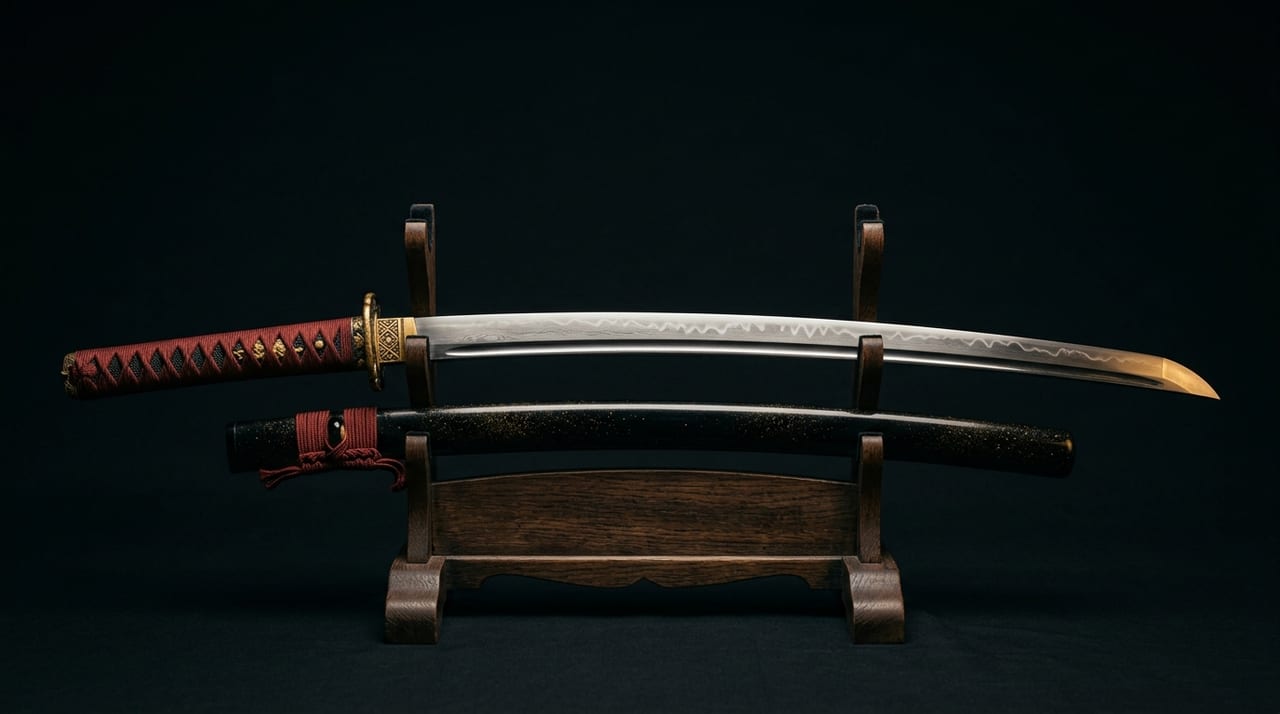 * Image is for illustrative purposes only.
Table of Contents
What Is the Nakago?
The nakago is the part of the blade that fits inside the tsuka, and it is the sword's most important source of information. One tends to be drawn to the striking hamon and jigane of the blade, but the nakago is precisely the part that can be called the sword's "résumé." The tōkō's signature, the period of production, the characteristics of the school, and traces of later alterations are all recorded here. In the world of appraisal, it is said that "read the nakago and you know the sword" — that is how important this part is.
Reading the Tōkō and Period from the Mei
Mei is the tōkō's signature. The omote-mei (front mei) bears the tōkō's name, while the ura-mei (reverse mei) may contain the date of production, the name of the patron, or the place of manufacture. The presence or absence of a mei and the manner in which it is written determine the sword's authenticity and estimated period.
The great tōkō of the kotō period each cut their well-known mei. For example, the mei "Osafune" for Bizen Osafune and "Awataguchi" for Yamashiro Awataguchi represent the pinnacle of their respective periods. On the other hand, many mumei swords exist, particularly among very old swords or those that saw heavy use on the battlefield. The style of the inscription and the depth of the engraving also allow the period and school to be estimated. It should be noted that among zaimei swords, counterfeit mei (gimei) engraved in later periods are not uncommon, and Types of Gimei and Authentication explains how to tell them apart in detail.
Learning the Tōkō's Individuality from the Yasurime
Yasurime are the direction and shape of the file marks applied to the nakago. The file marks left on the nakago of an ubu nakago are like fingerprints that reveal the tōkō's habits and level of skill.
The main types of yasurime are as follows:
- Kiri: Straight yasurime drawn in a straight line from top to bottom. A simple, craftsman-like finish.
- Katte-sagari: Yasurime drawn diagonally from upper right to lower left. The most common type, used by many schools.
- Sujichigai: Yasurime drawn from upper left to lower right, in the opposite direction from katte-sagari. This can be a distinguishing feature of certain schools.
- Higaki: Complex yasurime crossing in a lattice pattern, requiring advanced skill. Found on swords by high-ranking tōkō such as those of Sōshū-den.
Yasurime are the most important clue in determining authenticity. The yasurime on old swords show natural wear, which serves as evidence of genuineness. The yasurime on forgeries are unnatural, often cut with uniform force, and are seen through by experienced appraisers. Those who wish to learn more about the classification of yasurime should also refer to Types of Yasurime and Authentication.
The Depth of Period That Rust Color Reveals
Sabiiro refers to the hue and texture of the rust that has formed on the nakago. Old nakago bear deep natural black rust, and this "koshoku" (patina of age) indicates the depth of the period.
The following can be read from the color of the rust:
- Black, deep rust: Indicates that several hundred years or more have passed. The oxidation of the steel has progressed deeply.
- Brown-toned rust: Commonly seen on swords from the mid to late Edo period.
- Shallow rust: Seen on relatively new swords or swords that have been well maintained.
Artificial rusting to create an aged appearance is sometimes attempted, but natural rust has subtle variations in tone and texture that specialists can see through. The depth and quality of rust can also be confirmed through scientific analysis.
The Life of a Sword as Told by Suriage
Suriage is the state in which the nakago has been shortened to reduce the length of the blade. This is not damage or a defect but indicates a practical modification of the sword.
- Ubu nakago: The unaltered state as produced. The mei is fully preserved, and period identification is accurate.
- Suriage: The upper portion has been cut down. Part of the mei may remain, and sometimes the cut-out mei is inset as a gaku-mei.
- Ō-suriage: Drastically shortened, with the mei completely lost. This is commonly seen in examples of Nanbokuchō-period ōdachi converted into uchigatana during the Edo period.
Suriage reflects the demands of the era. The long tachi of the Nanbokuchō period were refashioned into more maneuverable uchigatana as firearms spread during the Sengoku period. This modification is not forgery but important evidence of the sword's historical transformation. The technical details and value assessment of suriage are explained in detail in The Technique and Appraisal of Suriage.
Mastering the Reading of the Nakago
Reading the nakago correctly is the foundation of appraisal. By comprehensively observing the mei, yasurime, rust color, and state of suriage, the history of the sword comes into view. Deciphering a single character of the mei can change the sword's period attribution, and a single yasurime can lead to identifying the school — once you experience this fascination of appraisal, the way you look at swords changes fundamentally. The nakago is the sword's résumé — a silent message the tōkō sends to posterity. More in-depth practical knowledge is compiled in The Complete Guide to Reading the Nakago. Please practice by all means with real swords.