Types of Gimei and Authentication — The Practice of Authenticating Zaimei Blades and Eliminating Gimei in the Japanese Sword Industry
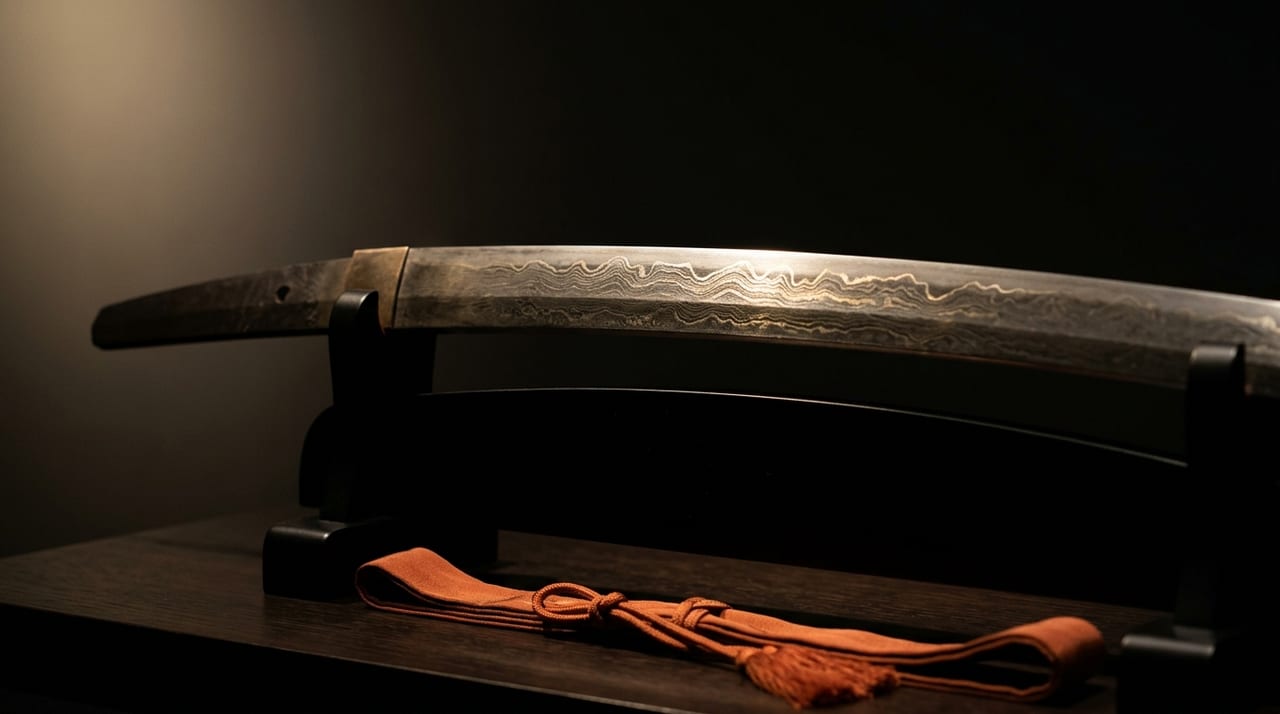 * Image is for illustrative purposes only.
Table of Contents
What Is Gimei — The History of "Deception" Lurking in Zaimei Blades
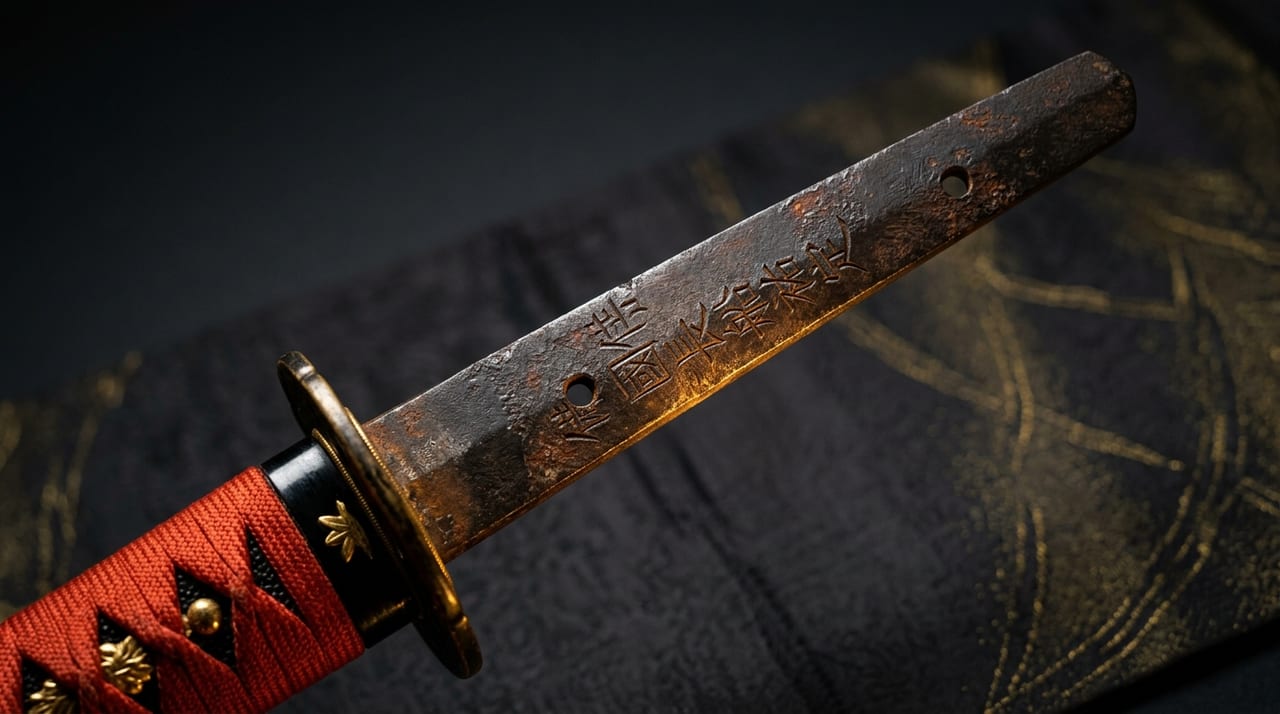
In the appraisal of nihontō, the mei (signature) engraved by the tōkō (swordsmith) on the nakago (tang) is one of the most critical factors in determining value. Blades bearing the mei of a master tōkō can fetch prices of several million to tens of millions of yen on the market, and this enormous economic value has long been the breeding ground for gimei. Gimei refers not to an authentic mei cut by the tōkō themselves, but to a mei that has been engraved or falsified by another party after the fact.
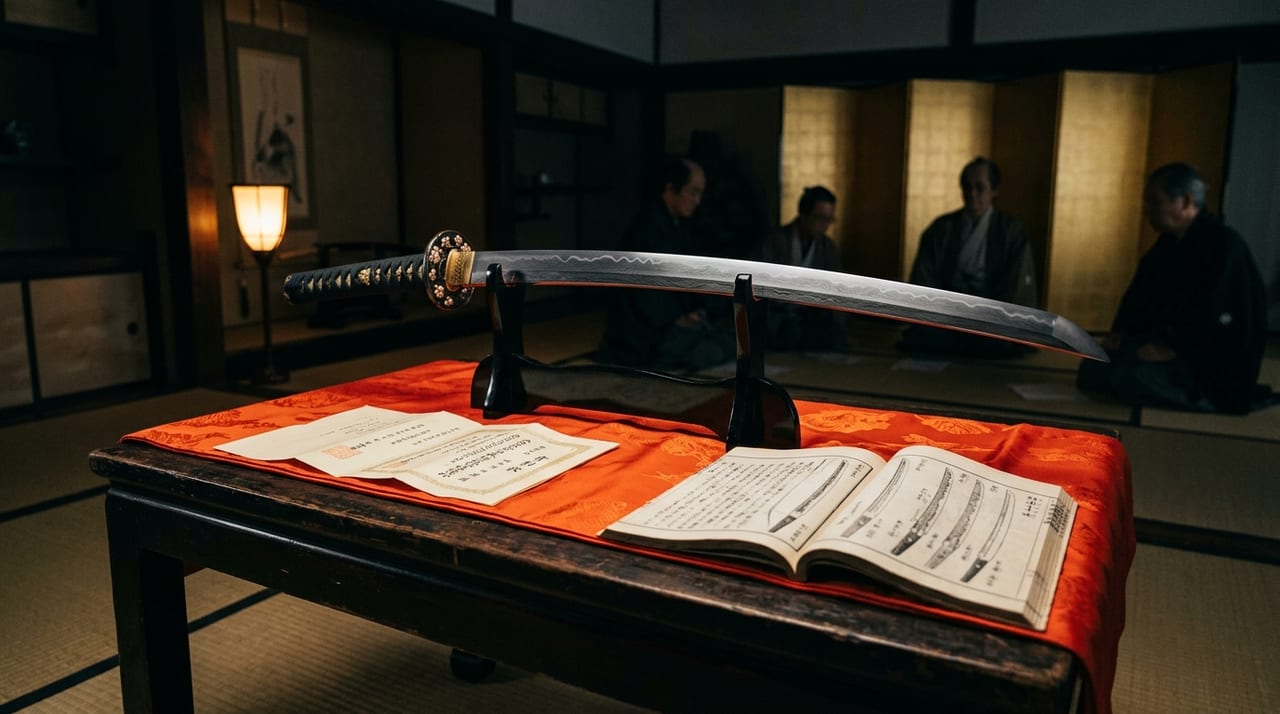
The history of gimei runs parallel to the history of nihontō itself. Already during the Edo period a "famous-sword boom" had emerged, and blades bearing the names of celebrated tōkō such as Masamune, Nagamitsu, and Yoshihiro circulated widely. The custom that a blade could not be recognized as a great sword without a kanteisho (appraisal certificate) known as origami (appraisal certificate), issued by the Hon'ami family, also arose as a countermeasure against the prevalence of gimei. Even today, zaimei (signed) blades that have not passed the examination of NBTHK or Nihonto Hozon Kai contain gimei at a certain rate, and the frontlines of authentication devote considerable energy to their elimination. With the expansion of internet auctions and overseas markets, awareness of gimei risk has become more important than ever.
Major Classifications of Gimei — Five Patterns
Gimei can be broadly divided into five categories based on the method of production and the motive behind it.
| Classification | Characteristics |
|---|---|
| ① Nochimei | A mei added to a mumei (unsigned) blade after the fact. The blade itself is often a genuine kotō or fine sword, and the typical example involves adding a false mei to a mumei work by a master tōkō in order to inflate its value. A discrepancy tends to arise between the period feel of the nakago and the freshness of the mei, placing this type among the easier categories for authenticators to detect. |
| ② Kaizanmei | A mei of a relatively obscure but real tōkō that has been re-carved into the name of a celebrated tōkō. Alterations between mei whose character forms are similar — for example, altering "Nobufusa" to "Nobuhide" — are common. When carried out with old rust already present, detection becomes difficult. |
| ③ Togidashimei | A technique in which a nakago whose mei has become difficult to read due to rust or grime is polished, and a brushstroke that did not originally exist is presented as a "discovery." If the traces of polishing are excessively uniform, suspicion increases. |
| ④ Daitsukemei | A blade in which a nakago originally belonging to a different sword has been repurposed and the blade body substituted. The period and stylistic features of the nakago and blade often do not match, making the position of the mekugi (peg) holes and the degree of corrosion of the nakago important indicators. |
| ⑤ Keizusashōmei | A mei entered on a mumei blade with a similar style, impersonating a genuine master tōkō of an existing school whose surviving works are few. Cases targeting provincial tōkō for whom historical records are scarce are common. |
How Authenticators Detect Gimei
Authentication of gimei proceeds along two axes: appraisal of the blade's workmanship and analysis of the mei's calligraphic style and manner of engraving.
- Checking consistency with the blade: This is the first and most fundamental step. For example, if a blade possessing the characteristic jigane (steel of the blade surface) of Bizen-den — itame hada and a chōji-midare hamon (temper line) — bears the mei of Masamune, the celebrated master of Sōshū-den, suspicion arises immediately. Masamune's swords are characterized by a nie-rich jigane and a distinctive irregular gunome, which are physically incompatible with a Bizen-type blade surface.
- Calligraphic style analysis of the mei: The character forms, chisel entry, depth of engraving, and letter spacing unique to each tōkō are compared against a database. Oshigata literature accumulated since the Hon'ami family and examination data compiled by NBTHK are consulted. Calligraphic characteristics are relatively well documented for tōkō from the mid-Edo period onward, but for kotō-period tōkō the reference materials are scarce and judgment becomes difficult. In recent years the digitization of oshigata data has advanced, and more precise comparison is becoming possible.
- Observation of chisel marks: This is an important clue. The chisels used by tōkō before the Edo period were often wide, mortise-chisel-type tools, and the cross-section of the engraving tends to be U-shaped. Those forged in the modern era more often have a V-shaped cross-section, which can sometimes be distinguished by examination under a magnifying glass.
- Rust formation patterns: These cannot be overlooked. On a genuine old mei, rust of the same degree accumulates both inside the grooves of the mei and on the surface of the nakago, whereas on a later gimei the rust inside the grooves tends to be uniformly thin or retains an unnaturalness suggestive of artificial coloring. The application of non-destructive testing technologies such as X-ray fluorescence analysis to authentication is also being discussed at the research level.
Economic and Legal Issues Surrounding Gimei in the Industry
Gimei inflicts serious economic damage on the nihontō industry. The price difference between a zaimei blade and a mumei blade can be several times to several tens of times, and buyers in transactions involving gimei suffer considerable losses. Particularly in the present day, with the growth in overseas buyers, fraudulent transactions targeting purchasers unfamiliar with Japan's authentication culture have become a problem.
From a legal standpoint, selling a gimei blade as an "authentic zaimei sword" may constitute fraud under Article 246 of the Penal Code. There have in fact been cases in the past in which dealers who sold gimei blades at high prices were indicted. However, there are also many cases where the determination of "whether it constitutes gimei" is difficult — such as a nochimei added in good faith as a restoration in earlier times — and legal judgment depends on the circumstances of each individual case.
The Japan Sword Dealers' Association and industry organizations recommend that members present a kanteisho (appraisal certificate) in nihontō transactions, and informally encourage that zaimei blades not yet examined by NBTHK be traded as "equivalent to mumei." This is a voluntary industry initiative to ensure transparency, but it carries no legal force and there are limits to its thoroughness.
Reducing Gimei Risk — Practical Measures Buyers Should Take
When purchasing a zaimei blade, carrying out the following step-by-step checks helps to reduce risk.
- Confirm the presence of a kanteisho (appraisal certificate) from NBTHK or Nihonto Hozon Kai: Both organizations conduct comprehensive examinations that include the authenticity of the mei on zaimei blades, and a blade awarded a rank such as Tokubetsu Jūyō Tōken or Jūyō Tōken is almost certainly free of gimei. However, since forgeries of the kanteisho itself also exist, it is advisable to verify by contacting the issuing organization with the publication number.
- Consulting multiple authenticators: Even if one authenticator judges a mei to be "genuine," it is not uncommon for another expert to hold a different opinion. In high-value transactions, obtaining second opinions from multiple parties is becoming established as an industry practice.
- The perspective of valuing the blade as mumei: Even if the authenticity of the mei is in doubt, if the workmanship of the blade is outstanding, a certain value is recognized for it as a mumei blade. Purchasing with full awareness of the gimei risk and trading at a price based on "evaluation of the blade's craftsmanship, disregarding the mei" is also one of the options taken by experienced collectors.
Nihontō listed in the TOUKENZA online catalog can be browsed together with seller information. The presence of a kanteisho (appraisal certificate) and its condition can be confirmed on the product detail page, and for any unclear points it is recommended to inquire via the contact form.