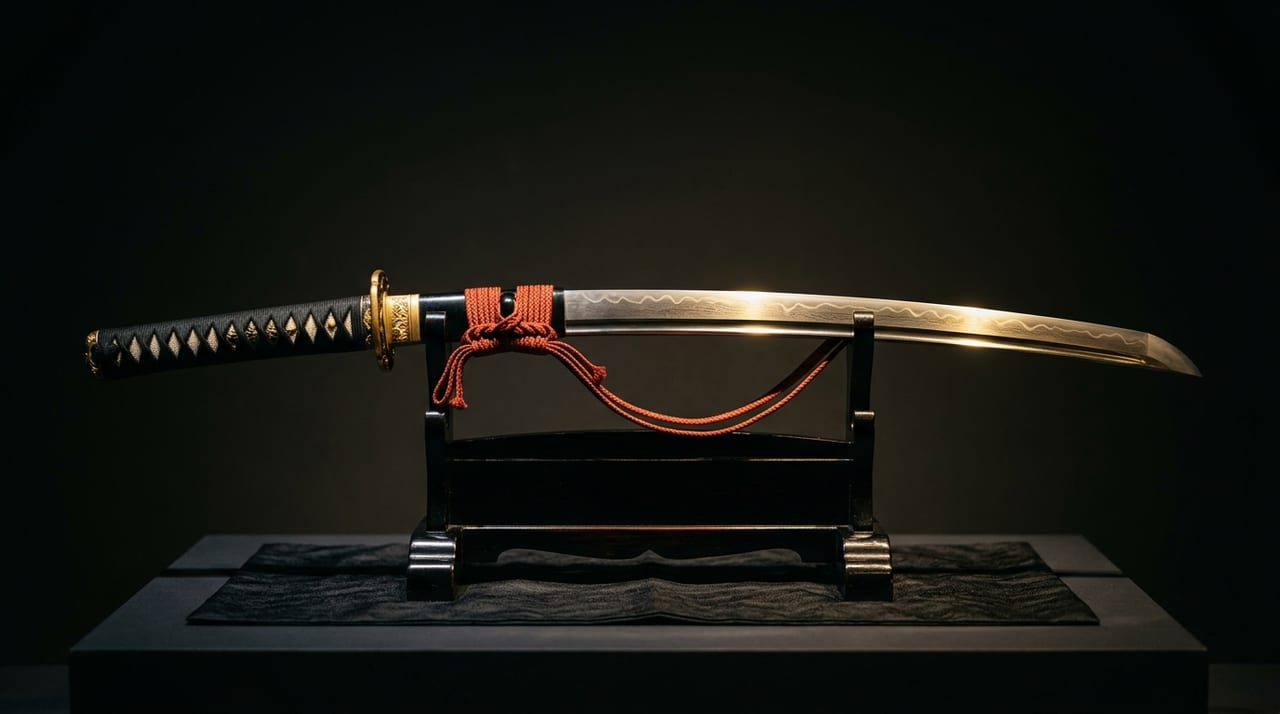
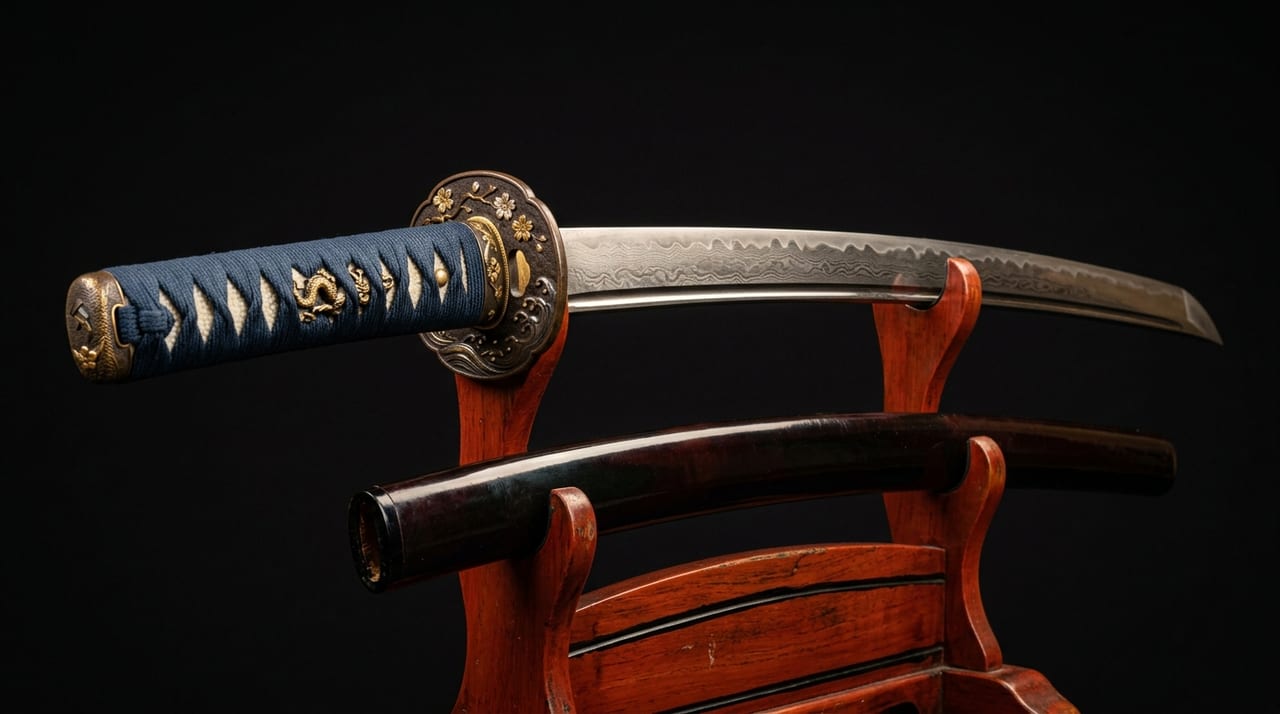
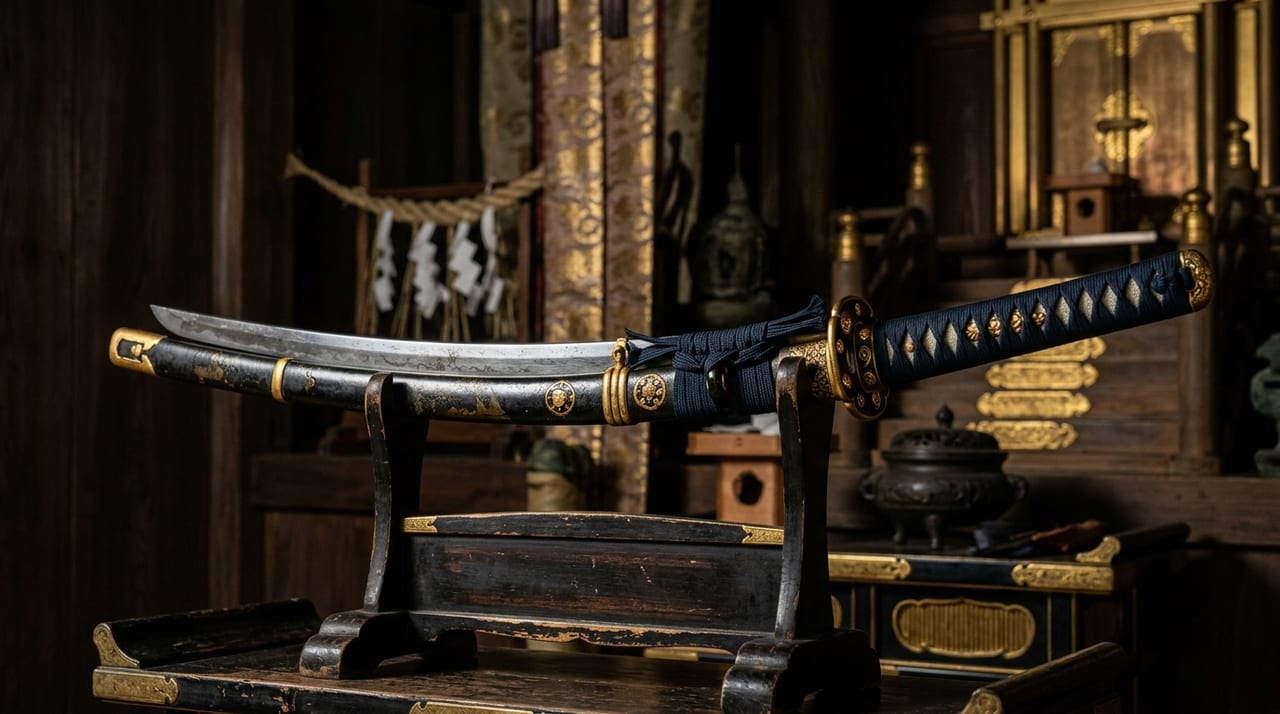
Sword Culture of the Three Tokugawa Branches: Domain Swordsmiths and Mounting Aesthetics of Owari, Kii, and Mito
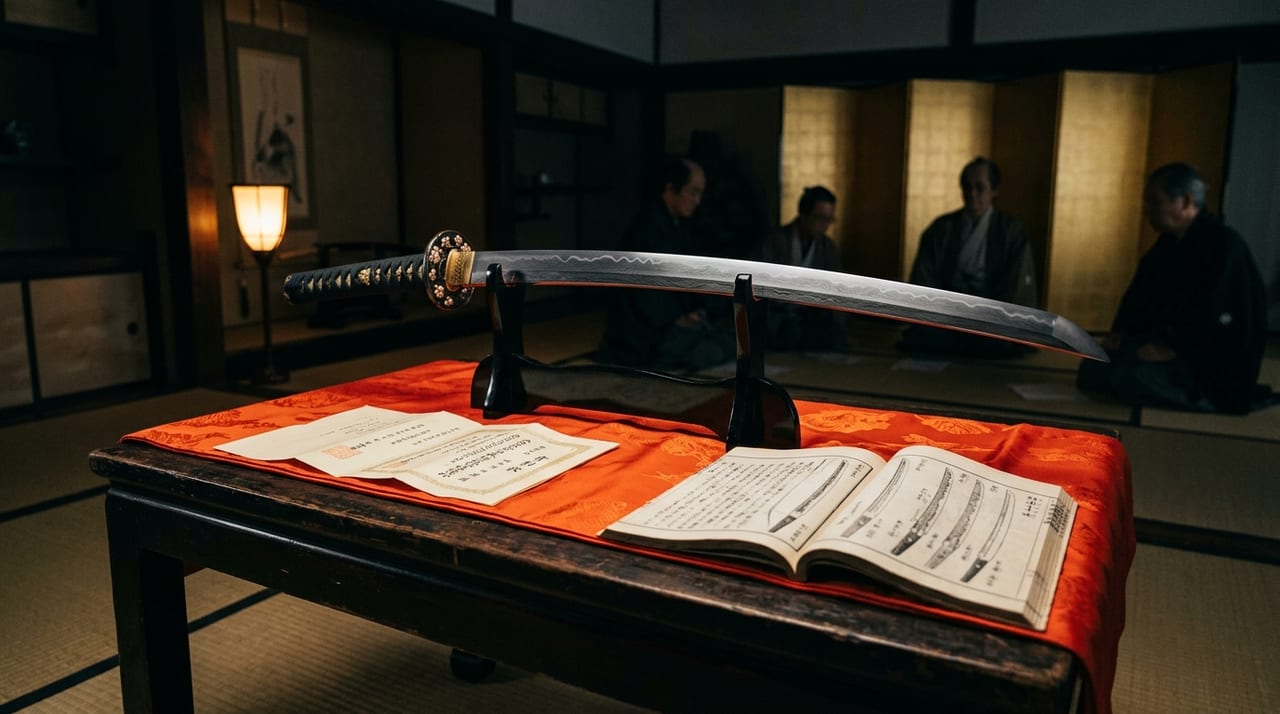 * Image is for illustrative purposes only.
Table of Contents
What Are the Go-Sanke? — The Three Great Domains That Supported the Tokugawa Shogunal House
The Go-Sanke refers to three powerful domains established to ensure the continuation of the Tokugawa shogunal bloodline into the future. These three houses were the Owari Tokugawa (Nagoya Domain, 620,000 koku), the Kishu Tokugawa (Wakayama Domain, 550,000 koku), and the Mito Tokugawa (Mito Domain, 350,000 koku). Each had the status to produce future shoguns and occupied a special position in bakufu politics as "collateral branches of the Tokugawa shogunal family."
Each of these three houses possessed distinct geographical and cultural backgrounds and cultivated their own distinctive styles and official swordsmiths in sword culture.
| House | Koku | Characteristics of Sword Culture |
|---|---|---|
| Owari Tokugawa | 620,000 koku | Absorbed blade-forging culture from Mino and Yamashiro and promoted practical forging |
| Kishu Tokugawa | 550,000 koku | Favored magnificent sword furnishings connected to maritime and trade culture in southern Kii |
| Mito Tokugawa | 350,000 koku | Held strong interest in "ancient blade revival" under the influence of Mito studies |
The differences in sword culture among the three houses were likewise reflections of each region's cultural individuality.
Owari Tokugawa Sword Culture — The Inheritance of Mino Tradition and the Legacy of Masamune Copies
The Owari Domain was one of the domains with the most extensive official swordsmith system regarding swords. The daimyo Tokugawa Yoshinao (the ninth son of Ieyasu and first Owari domain lord) possessed deep knowledge of swords and actively employed renowned swordsmiths. Notable among these were the successors of the Shizu Kaneuji line from Nōshū (Mino Province) and smiths of the Soshu tradition who later relocated to Owari.
The Owari Domain's sword collection is now systematically preserved at the Tokugawa Art Museum in Nagoya and is known as one of the world's premier Japanese sword collections, including numerous National Treasures and Important Cultural Properties. Particularly noteworthy is a short sword called "Shiro Izumi-no-Kami Masamune," which is said to be a work of Masamune that was transmitted to the Owari house and has been preserved by successive lords as their greatest treasure.
The Owari Domain sought to perpetuate within its territory the techniques of the Mino tradition, particularly the smithcraft of the Kanemoto (Magoroku Kanemoto) lineage known for the sanbon-sugi hamon. This represents an example of practical blade-forging techniques mass-produced in Mino Seki during the Sengoku period being repositioned as an authentic Owari Domain tradition during the peaceful Edo period.
Kishu Tokugawa Sword Culture — Magnificent Daimyo Furnishings and the Sword Culture of the Southern Seas
The Kishu Domain was a major domain centered on Wakayama in the Kii Peninsula and was also a unique domain that encompassed major religious centers such as Kumano and Koya-san within its territory. The characteristics of the Kishu Tokugawa sword culture lie in the fusion of magnificence and religious context.
The domain lords of Kishu generally encouraged martial arts and particularly emphasized horsemanship, spear techniques, and swordsmanship. As a result, the swords required from the official smiths of Kishu Domain had a stronger character as "practical blades capable of enduring martial exploits" rather than beauty. The sword furnishings (koshirae) of Kishu Domain were often relatively simple and devoid of unnecessary ornamentation, embodying a "pragmatic warrior's aesthetic."
A notable historical fact is that Tokugawa Yoshimune, the eighth daimyo of Kishu Domain, later became shogun (the eighth shogun). In Yoshimune's Kyoho Reforms, the frugality and resilience of the warrior class were emphasized, and a policy prioritizing "practical use" was adopted regarding swords. This thinking of Yoshimune was cultivated during his time in the Kishu Domain, and it can be said that the "pragmatism" of Kishu sword culture influenced bakufu policy itself.
Particularly well-known among the Kishu smiths is a group of swordsmiths from Echizen who relocated to Kii Province: craftsmen in the line of Echizen Yasutsugu's disciples are recorded to have been employed by the Kishu Domain.
Mito Tokugawa Sword Culture — Mito Studies and the Passion for Ancient Blade Revival
The Mito Domain had the lowest koku among the three houses (350,000 koku), yet possessed distinctive intellectual and cultural influence. In particular, Mito studies (Mito-gaku), which developed from the mid-Edo period onward, served as the source of the sonno-joi ideology and exerted great influence on the activists of the late Edo period.
One characteristic of Mito studies was archaism based on the principle of "learning from the ancients." This philosophy directly informed sword appreciation, and in the Mito Domain, a strong inclination developed to value the "ancient blades" from the Kamakura and Nanboku-cho periods over the "new blades" of the Edo period. The second daimyo, Tokugawa Mitsukuni, was the person who initiated the "Dai-Nihon-shi" (Great History of Japan), the first systematic history compilation project in Japan, and possessed high scholarly interest in ancient blades, encouraging sword collection and research within the domain.
Particularly well-known among the official smiths of the Mito Domain were the Mito school smiths tracing their lineage to Mito Masamitsu as their founder. The Mito school's characteristics were a style conscious of the Kamakura period Soshu and Yamashiro traditions, with jigane that produces nie and suguha hamon as their foundation. The alignment of the trend toward "ancient blade copies" that became popular in the Shinshintō period (late Edo) with Mito studies' "archaism" enabled the Mito school smiths to maintain a certain level of support until the end of the bakufu.
What the Go-Sanke's Sword Culture Left in Japanese Sword History
The sword cultures of the Go-Sanke influenced the Edo period sword industry and aesthetics from different directions. Owari functioned as a center for the inheritance of Mino and Soshu techniques, Kishu presented the aesthetics of practical warrior sword furnishings, and Mito strengthened scholarly interest in ancient blades and the direction of ancient blade copies.
The sword collections of the three houses are now dispersed and preserved: the Owari collection at the Tokugawa Art Museum, the Kishu collection at the Wakayama Prefectural Museum and Tokugawa Museum, and the Mito collection at the Ibaraki Prefectural History Museum and other locations, all of which hold importance as primary sources for Japanese sword research. The fact that the Go-Sanke as a political framework also functioned as an institutional foundation for maintaining regional diversity in sword culture is a noteworthy fact even from a modern perspective.