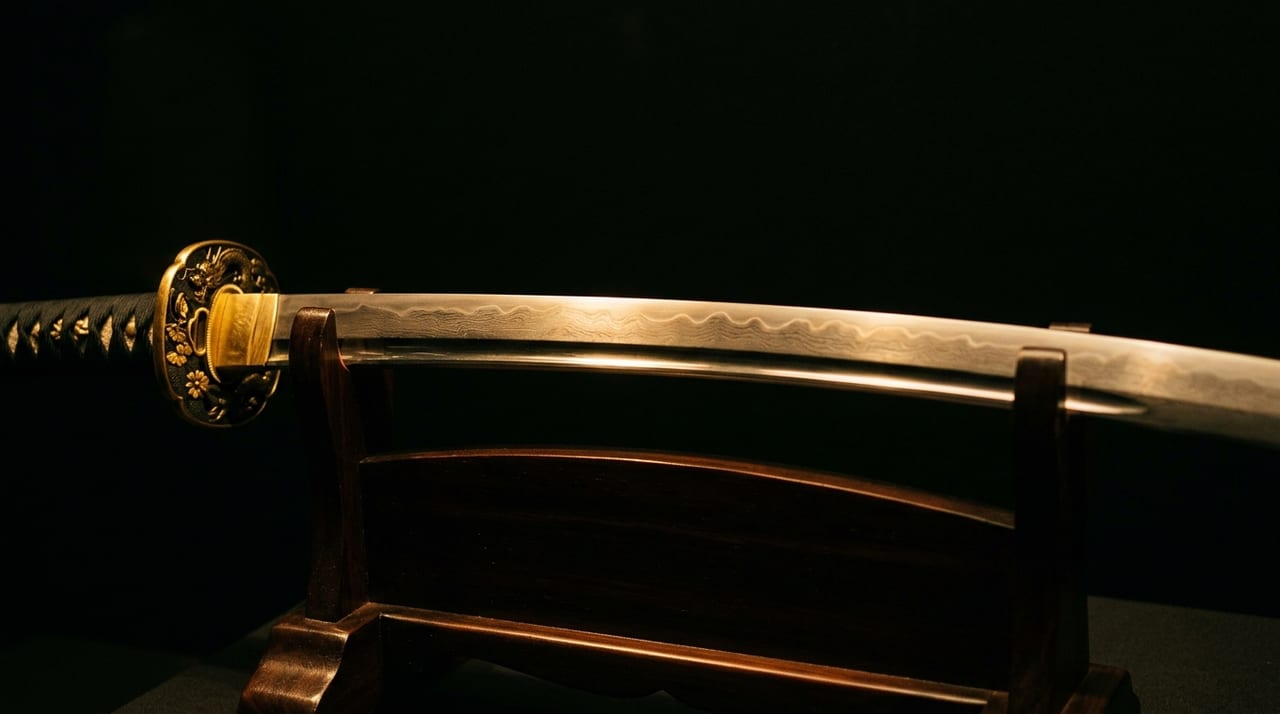
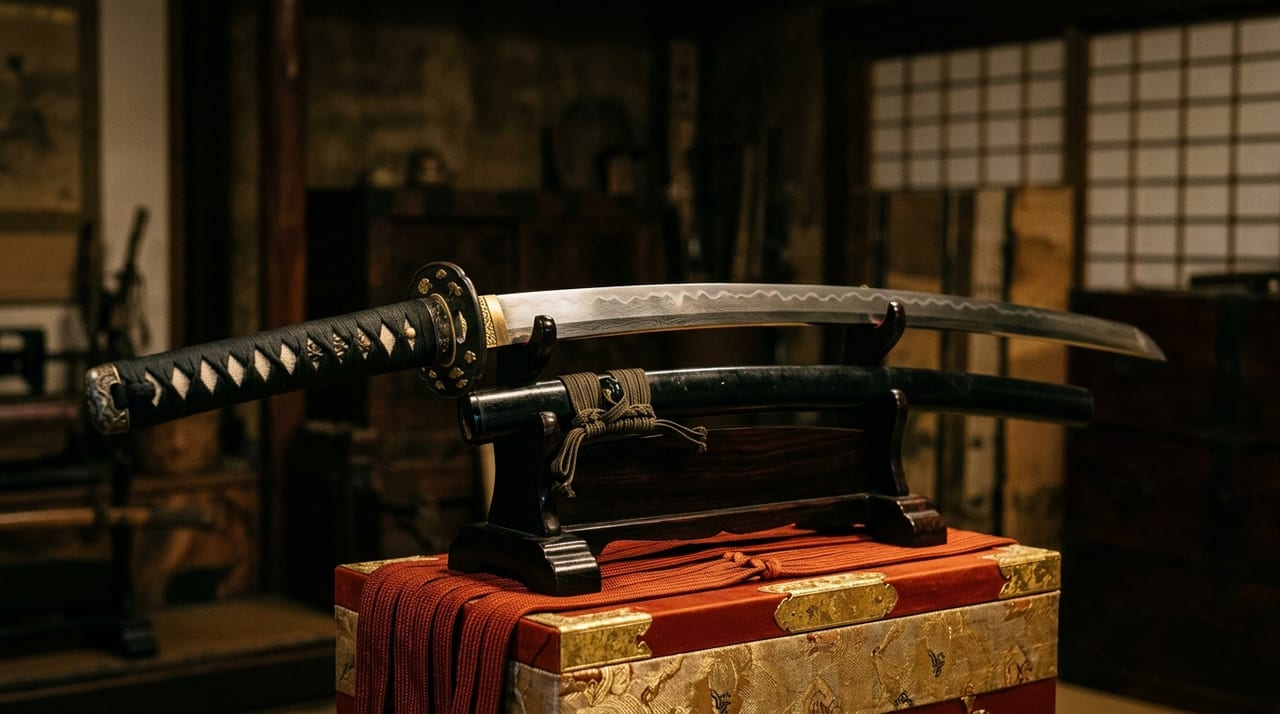
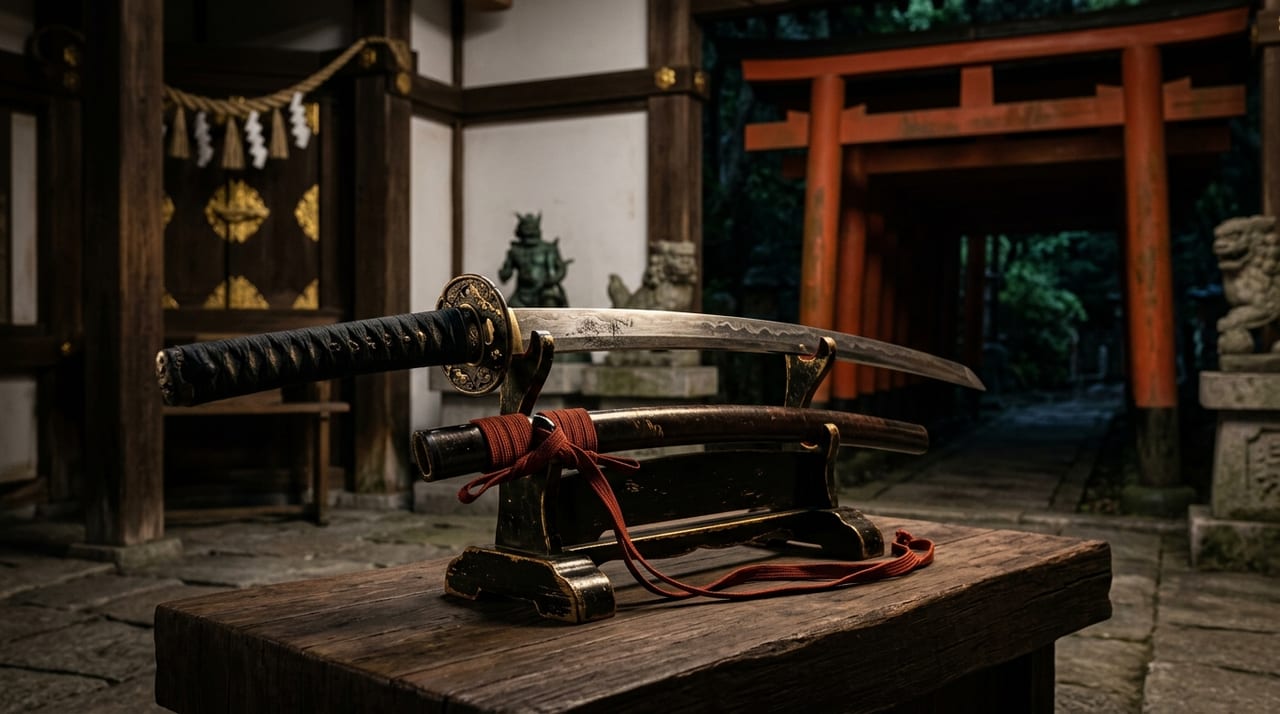
Myths and Truths about Nihontō — Correcting Common Misconceptions
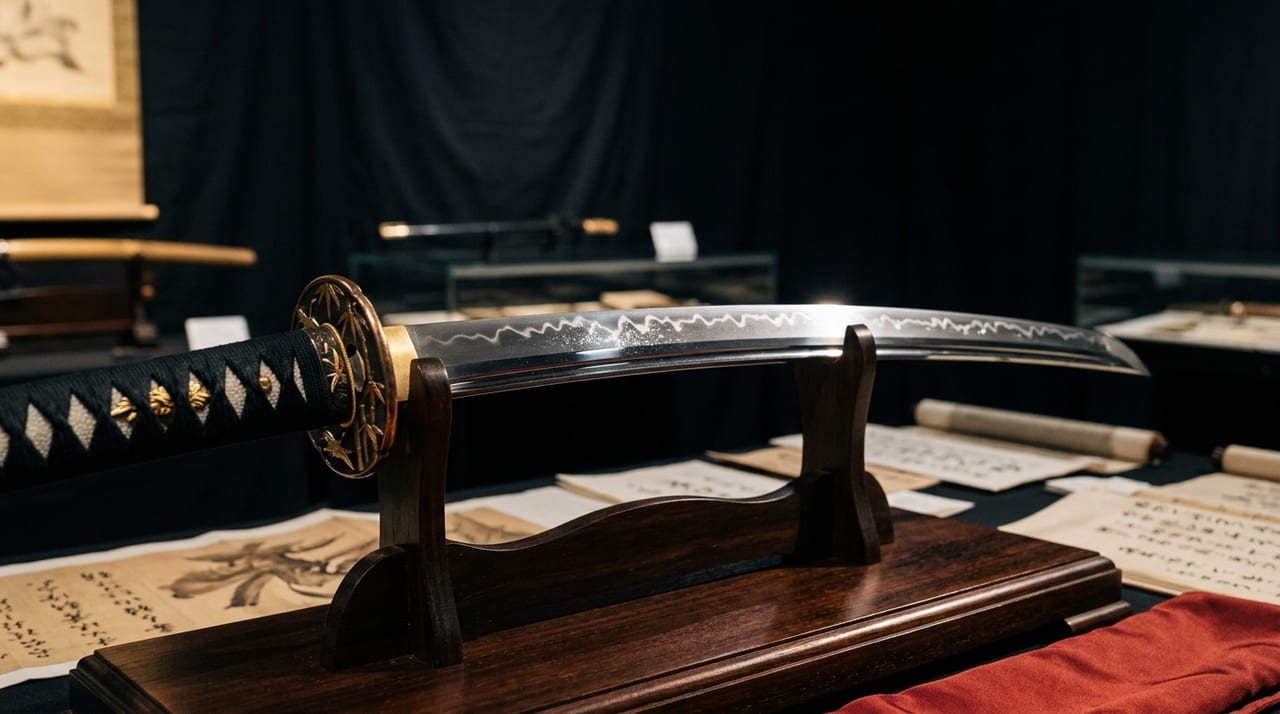 * Image is for illustrative purposes only.
Table of Contents
Nihontō Are Surrounded by Romance
Nihontō are surrounded by a great many romantic legends, and through films, novels, and games many people have formed vivid impressions of the sword. Yet among these creative portrayals there is no shortage of depictions that differ greatly from actual nihontō. By acquiring accurate knowledge, one can arrive at a far deeper understanding of the true value and beauty of the nihontō.
Myth 1: A Nihontō Can Cut Through Anything
Depiction in fiction: In films and anime, swords are shown slicing an iron helmet in two with a single stroke, or piercing a stone wall with ease.
Reality: The nihontō is an extremely delicate instrument. It certainly possesses a sharp edge, but contact with hard substances will quickly chip it. The design philosophy of tōkō also placed greater emphasis on efficiently cutting the human body than on all-purpose capability. Examination of wear marks on old swords frequently reveals chips and rounded edges, testifying to the clear limitations the sword faced in actual combat. Sharpness and strength are inherently in a trade-off relationship: push cutting performance to its extreme and the blade becomes brittle; prioritize strength and cutting performance suffers. By adjusting the degree of yaki-ire and devising the cross-sectional shape of the edge, tōkō brought these conflicting demands into balance at a razor-thin equilibrium.
Myth 2: A Nihontō Never Breaks
Depiction in fiction: From the idealized phrase "does not break, does not bend, cuts well," people assume that a real sword will absolutely never break.
Reality: A nihontō can break. This is not a matter of quality but derives from the physical properties of steel as a material. When force concentrates at the edge during violent clashing, the possibility of breakage cannot be avoided. Close examination of old swords reveals some that bear repair marks (joints). Edo-period documents record repair methods for broken swords in detail, demonstrating that breaking was by no means uncommon. It is important to understand that the phrase "does not break, does not bend, cuts well" represents the ideal that tōkō aspired to — a slogan expressing the high level of perfection to be achieved — and is not a guarantee of performance that transcends the laws of physics.
Myth 3: Muramasa Is a Cursed Sword
Depiction in fiction: Swords by Muramasa are called "cursed swords," and the legend that they bring misfortune to the Tokugawa clan spread widely, leading people to believe the swords themselves were cursed.
Reality: Muramasa was a real tōkō who was active from the Sengoku period through the early Edo period and was an exceptionally skilled maker of practical swords. The label "cursed sword" is nothing more than a later fictional invention. When several bloody incidents involving the Tokugawa clan occurred, the retroactive theory that "it was because a Muramasa sword had been used" spread widely. In reality, swords by Muramasa were prized by many samurai and were known for their excellent cutting ability and durability. Behind the spread of such tales lies the consideration that the works of skilled tōkō were more likely to be used on the battlefield and in daily life, and consequently more likely to be present at various incidents. By separating legend from historical fact, the technical reputation that Muramasa as a tōkō genuinely possessed becomes more accurately visible.
Myth 4: Tamahagane Is the World's Finest Steel
Depiction in fiction: Tamahagane, produced by Japan's ancient steelmaking method, is emphasized as the finest steel in the world.
Reality: Tamahagane is indeed a material well suited to the production of nihontō. It contains relatively few impurities, can be worked flexibly by tōkō, and yields ideal characteristics through heat treatment. However, compared with modern industrial steel it is inferior in some respects of mechanical performance (tensile strength, hardness, etc.). The true value of tamahagane lies not in superiority as a material per se, but in the fact that a tōkō's creativity is expressed through the traditional manufacturing process. In other words, it is not tamahagane itself that is "the world's finest" — rather, it is the sword that a tōkō forges using tamahagane that is "an artwork without parallel in the world." The true value lies not in comparing the performance of the material by figures alone, but in the skill grounded in the tōkō's experience and sensibility — the skill of how to make the most of that material in crafting a single sword.
Myth 5: A Nihontō Is Made by a Single Tōkō
Depiction in fiction: The common image is of a master tōkō doing everything from selecting materials to the finished product entirely alone.
Reality: The production of a nihontō is built upon an extensive system of division of labor. It is true that the tōkō forges the steel, but many craftsmen are involved in the finished sword.
- Togishi: polishes the blade
- Sayashi: produces the saya
- Tsubakō: crafts the tsuba
- Tsukamaki craftsman: completes the tsuka
Only with the skills of all these craftsmen can a fine sword be completed. The "production of a nihontō" is the fruit of collaboration by a group of craftsmen centered on the tōkō. From the stage of selecting materials to the stage of finishing, each process passes through the hands of craftsmen who specialize in it, and if any process is missing, the result cannot become the highly accomplished single sword we see today.
Myth 6: Authenticity Can Be Determined by Appearance and Impression Alone
Depiction in fiction: At antique markets and in period dramas, scenes in which a connoisseur instantly identifies the authenticity and provenance of a sword at a single glance are commonly depicted.
Reality: Determining the authenticity and provenance of a nihontō requires comprehensive examination — grounded in specialized expertise — of many elements: the hamon, the condition of the jigane, the shape of the nakago, the style of the mei, and more. Because reproductions that are difficult for a layman to distinguish and swords that have been altered in later times also exist, a kanteisho issued by a specialist institution serves as an important document corroborating the sword's period and history. Rather than judging authenticity and value by visual impression and atmosphere alone, referring to reliable information grounded in expert appraisal is the first step toward a proper engagement with nihontō.
Myth 7: Only a Special Master Can Maintain a Nihontō
Depiction in fiction: Sword maintenance tends to be depicted as a secret art — a special ritual that a layperson is not even permitted to touch.
Reality: The basic practices of sword maintenance are something anyone can carry out once they have acquired the correct knowledge. By observing the following basics, the condition of a sword can be kept in good order.
- Do not touch the blade directly with bare hands
- Store away from damp locations
- Replenish the oil over time
Naturally, handling a drawn blade requires ample care, but as long as one follows the correct procedure, even an enthusiast without special qualifications can carry out everyday maintenance without difficulty. Learning the correct practices of sword care is one of the indispensable fundamentals for a long relationship with the nihontō as a cultural asset.
The New World Opened by Accurate Knowledge
By correcting the myths about nihontō, the sword becomes all the more fascinating. It is precisely because one understands the limits of its hardness that the refinement of a design that extracts maximum performance within those constraints becomes visible. It is precisely because one knows the possibility of breakage that the reliability of a sword that did not break and was used in battle time and again can be understood more vividly. It is precisely because one knows of the collaboration of a group of craftsmen that the great depth of heart and skill imbued in a finished sword can be felt. It is precisely because one knows that determining authenticity is work requiring specialist expertise that the weight of a kanteisho as evidence can be more deeply understood. Accurate knowledge is what helps one understand the true value of nihontō more profoundly.
Having accurate knowledge about nihontō is the starting point for understanding the sword's true value. Rather than being swayed by myths, holding a recognition grounded in scientific evidence and historical fact is indispensable for the true sword enthusiast. By combining both a scientific perspective and a historical context, one can enjoy nihontō — that complex and richly layered cultural product — more deeply and more sincerely. Knowledge is the foundation of true sword appreciation. The true form of the nihontō that becomes visible beyond the myths is in fact even more profound and beautiful than any romantic fantasy. Refining both empirical knowledge and sensibility will be the path to genuine richness in the world of the sword.