Hamon Failures and Defects — Causes and Prevention of Nie-kuzure, Hada-kuzure, and Ha-gire
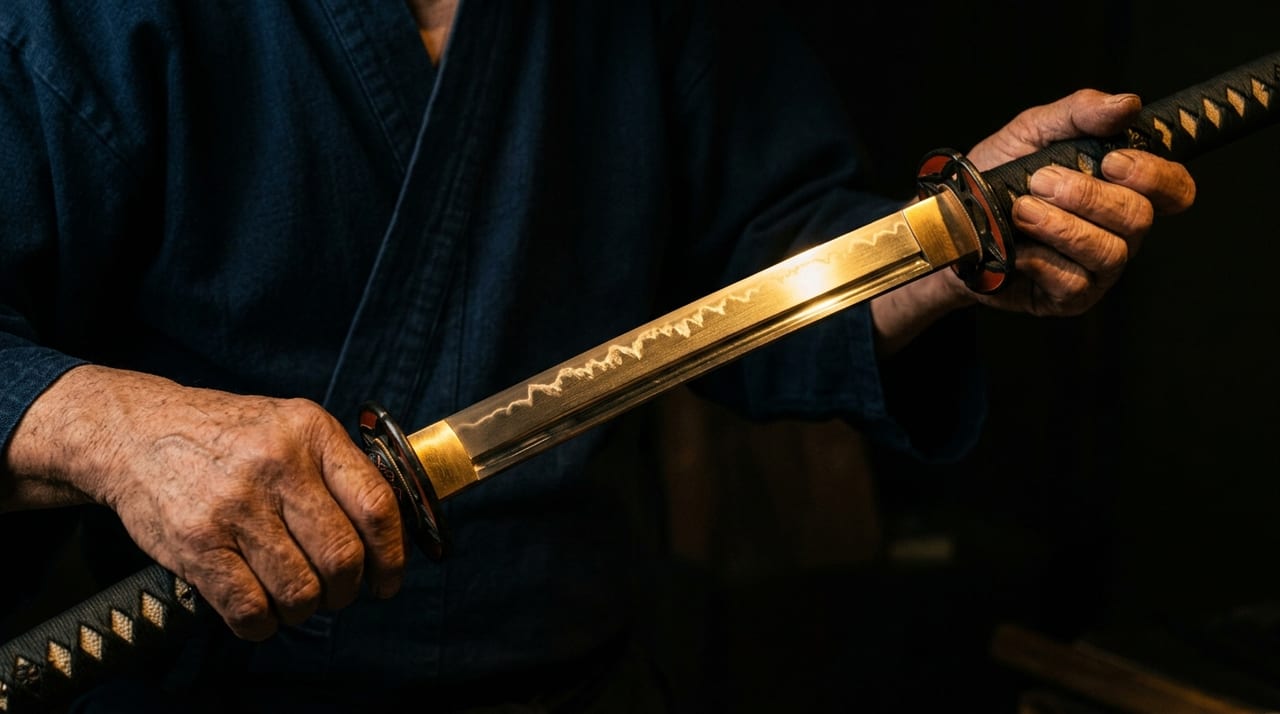 * Image is for illustrative purposes only.
Table of Contents
Hamon Defects — The Science of Sword Forging That Failure Teaches
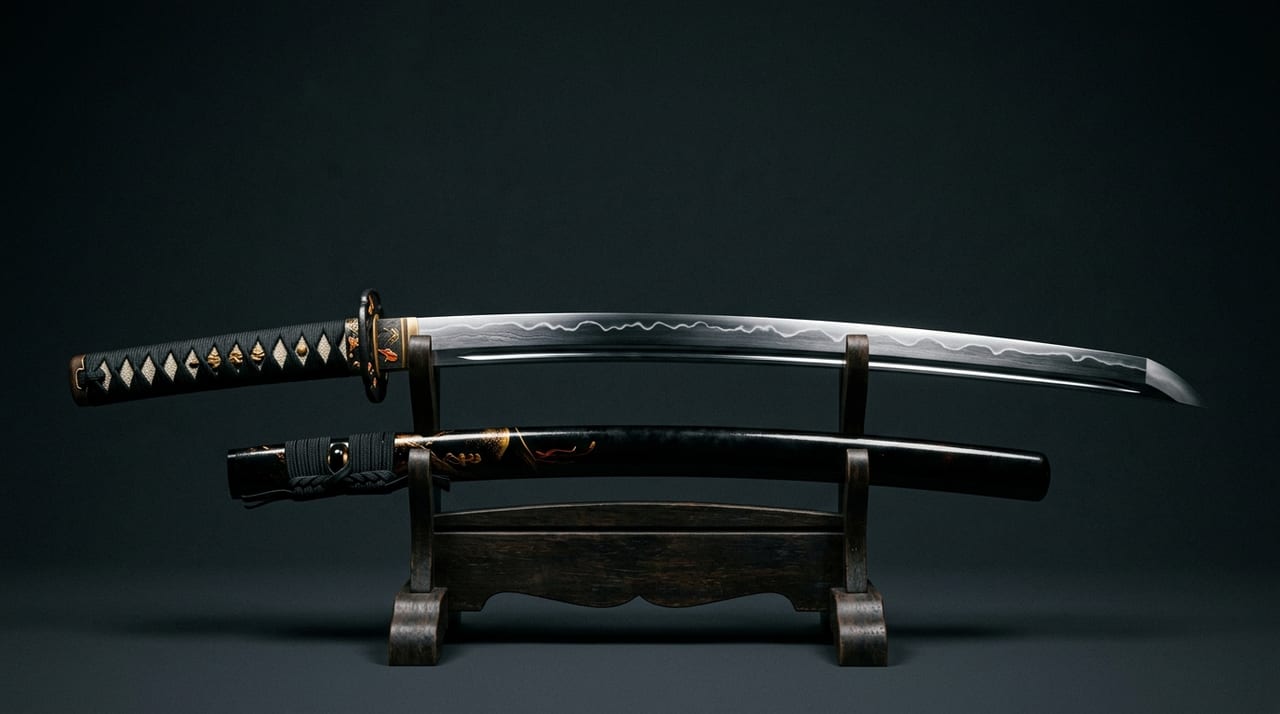
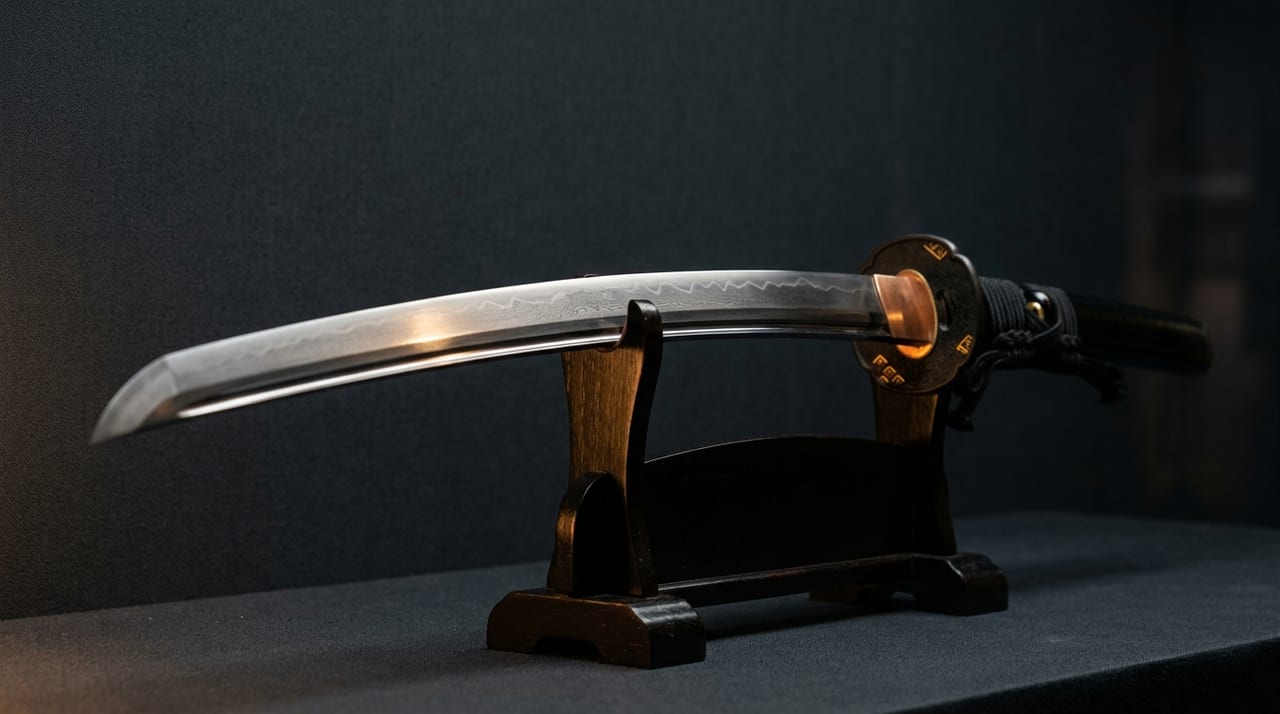
The hamon of a Japanese sword is born in the yaki-ire (quenching) process. The blade is coated with clay, heated in a furnace, and rapidly cooled in water or oil — through this process, the steel of the blade edge (ha side) and mune (back side) transforms into different metal microstructures (martensite vs. pearlite), and the "hamon" appears at the boundary.
This process is the most difficult and highest-risk among all tōkō techniques. Minor errors in temperature, tsuchioki precision, and cooling speed produce defects in the hamon.
This article takes up the three representative hamon failure examples — nie-kuzure, hada-kuzure, and ha-gire — and details their mechanisms of formation, prevention techniques, and effects on appraisal.
Nie-kuzure — The Phenomenon of Collapsing Hamon Luster
What Is Nie-kuzure
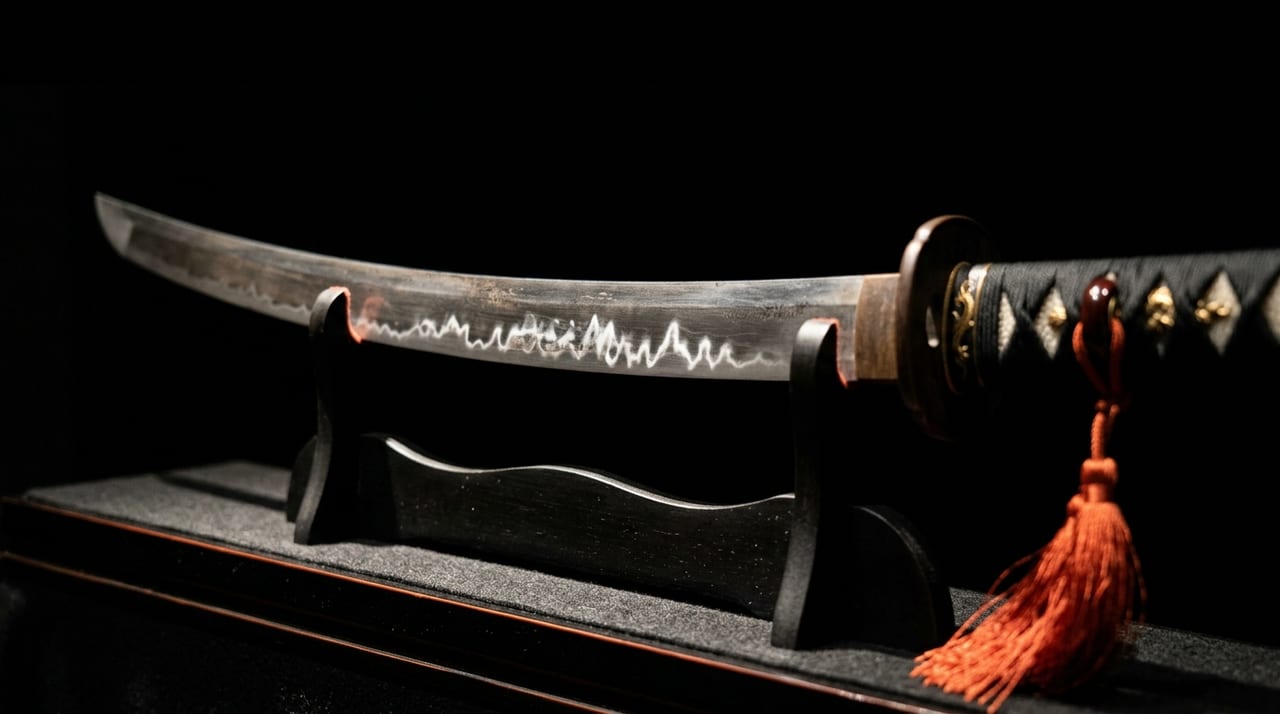
Nie is one of the luster elements of the hamon: particle-like brilliance (the phenomenon where martensite crystal particles are visible) that appears along the hamon edge. Normal nie lines up as uniform, beautiful particles along the hamon edge.
Nie-kuzure refers to the condition where these nie particles are not uniform but distributed irregularly, as if crumbled. Areas where particles are overly concentrated and areas where they have disappeared coexist, disturbing the hamon line.
Mechanism of Nie-kuzure Formation
Nie-kuzure occurs primarily from the following causes.
- Uneven heating temperature: If yaki-ire is performed when different parts of the blade have not reached uniform temperature in the furnace, different microstructural transformations occur in different areas. In areas that were too hot, particles become coarse and aggregate; in areas that were too cool, particles do not form.
- Uneven flame exposure: Especially when quenching long tachi, if the furnace flame does not reach the entire blade uniformly, the temperature distribution becomes uneven. Even with modern electric furnaces, the temperature difference between the root and tip of a long blade is an unavoidable challenge.
- Uneven clay thickness: If the clay applied to the blade before yaki-ire is not of uniform thickness, differences in cooling speed arise, causing uneven nie formation.
Prevention Techniques
Skilled tōkō prevent nie-kuzure by the following methods.
- Precise furnace temperature management: Stabilize furnace temperature over an extended period, confirm from "blade color (nearly uniform orange to red throughout)" that the entire blade has reached uniform temperature, then perform yaki-ire. This temperature check is an experiential visual judgment ("irome"), which requires a skilled tōkō.
- Tsuchioki precision: Maintain consistency in thickness when applying clay thinly on the blade edge and thickly on the mune. Tsuchioki is done with brushes, spatulas, and similar tools, minimizing variation in clay amount for each area.
- Blade orientation and furnace insertion method: Standardize the angle and direction of inserting the blade into the furnace so as to standardize how flame reaches it.
Hada-kuzure — The Phenomenon of Collapsing Jigane Grain Pattern
What Is Hada-kuzure
Jihada is the grain pattern of the steel that appears on the flat surface of the blade. It is the layered steel structure formed by orikaeshi tanren (folding) as it appears on the viewing surface, with varieties including itame, masame, mokume, ayasugi-me, and others.
Hada-kuzure refers to the condition where this jihada grain pattern has become crumbled, disordered, or irregular.
Mechanism of Hada-kuzure Formation
- Excessive orikaeshi tanren: If orikaeshi tanren is repeated too many times, the steel layers become too fine and the grain pattern disappears or becomes overly refined. Conversely, too few times results in a coarse grain (ara-me hada).
- Error in tanren temperature: If the heating temperature of the steel during orikaeshi tanren is too high, the steel structure becomes homogenized and the grain pattern is lost (a condition called "down structure" or "over-fired").
- Contamination with impurities: If the raw material (tamahagane, iron) contains many impurities (sulfur, phosphorus, etc.), segregation (hensei: the phenomenon where specific elements concentrate locally) occurs during tanren, causing hada-kuzure.
- Residual moisture and slag: If the "noro" (slag: lumps of impurities) produced when striking the steel during orikaeshi tanren are not completely expelled, residual slag remains inside the steel, causing hada-kuzure and surface cracking.
Prevention Techniques
- Tamahagane quality selection: Quality control at the raw material stage is the fundamental prevention measure. When tōshō receive tamahagane, they break pieces and examine the cross-section, visually assessing carbon distribution and impurity content to select which portions to use.
- Tanren temperature management: Judge temperature from the color of the steel (yellow to white) and maintain a range that is not too high (approximately 900–1,100°C).
- Appropriate number of tanren repetitions: While it varies by tōkō, orikaeshi tanren is generally done approximately 8–15 times as a guideline. Avoid excessive repetitions.
Ha-gire — The Most Serious Hamon Defect
What Is Ha-gire
Ha-gire (also read ha-kire) is the condition where a split or crack occurs in the hamon line. It is a phenomenon where the hamon is interrupted or microscopic cracks appear in the blade, and is one of the most serious defects that directly affects the strength of the sword.
Mechanism of Ha-gire Formation
- Thermal shock during yaki-ire: When the blade is rapidly cooled during yaki-ire, a sudden temperature difference and expansion difference arises between the blade edge area (high temperature, high carbon) and the mune area (relatively low temperature, low carbon). If this thermal shock is excessive, microscopic cracks enter the blade.
- Excessive heating temperature: If the heating temperature before yaki-ire exceeds the optimal temperature (approximately 850–950°C), the volume change during martensite transformation becomes abrupt, making cracks more likely.
- Locally thin tsuchioki: If the clay on a specific area of the blade is too thin, that area cools more rapidly than other areas, causing localized thermal shock.
- Quenching medium temperature: In water quenching, if the water temperature is too low, cooling speed is too fast, increasing crack risk. Managing water temperature (generally approximately 15–25°C) is important.
Prevention Techniques
- Strict heating temperature management: Master "irome" — the experiential technique of judging temperature from the color of the blade — and maintain the optimal temperature range. Among modern tōkō, some also use electronic thermometers as a supplementary tool.
- Uniform tsuchioki: Maintain the optimal ratio of clay thickness between the blade edge and mune. Follow the basic principle of thin clay on the blade edge (allowing heat to escape for rapid cooling) and thick clay on the mune (insulating for slow cooling), while avoiding locally too-thin or too-thick areas.
- Water temperature management: Keep the temperature of the water (or oil) for yaki-ire constant. Especially when quenching multiple blades in succession, water temperature rises, so checking and adjustment are necessary.
- Choosing abura-yaki (oil quenching): Compared to water quenching, oil quenching has a more gradual cooling speed and a lower crack risk from thermal shock. Many tōkō choose oil quenching for long tachi and complex hamon patterns in particular.
Defect Detection and Its Effect on Appraisal
Methods of Defect Detection
Hamon defects are detected by the following methods.
- Visual inspection during viewing: Observe the blade while tilting it under a good light source (sunlight or high-quality fluorescent lighting). Nie-kuzure and hada-kuzure can be assessed visually.
- Detection of ha-gire: The more serious ha-gire appears as a black line (the crack line) when light strikes the blade at a specific angle. Skilled togishi and appraisers precisely grasp the location and extent of ha-gire.
Effect on Appraisal Value
- Nie-kuzure and hada-kuzure: These lower evaluation as defects that impair aesthetics, but in many cases do not directly affect the safety of the sword (risk of fracturing during use).
- Ha-gire: This is the most serious defect affecting the structural integrity of the sword. If ha-gire is present, there is a danger of the blade breaking during use (such as tameshigiri). In NBTHK examination, ha-gire is also a major point-deduction factor, and swords with significant ha-gire face difficulty in receiving Jūyō Tōken designation.
- Repairability: Nie-kuzure and hada-kuzure can sometimes be improved through polishing. Ha-gire can theoretically be fundamentally repaired (re-quenching, etc.), but for famous swords, re-quenching carries the risk of compromising the original form, so careful judgment is required.
Conclusion — The Science of Sword Forging Learned from Failure
Nie-kuzure, hada-kuzure, and ha-gire — these three defects vividly illustrate the complexity of Japanese sword forging. All of them arise from "a combination of invisible factors" — temperature management, tsuchioki precision, and raw material quality.
Skilled tōkō learn from long years of failure experience, in their very bodies, "why defects occurred," and accumulate the techniques to prevent them. Behind a "well-executed hamon" free of defects lie countless failures and improvements.
When viewing the hamon of a Japanese sword, in a perfectly ordered nie, a uniform jihada, and an unbroken hamon line, is concentrated the meticulous care and advanced skill that the tōkō devoted to avoiding defects.