Togishi Qualifications and Training — Cultivating the Craftspeople Who Revive Japanese Swords with Whetstones and Water Alone
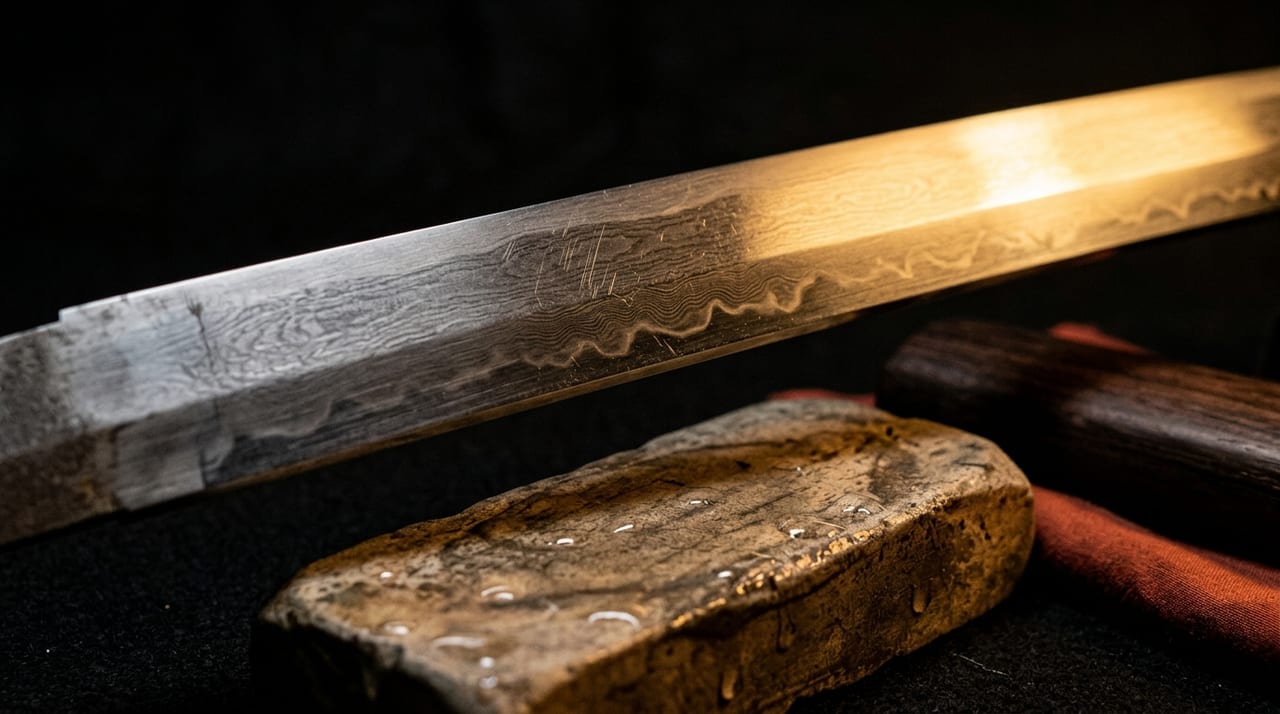 * Image is for illustrative purposes only.
Table of Contents
What a Togishi Is — A Specialist Who Revives the Japanese Sword
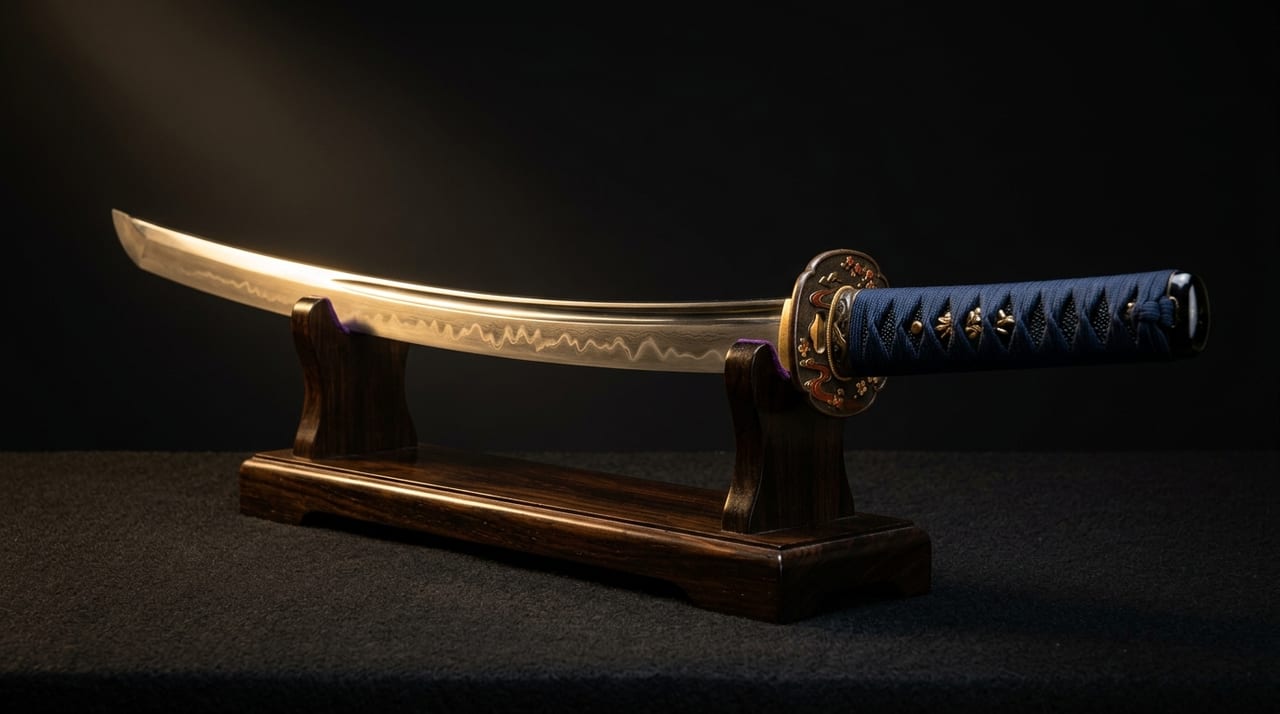
A togishi is a specialist craftsperson who draws out the beauty of the Japanese sword and brings the blade to its finest condition. If the tōshō creates a sword by forging tamahagane, then the togishi is the craftsperson who reveals that latent beauty using nothing but whetstones and water. The grain pattern of the blade's jigane, the nie and nioi of the hamon, the crisp ridge line of the shinogi — all of these take visible form for the first time through the togishi's skill.
The togishi's work is not mere "polishing." It is a highly technical practice with two dimensions: the "form togi" that corrects the sori and shape of the blade, and the "aesthetic finishing" that makes visible the structural makeup of the steel. An incorrect polish can severely diminish the value of a sword, so the togishi's skill is directly tied to the market value of a blade.
The Path to Becoming a Togishi — The Reality of Training
There is no legally mandated examination system for acquiring togishi qualifications; the master-apprentice system (shitei seido / apprenticeship system) in which one trains under a master (oyakata / shishō) remains in place today. The general progression of training is as follows.
- Entry / Apprentice Period (Years 1–3): One enters the master's workshop and begins with cleaning the studio, caring for tools, and managing whetstones. During this period, actual polishing is often not permitted; it is spent observing senior craftspeople at work and learning the nature of whetstones through the body.
- Early Training Period (Years 3–7): Skills are built gradually, beginning with "aratogi" (rough polishing) of the blade. One starts with gendaitō and relatively lower-value swords and progresses step by step to more difficult pieces. This is a critical period for learning the types and uses of whetstones and ingraining in the body the proper pressure to apply to each part of the blade.
- Intermediate Period (Years 7–15): The stage at which aesthetic finishing polish (hon-togi / shiage-togi) is mastered. This is a period of accumulating advanced techniques such as "hatori" — drawing out the hamon to the fullest — and "ji-togi," which expresses the grain pattern of the jigane.
- Independence / Full Proficiency (15–20+ Years): The stage at which the master acknowledges one's readiness to work independently, and one opens one's own workshop or works as a craftsperson receiving commissions directly from museums and sword dealers.
What is consistently demanded throughout each stage of training is the power of observation — the ability to assess the condition of the whetstone and the nature of the sword before ever touching the blade. Even among swords bearing the same mei, each individual sword differs in the hardness and degree of fatigue of its steel, so the longer a togishi builds experience, the sharper their judgment for "looking before polishing" becomes. This judgment, which is difficult to reduce to a manual, is precisely the reason why the period of training extends over so many years.
The Whetstones a Togishi Uses — The Science and Selection of Stone
The core of the togishi's skill lies in knowledge of whetstones and how to use them. Whetstones are broadly divided into "natural whetstones" (tennen toishi) and "synthetic whetstones" (jinzō toishi), but natural whetstones are considered essential for the finishing of Japanese swords.
- Arado (rough whetstone) and nakado (medium whetstone): Used in the process of correcting the shape of the blade and removing major scratches. These relatively coarse-grit whetstones are also used for adjusting the angle of the cutting edge and correcting sori.
- Uchigumori-do: Used in the important process of sharpening the outline of the hamon. Whetstones produced in Kyoto Prefecture are considered the finest, and their price has surged in recent years due to declining output from quarries.
- Shiage-do (finishing whetstone) and nagura-do: The finest-grit whetstones used in the final finishing. This is the process that draws out the beauty of the jihada to the fullest and requires skilled craftsmanship.
A special technique called "yubi-togi" — manipulating small pieces of whetstone with the fingertips — is also used for polishing near the habaki base and the cutting edge.
In the final stages of finishing, in addition to whetstones, there is also the process called "nugui," in which an extremely fine powder dissolved in oil is worked into the blade surface, as well as "hatori" to sharpen the definition of the hamon and "ji-tsuya" to enhance the appearance of the jihada. These are delicate operations that adjust the minute patterns produced by the reaction between whetstone particles and steel into a form perceptible to the human eye, and they are a different kind of skill from forceful abrasion. Because even a slight change in the coarseness of the whetstone or the angle at which it is applied can dramatically alter the appearance of the hamon, togishi develop judgment for selecting the right whetstone at each stage of the process.
The NBTHK Certification System — How the Public Qualification Works
NBTHK has established its own examination and certification system for togishi, which functions as an objective evaluation of technical level.
- Hozon Tōken polishing: A standard certifying polishing skill at the level required to pass NBTHK appraisal review. This is the stage that can be considered the minimum independent qualification as a togishi.
- Tokubetsu Hozon / Jūyō Tōken polishing: A level qualifying one to handle the polishing of swords with cultural property value. Only a limited number of togishi nationwide can work at this level.
- Tokubetsu Jūyō Tōken polishing: The highest level, entrusted with the polishing of swords of kokuhō (National Treasure) or jūyō bunkazai (Important Cultural Property) grade. It is said that only a few dozen togishi across all of Japan currently reach this level.
In addition, several togishi have been designated "Selected Conservation Technique Holders" by the Agency for Cultural Affairs, and they carry on the tradition of this craft under national protection.
The Modern Togishi Industry — Successor Shortage and Challenges
The estimated number of active togishi across Japan is around 300 to 500, of which an even smaller number can make a full livelihood as full-time craftspeople. Although demand for the polishing of art swords remains stable, the length of the training period and the low income during that time make it difficult to attract young entrants, and the shortage of successors has become a serious problem.
Income during the training period is often limited to a few tens of thousands of yen per month, and economic hardship continues until one achieves independence after 15 to 20 years of training. On the other hand, once independent, some craftspeople earn hundreds of thousands to over one million yen for polishing a single Jūyō Tōken, and income disparities by skill level are significant.
As overseas collectors and domestic sword enthusiasts continue to grow in number, demand for high-level togishi remains strong. Scholarship and subsidy programs to foster successors are being put in place in some areas, but they have yet to fundamentally resolve the shortage of practitioners.
What Sword Buyers Should Know About Evaluating a Polish
Even from the perspective of someone purchasing or owning a Japanese sword, the togishi's skill is not an unrelated matter. For a sword that has already received an aesthetic finishing polish, maintaining that condition is itself important to preserving the blade's value. Conversely, a sword whose blade has been worn thin by repeated polishing, or one that has developed nicks or rust, may require re-polishing, and the judgment of whether this is necessary should properly be left to an experienced togishi. When considering a purchase, confirming with the seller when the last polishing was carried out and whether the sword is in aesthetic finishing condition or practical-polish condition will make it easier to plan for maintenance after purchase. It is also worth understanding that even when a NBTHK kanteisho (appraisal certificate) is included, it is an assessment of the sword itself — its authenticity, period, and maker — and does not in itself guarantee the condition of the polish.
Caring for a Blade and Deciding When to Re-polish
Regular care is also indispensable for keeping a blade in beautiful condition. Applying a thin coat of chōji oil to prevent rust from moisture, then removing old oil and dirt with uchiko before applying fresh oil — this basic maintenance is considered work that the owner can carry out themselves. However, treating rust that has progressed, or nicks that have developed, falls within a domain that should be referred to a togishi with specialist knowledge; amateur polishing carried out without due care can instead damage the blade and diminish its value as a sword. Determining whether re-polishing is necessary is also most reliably done by relying on the eye of an experienced togishi. Combining daily care with polishing by a specialist can be said to be the foundation for passing on a Japanese sword in good condition over a long period of time.