The Work of the Shirasayashi — Technique, Material Selection, and Cultural Property Restoration in Hōnoki Koshirae for Protecting the Japanese Sword
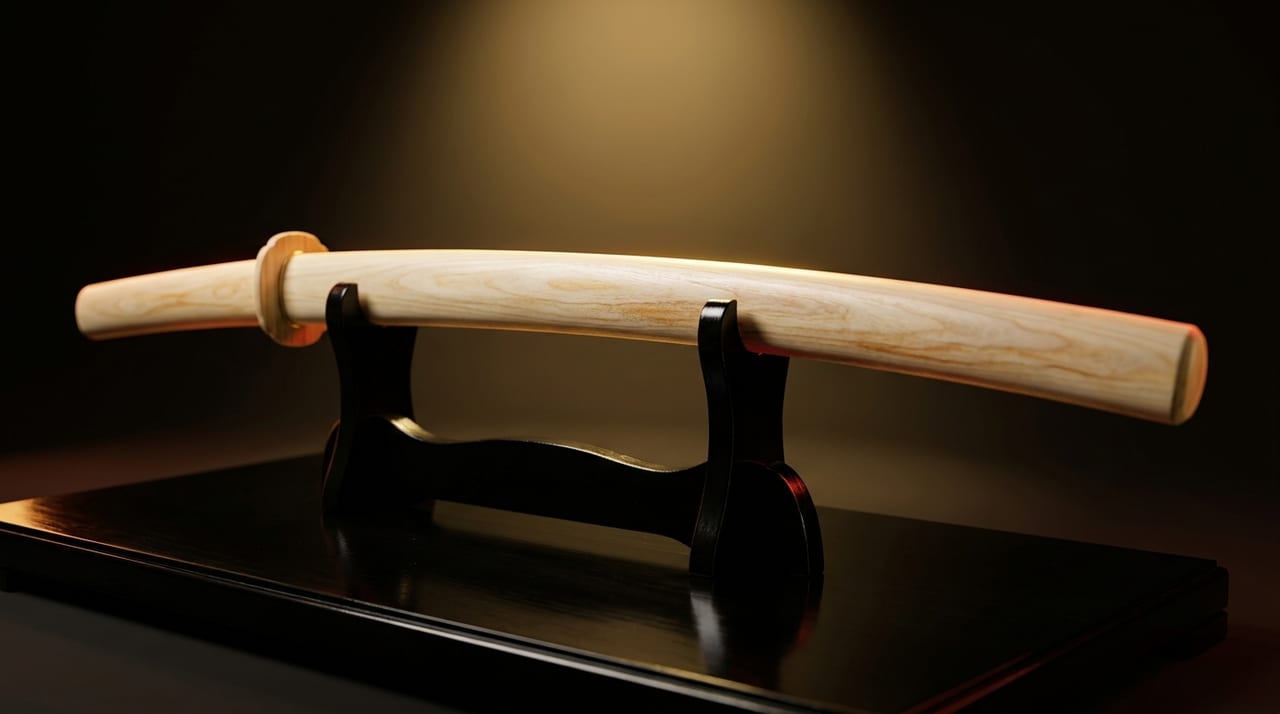 * Image is for illustrative purposes only.
Table of Contents
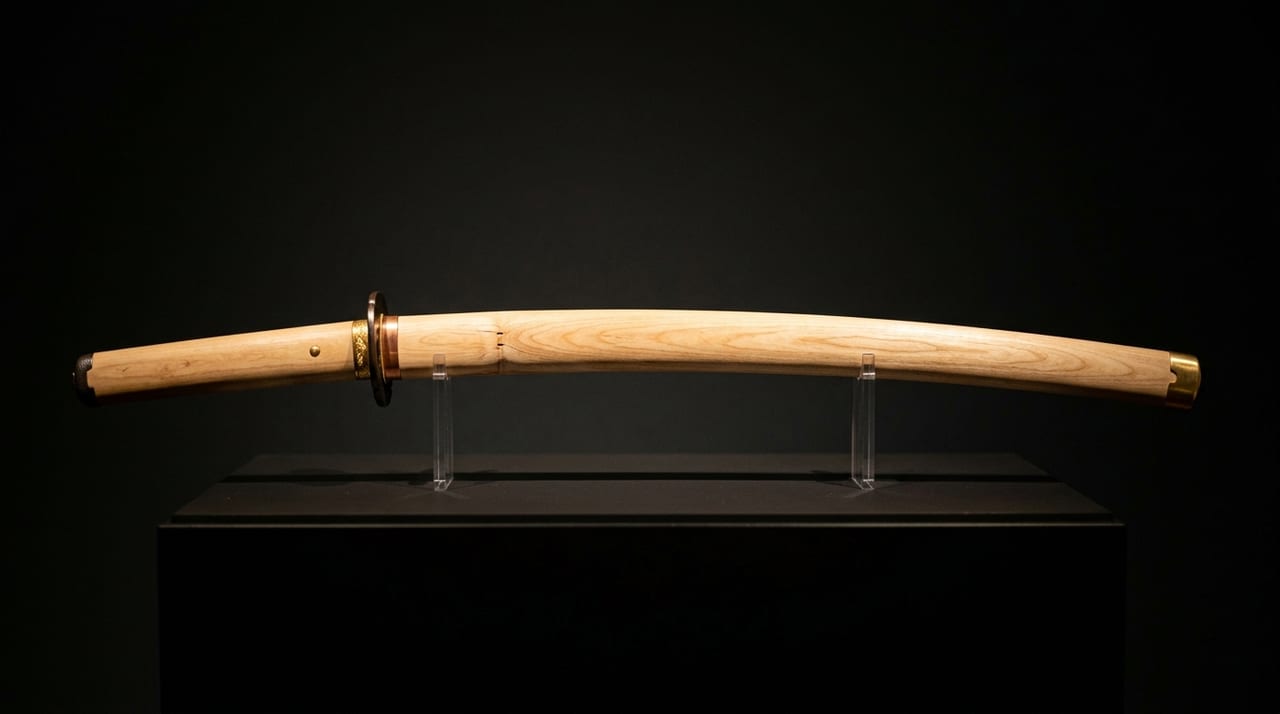
What Is a Shirasaya? — The "Plain Koshirae" That Protects the Blade
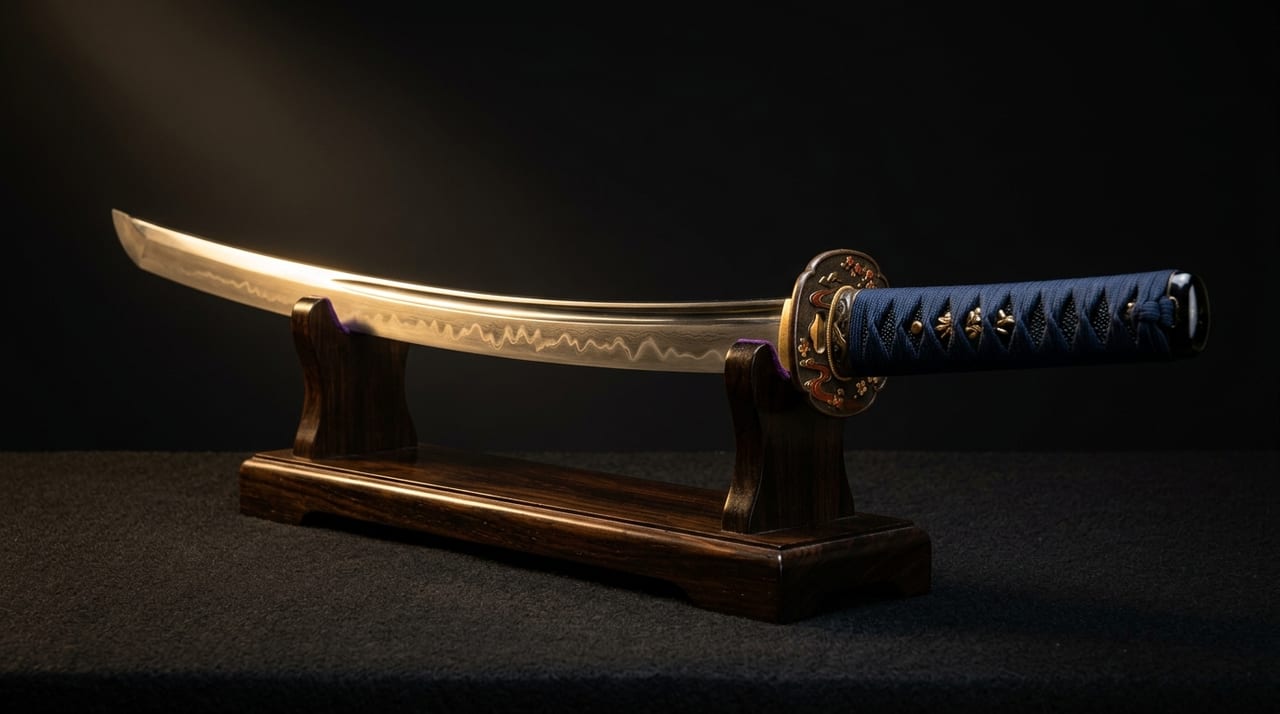
Japanese swords have two broad categories of koshirae. One is the "decorative koshirae," adorned with metalwork, hilt wrapping, and lacquer, used by samurai for actual wear or ceremonial purposes. The other is the shirasaya — a plain-wood koshirae that forgoes all decoration and exists solely for the preservation of the blade.
The shirasaya is indispensable in contemporary Japanese sword preservation. When a sword is housed in a proper shirasaya, the blade is protected from air, moisture, and inadvertent contact. Most swords held by dealers, collectors, and museums are stored in shirasaya, and coming "with shirasaya" is considered one indicator of preservation condition.
The craftsman who specializes in making these shirasaya is the shirasayashi.
The Craft of the Shirasayashi — What Is Required
The work of the shirasayashi appears simple at first glance, but it is in fact a specialized profession demanding advanced technique and deep knowledge.
Accurate Measurement and Shape Assessment of the Blade
The first step in making a shirasaya is accurate measurement and shape assessment of the blade. No two Japanese swords are the same in shape. Nagasa (blade length), sori (curvature), motohaba, sakihaba, thickness of the mune (back of the blade), position of the yokote (the boundary between the kissaki and the body of the blade), and the length and shape of the nakago (tang) — every measurement must be taken precisely and reflected in the woodworking.
Particularly important is the sori of the blade. Unless the interior of the saya (scabbard) is shaped to match the sori of the blade, the sword will not sit properly. Even a slight misalignment can cause scratches when drawing or sheathing, or lead to deformation of the housed blade.
Precise Fit to the Habaki
The koiguchi of the shirasaya — the mouth of the saya — must fit precisely with the metal component called the habaki (blade collar) fitted to the blade. If the habaki fits too loosely, the blade will fall from the saya; if it fits too tightly, the sword cannot be drawn or sheathed. The exquisite precision of fit — "sliding in smoothly and stopping with a click" — is where the shirasayashi's skill is demonstrated.
Interior Finishing — The Craft of Not Damaging the Blade
The interior of the saya (the blade channel) is the space in which the blade rests. If the interior finishing is inadequate, the blade will contact the wood every time the sword is drawn or sheathed, causing rust and scratches. The shirasayashi finishes the interior to an extremely smooth surface, forming a space in which the blade sits safely with only the minimum necessary contact.
Hōnoki — The Absolute Requirement for Shirasaya Material
The material traditionally chosen for shirasaya is hōnoki (Magnolia obovata). There are multiple reasons why hōnoki is ideal for shirasaya.
Characteristics of Hōnoki
Low oil content: If wood contains high levels of oil, it seeps into the blade and causes rust. Hōnoki has extremely low oil content and is unlikely to adversely affect the blade.
Moderate softness: Hōnoki has moderate softness and a uniform grain that makes it easy to work. Wood that is too hard carries the risk of scratching the blade at contact points.
Balanced moisture absorption and release: Hōnoki absorbs and releases moisture in moderation, acting to stabilize the humidity around the blade. Maintaining constant humidity between the metal (blade) and the wood (saya) is advantageous for long-term preservation.
Low deformation: Deformation after drying (warping and cracking) is less than with other woods, giving it high long-term dimensional stability.
Near-odorless: Wood with a strong odor can adversely affect the metal components of a sword. Hōnoki has a mild scent.
Criteria for Selecting Quality Wood
When selecting material, the shirasayashi checks the following points.
Grain direction: It is ideal for the grain to run nearly parallel to the length of the saya (the direction in which the blade sits). If the grain runs at an angle, it can cause the saya to warp after manufacture.
Presence of knots: Sections containing knots have uneven strength and split easily. Knot-free wood is used for shirasaya.
Moisture content: Insufficiently dried wood will shrink later and cause the saya to go out of true. Wood that has been thoroughly dried (or naturally seasoned) is used.
Density of growth rings: Wood with fine, uniform growth rings (from a slowly grown tree) has high strength and stability.
Structure and Manufacturing Process of the Shirasaya
A shirasaya is fundamentally made in a "joined structure" by gluing two pieces of wood together.
Main Stages of the Manufacturing Process
- Preparation of material: Hōnoki is rough-cut to the size of the saya.
- Splitting into two halves: The wood is split into left and right halves to form the blade channel (the groove in which the blade sits), and the interior of each half is carved out.
- Shaping the blade channel: The interior groove is precisely carved to match the shape of the blade, forming a space in which the blade fits smoothly.
- Finishing the koiguchi: The koiguchi, the fitting section for the habaki, is precisely shaped.
- Exterior finishing: The outer shape of the saya is refined and the edges are smoothed.
- Gluing: The two pieces of wood are joined with rice paste (komenori) or woodworking adhesive.
- Final finishing: The surface is smoothed with fine files and whetstones, and the overall shape is verified.
The traditional method of joining with rice paste is notably not excessively strong, giving it the advantage that the saya can be disassembled for repair or adjustment when necessary.
The Successor Problem — A Disappearing Specialty
Even as of 2026, shirasayashi face a serious shortage of successors. The number of craftsmen working independently nationwide is said to be in the dozens, and among them the number who practice it as a full-time primary profession is even smaller. While mastering the advanced techniques requires a long apprenticeship (normally five to ten years or more), the overall scale of the sword market is limited, and the problem of it being difficult to sustain economically persists.
Role in Cultural Property Restoration
A context in which the importance of shirasayashi is especially heightened is cultural property restoration. Swords designated as jūyō bunkazai (Important Cultural Property) or kokuhō (National Treasure) held by museums, shrines, and temples periodically require the replacement or restoration of their shirasaya. This is because leaving a deteriorated shirasaya as it is leads to rust and damage to the blade.
Swords designated as cultural properties carry different constraints from ordinary swords — management by public institutions, creation of restoration records, the presence of specialists, and so on. Shirasayashi capable of working in this field are particularly rare, and the transmission of their techniques is directly linked to the protection of cultural properties.
The Modern Shirasayashi — Maintaining and Innovating Technique
Modern shirasayashi maintain traditional techniques while also incorporating new knowledge from conservation science.
Responses to modern preservation environments are also required: temperature and humidity management, selection of preservation oils, pest-control treatment inside the shirasaya (research into methods that minimize the use of chemical agents), and so on. In recent years, as the number of overseas collectors has grown, restoration and new-production commissions from abroad have also increased.
The work of the shirasayashi is understated and rarely catches the eye, but it is the crystallization of craft indispensable for ensuring that Japanese swords "remain beautiful for hundreds of years." Alongside the swordsmith, the togishi (polisher), the saya lacquerer, and the metalwork specialist, the shirasayashi is an indispensable expert supporting the culture of the Japanese sword.