The Number of Folding Cycles and Steel Microstructure: Theory of Over-Forging-Induced Brittleness and Optimal Forging Cycles
 * Image is for illustrative purposes only.
Table of Contents
What is Folding and Forging—The Heart of Japanese Swords
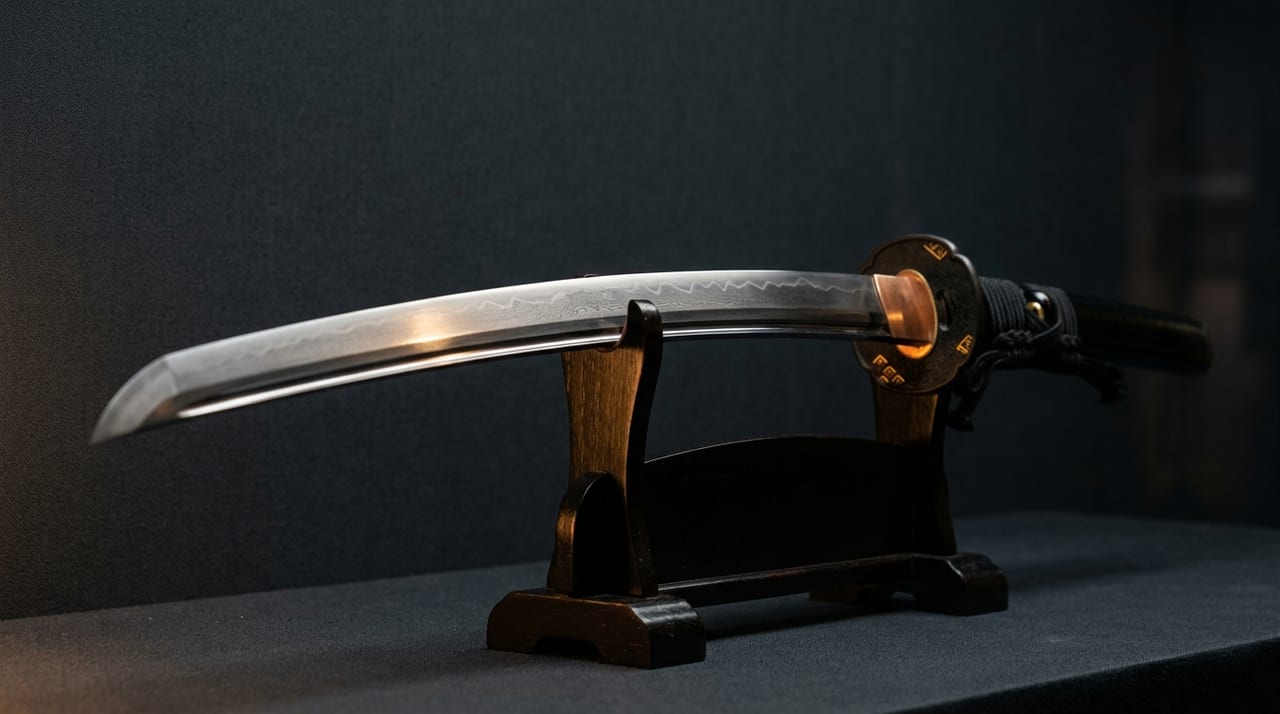
In the process of Japanese sword-making, folding and forging (orikaeshi-tanren) is one of the most essential techniques. By repeatedly heating tamahagane born from tatara steel-making to high temperatures and folding it with a forging bar (taganebo), the internal structure of the steel becomes uniform, impurities are driven out, and the unique jihada of Japanese swords is formed.
With each fold, the number of layers doubles. After 10 folds, theoretically 2 to the 10th power = 1,024 layers; after 15 folds, 32,768 layers. This laminated structure produces patterns called "jihada" that resemble wood grain or ripples, becoming one of the most important elements in appreciating Japanese swords.
Changes in Steel Layer Structure According to Folding Count
As the number of folds increases, the following changes occur within the steel's internal structure.
Homogenization of Carbon Distribution
When tamahagane is first produced, its internal carbon distribution is uneven. High-carbon regions (0.7–1.5%) and low-carbon regions coexist, and if a blade is forged in this state, hardness varies by location, resulting in an unstable sword.
Through repeated folding and forging, high-carbon and low-carbon regions are alternately layered and folded, causing carbon to diffuse uniformly throughout. This homogenization achieves the state where "stable hardness results no matter where quenching is applied."
Removal of Inclusions
Tamahagane contains slag (inclusions such as iron oxide and silica) that mixed in during the steel-making process. As it undergoes repeated heating and extension at high temperatures, these inclusions are gradually driven out to the exterior of the steel.
If inclusions remain, they become stress concentration points that cause breakage and cracking. Folding and forging is therefore not merely shaping but also a "purification process."
Refinement of Crystal Grains
Iron crystals (ferrite and austenite) grow at high temperatures, but the plastic deformation from impact and folding breaks and refines the crystal grains. The finer the crystal grains, the greater the toughness of the steel, resulting in a blade less prone to breaking.
Brittleness from Over-Forging—The Existence of an Optimal Range
So is it better to fold as many times as possible? The answer is no. Here lies the most critical question of "optimal values" in Japanese sword-forging technique.
Excessive Carbon Consumption
During repeated folding and forging, carbon in the steel is gradually lost through oxidation (decarburization). As carbon content decreases, the hardness required for a sword (hardness after quenching) cannot be achieved.
Although tamahagane contains abundant carbon, this quantity gradually decreases with each forging. Excessive folding causes carbon to drop too far, and the steel approaches the properties of soft iron.
Excessive Refinement of Crystal Grains and Work Hardening
Over-forging causes crystal grains to become excessively refined and deformed, and conversely, work hardening progresses, making the steel brittle. In metallurgical terms, this is called "strain-induced transformation" or "saturation of strain hardening."
The very forging intended to prevent breakage, when excessive, produces the reverse effect of "accumulation of deformation-induced strain → brittleness."
"Rough Skin" as a Sign of Over-Forging
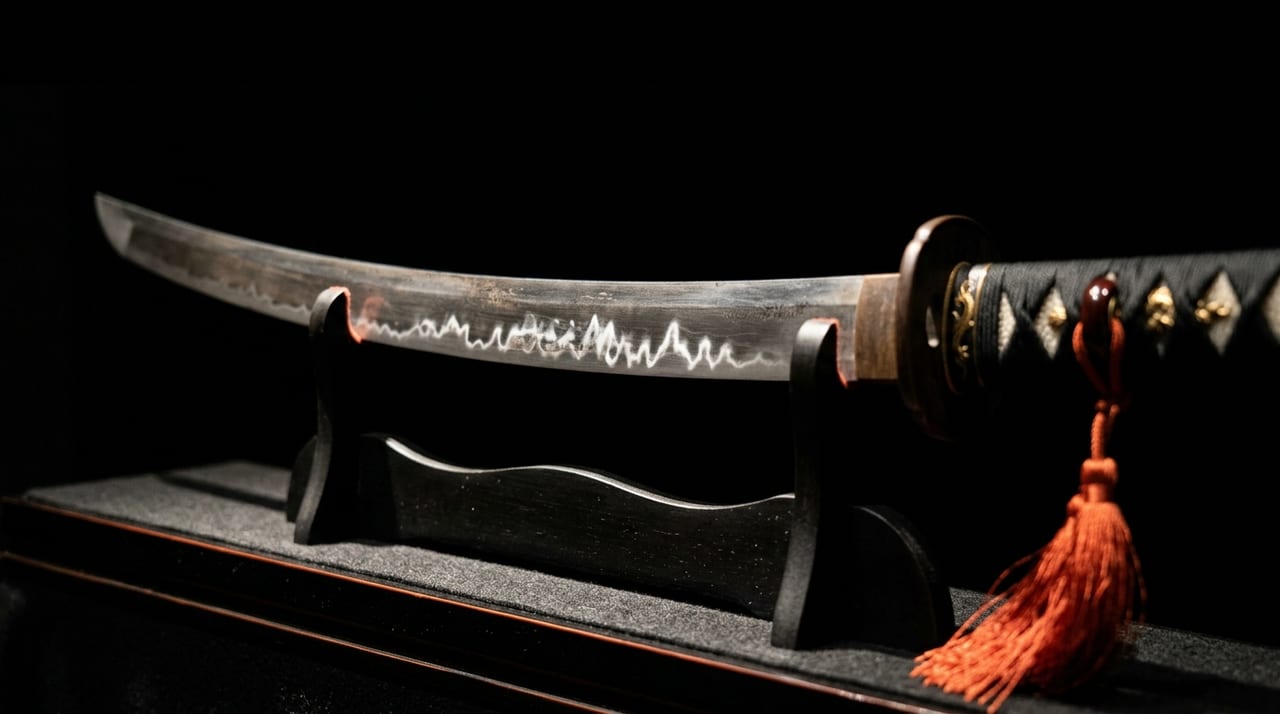
Swordmakers judge over-forging empirically by observing the surface of the jihada. As over-forging progresses, the jihada "roughens"—the normally fine-grained wood-grain-like skin becomes coarse, and the boundaries between layers become disordered. This is a sign that internal carbon distribution unevenness recurs and the layer structure breaks down.
The Theory of Optimal Forging Cycles—The Secret Traditions of Schools
The "appropriate number of folds" in Japanese sword folding and forging belongs to the secret techniques of each school (Yamashiro, Soshu, Bizen, Yamato, Mino traditions). According to modern research and reconstruction experiments, generally 8–15 folds is considered the optimal range.
Tendencies by School
- Soshu tradition (Masamune, Sadamune, and others) is known for strong toughness and fierce hamon patterns, which relate to the use of "wild steel" achieved by employing relatively few folds while retaining the coarse o-itame grain structure of the jihada during quenching.
- Bizen tradition (Osafune school, etc.) is known for tightly-packed jihada with ko-itame and ko-mokume patterns, showing a tendency toward more folds emphasizing homogenization.
- Yamato tradition (Senjuin, Taima, and others) is characterized by masame jihada flowing in straight lines, distinguished by a technique of maintaining consistent folding direction.
Variations in Optimal Folding Count by Steel Classification
Blade structure is divided into "kawagane" (outer steel) and "shingane" (core steel).
- Kawagane (outer layer, high-carbon steel): covers the edge and surface. Since hardness is necessary, it is finished in a state that retains carbon. Approximately 8–12 folds is the guideline.
- Shingane (inner core, low-carbon steel): requires flexibility and toughness, so in some cases more folds are applied to intentionally reduce carbon content.
"Warikomi-kitae" (split-and-forge technique)—combining these two steel types to forge a blade—is the fundamental structure of Japanese swords, and managing fold count has different optimal values for kawagane and shingane.
The Mechanism of Jihada Formation—The Beauty Born from Folding and Forging
A key aspect of the scientific consequences of folding and forging that must not be overlooked is the formation of jihada, the core of Japanese sword aesthetics.
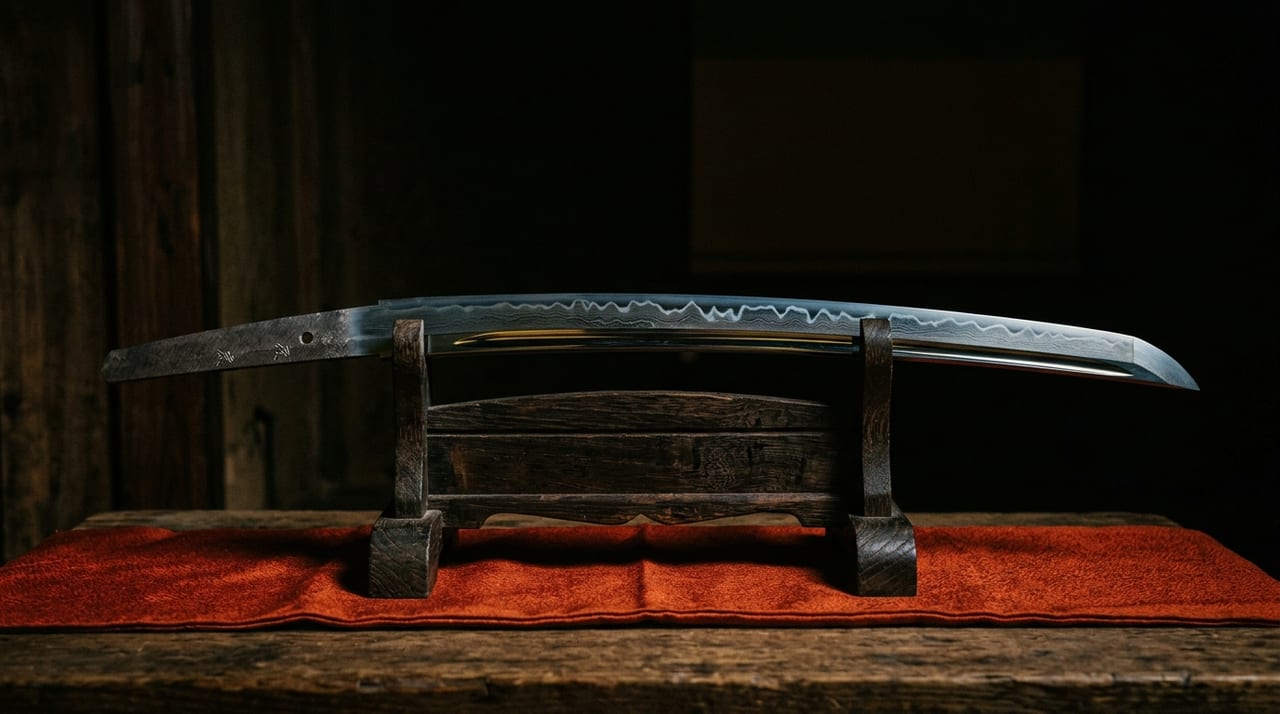
The boundaries between layers of laminated steel are first visualized when a polishing specialist refines them with finishing whetstones. The subtle differences in carbon concentration in each layer alter light reflection, and what appears as wood grain, flow, and patterns is the jihada.
- Itame (wood-grain pattern): When carbon distribution irregularly coexists in folded layers, wood-grain-like irregular patterns appear.
- Masame (straight-grain pattern): When the folding direction is maintained vertically in one direction, linear patterns resembling tree rings appear.
- Mokume (wood-eye pattern): Swirling or fist-shaped patterns. They appear as a result of localized carbon distribution remaining.
These jihada patterns are not merely aesthetic matters but are a "map" of the internal carbon, layers, and crystal structure. Experienced appraisers read from the jihada the tendency of fold count, carbon distribution, forging methods, and deduce the school, period, and maker.
Conclusion—Science Validates the Empirical Knowledge of Swordmakers
The optimal number of folds and the risks of over-forging are being clarified by modern metallurgy (microstructure of carbon steel, work hardening, decarburization theory) "retroactively validating" the wisdom that swordmakers once empirically acquired through experience.
Setting aside the naive assumption that "the more you forge, the better the blade becomes," the refined technical judgment of "drawing out the finest steel within optimal forging cycles"—that is the essence of Japanese sword-forging and is crystallized as the beauty of jihada. Those who wish to actually compare the differences in jihada are encouraged to also read the style-specific explanations in the column list.