Carbon Distribution Control in shingane and kawagane — The Science of orikaeshi tanren That Produces Japanese Swords from tatara Steel
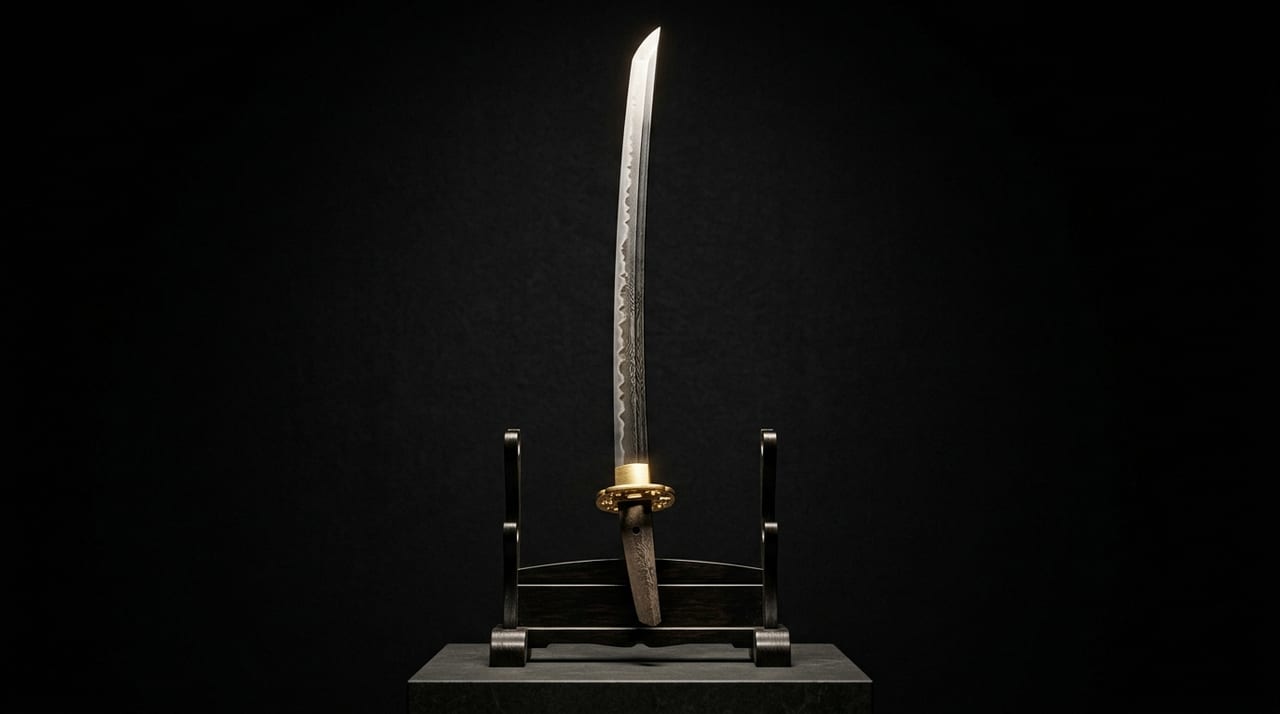 * Image is for illustrative purposes only.
Table of Contents
The Composition of tamahagane and Carbon Non-uniformity — The Starting Point of Japanese Sword Materials
Tamahagane produced by tatara smelting has a carbon content distributed across a wide range of 0.6–1.5%, giving it fundamentally different material properties from homogeneous Western steel (carbon steel). This non-uniformity is the very source that gives rise to the two-layer structure of shingane and kawagane in the Japanese sword, as well as the technical significance of orikaeshi tanren.
The process of splitting tamahagane and tapping it with a chisel to sort out the high-carbon portions (high-carbon steel) from the low-carbon portions (low-carbon steel) is called "kowari." The high-carbon portions contribute to the hardness and sharpness of the edge, while the low-carbon portions contribute to higher toughness (resilience) and resistance to blade breakage. By deliberately combining these two types of steel, the contradictory properties of sharpness and durability are realized in a single sword — this is the fundamental design philosophy of Japanese sword forging.
The Science of orikaeshi tanren — Impurity Removal and Steel Homogenization
The greatest challenge with tamahagane is that slag and impurities are mixed in, and that the carbon distribution is locally uneven. The process of orikaeshi tanren resolves this.
Heating the steel, striking it flat, folding it, and striking it again — repeating this operation yields three effects:
- Slag is expelled and the steel is refined
- Carbon atoms diffuse evenly throughout the crystal lattice of the steel, eliminating localized unevenness in hardness
- The crystal grains of the steel become finer (grain refinement), improving toughness
In theory, the more times the steel is folded, the more homogenization progresses; however, excessive folding has the counterproductive effect of causing decarburization, making the steel too soft. According to modern metallurgical analysis, the 8–16 folds (approximately 256–65,536 layers) performed in traditional sword making have been shown to be close to the optimal solution for carbon control and impurity removal.
The Number of Folds and the Quality of tanren — The Misconception That "More Is Better"
It is premature to judge the quality of a sword by the number of orikaeshi tanren folds alone. Folding is a means for removing impurities and homogenizing carbon; the overall capability of the entire process — including the quality of the tamahagane itself, the kaji's skill in controlling the fire and striking force, and temperature management during yaki-ire — determines the final strength of the blade and the beauty of the hamon. The number of folds is merely one element of the process and does not by itself guarantee the quality of the sword. When readers are selecting a sword, it is practically important not to fixate on the single metric of fold count, but to take a comprehensive view that includes the condition of the jigane and hamon.
The Layout Design of shingane and kawagane — The Rationality of kobuse kitae
The process of combining the low-carbon steel (shingane) and high-carbon steel (kawagane) that have undergone orikaeshi tanren is called "zukuri-komi" or "kobuse kitae" (there are also multiple other styles, such as "hon-sanmai" and "shihozume").
The most representative kobuse kitae employs a U-shaped cross-sectional structure in which the shingane is wrapped in kawagane. The shingane absorbs shock within the body of the blade and prevents breakage, while the kawagane maintains high carbon concentration toward the cutting edge, preserving hardness. This arrangement is rational because placing the tough shingane near the shinogi ridge (shinogisuji), where stress concentration tends to occur, minimizes the risk of fracture in actual combat.
Furthermore, by designing the shingane to have a lower carbon content than the kawagane, the quenching during yaki-ire enters the shingane "lightly," which has the effect of controlling so that the embrittlement from martensitic transformation does not reach the core of the blade. This is the same principle as modern case carburizing (case hardening) technology, and it is remarkable that empirical knowledge aligns with metallurgical understanding.
yaki-ire and Carbon Phase Transformation — The Scientific Basis of the hamon
Tsuchioki — the process of applying a mixture of clay, whetstone powder, and similar materials called "nurito" to the blade — is a method for varying the cooling rate at different parts of the blade during yaki-ire. By applying the clay thinly (or not at all) on the cutting edge and thickly on the mune side, only the cutting edge is rapidly quenched during yaki-ire to form martensite (the high-hardness phase), while the mune side cools more slowly and is preserved in a pearlite-bainite microstructure that retains toughness.
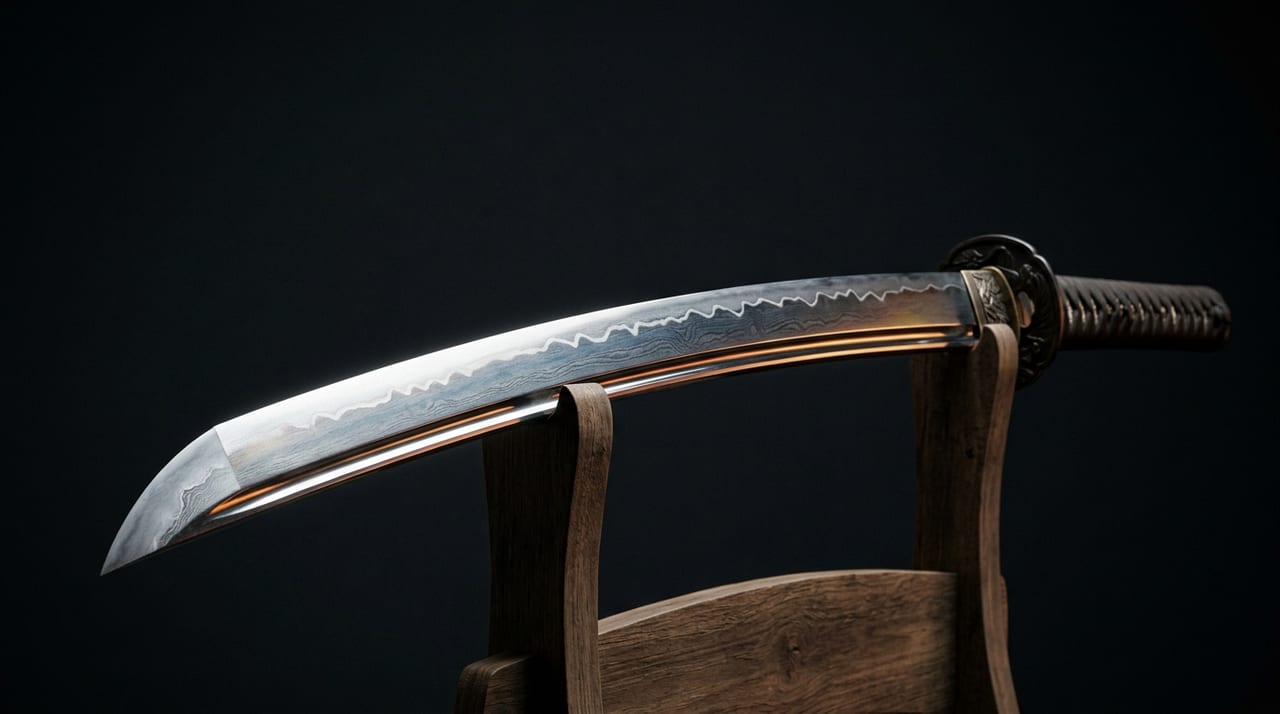
The hamon forms at the boundary between this rapidly quenched zone and the slowly cooled zone. The higher the carbon content of the steel, the more the brightly glittering "nie" and "nioi" appear; the diverse hamon patterns — midareba, choji-ba, suguha, and others — emerge as a compound result of the shape of the tsuchioki, the yaki-ire temperature, and the carbon distribution of the tamahagane. The reason a hamon differs every time even when the same toko strikes with the same design is that the "natural variation" of tamahagane's non-uniformity is reflected in the result.
Traces of tanren Appearing in the jigane and hamon — Points of Appreciation
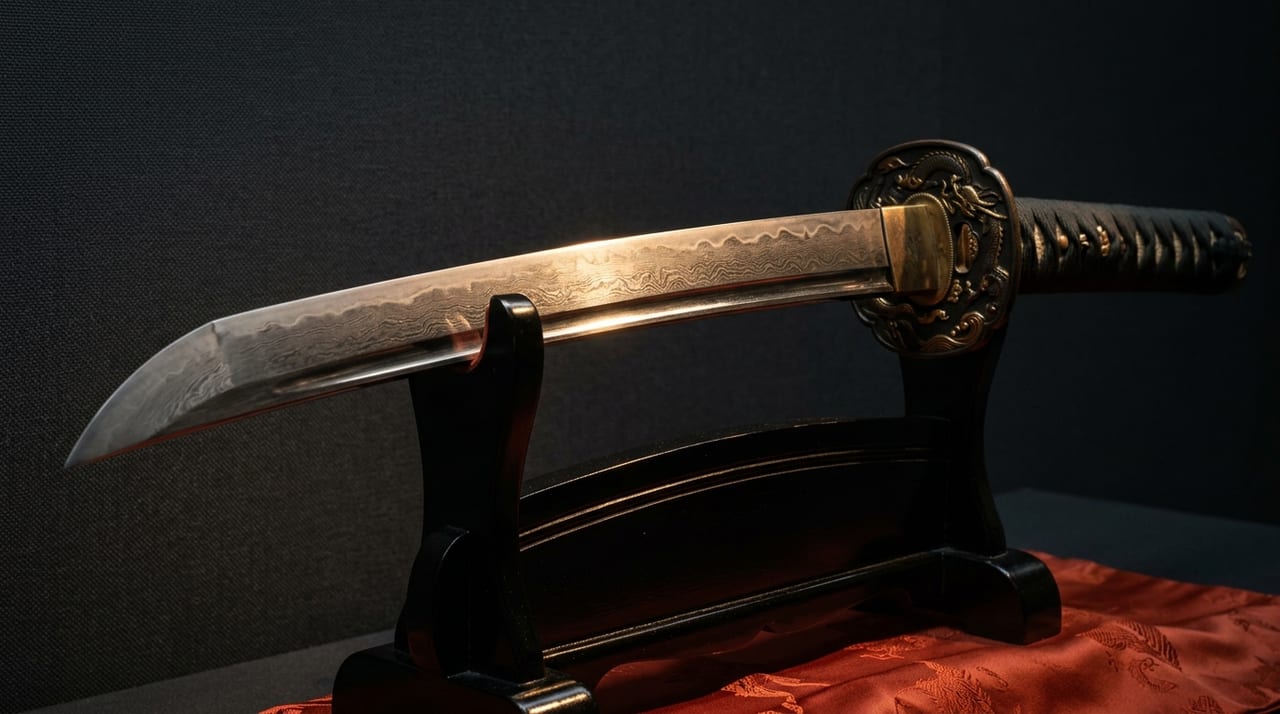
The layered structure of the steel produced by orikaeshi tanren appears on the polished blade surface as patterns in the jigane. All of them are traces that reflect the properties of the tamahagane and the care with which the tanren was performed.
| Appearance | Name |
|---|---|
| Layers appear to undulate | itame-hada |
| Layers appear to swirl | mokume-hada |
| Layers appear to flow in straight lines | masame-hada |
Regarding the hamon as well, the granular working that glitters white is called "nie," and the working that appears as a continuous mist is called "nioi"; their character changes depending on the carbon distribution at the boundary and differences in cooling speed during yaki-ire. Observing the jigane and hamon together provides clues for reading what kind of steel and techniques were used in making that sword.
The Dialogue Between Modern Science and Traditional Techniques — Remaining Mysteries
Modern analysis using scanning electron microscopy (SEM) and energy-dispersive X-ray analysis (EDX) has made it possible to visualize the cross-sectional structure and carbon distribution of renowned swords. Through this, it is being confirmed that the carbon control that master smiths before the Edo period acquired through experience is close to optimal even from the perspective of modern materials science.
On the other hand, much remains incompletely understood. The influence of trace elements unique to tamahagane (such as titanium and vanadium) on quenching characteristics, the visual effects of localized carbon segregation on the "scenery" of the hamon, and the individual toko's sensory knowledge — the skill of judging quality from the sound of the hammer, the color of the flame, and the viscosity of the steel — belong to the domain of craftsman's tacit knowledge (Tacit Knowledge) that is difficult to quantify.
The technology of carbon distribution control in shingane and kawagane is a uniquely Japanese materials-engineering invention born from the constraints of tamahagane, an inherently non-uniform material. Understanding its scientific rationality gives us the perspective to appreciate the Japanese sword not merely as a weapon or a work of art, but as an intellectual achievement in the history of human technology.
NBTHK kanteisho and the Verification of Traditional Techniques
The kanteisho issued by NBTHK is a document in which specialists comprehensively evaluate the quality of the jigane and hamon, the shape, the mei, and other features, and then indicate the appraisal classifications of period, province, school, and so on. Traditional techniques such as orikaeshi tanren and the zukuri-komi of shingane and kawagane are closely linked to the evaluation of the jigane and hamon recorded in the kanteisho, and the kanteisho serves as one piece of indirect evidence that these techniques have been correctly applied. When selecting a sword, verifying the condition of the jigane and hamon with one's own eyes, together with the contents of the kanteisho, becomes a practical guide for identifying genuine works made according to traditional techniques.