Edge Angle and Togi — The Acute-Angle Design of Nihontō That Balances Sharpness with Durability
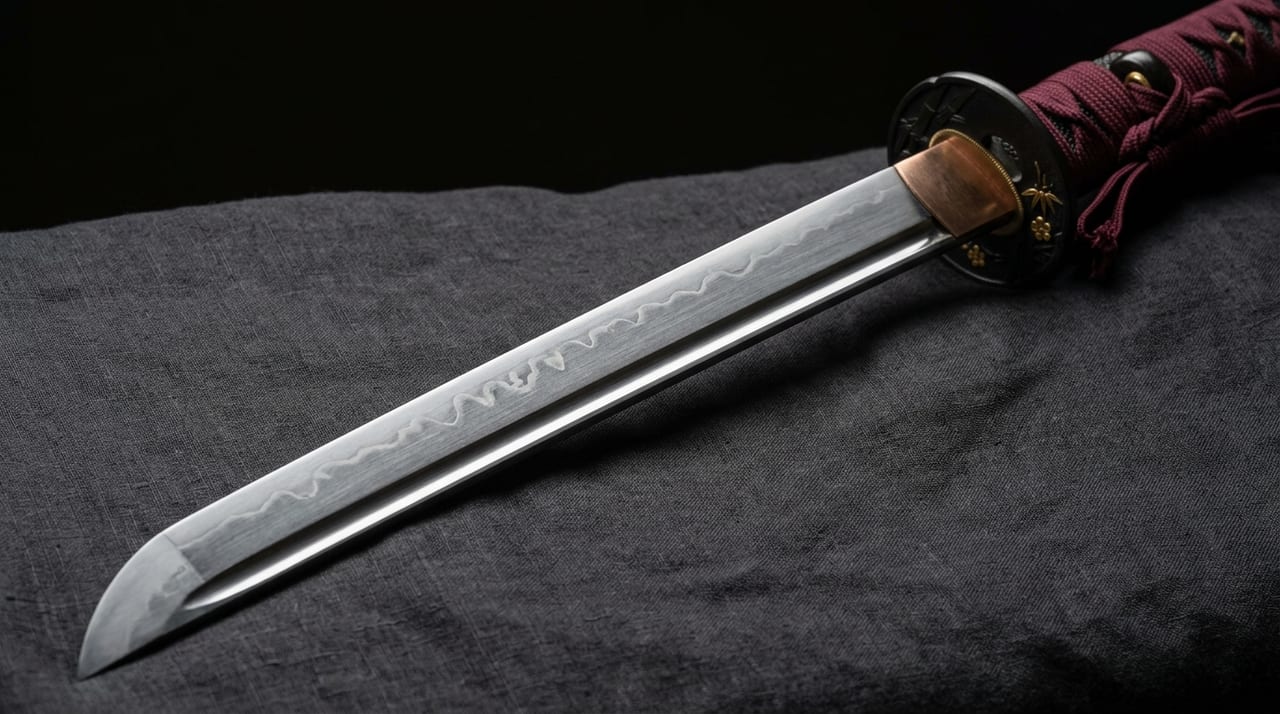 * Image is for illustrative purposes only.
Table of Contents
What Is Edge Angle — The Concept of "Ha-kaku" in Nihontō
Edge angle (ha-saki kakudo) is the angle formed by both faces of the blade in the cross-section of the cutting edge (ha-bu) of the sword. In technical usage it is also called "ha-kaku" or "ha-tsuke kaku."
The concept of edge angle also exists in the world of ordinary knives and kitchen blades, but in nihontō the question of edge angle involves a complex interplay of three elements — "blade geometry," "steel microstructure," and "the togi process" — giving it a depth that cannot be captured by simple angle measurement alone.
Let us first organize the role of edge angle. The smaller the edge angle (more acute), the sharper the cutting performance, but the thinner the edge becomes, raising the risk of chipping and nicking. Conversely, the larger the edge angle (more obtuse), the greater the blade's strength, but sharpness diminishes. This simple relationship holds in principle for nihontō as well, but the optimal ha-kaku design, given the unique structure and intended uses of nihontō, calls for a different way of thinking compared to modern cutting tools.
The Relationship Between Blade Structure and Edge Angle — The Design Philosophy of Shinogi-zukuri
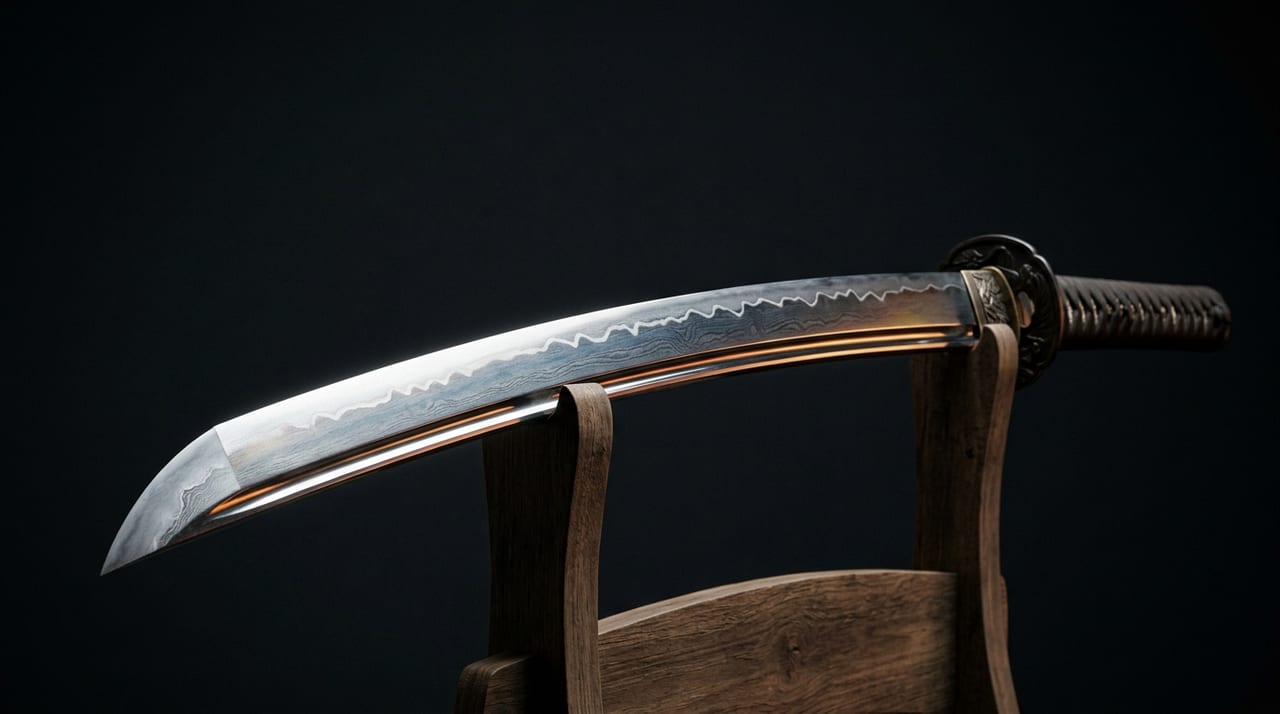
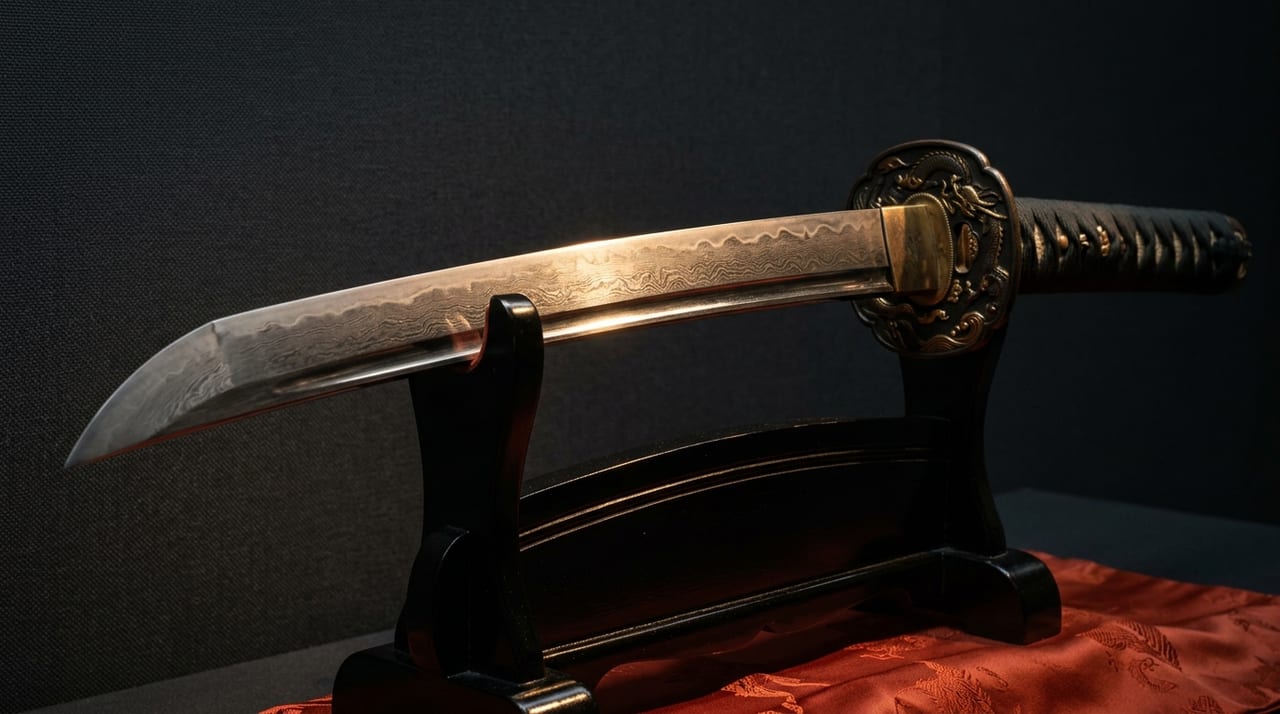
The most prevalent blade construction in nihontō is shinogi-zukuri. It features a ridge line called the shinogi on the side of the blade, and is composed of two surfaces: the "ha-niku" (the area between the shinogi and the cutting edge) and the "shinogi-ji" (the area between the shinogi and the mune).
In shinogi-zukuri, the edge angle design is determined by the combination of "the cross-sectional shape of the blade (width of the shinogi-ji, thickness of the ha-niku, thinness of the cutting edge)." At the forging stage, the tōshō designs this cross-sectional shape using the concept called "niku-oki." Niku-oki refers to the distribution of niku (thickness) at each part of the blade; how the thickness gradually diminishes from the base (moto) toward the tip (saki), and from the mune side toward the cutting edge, directly affects the overall balance of sharpness, strength, and weight of the sword.
The ideal edge is "thinned to the utmost limit, yet reinforced by the yakiba — the hardened steel whose microstructure was transformed through yaki-ire." To achieve this "thin yet strong" edge, the tōshō precisely controls the cross-sectional shape of the blade throughout the forging and yaki-ire process.
Yaki-ire and Edge Hardness — Control of Martensitic Transformation
The greatest factor that makes it possible to achieve both sharpness and durability in nihontō is the change in steel microstructure brought about by yaki-ire (quenching).
Near the cutting edge, yaki-ire produces a high-carbon martensitic microstructure with the characteristics of high hardness (around HRC 60) and high brittleness. The shingane (core steel) and the mune side, on the other hand, remain as low-carbon, softer steel and retain toughness.
This combination of "hardness at the edge (= sustained sharpness)" and "toughness of the body (= resistance to breaking)" is the structural ingenuity of nihontō. In designing the edge angle too, a critical judgment is "how far to thin" this hardened yakiba.
If the edge is ground and thinned to the point where the hardened layer (yakiba) is extremely thin, the softer steel outside the yakiba becomes exposed at the cutting edge, producing sharpness but a blade that chips easily. Conversely, if the edge is ground so as to leave the cutting edge within a relatively thick part of the yakiba, durability is high but sharpness is somewhat reduced.
This judgment falls within the domain of expertise of the togishi (polisher), and is made after assessing the sword's intended use, condition of preservation, and soundness of the yakiba.
The Role of the Togishi — The Final Arbiter of Sharpness and Edge Angle
When it comes to the sharpness of nihontō, it is important to understand precisely the division of roles between the tōshō and the togishi.
The tōshō is responsible for the processes that determine the "latent sharpness" of the sword — the selection of steel, tanren (forging), and yaki-ire. The togishi is responsible for the process of "drawing out that latent sharpness as an actual working edge."
Even with the same sword, the final edge angle and finish will differ depending on the togishi's skill and approach, and the perceived sharpness will change accordingly. Some togishi work primarily in "bijutsu-togi" (togi for appreciation, where the edge is not thinned excessively), while others apply "practical togi" suited to the sword's intended use.
The primary process by which the togishi adjusts the edge angle is "ha-tsuke." This process, which uses whetstones to adjust the thinness of the cutting edge, directly determines the sword's final sharpness and risk of nicking. The factors that affect the realization of the edge angle are as follows.
- Grit number (coarseness) of the whetstone
- Application angle
- Number of strokes
- Choice of whetstone for the final finish
Measured Values of Nihontō Edge Angles — Comparison with Other Blades
The edge angle of nihontō varies by intended use, period, and school, but it is generally reported to fall in the range of approximately 10 to 25 degrees on a single bevel, or 20 to 50 degrees for the combined ha-kaku of both faces.
For comparison, the edge angles of other blades are summarized as follows.
| Blade | Edge angle |
|---|---|
| Nihontō (single bevel) | Approx. 10–25 degrees |
| Nihontō (combined ha-kaku of both faces) | Approx. 20–50 degrees |
| Wa-bocho (sashimi knife, single bevel) | Approx. 7–12 degrees |
| Woodworking chisel (nomi) | Approx. 25–35 degrees |
Wa-bocho have a very acute angle and are designed with sharpness as the top priority. Chisels, on the other hand, are thicker, and knives intended for cutting bone or hard ingredients tend to have a wider ha-kaku.
Nihontō span a wide range of quality, from "kazu-uchi-mono" (inexpensive, mass-produced utility swords) to fine-art swords by master smiths, and the design philosophy for edge angle is not uniform. It is natural that the edge angle design and togi finish differ between a sword as a weapon intended for actual combat and a modern fine-art or appreciation sword.
Aging and Re-togi — Maintenance of Edge Angle
Swords that have been used or that develop nicking during storage can have their edge restored through re-togi. However, since metal is removed from the blade with each re-togi, repeated re-togi can reduce the thickness of the blade, and the edge angle design itself may change.
This is why "excessive togi" is considered a problem in the preservation of fine-art swords. The concept of "hozon-togi" — maintaining the blade's condition with the minimum necessary togi while prioritizing the preservation of shape, thickness, and mei (signature) — has become the fundamental approach in modern sword preservation.
Conclusion — The Design Wisdom That Achieves Both Sharpness and Durability
The question of edge angle in nihontō emerges from the overlapping knowledge and skills of three specialists: the tōshō's forging design and yaki-ire control, and the togishi's togi technique.
It is not simply a matter of "grind it thin and sharp and it will cut." The optimal edge angle and finish are chosen through a comprehensive assessment of the sword's steel microstructure, the soundness of the yakiba, the intended use, and the condition of preservation. This multi-layered design philosophy underpins the functional beauty of nihontō and continues to live on as wisdom referenced in modern blade design.
Please feel free to contact us via the form.