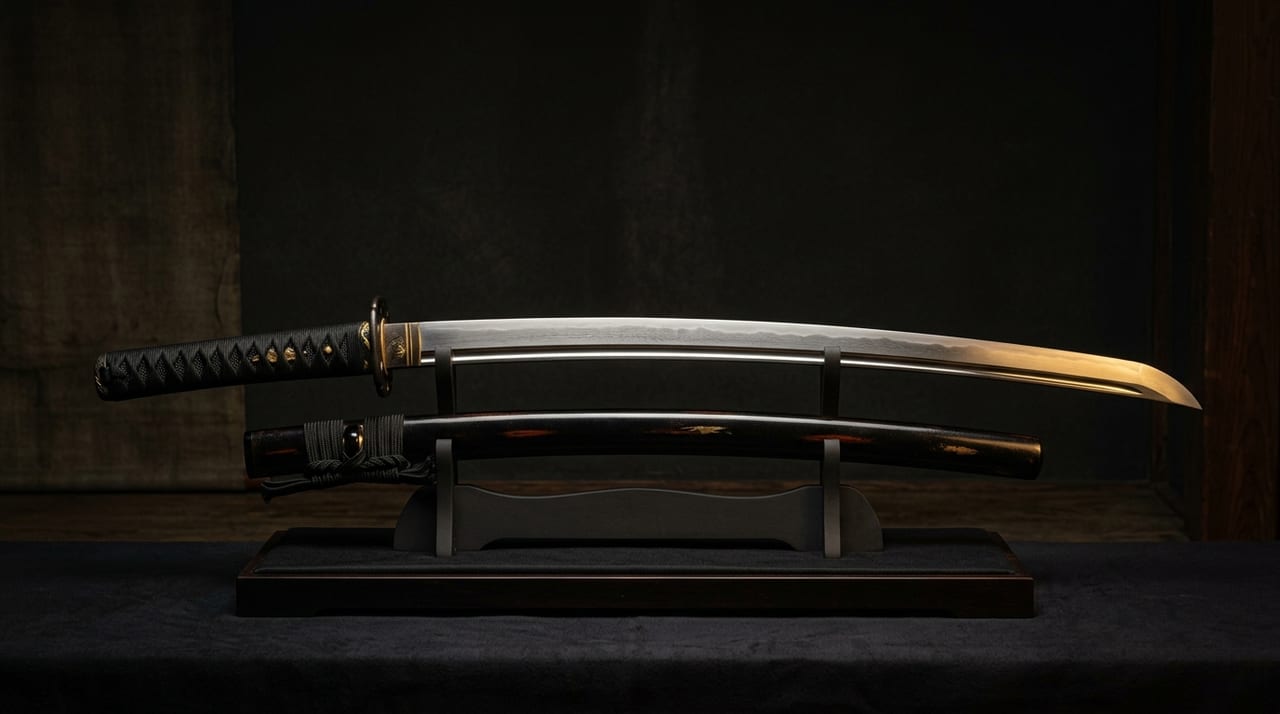
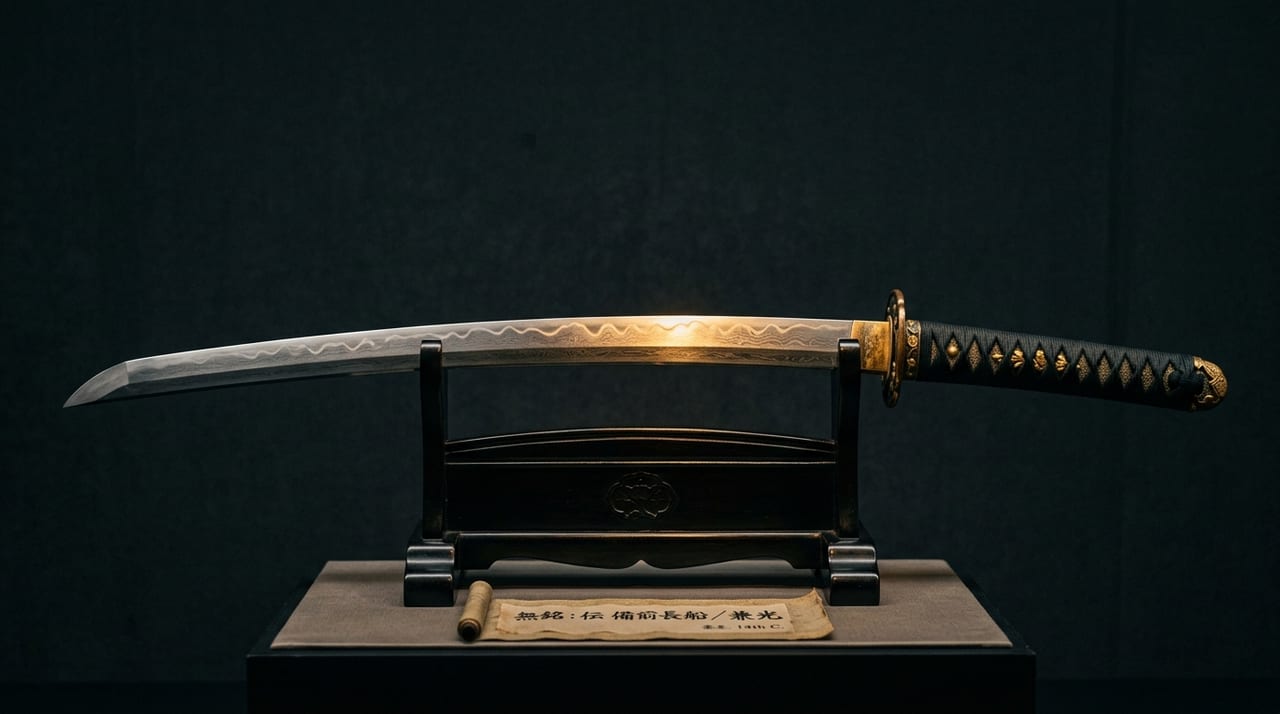
Sanjo Munechika — The Heian Master Behind the National Treasure Mikazuki Munechika and the Roots of Yamashiro Tradition
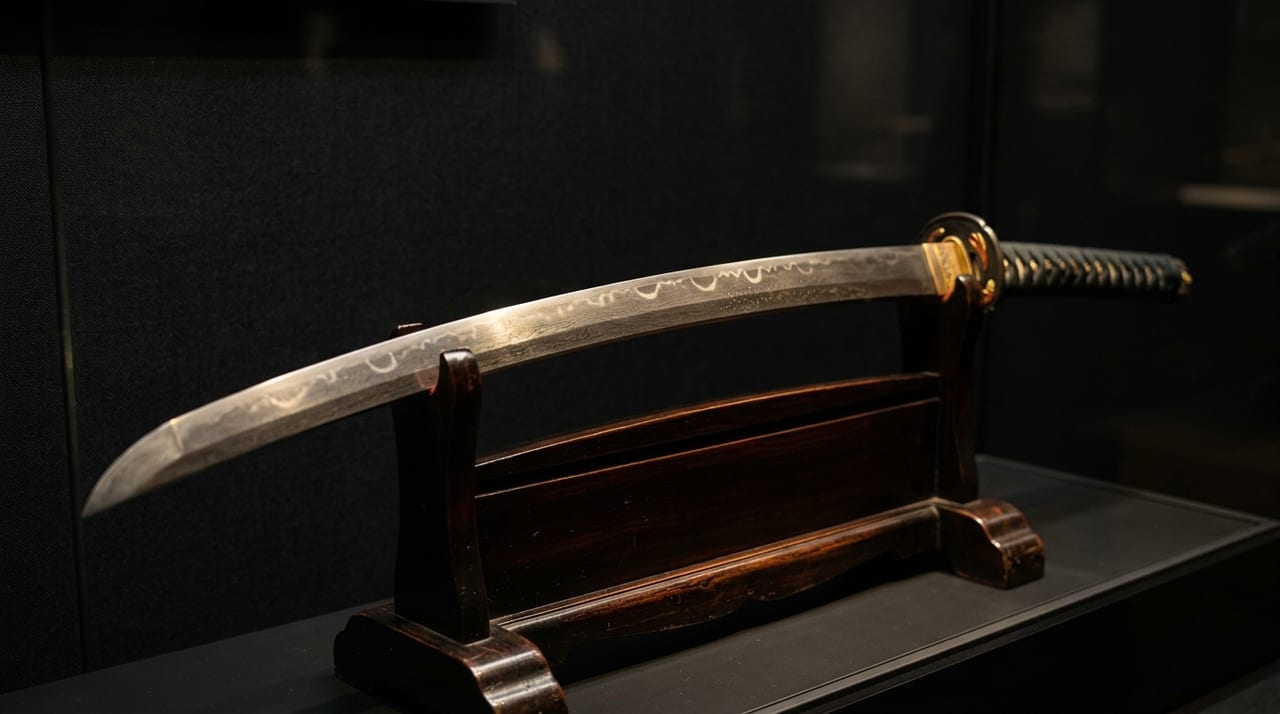 * Image is for illustrative purposes only.
Table of Contents
What Kind of Swordsmith Was Sanjo Munechika?
Sanjo Munechika was a swordsmith of Yamashiro Province who flourished in the late Heian period. He belonged to the lineage of blacksmiths known as Sanjo Kokaji in Kyoto and is known as a master craftsman of the oldest era in Japanese sword history. Among existing swords, the National Treasure "Mikazuki Munechika" is especially famous and is counted as one of the Five Swords Under Heaven. No definitive historical records exist showing when Munechika was born or died, but the tradition that he was active during the reign of Emperor Ichijo (986-1011) is the most credible. Munechika's swords possess elegant proportions in their form, jihada, and hamon, and have been regarded as symbolic representations of a sacred aesthetic appreciation of swords as art objects rather than weapons. Later swordsmiths and appraisers have repeatedly referred to Munechika's works as "the highest standard of koto swords."
Characteristics and Provenance of the National Treasure "Mikazuki Munechika"
Mikazuki Munechika is currently transmitted as a National Treasure tachi. The basic information is as follows.
| Item | Details |
|---|---|
| Holder | Tokyo National Museum |
| Blade Length | Approximately 80.0 centimeters |
| Curvature | Approximately 2.7 centimeters |
It preserves the characteristic form of late Heian period tachi with strong curvature at the waist.
The greatest characteristic is the "crescent-shaped uchioke" that appears in the hamon. This is named "Mikazuki" (three-day moon) because the crescent-shaped uchioke—short double-arc activities—that appears along the blade edge are scattered throughout the blade body, appearing like rings of the moon. The jihada features a tightly packed ko-itamehada with ji-nie, combining elegance and tranquility. Its provenance is as follows.
- The Ashikaga Shogunate family
- Owned by Kodai-in (Nene), the principal wife of Toyotomi Hideyoshi
- Passed to Tokugawa Hidetada in Kan'ei 1 (1624)
With such provenance, it is widely recognized in modern times as a symbolically important sword in sword history. Counted as one of the "Five Swords Under Heaven," this blade has taken deep root in Japanese aesthetic consciousness as the pinnacle of Japanese sword art. The asymmetry of the hamon shape differing subtly between the front and back sides is also an important indicator in appraisal as a characteristic of Munechika's work.
The Kokaji Legend and Its Connection to Inari Kami
The story of "Kokaji" is widely known through Noh theater and Kabuki as a legend surrounding Munechika. The narrative tells that when Emperor Ichijo ordered Munechika to forge a sacred sword and he had no apprentice capable of striking the opposing hammer, he prayed to Inari Myojin. A young boy then appeared to strike the opposing hammer, and the completed tachi was inscribed with the name "Kokomaru."
Although this legend is not historically accurate, it demonstrates that Munechika was widely remembered in popular tradition as a sacred swordsmith. A connection to Fushimi Inari Taisha in Kyoto is also mentioned, reflecting the spiritual culture of the Heian period when swords and Shinto belief were deeply intertwined. The repeated invocation of Munechika's name in later periods was partly because such mythological authority was attributed to him. While no existing sword called "Kokomaru" has been confirmed, its name has been transmitted to the present through Kabuki and Noh performances. The appearance of the name "Munechika" in recent video games and anime works has also contributed to spreading awareness of this Heian-period master craftsman in modern times.
Munechika's Position as the Source of the Yamashiro Tradition
The Yamashiro Tradition, one of the Five Traditions of Japanese sword-making, refers to the lineage of swordsmith groups centered in Kyoto. Munechika is positioned at the source of the Yamashiro Tradition and is regarded as having created the prototype of the refined and elegant style that was later inherited by the Awtaguchi and Rai schools.
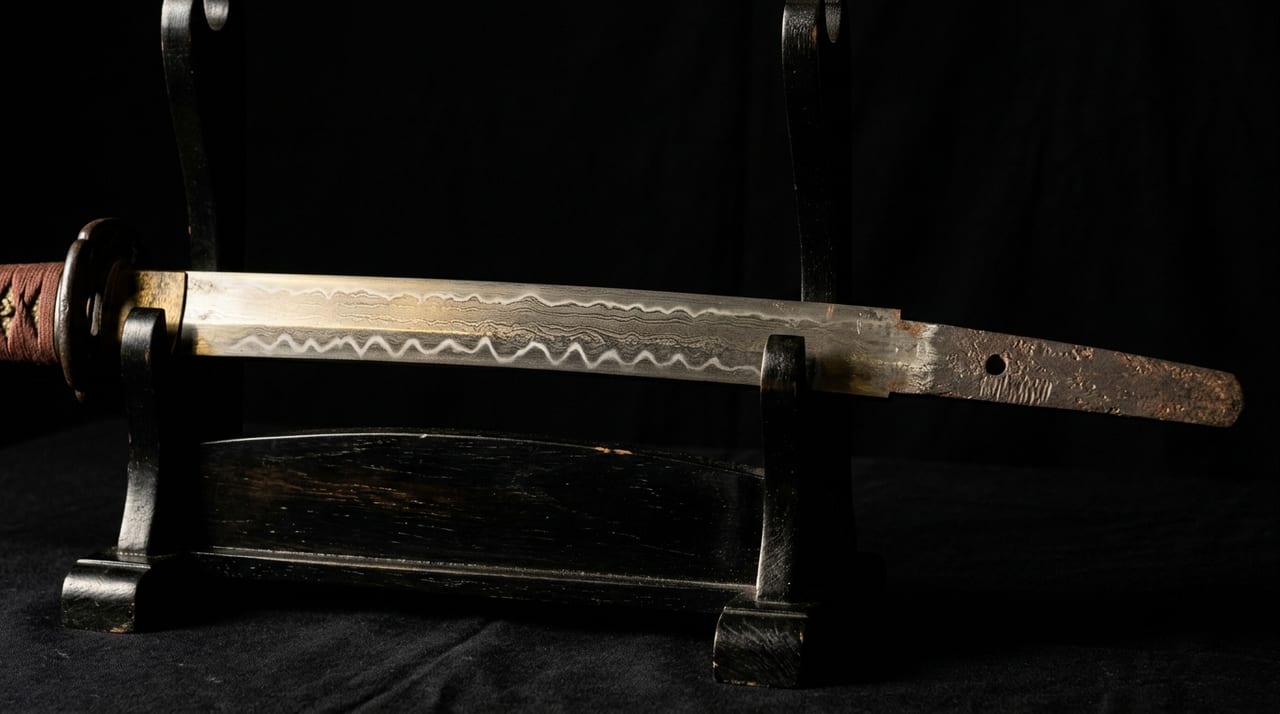
Yamashiro Tradition swords are generally characterized by mild hamon, well-packed jihada, and an overall refined finish. Very few authenticated works by Munechika remain in existence, with only a handful recognized as definite genuine pieces, but multiple swords attributed to "Den-Munechika" (attributed to Munechika) are preserved in museums and shrines throughout the country and continue to attract scholarly attention. The "Sanjo school," named after the locality Sanjo, derives from Munechika and his followers, and their technical influence on the later "Awtaguchi" school has been discussed.
Technical Continuity Between Munechika and the Awtaguchi School
The Awtaguchi school was a group of swordsmiths based in Awtaguchi, Kyoto (in present-day Higashiyama Ward) in the early Kamakura period and produced many master craftsmen including Kuniyoshi and Yoshimitsu. While there are various theories regarding the technical continuity between Munechika and the Awtaguchi school, it has been suggested that the Awtaguchi school developed on the basis of Munechika's style, which preceded the blacksmith tradition within Yamashiro Province.
Particularly, there are commonalities in the tightness of the jihada and the mildness of the hamon, and they are sometimes evaluated together as part of the "Kyoto style" (kyomono) tradition of refined finishing. The flow of technique from Munechika to Awtaguchi is an important perspective for understanding the internal development of the Yamashiro Tradition. Moreover, within the lineage of Yamashiro smithcraft that continues to the Rai school, Munechika continues to occupy a primordial position.
The Significance of Heian-Period Swords for Modern Collectors
Among swords transmitted as works of Munechika, the possibility that some include later added signatures or temporary signatures has been pointed out, and careful scholarly appraisal is required. From the perspective of sword research, it is important to comprehensively examine the tightness of the jihada, the characteristics of the hamon, and the formal features, and to confirm whether they are consistent with a manufacturing date in the late Heian period.
Understanding Munechika's style and the historical background of the Yamashiro Tradition greatly deepens the appreciation and collection of Japanese swords. Mikazuki Munechika is also displayed at the Tokyo National Museum, allowing visitors to directly experience the beauty of Heian-period swords through the actual object. TOUKENZA's online catalog features sword information aimed at collectors interested in koto and the Yamashiro Tradition. We hope that through the explanatory columns about featured swords, you will be able to deepen your understanding of the history and beauty of Japanese swords.