Han-tachi Koshirae: Structure and History — The Formal Sword-mounting Style Nurtured by Court Noble Culture and Surviving Important Examples
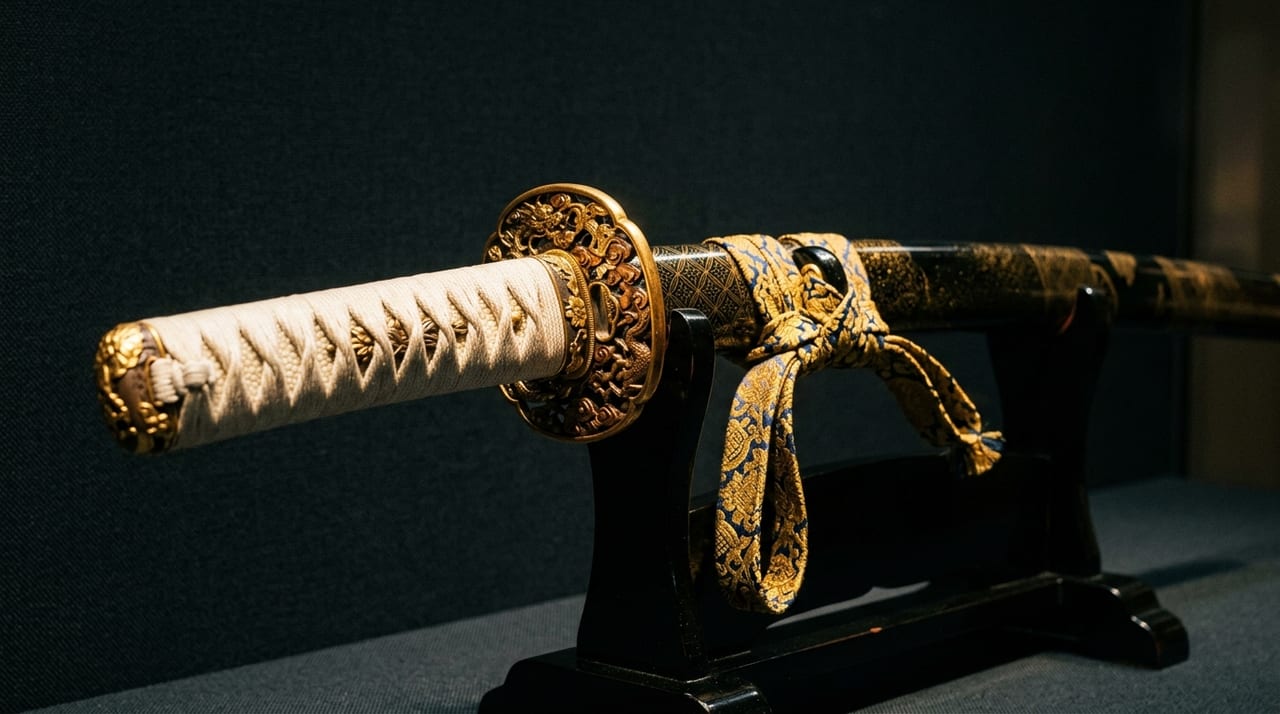 * Image is for illustrative purposes only.
Table of Contents
What Is Han-tachi Koshirae — Origins of the Name and Its Place in Sword Mounting
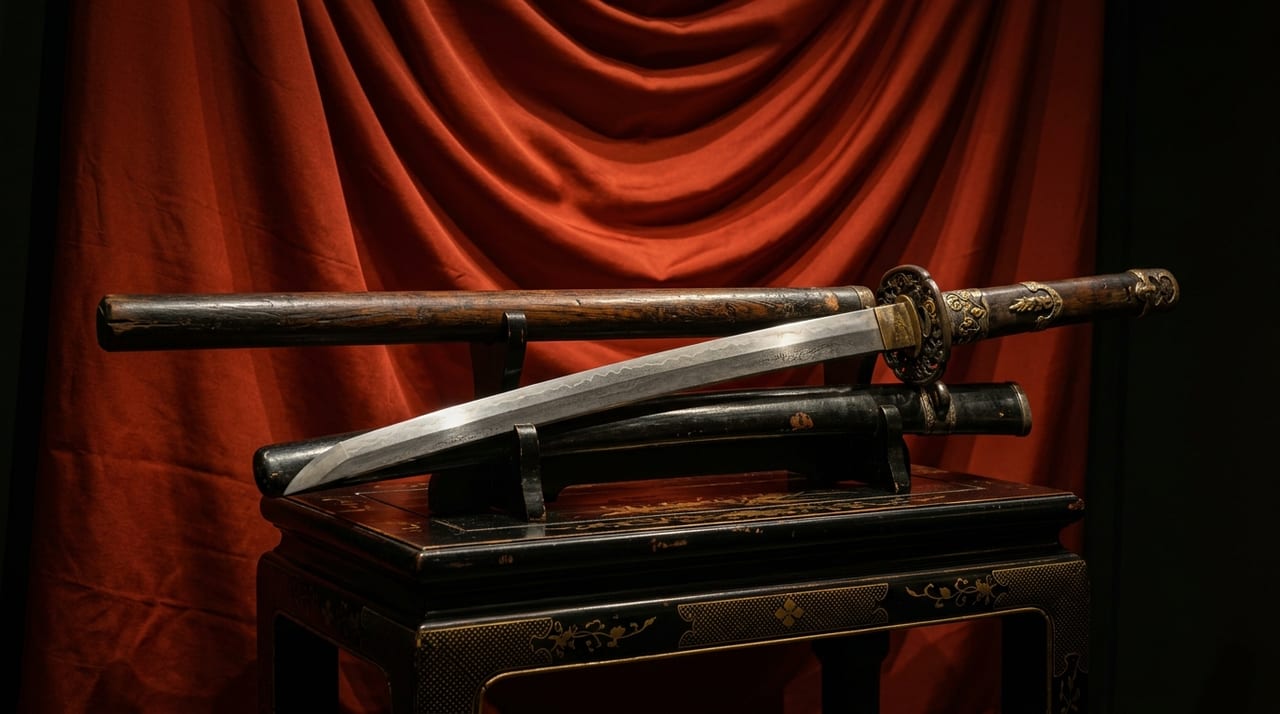
Han-tachi koshirae is a style of koshirae (mounting) that takes an intermediate form between tachi koshirae and uchigatana koshirae. The name "han-tachi" refers to a mounting that is not a complete tachi koshirae but incorporates some of its elements — a "half-tachi-like" style. More precisely, it is understood as a form in which both the tachi manner — suspending the sword from the obi (sash) with the blade facing downward (haiyō) — and the uchigatana manner of thrusting through the obi coexist, or as "a formal mounting close to tachi koshirae that was also intended to be worn as an uchigatana."
This koshirae style is believed to have developed during the period from the Muromachi era through the Azuchi-Momoyama period, and was used as formal attire by kuge (court nobles) and high-ranking warriors. Whereas pure tachi koshirae was positioned as full formal dress for ceremonies and Shinto rituals, han-tachi koshirae had the character of "semi-formal dress," intended for more everyday official occasions — audiences with the shogun, ceremonial processions, and important events of daimyo houses. This balance of practicality and formality is thought to have matched the social needs of the time.
Structural Characteristics — Differences from Tachi Koshirae
To understand the structure of han-tachi koshirae, one must first know the basics of pure tachi koshirae. Tachi koshirae takes the form in which the blade is housed in the saya (scabbard), metal fittings called ashikanamono are attached to the saya, and a cord called sageo is threaded through them to suspend the sword from the waist obi (haiyō). The tsuka (hilt) is shaped to be easy to grip even with the blade facing downward, and the sori (curvature) is fundamentally the koshi-zori characteristic of tachi.
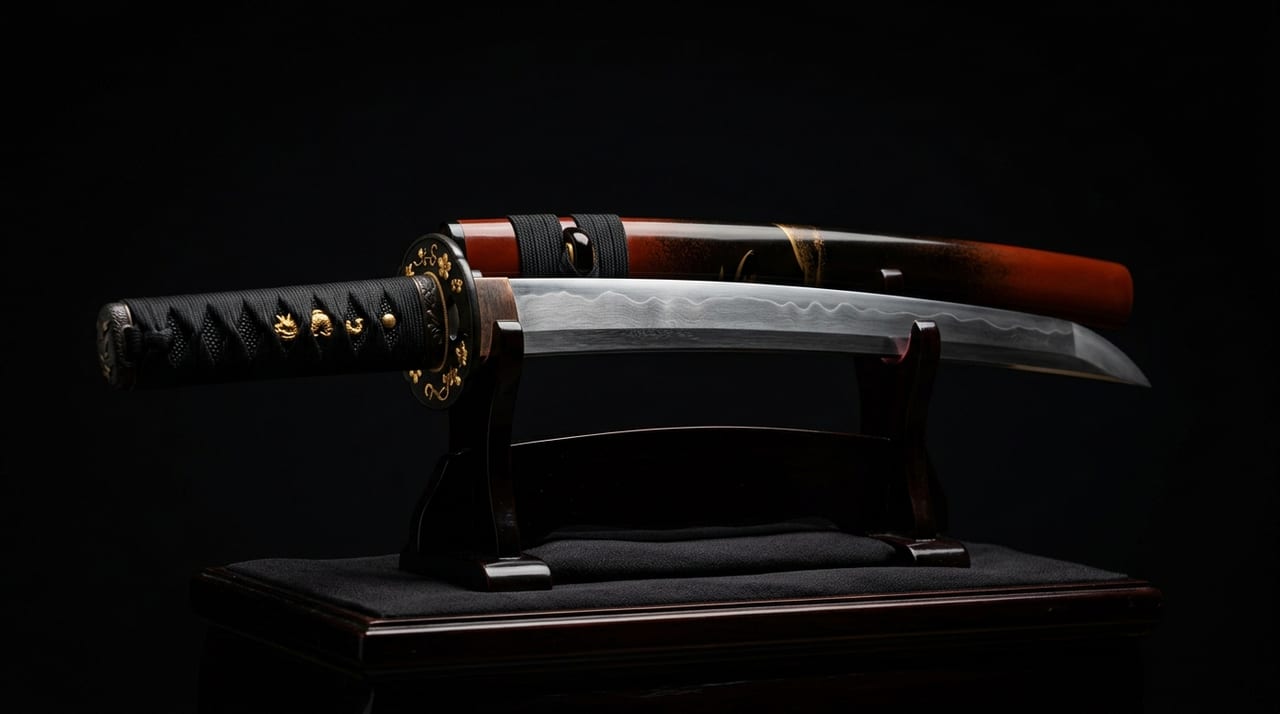
Han-tachi koshirae makes modifications to these tachi koshirae elements — particularly the shape of the saya, the ashikanamono, and the treatment of the sageo — while adopting a structure that can house either an uchigatana or a tachi blade. The saya follows the shape of a tachi saya while indicating the "semi-formal" level by reducing the number of fittings or slightly lowering the quality of the saya lacquer. The tsuka is slender like that of tachi koshirae, and the tsuka-maki (hilt wrapping) frequently uses silk or white thread for an elegant finish. The tsuba (hand guard) tends to be large and lavish, often featuring pictorial openwork or relief carving, with decorative beauty emphasized.
The Relationship between Court Noble Culture and Han-tachi Koshirae
Han-tachi koshirae held special significance in court noble society because the kuge's manner of wearing swords maintained a tradition distinct from that of warriors. Even during the Muromachi through Edo periods, when warriors had come to use uchigatana koshirae emphasizing practicality in daily life, court nobles continued to observe the traditional manner of tachi haiyō when attending the Emperor or Retired Emperor and at ceremonies in shrines and temples.
However, wearing pure tachi koshirae at all times was a considerable physical and financial burden, and han-tachi koshirae — which could "easily evoke the formal appearance of a tachi" — was highly valued. In particular, when men of the sekkan-ke (regent houses) such as the Konoe and Kujō houses, or of the seiga-ke (senior noble houses), attended court events, lavish koshirae that displayed their family status were required, making it an opportunity for kinko-shi (metal artisans), lacquerers, and scabbard makers to demonstrate their skill. It can also be said that orders for han-tachi koshirae played a significant role in raising the technical level of these craftsman groups involved in sword mounting.
Surviving Important Examples — Focusing on Museum Collections
Outstanding surviving examples of han-tachi koshirae are housed in major art museums, museums, and shrines. The Tokyo National Museum holds several pieces from the late Muromachi through the early Edo period, and the designs of their lavish koshirae fittings have attracted the attention of researchers. Shrines in Kyoto also preserve tachi and han-tachi that were once dedicated by court nobles, carefully kept as sacred objects.
These examples share the following three features.
- High-quality tsuka specifications, with the tsuka covered in white same-kawa (ray skin) or brown-dyed ray skin
- Lavish fuchi-kashira and menuki made of gold, shakudō, or shibuichi
- Saya finished in black lacquer with makie (sprinkled gold lacquer decoration) or chinkin (incised gold lacquer decoration)
The number of ashikanamono is typically two to three, and high-quality brocade-woven or braided sageo are used. The mei (signature) on the blades are also frequently those of leading tōkō (swordsmiths) of the time, demonstrating the prestige of these pieces as masterworks in which koshirae and blade form an integrated whole.
Evaluation and Research in the Modern Era
In modern nihontō research, han-tachi koshirae is a field with relatively less study than blade research, and debate continues even among tōsōgu (sword fittings) researchers regarding its definition and scope. In NBTHK (Society for the Preservation of Japanese Art Swords) appraisals as well, blade assessment is primary, and koshirae are often evaluated as tsukitari (accessories); however, outstanding koshirae may receive independent designation as jūyō bunkazai (Important Cultural Property).
From the perspective of enthusiasts and collectors, han-tachi koshirae is popular as an "accessible high-quality koshirae" — easier to obtain than pure tachi koshirae (because its slightly lower status means more pieces circulate) yet more prestigious than uchigatana koshirae. However, identifying forgeries and later-replacement koshirae (atoogi) requires a specialist eye, and consulting a reputable sword dealer or appraisal organization before purchase is strongly recommended. As of 2026, outstanding examples of han-tachi koshirae are increasingly appearing at overseas auction houses, and international interest is growing.