 * Image is for illustrative purposes only.
Kumamoto Castle Honmaru Palace & Kumamoto Castle Museum Wakuwaku-za
熊本城本丸御殿・熊本城ミュージアム わくわく座
Overview
Kumamoto Castle History and Kato Kiyomasa
Kumamoto Castle, constructed beginning in 1601 (Keichō 6) by Kato Kiyomasa, stands as one of the finest fortified castles in western Japan, known for its impregnable defenses featuring double moats utilizing the Shirakawa and Tsuboi rivers and numerous watchtowers. Kiyomasa fully applied fortification techniques learned from the Korean Campaign, and the distinctive stone wall curve known as "musha-gaeshi" (warrior-turning walls) represents a crystallization of advanced engineering that astounds modern architects. During the Satsuma Rebellion (Meiji 10, 1877), the castle served as a garrison stronghold for government forces, withstanding fierce attacks from Saigō Takamori's Satsuma forces for over fifty days. In this battle, the main keep, honmaru palace, and numerous structures were destroyed by fire, though the long palisade wall, Uto turret, and some other buildings survived. Kumamoto Castle's grandeur has been preserved as a National Special Historic Site for posterity. The 2016 Kumamoto earthquake caused severe damage including major stone wall collapses, but restoration efforts supported by nationwide assistance progressed, and the main keep reopened to the public in 2021.
Sword Collections and Higo Samurai Culture
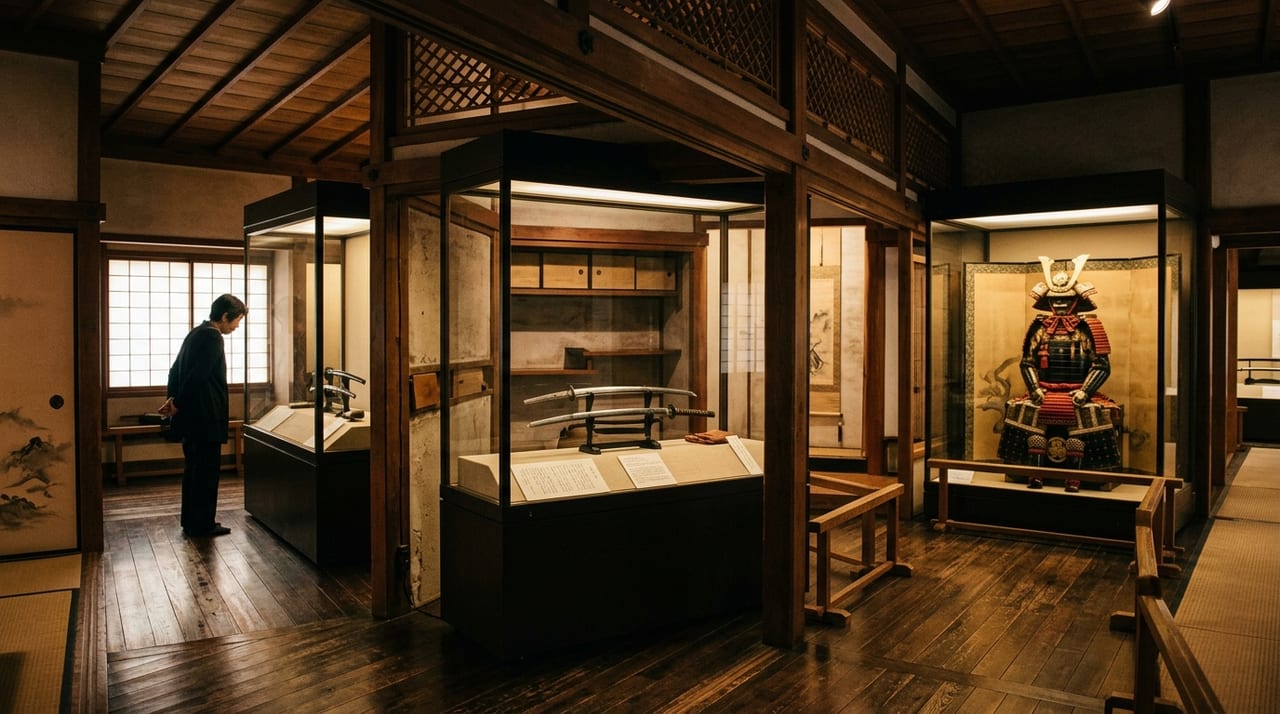
The Kumamoto Castle Museum 'Wakuwaku-za' and the honmaru palace exhibition area display swords, armor, and protective gear associated with Kato Kiyomasa and the Hosokawa family, offering visitors an immersive experience of Higo samurai culture. Kato Kiyomasa was a formidable military leader and powerful commander under Toyotomi Hideyoshi who participated in the Korean Campaign. His armor and swords preserve the legacy of the great hero known affectionately as 'Seishōkō' to Kumamoto citizens. The Hosokawa family ruled Higo's 540,000 koku domain throughout the Edo period, with successive daimyo often being cultured warriors who valued both martial and civil accomplishments. Sannsai (Hosokawa Tadaoki), a principal disciple of Sen no Rikyū, was versed in tea ceremony culture and possessed sophisticated connoisseurship in sword appreciation. Among Higo swordsmiths, the Enju school, following the Rai tradition, was active around Kikuchi during the Old Sword period, while Dōtanuki, employed by Kato Kiyomasa, achieved renown as a practical combat blade during the Momoyama period. The swords preserved at Kumamoto Castle are displayed in a way that contrasts the blade cultures of two distinct samurai traditions—the Sengoku warlord and Edo daimyo—allowing visitors to appreciate the cultural diversity of Japanese swords.
Honmaru Palace Restoration and Exhibition Space
The Kumamoto Castle honmaru palace was reconstructed in wood in 2008 (Heisei 20), faithfully recreating the shoin-zukuri architectural style of the Edo period. The configuration of interconnected rooms—including the grand hall, Shōkunshi Chamber, and sukiya-style tearoom—revives the atmosphere of the administrative and residential space once used by successive Hosokawa daimyo. Shoin architectural elements such as tokonoma alcoves, staggered shelves, and decorative canopy stands have been carefully restored, and the swords and armor displayed within evoke the very atmosphere of when the daimyo used these spaces. The honmaru palace suffered damage in the earthquake, but after restoration is now open to visitors, serving as a symbol of Kumamoto Castle's recovery and offering a powerfully moving experience.
Kumamoto Castle Special Exhibition and Surrounding Tourism
Designated as a National Special Historic Site, Kumamoto Castle attracts over one million visitors annually from across Japan, making it Kumamoto Prefecture's premier tourist destination. Beyond sword and armor exhibits, the castle grounds offer abundant attractions including stone wall walking courses, the honmaru palace, and the main keep, providing entertainment for a half-day to full-day visit. Visiting adjacent facilities such as the Kumamoto Municipal Museum and Kumamoto Contemporary Art Museum provides deeper insight into Kumamoto's history and culture. Located in central Kumamoto City with convenient access via Kumamoto Station, streetcars, and buses, it serves as an excellent base for tourism to Aso and Amakusa. The facility features displays related to Kato Kiyomasa's martial exploits, with profound respect for the local hero evident throughout.
The Satsuma Rebellion and Historical Testimony of Swords
The Satsuma Rebellion, the last time Kumamoto Castle served as an active combat zone, symbolized the end of the samurai sword era in Japanese history. Occurring just one year after the Prohibition of Swords edict (1876), this rebellion saw Satsuma samurai defeated by government forces armed with modern rifles, effectively marking the end of the sword as a practical weapon. Exhibits of government garrison records and weapons related to the Satsuma Rebellion vividly document the historical moment when swords transitioned from 'weapons' to 'cultural artifacts and works of art,' providing invaluable content for understanding the positioning of Japanese swords as fine art objects from the Meiji era onward.
Higo Mounting and Hosokawa Sword Fittings Culture
Kumamoto developed distinctive culture not only in swords themselves but also in the field of koshirae (sword mountings and fittings). The Higo mounting style, developed in Higo's Kumamoto domain during the Edo period, is characterized by austere, refined design that strongly reflects the samurai virtue of practical strength and integrity. Works by Higo metalworkers—including sturdy iron tsuba hardened through tempering, functional mokko and circular guard designs, and exquisitely detailed metal fittings—receive high acclaim nationwide. Higo metalworking traces its lineage to Hayashi Matashichi as founder, with later masters such as Hirata Hikozō, Nishigaki Kanshirō, and Shimizu Jinshiro establishing distinct traditions that continue to influence contemporary tsuka-tetsuke masters. The museum's collection includes fine examples of Higo mountings, allowing visitors to study Hosokawa samurai aesthetics through authentic examples of this distinctive mounting culture.
Exhibition Facilities Overview and Surrounding Cultural Resources
The Kumamoto Castle Museum 'Wakuwaku-za' presents castle history through video and interactive exhibits in an accessible format that appeals to families. The honmaru palace exhibition space offers appreciation of armor and swords in a historically evocative setting. Combined visits to neighboring institutions such as the Kumamoto Municipal Museum and Kumamoto Prefectural Museum of Art (Hosokawa Collection) provide deeper engagement with Kumamoto's history and craft culture. As a central city in Kyushu with excellent access via airport and bullet train, Kumamoto serves as a base for exploring destinations of natural beauty and historical interest such as Aso, Amakusa, and Hitoyoshi.
Highlights
- Armor and Swords of Kato Kiyomasa — Military equipment of the formidable general Kiyomasa, who participated in the Korean Campaign. The martial legacy of the local hero affectionately known as 'Seishōkō-san' by Kumamoto residents
- Swords Associated with Hosokawa Sannsai (Tadaoki) — Principal disciple of Sen no Rikyū and master of both martial and civil arts. Experience the refined samurai culture of the Hosokawa, who combined expertise in tea ceremony and sword connoisseurship
- Higo Swordsmiths: Enju School and Dōtanuki — The Enju tradition, following the Rai lineage and active around Kikuchi, alongside Dōtanuki, renowned as a practical combat blade in Kato Kiyomasa's service. Discover Higo's distinctive blade culture within regional history
- Integrated Appreciation with the Reconstructed Honmaru Palace — View swords and armor within the 2008-restored shoin-style palace space. An exhibition experience that captures the atmosphere of spaces once inhabited by daimyo
- Testament to the Satsuma Rebellion — Kumamoto Castle as the stage of the final samurai uprising following the Sword Prohibition edict. Exhibits that document the historic moment when swords transitioned from weapons to cultural treasures
* Opening hours and exhibitions are subject to change. Please check the official website before visiting.