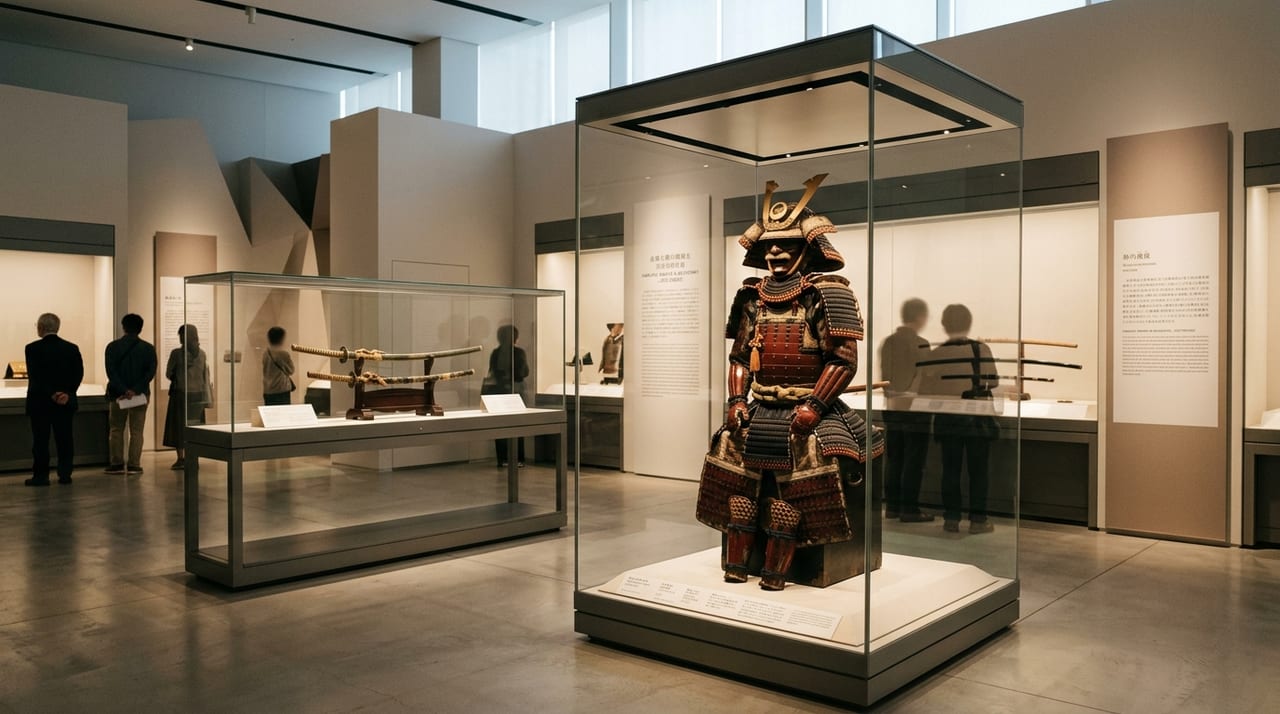
 * Image is for illustrative purposes only.
Yatsushiro City Museum Miraino-Mori Museum
八代市立博物館 未来の森ミュージアム
- Location
- Yatsushiro City, Kumamoto Prefecture
- Access
- About 3 km from Yatsushiro Station on the JR Kagoshima Main Line and Hisatsu Orange Railway, or about 15 minutes by taxi from Shin-Yatsushiro Station on the Kyūshū Shinkansen. By bus, get off at the stop “Kensatsuchō, Hōmukyoku, Shi Hakubutsukan-mae,” right in front of the museum. About 6 km from the Yatsushiro IC on the Kyūshū Expressway. Adjacent to Yatsushiro Castle Ruins (Matsue Castle)
- Opening Hours
- ※ Temporarily closed until further notice due to the earthquake of July 28, 2026 (Reiwa 8) (reopening date to be announced on the official website; the on-site café will be open from October 1). Usually 9:00–17:00 (last admission 16:30). Closed Mondays (if a national holiday, open and closed the following day). Closed for New Year holidays
- Admission
- Permanent exhibitions: adults 310 yen, university students 200 yen, high-school students and younger free (special exhibitions charged separately)
Overview
Yatsushiro City Museum Miraino-Mori Museum is a municipal museum located in Yatsushiro City in southern Kumamoto Prefecture, and it opened in October, Heisei 3 (1991). It introduces the history and way of life of the Yatsushiro region from ancient times to the present, and it also displays arts and crafts handed down by the Matsui family, who were lords of Yatsushiro Castle. The building was designed by Itō Toyo Architecture & Design Office. In the early modern period Yatsushiro was a castle town placed under the rule of the Katō clan and then the Hosokawa clan, and it is an area where abundant cultural properties accumulated by the samurai households remain.
In the Second Permanent Exhibition Room, the museum displays weapons and armor, paintings and calligraphy, Noh masks and Noh costumes, furnishings, and tea ceremony utensils handed down by the Matsui family (held by the general incorporated foundation Matsui Bunko). The displays are changed several times a year. During the Edo period the Matsui family served as chief retainers to the Hosokawa family, lords of Kumamoto Domain, and resided at Yatsushiro Castle (also known as Matsue Castle). The Matsui family is known not only for its skill as chief retainers but also for its deep appreciation of the tea ceremony and Noh theater, and its handed-down collection is regarded as a rare samurai collection even on a national scale.
In addition to these displays, the permanent exhibitions present a scale model of Yatsushiro Castle, a figure model of the Myōken-gū Shrine festival procession, and Yatsushiro ware (Yatsushiro-yaki).
The museum is easy to reach from the Kyūshū Expressway Yatsushiro IC, and it also functions as a cultural hub for touring southern Kyūshū in combination with sightseeing in Minamata and Amakusa.
Highlights
- Traditional belongings of the Matsui family, lords of Yatsushiro Castle — weapons and armor, paintings and calligraphy, Noh masks and Noh costumes, furnishings, and more (held by Matsui Bunko), presented through rotating displays
- Matsui family tea ceremony utensils — introduces prized pieces handed down in the Matsui family, which was fond of the tea ceremony
- Scale model of Yatsushiro Castle and figure model of the Myōken-gū festival procession — permanent exhibits that present the castle and the festival in three dimensions
- Architecture by Itō Toyo — opened in October, Heisei 3 (1991), museum architecture designed by Itō Toyo Architecture & Design Office
- Historical experience together with Yatsushiro Castle Ruins (Matsue Castle) — the castle-ruins park adjacent to the museum can be visited along with the exhibits
- Hub for sightseeing in southern Kyūshū — about 6 km from the Kyūshū Expressway Yatsushiro IC, easy to combine with sightseeing toward Minamata and Amakusa
* Opening hours and exhibitions are subject to change. Please check the official website before visiting.