Awataguchi Yoshimitsu's Famous Swords — Where Are Ichigo Hitofuri and Honebami Today? Complete Ownership Record
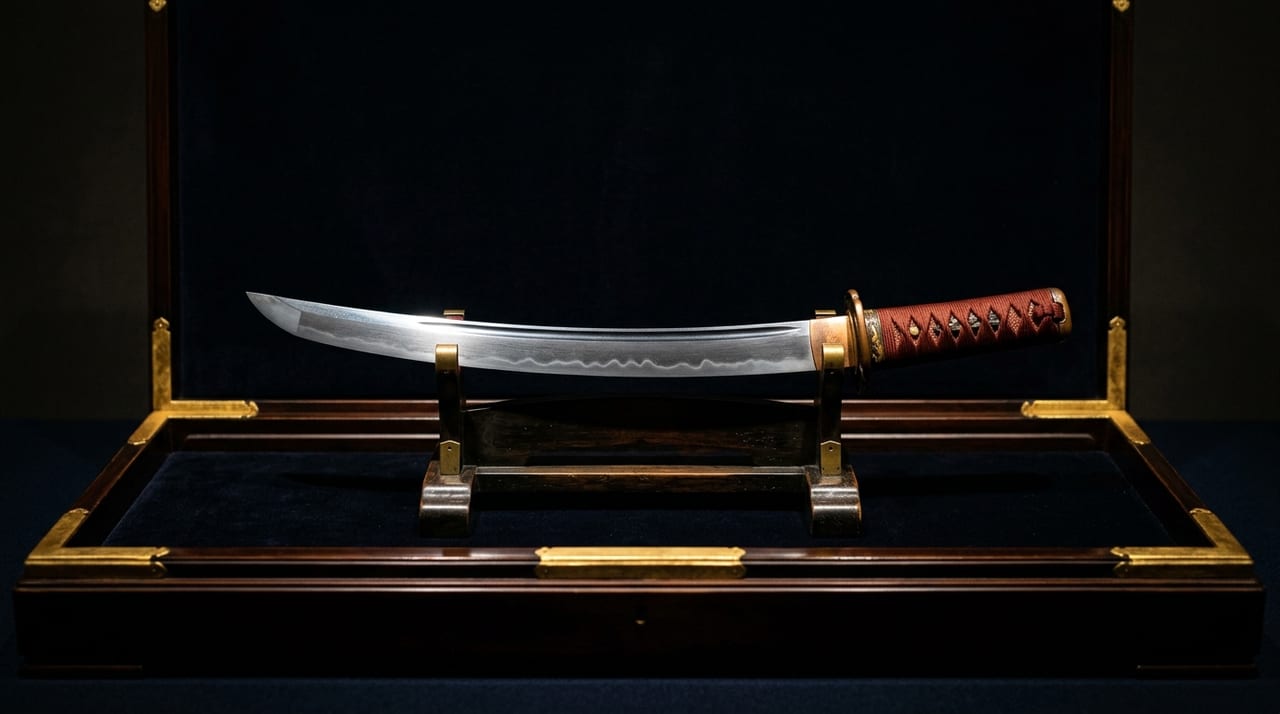 * Image is for illustrative purposes only.
Table of Contents
Awataguchi Yoshimitsu (粟田口吉光)—Master of Short Blades, Counted Among the Three Great Swordsmiths
Awataguchi Yoshimitsu was a bladesmith who flourished in the late Kamakura period (late 13th century) in the Awataguchi district of Kyoto. His common name was "Tōshirō (藤四郎)." In the Edo period's Kyōhō Meibutsu-chō, he was counted among the "Three Great Swordsmiths (Tenka Sansaku)" alongside Masamune of Sōshū and Gō Yoshihiro of Etchū, and his name is inscribed in the history of Japanese sword-craftsmanship particularly as a master of short blade construction. Many of Yoshimitsu's celebrated blades are called by the epithet "~Tōshirō" after this common name.
Three reasons explain why so many of Yoshimitsu's renowned blades survive to the present day. First, short blades are shorter than tachi, making them more likely to endure warfare and fire. Second, in many cases they were managed with great care as treasures and precious objects (gyobutsu) of those in power, such as Toyotomi Hideyoshi and the Tokugawa shoguns. Third, the reputation of the "Yoshimitsu" signature remained consistently high through the ages, and successive owners have carefully preserved these blades.
Honebami Tōshirō (骨喰藤四郎)—The Naginata-Remake Wakizashi Feared for "Slashing Through Bone"
Location: Toyokuni Shrine (Kyoto) collection, deposited with Kyoto National Museum, Designated Important Cultural Property
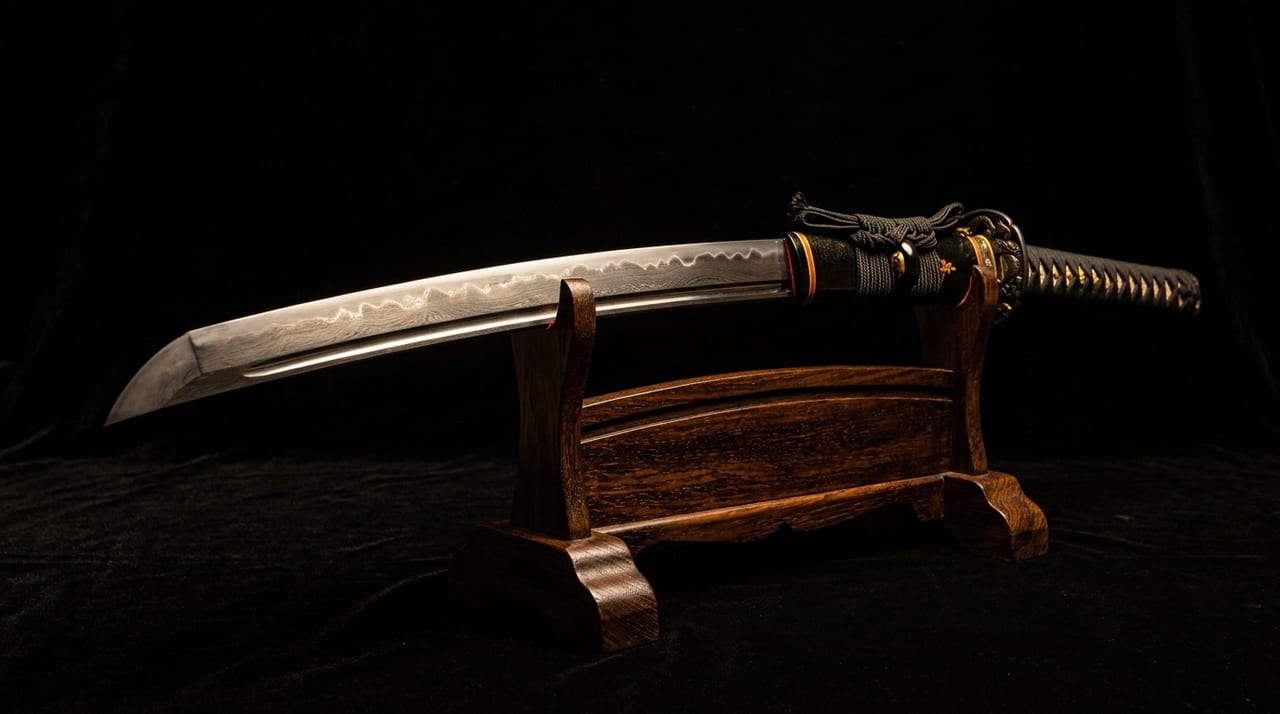
The epithet "Honebami" ("bone eater") derives from a legend transmitted in the Ōtomo clan of Bungo: "it was said that merely mimicking a slash with this blade would shatter the opponent's bone." The blade type is not a short blade but a naginata-remake wakizashi (naginata-naoshi no wakizashi)—a naginata polished into a short sword—with a blade length of approximately 58.9 cm. The blade bears carvings such as the Kurikara dragon, and is known as an example demonstrating the skill of the Awataguchi school's sculptural craftsmanship.
Key history: It was presented from the Ōtomo clan to the Ashikaga shoguns, survived the turmoil of the Sengoku period, and passed into the hands of Toyotomi Hideyoshi. After the fall of the Toyotomi house, it entered the collection of the Tokugawa shogunate. It was damaged in the Great Fire of Meireki (1657) and underwent re-blading (saiba) by bladesmiths of the Echizen Yasutsugu lineage. In the Meiji period it was dedicated to Toyokuni Shrine in Kyoto, which enshrines Toyotomi Hideyoshi, and is currently deposited with the Kyoto National Museum. It is sometimes displayed at exhibitions.
Ichigo Hitofuri (一期一振)—Yoshimitsu's Only Tachi
Location: Imperial treasures (Imperial Household Agency Chamberlain's Office), principally closed to public viewing
Because Yoshimitsu, a master of short blades, is said to have forged only one tachi in his entire lifetime, it bears the name "Ichigo Hitofuri" (One Time, One Strike). The current blade length is approximately 68.8 cm, and it is said that Toyotomi Hideyoshi had it polished down (suriage) to match his own build.
Key history: It was presented from the Mōri clan to Toyotomi Hideyoshi, who treasured it deeply. It became fire-scarred in the flames of the Osaka Summer Campaign (1615), but by order of Tokugawa Ieyasu it was re-bladed by Echizen Yasutsugu, and subsequently passed to the Owari Tokugawa house. In Keiō 3 (1867), it was presented from the Owari house to the imperial court, and is now managed by the Imperial Household Agency as imperial property. As imperial treasures are exempt from designation as National Treasures or Important Cultural Properties under the Cultural Properties Protection Law, opportunities for public viewing are extremely rare.
The Mystery of Ichigo Hitofuri: Among blade researchers, debate continues over whether "it was originally forged as a tachi." As an exceptional work from Yoshimitsu, a specialist in short blades, this deepens the mystique of the blade.
Atsushi Tōshirō (厚藤四郎)—A National Treasure Short Blade Named for Its Thick Spine
Location: Tokyo National Museum collection, National Treasure
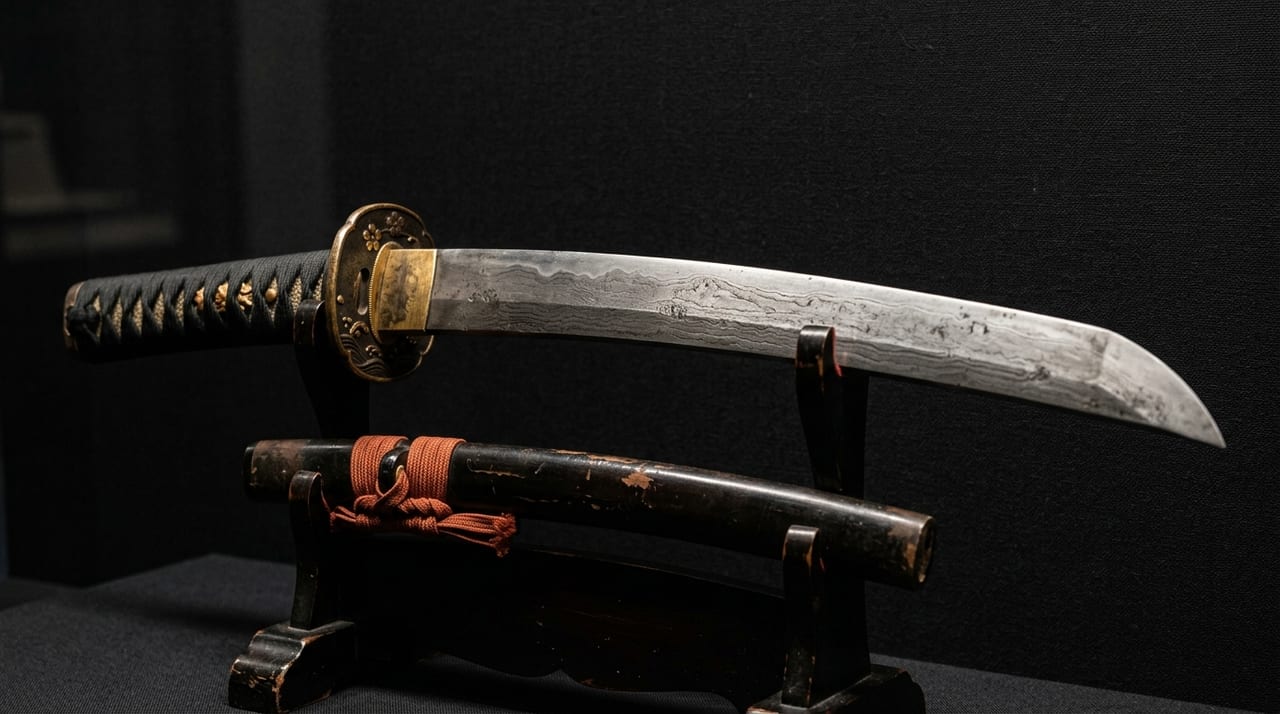
The epithet "Atsushi" derives from the thickness of the ridge (mune) side—the spine (kasane)—which measures approximately 1 cm, nearly double that of a typical short blade. The blade length is approximately 21.8 cm. It is a typical example of robust construction called "armor-piercer (yoroidōshi)," designed to penetrate gaps in armor during grappling. The provenance underwent various transitions through different families, and is currently held by the Tokyo National Museum. It is a representative work of Yoshimitsu's that is relatively easy to view in person, as it is regularly displayed in the museum's sword exhibition room.
Gotō Tōshirō (後藤藤四郎)—A National Treasure Associated with the Gotō Family Gold Mint
Location: Tokugawa Art Museum (Nagoya) collection, National Treasure
The name is said to derive from the fact that it was owned by Gotō Shōzaburō Mitsutsugu (後藤庄三郎光次), who oversaw the gold mint in the early Edo period. With a blade length of approximately 27.6 cm, it is on the longer side for a Yoshimitsu short blade, and possesses a dignified form with a wide blade width. It subsequently passed to the Owari Tokugawa house and is currently held by the Tokugawa Art Museum. It is sometimes displayed in the museum's sword exhibitions, offering an easily accessible opportunity to view Yoshimitsu's work in Nagoya.
Yagen Tōshirō (薬研藤四郎)—The Oda Nobunaga's Beloved Blade That Vanished at Honnō-ji
The name's origin lies not in its form but in an anecdote. When the Muromachi period warrior Hatakeyama Masanaga attempted seppuku, this short blade did not pierce the lord's abdomen; when thrown away, it pierced through a mortar (yagen—an iron vessel for grinding medicines) beside him—from the legend that it "does not wound the master's body," it came to be called "Yagen Tōshirō."
Subsequently, it was presented from Matsunaga Hisahide to Oda Nobunaga and became Nobunaga's beloved blade, but after the Honnō-ji Incident (1582), reliable records of its whereabouts cease. Various theories exist—theories of destruction by fire, theories of removal—but its current location remains unknown. Multiple blades claiming the name "Yagen Tōshirō" appeared after the Meiji period, but none has been confirmed as genuine. It is remembered among blade enthusiasts as a legendary, lost treasure.
A List of Extant Celebrated Blades by Awataguchi Yoshimitsu—Collections and Viewing Opportunities
| Name | Type | Collection/Management | Designation | Viewing Opportunity |
|---|---|---|---|---|
| Ichigo Hitofuri | Tachi | Imperial treasures (Imperial Household Agency) | ── (Imperial treasure) | Principally closed to public |
| Honebami Tōshirō | Naginata-remake wakizashi | Toyokuni Shrine (deposited with Kyoto National Museum) | Important Cultural Property | Special exhibitions, etc. |
| Atsushi Tōshirō | Short blade | Tokyo National Museum | National Treasure | Regular exhibition |
| Gotō Tōshirō | Short blade | Tokugawa Art Museum (Nagoya) | National Treasure | Sword exhibitions |
| Hirano Tōshirō | Short blade | Imperial treasures (Imperial Household Agency) | ── (Imperial treasure) | Principally closed to public |
| Namazuo Tōshirō | Naginata-remake wakizashi | Tokugawa Art Museum (Nagoya) | ※ | Sword exhibitions |
| Akita Tōshirō | Short blade | Kyoto National Museum | Important Cultural Property | Regular exhibitions, etc. |
| Shinano Tōshirō | Short blade | Chidō Museum (Tsuruoka, Yamagata) | Important Cultural Property | Exhibition planning |
| Gokotai | Short blade | Uesugi house collection (Yonezawa) | ※ | Special viewing history |
| Yagen Tōshirō | Short blade | Location unknown (whereabouts unknown since Honnō-ji Incident) | ── | ── |
※The designation category is omitted in this article. "── (Imperial treasure)" indicates that as imperial property, it falls outside the scope of National Treasure or Important Cultural Property designation. Honebami Tōshirō held by Toyokuni Shrine is displayed at exhibitions by the Kyoto National Museum, while the celebrated blades of the Tokugawa Art Museum and Tokyo National Museum have regular viewing opportunities through sword exhibitions.
Common Techniques Among Yoshimitsu's Celebrated Blades—The Beauty of the Awataguchi School's "Nioi"
To clarify the common technical characteristics found in Yoshimitsu's celebrated blades such as Honebami, Ichigo Hitofuri, Gotō, and Atsushi Tōshirō:
Nioi-deki: The paramount characteristic of Yoshimitsu is the quality of the "nioi." The particles of nie are arranged with exceptional fineness and uniformity, and the boundary of the blade pattern spreads gracefully as if obscured by mist. It embodies the "beauty of stillness" in contrast to the rough nie of the Sōshū tradition.
Brightness of the ground steel: As a characteristic of the Awataguchi school as a whole, the ground steel is described as "bright." This is a visual effect resulting from uniform layering of small plate grain, creating uniform light reflection during the forging process.
Dignity of the tip (bōshi): The tip of Yoshimitsu's short blades ranges from small-round to medium-round, with a deep return that conveys dignity. The careful finishing of the tip demonstrates Yoshimitsu's high technical mastery as a short blade specialist.
Frequently Asked Questions (FAQ)
How is Awataguchi Yoshimitsu read, and what is the origin of "Tōshirō"?
It is read "Awataguchi Yoshimitsu." He was a bladesmith of the Awataguchi school who was active in the place-name of Awataguchi in Kyoto, and from his common name "Tōshirō," many of Yoshimitsu's short blades are called by the epithet "~Tōshirō," such as "Atsushi Tōshirō" or "Yagen Tōshirō."
Where is Ichigo Hitofuri now? Does it still exist?
It is managed by the Imperial Household Agency Chamberlain's Office as imperial property and is principally closed to public viewing. Though it became fire-scarred in the Osaka Summer Campaign, it survives after undergoing re-blading by Echizen Yasutsugu.
Whose sword was Honebami Tōshirō?
It passed through the Ōtomo clan → Ashikaga shoguns → Toyotomi Hideyoshi → Tokugawa shogunate, and was dedicated to Toyokuni Shrine in Kyoto in the Meiji period. It is currently deposited with the Kyoto National Museum.
Does Yagen Tōshirō still exist?
Its whereabouts are uncertain after the Honnō-ji Incident, and its continued existence has not been confirmed. Blades claiming the same name appeared in later periods, but none has been verified as genuine.
Conclusion—What Yoshimitsu's Celebrated Blades Tell Us About the Pinnacle of Kamakura Bladsmiths
The background to why Awataguchi Yoshimitsu's celebrated blades have been carefully transmitted to the modern era lies in the protection of those in power, the maturation of blade culture, and the heightened awareness of cultural property preservation. From celebrated blades such as Atsushi Tōshirō and Gotō Tōshirō, which can be viewed in person at museums, to Ichigo Hitofuri and Hirano Tōshirō, kept private as imperial treasures, and to the missing Yagen Tōshirō, the provenance of each single blade is itself a microcosm of Japanese history. Visiting a museum to see a Yoshimitsu short blade is both the finest introduction to Japanese blade appreciation and its highest achievement.