Ashikaga Yoshiteru and the Swordsman Shogun — The Sword Techniques Passed Down Directly by Tsukahara Bokuden and the Final Battle at the Nijō Palace
 * Image is for illustrative purposes only.
Table of Contents
Ashikaga Yoshiteru — The Thirteenth Shogun of the Muromachi Period, Known as the "Swordsman Shogun"
Ashikaga Yoshiteru (1536–1565) was the thirteenth shogun of the Muromachi shogunate. He succeeded his father Ashikaga Yoshiharu as shogun, but his reign was a succession of hardships — the seizure of real power over the shogunate by strongmen such as the Miyoshi clan and the collapse of shogunal authority.
However, the reason Yoshiteru has been celebrated by later generations as the "Swordsman Shogun" lies not in his political hardships but in his exceptional talent for swordsmanship, his discipleship under the sword saint Tsukahara Bokuden, and the manner of his final stand in 1565 (Eiroku 8).
Tsukahara Bokuden and Their Relationship — The Shogun Who Received Direct Instruction from the Sword Saint
Tsukahara Bokuden (1489–1571) was the founder of Kashima Shintō-ryū and one of the greatest swordsmen of the Sengoku period. Called "kenjō" (sword saint), he is legendary for having fought thirty-seven battles without a single defeat and never once receiving a wound.
The Master-Disciple Relationship between Yoshiteru and Bokuden: According to historical sources, Tsukahara Bokuden instructed Ashikaga Yoshiteru in swordsmanship in his later years (around his late seventies). Teaching swordsmanship to the shogun was an honor that at the same time further established Bokuden's reputation as a swordsman.
There is a tradition that Yoshiteru was transmitted Bokuden's supreme secret technique, known as the "hidachi ichi no tachi." Various theories exist about the true nature of this "ichi no tachi," but it is said to have been a practical combat technique using a live blade.
Yoshiteru's Swordsmanship Training: Yoshiteru is said to have pursued swordsmanship training with extraordinary zeal. Alongside his duties as shogun he sparred with swordsmen of various schools and was known as a sincere martial artist who went beyond mere hobby. He is also said to have had exchanges with swordsmen of the Shinkage-ryū such as Kamiizumi Nobutsuna.
Blades Possessed by Ashikaga Yoshiteru — Their Relationship to meibutsu
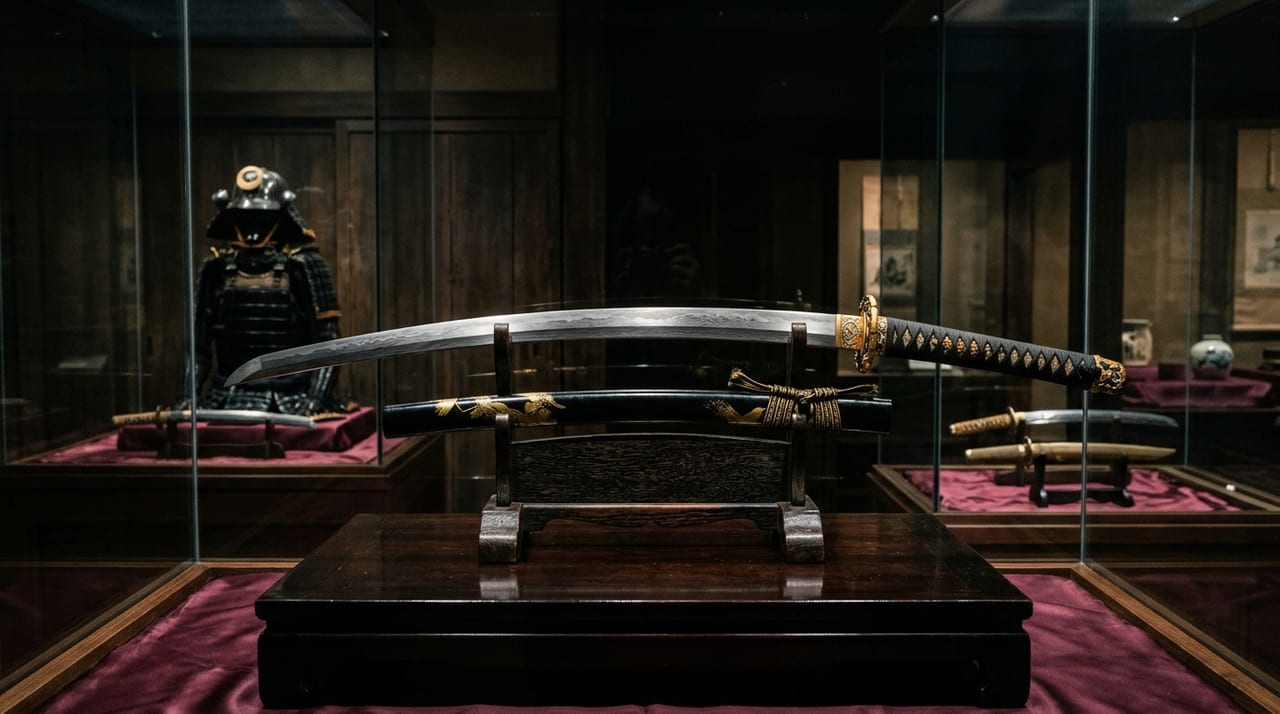
The Muromachi shogunal house owned a collection of meibutsu (named treasure swords) known as the "Higashiyama gyobutsu," and swords were among them. The full picture of the shogunal house's sword collection is covered in "The Sword Collection of the Ashikaga Shogunal House — The Discerning Eye of the Dōbōshū Nurtured by the Muromachi Shogunate and the Swords of the Higashiyama gyobutsu."
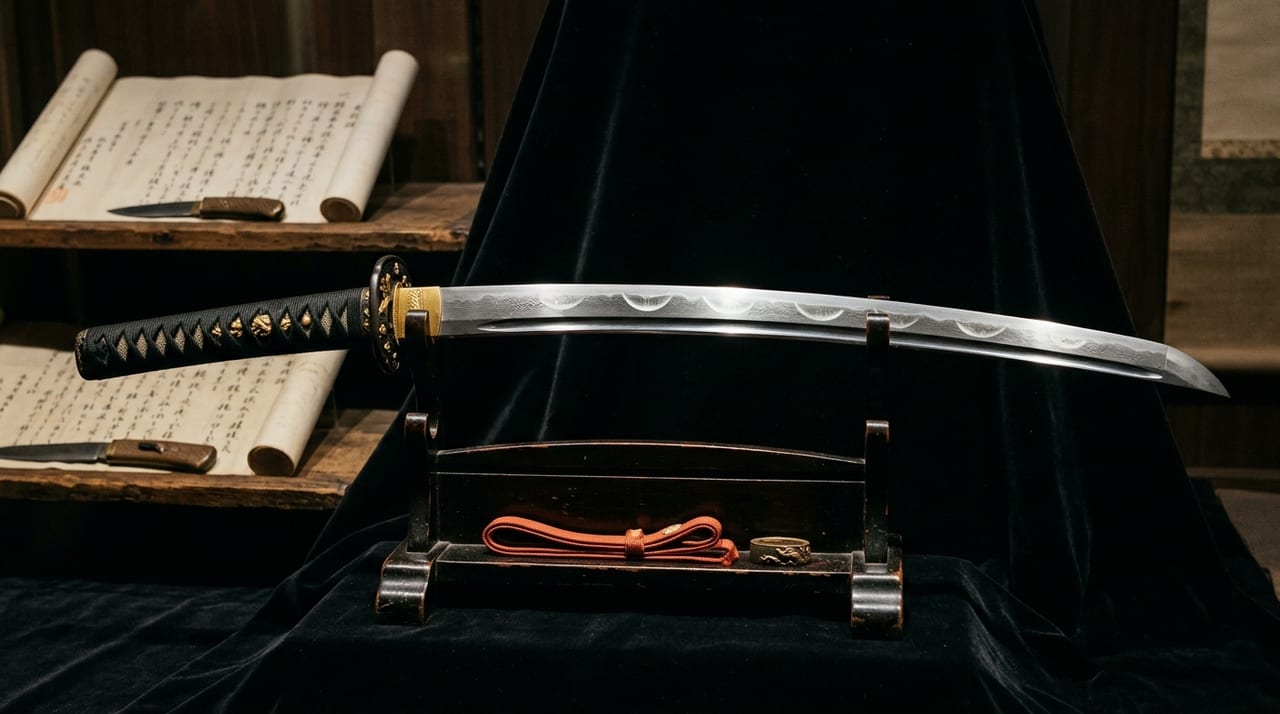
Records of Yoshiteru and Swords: Historical sources confirm that Yoshiteru possessed meibutsu swords as shogun. Particularly noteworthy are the following points.
- Yoshiteru also inherited the swords that the shogunal house had passed down through the generations
- The live blades used during his training under Tsukahara Bokuden are said to have been meibutsu swords selected from the shogunal house's sword storehouse
- Records remain of Yoshiteru presenting swords to the young Oda Nobunaga at a shogunal audience around 1558 (Eiroku 1)
Specific records of meibutsu attributed to Yoshiteru are fragmentary, but there is also a tradition that swords attributed to Sanjō Kokaji Munechika were among the shogunal house's gyobutsu.
The Eiroku Incident (1565) — The Final Battle and the Sword Legend
On the 19th day of the 5th month of Eiroku 8 (1565), the Miyoshi Sanninshu, Miyoshi Yoshitsugu, and Matsunaga Hisamichi (son of Matsunaga Hisahide) suddenly attacked the Nijō Palace (Yoshiteru's residence). Matsunaga Hisahide himself was in Yamato Province that day and was not present at the scene. Yoshiteru was killed in this "Eiroku Incident."
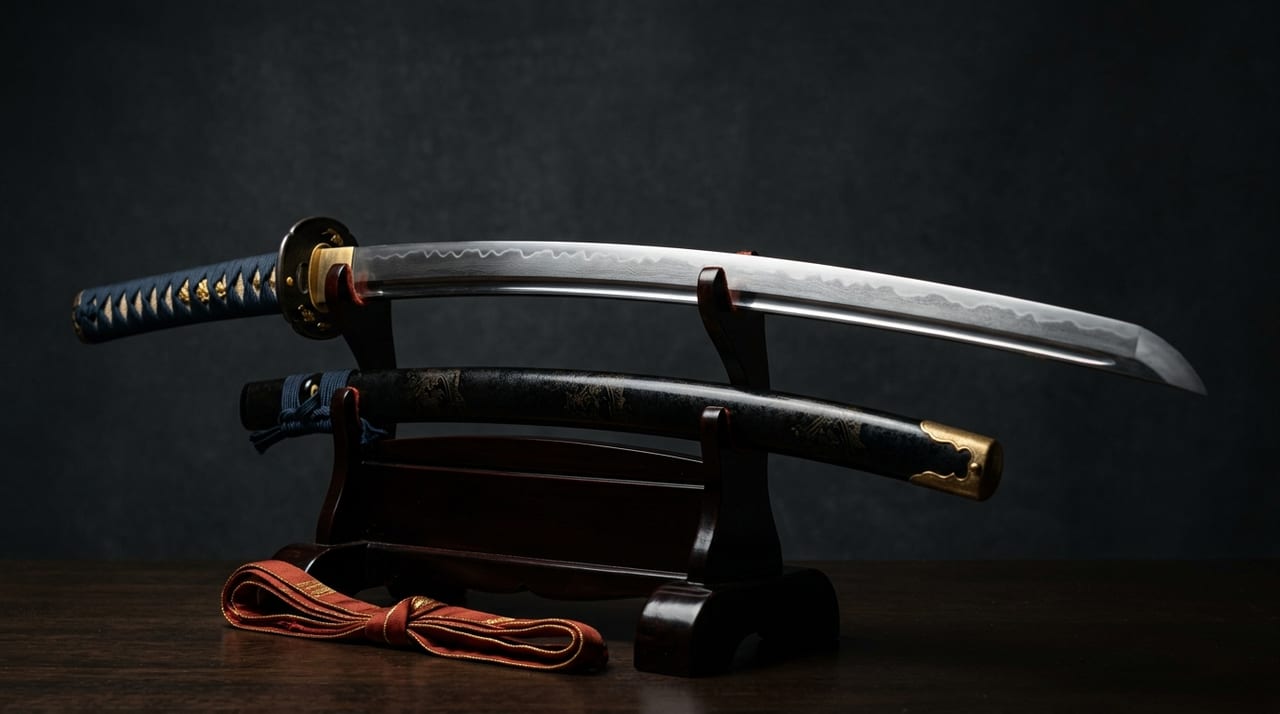
The Legend of "Thrusting Swords into the Tatami Mats and Fighting": According to a legend handed down through later generations, Yoshiteru, vastly outnumbered, barricaded himself in the mansion, thrust several meibutsu swords into the tatami mats beforehand, and is said to have fought fiercely, drawing the next sword each time one became unusable.
The historical basis for this legend is as follows.
- The most detailed records are found in contemporary sources such as the Tokitsugu Kyōki
- The specific act of "thrusting swords into tatami mats" appears in later military chronicles, and there are parts that are difficult to confirm in contemporary sources
- However, multiple sources attest that "Yoshiteru fought bravely" and "inflicted considerable casualties"
What can be confirmed as historical fact: Yoshiteru died in battle — either by his own hand or cut down — after fighting valiantly. It is thought that his manner of fighting was passed down as "a final stand befitting the Swordsman Shogun," and the legend of fighting by switching between multiple swords took shape.
The Swordsman Shogun's View of Swords — The Attitude toward Swords among Warriors That Yoshiteru Embodied
Yoshiteru's attitude toward swords represents one achievement of sword culture among warriors of the Muromachi period.
The Collapse of Political Authority and Swordsmanship Training: With shogunal authority lost and unable to hold real power as shogun, Yoshiteru can also be interpreted as having found an outlet in swordsmanship — a "personal fulfillment as a warrior." His discipleship under Tsukahara Bokuden may have been an expression of "pride as a warrior" amid political impotence.
The Symbolism of the Shogun and Swordsmanship: The act of the shogun taking instruction from the greatest swordsman was also a visualization of "authority as the head of the warrior houses." Being transmitted the "ichi no tachi" by Tsukahara Bokuden meant that Yoshiteru was recognized as one who stood at "the apex of martial arts."
Yoshiteru's Legacy — Influence on Later Warriors and Culture
The image of Ashikaga Yoshiteru as the "Swordsman Shogun" had a great influence on later generations.
- Oda Nobunaga is said to have grieved upon hearing of Yoshiteru's death and later took the restoration of shogunal order as one of his own missions
- Yoshiteru's death symbolized "the end of the shogunate in the Sengoku period" and became a foundation for the subsequent establishment of the Toyotomi regime and the Edo shogunate
- In the modern era, "Yoshiteru" appears as a "swordsman character" in manga, games, and novels, and is particularly popular in sword games
Conclusion — The Spirit of the Sword and the Warrior Houses That the Swordsman Shogun Embodied
Ashikaga Yoshiteru was a politically frustrated shogun, but as a swordsman and possessor of swords he became one of the most famous shoguns in Japanese history. The sword techniques received directly from Tsukahara Bokuden, the meibutsu swords passed down through the shogunal house, and the final valiant stand at the Nijō Palace — all of these are passed down as an embodiment of "the sword and the spirit of the warrior houses."
Through Yoshiteru's life, the sword's multiple meanings — as the "soul of the warrior," "symbol of authority," and "final pride" — beyond a mere weapon, come into sharp relief anew. Yoshiteru's life, which reached the heights of the sword yet could not resist the currents of politics, quietly speaks to the reality of the Sengoku period: that the sword itself does not guarantee power.