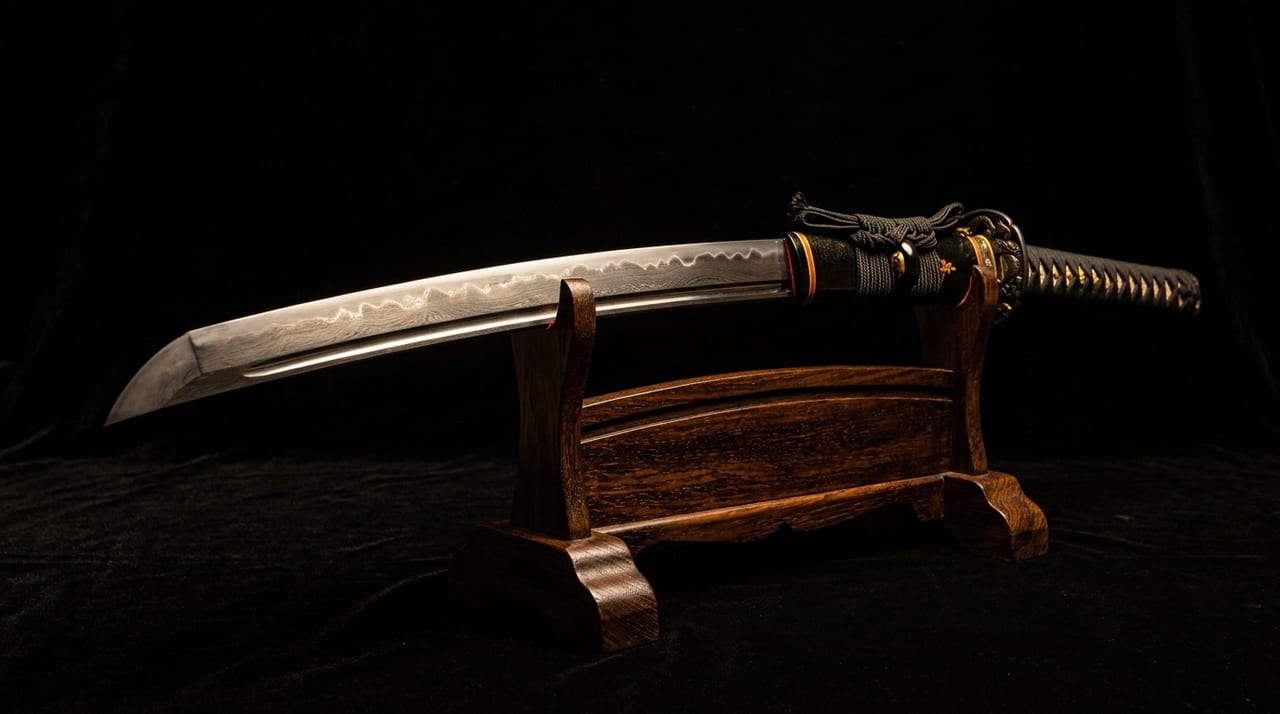
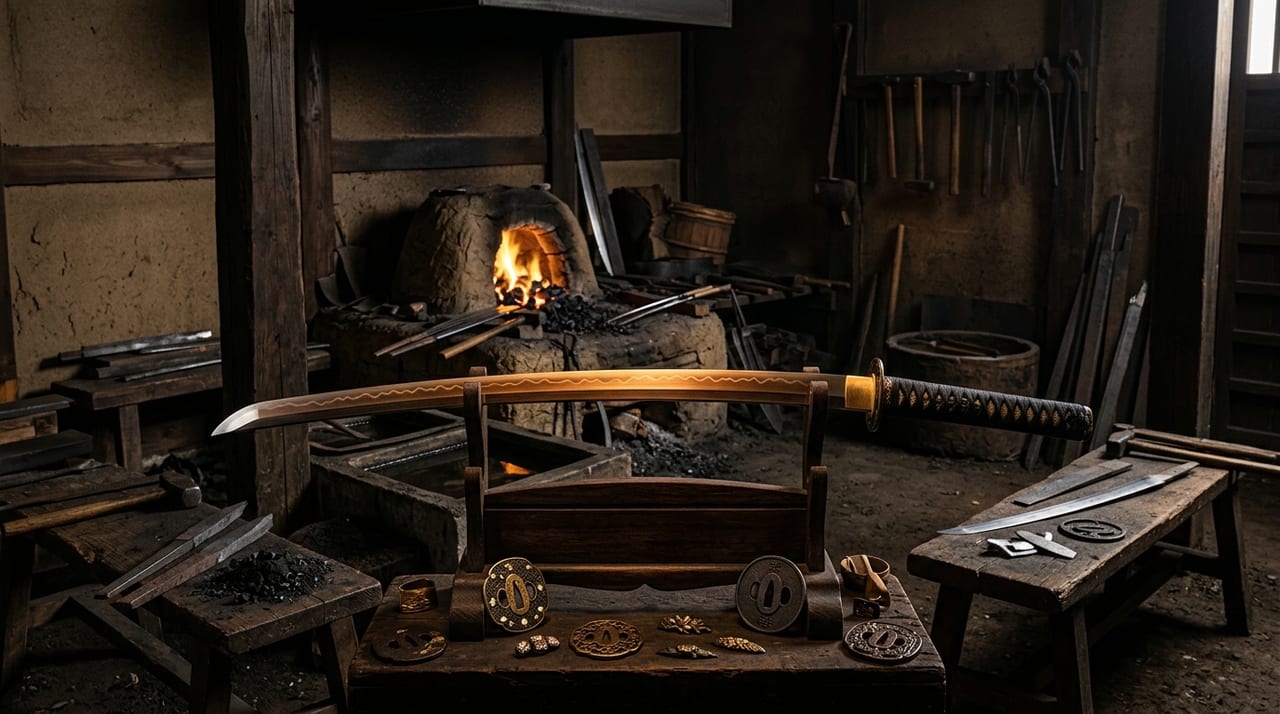
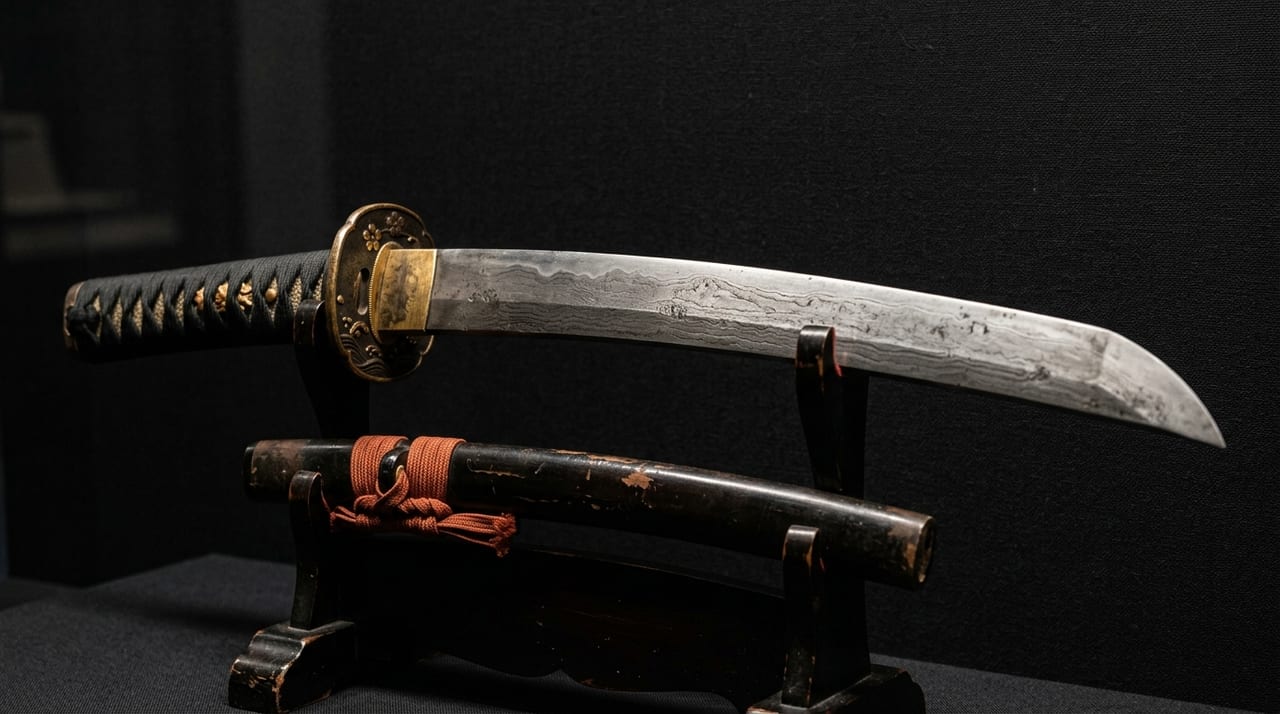
Yokoyama Sukesada and the Last Master Smiths of Osafune: The Brilliance and Decline of Bakumatsu Bizen Swords
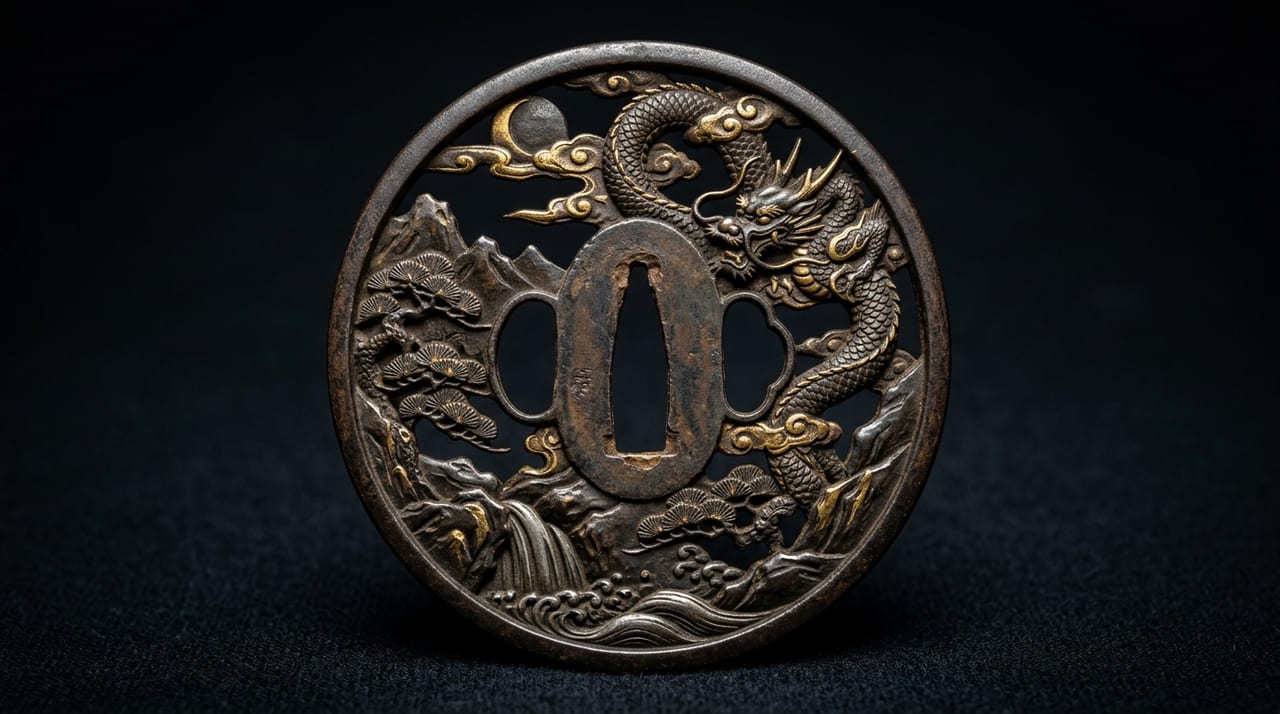 * Image is for illustrative purposes only.
Table of Contents
The Successors of the Osafune School and the "Yokoyama Family"
Bizen Province's Osafune (present-day Osafune-chō, Setouchi City, Okayama Prefecture), Japan's largest sword-producing region with a history stretching back to the Kamakura period, passed through its flourishing Nanbokuchō, Muromachi, and Sengoku eras before transitioning into the shintō period during the Edo era.
The Yokoyama family, one of Osafune's most distinguished houses, was the last large-scale swordsmith clan to uphold the tradition of Bizen swords from the mid-Edo period through the Bakumatsu era. The foremost figure of the Yokoyama family, Yokoyama Sukesada — in particular the group of smiths known as "Bizen no Suke Sukesada" — has been recognized by later generations as the guardian of Bizen-den during the Bakumatsu period.
The Historical Background of Yokoyama Sukesada
The mei "Sukesada" is a traditional name within the Osafune school, used by multiple generations and branch families. This is the practice of "hereditary name succession" often seen in the history of Japanese swords.
The main lineages of "Yokoyama Sukesada" followed this progression:
- The founder, who established the foundations of the Yokoyama family in the mid-Edo period (17th century)
- The leading group of smiths of the shinshintō period, active from the late Edo period through the Bakumatsu era (Bizen no Suke Sukesada)
- The Yokoyama family at the very end of the Bakumatsu era, active until around the time of the Sword Abolishment Edict (Haitōrei)
Swords bearing the mei "Sukesada" survive in large numbers, owing to the mass-production system that the Yokoyama family had established.
The Yokoyama family maintained workshops in the old production district of Osafune and continued kaji in a rural setting. Although Osafune had lost its former prosperity during the Edo period, the traditional authority of being the "inheritors of Bizen-den" was preserved, and orders from daimyo and warriors throughout the country continued to arrive.
In the Yokoyama family's workshops, it is said that the head of the family directed an assembly of apprentices and affiliated tōkō who divided the forging work among themselves. This is why, even among swords bearing the mei "Sukesada," the quality is said to vary depending on the smith and the period of production. When appreciating or purchasing such swords, one is advised not to judge by the face of the mei alone, but to look in combination at the quality of the jigane and hamon and the contents of any kanteisho.
Technical Characteristics of Bakumatsu Bizen Swords
The sword world of the late Edo period is called the shinshintō era, a time when Suishinshi Masahide, Taikei Naotane, and others advocated a "return to kotō (classical techniques)." Yokoyama Sukesada maintained an independent stance against this mainstream revival movement. While the revival of Yamato-den and Sōshū-den was in fashion, the Yokoyama family continued to uphold the hallmarks of Bizen-den: nioi workmanship, chōji-midare, and bright jigane.
The appreciation points for swords by Yokoyama Sukesada (particularly those of the Bakumatsu period) are as follows:
| Item | Characteristics |
|---|---|
| jigane | Primarily flowing itame with intermixed mokume, grounded in the bright, clear jigane characteristic of Bizen-den |
| hamon | Typically chōji-midare or gunome-midare, with nioi workmanship predominating throughout |
| mei | Such as "Bizen no Suke Sukesada saku" or "Yokoyama Bizen no Suke Sukesada"; the inscription and shape of the nakago allow period identification |
Reading the Mei and Nakago — Key Points for Authenticity Verification
When appreciating or purchasing swords by Yokoyama Sukesada, one key point to keep in mind is the condition of the nakago (the tang, the part that fits inside the tsuka). The mei (the smith's name) is engraved into the nakago with a chisel, and its calligraphic style, arrangement, and yasurime (file marks) differ in character depending on the tōkō and the period. Swords that have been used for many years develop age-related rust and patina (koshoku) on the nakago, which is also a sign of sound preservation.
The mei "Sukesada" was used not only by the Yokoyama family but also in documented cases by other Osafune-lineage tōkō, so sharing the same mei does not necessarily mean the smith or quality is uniform. Rather than relying on personal judgment alone to determine authenticity or attribution, confirming the kanteisho from a specialist body such as NBTHK is the foundation for confident ownership. The kanteisho contains expert opinions on the period, province, and maker of the blade, and serves as an important basis for judgment before purchase.
The Sword Abolishment Edict (Haitōrei) and the End of Osafune
The Sword Abolishment Edict (Haitōrei) of Meiji 9 (1876) — prohibiting the warrior class from wearing swords — dealt a devastating blow to the Japanese sword industry. The samurai class, which had been the primary customer base, disappeared, and orders for functional swords plummeted. While some demand shifted to guntō, industrial-scale production was beyond reach, and many tōkō closed their businesses during the 1880s and 1890s. The Yokoyama family also found it practically impossible to continue forging swords during this period, and the continuous tradition of the Osafune school came to an end in the Meiji era.
The decline around the time of the Sword Abolishment Edict (Haitōrei) led not only to the closure of tōkō workshops but also to a chain-reaction decline in related industries — tsuba craftsmen, togishi, hilt-wrappers, and others. The town of Osafune lost its former function as a center of swords and reverted to an agricultural region.
Fundamentals of Storage and Care
Japanese swords are metal works of art, and at the same time delicate implements susceptible to rust from moisture and perspiration. Not limited to swords by Yokoyama Sukesada, the traditional basics of care after handling are to wipe away fingerprints and perspiration from the blade with a soft cloth, and then to apply a thin coat of oil using uchiko (polishing powder) and chōji oil.
For storage, it is common practice to choose a place with little humidity variation and to lay the sword horizontally in its saya (scabbard). Sudden temperature changes and direct sunlight should be avoided, as they cause rust and deterioration of the saya. Polishing and the repair of nicks are tasks that should be entrusted to a specialist togishi; self-administered care carries a risk of damaging the blade and calls for caution.
Evaluation of Surviving Works
At modern auctions and sword markets, the going rate for Bakumatsu-period "Yokoyama Sukesada" swords accompanied by a kanteisho (hozon or tokubetsu hozon class) is approximately 300,000 to 1,500,000 yen. There is consistent demand for them as Bakumatsu works in Bizen-den, though they rank lower in prestige than kotō and upper-tier shintō. Since swords bearing the mei "Sukesada" exist in large numbers, verifying the authenticity of the mei and period attribution is important, and receiving NBTHK certification is strongly recommended.
When considering a sword by Yokoyama Sukesada, factors such as provenance, condition, and the presence of accompanying koshirae (mounting) or tōsōgu (sword fittings) — in addition to whether a kanteisho exists — all contribute to an overall value judgment. When purchasing from a specialist dealer, being able to consult in advance about the contents of the kanteisho and the condition of the blade is itself a source of reassurance.
Conclusion — The Last Flame of Osafune
Yokoyama Sukesada and the Bakumatsu-era Osafune swordsmiths kept the flame of Bizen-den burning until the eve of the storm that was the Sword Abolishment Edict (Haitōrei). Their works do not match the "golden age of kotō," but they hold undeniable value as historical testimony to the final chapter of Japanese sword history from the Edo through the Meiji eras.
The very reason the place name Osafune lives on today as a byword for swords is the work of these craftsmen of the final era. When you hold a Bakumatsu Bizen sword in your hands, we hope you can sense that the closing chapter of Japanese sword history is inscribed in its blade.