Swordsmith Lineages of Dewa and Mutsu: The Kaji Traditions Rooted in the Tōhoku Region, Notable Swordsmiths, and Extant Works
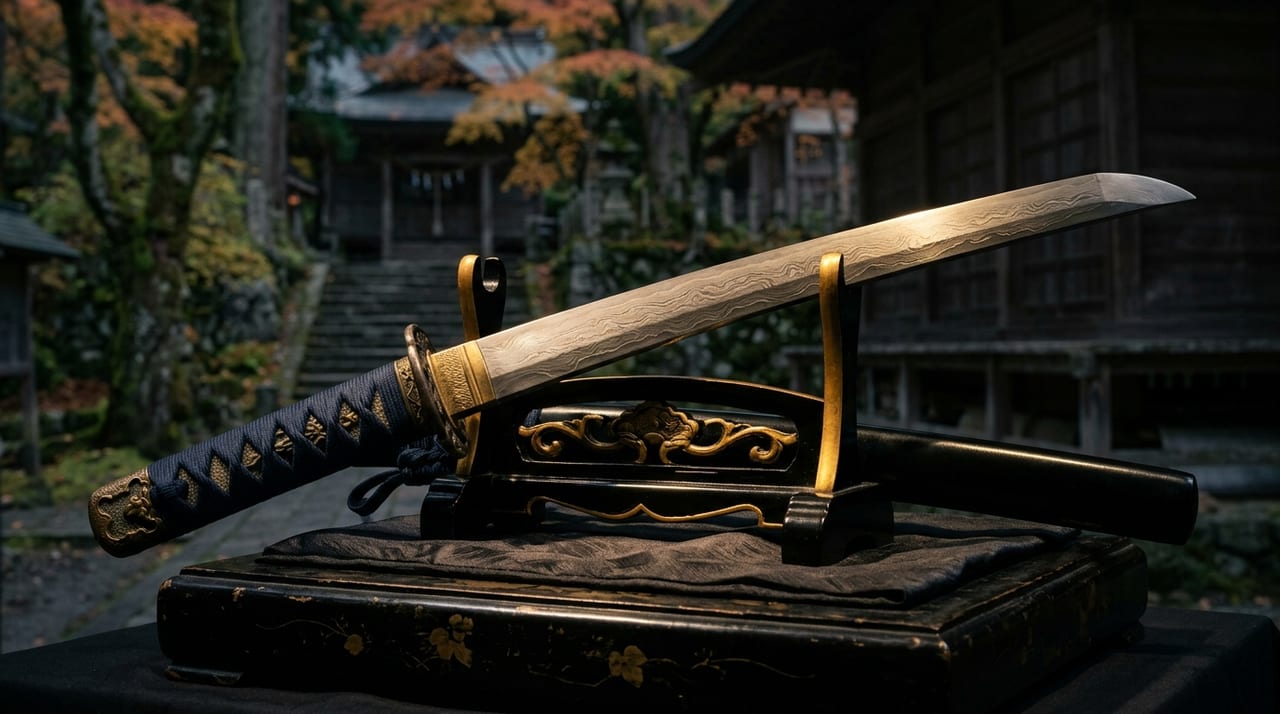 * Image is for illustrative purposes only.
Table of Contents
Perspectives on Tōhoku Swordsmiths
The regions most renowned as production centers for Japanese swords are Bizen (Okayama), Yamato (Nara), Yamashiro (Kyoto), Sōshū (Kanagawa), and Mino (Gifu) — the five areas collectively referred to as the five major traditions (go-den). These production centers boasted overwhelming output and quality from the medieval through the early modern period, and the image of "Japanese swords as products of the Kinai and western Japan" has persisted to this day.
However, the Tōhoku region — Dewa (present-day Yamagata and Akita prefectures) and Mutsu (present-day Miyagi, Iwate, Aomori, and Fukushima prefectures) — also possessed its own distinctive swordsmith culture. Though situated on the periphery, the sword culture of Tōhoku absorbed techniques from the center while achieving its own development; this article traces that culture through representative swordsmiths and extant works.
Swordsmiths of Mutsu: The Kaji Culture of Aizu and Sendai
The best-known swordsmiths of Mutsu are those who took root in Aizu (present-day western Fukushima Prefecture).
Behind the development of sword-making in Aizu lay the rise of the Sengoku warlord clan the Date, and the sword-promotion policies of Gamō Ujisato, Uesugi Kagekatsu, and Hoshina Masayuki (the first lord of the Aizu Matsudaira domain), who successively ruled Aizu thereafter. Hoshina Masayuki in particular, as lord of the Aizu domain in the early Edo period, devoted great effort to the protection of swordsmiths, laying the foundation for Aizu's sword-making industry.
Miyoshi Nagamichi is the preeminent tōkō of Aizu shintō. Active in the early Edo period, he earned such renown that he was called "the Kotetsu of Aizu." Said to have trained in Kaminoyama in Dewa before relocating to Aizu, he is credited with firmly establishing the techniques of Sōshū-den in Tōhoku. Miyoshi Nagamichi's swords continue to be highly regarded today for their keen cutting ability and well-ordered hamon, and are held by museums and private collectors in various parts of the country.
In Sendai (present-day Miyagi Prefecture), swordsmiths in service of the Date family were active. The Sendai branch of the Shōami school is the most representative of these; the Shōami school was a clan of tōsōgu metalworkers based in Kyoto who spread branches throughout the country, and the Sendai domain retained one of its prominent offshoots, which was known for producing not only blades but also tsuba, kodogu, and other tōsōgu.
Swordsmiths of Dewa: Production Centers in Yamagata and Akita
Dewa Province (present-day Yamagata and Akita prefectures) has fewer documented swordsmiths than Mutsu, but several noteworthy tōkō are known.
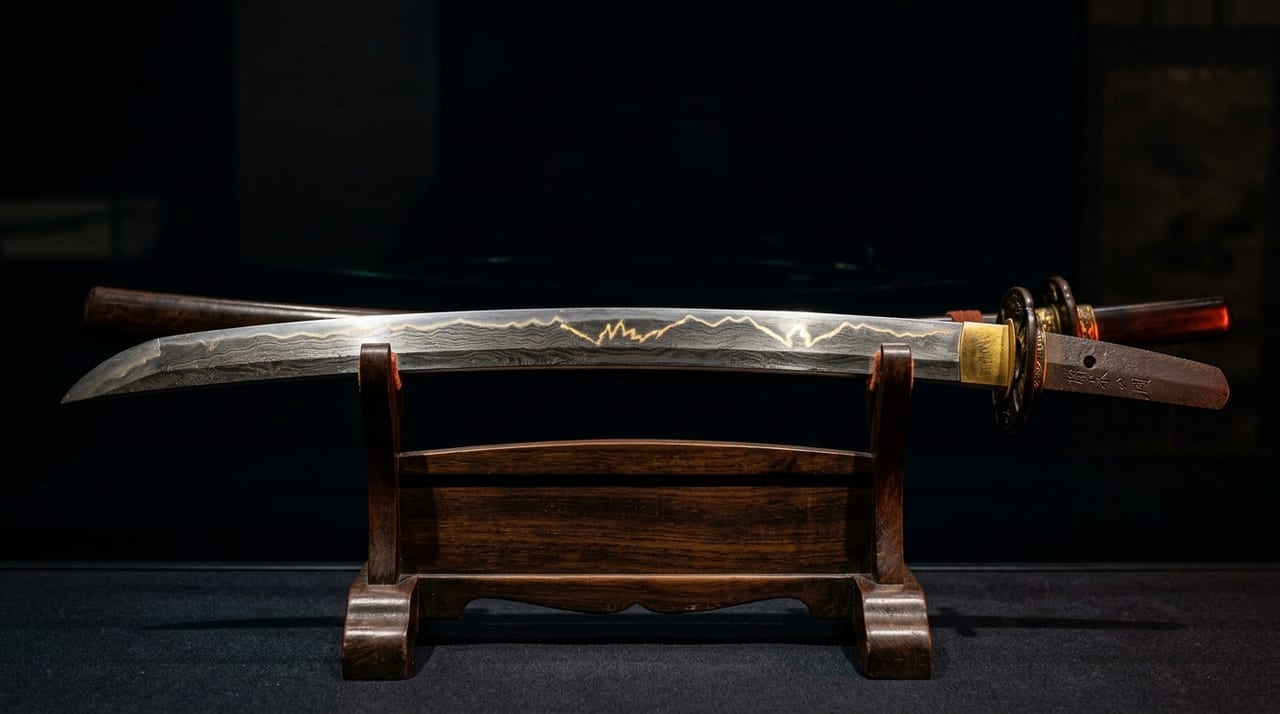
Gassan Sadaichi and his lineage descend from a line of swordsmiths connected to the Gassan mountain faith of Dewa. The Gassan school originated at Mount Gassan in Dewa Province; in the late Edo period Gassan Sadayoshi moved from Dewa to Osaka, and the first-generation Gassan Sadaichi, who became his adopted son, established the Osaka branch of the Gassan school from the Bakumatsu era through the Meiji period. The school is famous for the distinctive jigane grain pattern known as ayasugi-hada; the wave-like jihada resembling the annual rings of a tree is a virtually unique feature found in almost no other school, and Gassan school swords are identifiable at a glance.
The Gassan school continued to be active, centered on Osaka, after the Meiji period, and in modern times has produced holders of the title of Jūyō Mukei Bunkazai Hojisha (Living National Treasure). The second-generation Gassan Sadaichi (1907–1995) received the highest recognition as a tōkō of the Shōwa and Heisei periods, and in 1971 (Shōwa 46) was designated a Jūyō Mukei Bunkazai Hojisha (Living National Treasure). His works are held in important collections both within Japan and abroad. The tradition of Dewa-lineage ayasugi-hada has been passed down to the tōshō of the Gassan school in the present day.
In Akita, swordsmiths operated under the patronage of the Satake clan, lords of the Akita domain. The Satake were a daimyo clan transferred from Hitachi (present-day Ibaraki Prefecture), and are said to have brought the sword culture of their former domain to Tōhoku. Records of swordsmiths serving the Akita domain are fragmentary, but local historical documents confirm that multiple tōkō were forging swords in Akita during the 17th and 18th centuries.
Technical Characteristics of Tōhoku Swordsmiths
Because Tōhoku swordsmiths were geographically far removed from the major production centers, they tended to incorporate eclectic techniques from multiple traditions rather than inheriting any single production center's "pure den." The influences of Sōshū-den (Kanagawa) and Yamato-den (Nara) were particularly strong, and swords in the Sōshū style — characterized by vigorous jihada and striking hamon — were also produced in Tōhoku. This indicates that swordsmiths migrated and techniques were transmitted from the Kantō region.
Tōhoku swordsmiths also exercised ingenuity within the constraints of procuring iron materials. Because they could not obtain a stable and plentiful supply of tamahagane as the major production centers could, they sometimes smelted iron independently from locally sourced iron sand, and this is thought to have given the jigane of some Tōhoku swordsmiths a distinctive character.
Modern Continuity of Tōhoku Sword Culture
Even today, tōshō remain active in the Tōhoku region, and the continuation of tradition persists. Multiple tōshō are registered primarily in Miyagi, Yamagata, and Fukushima, contributing to the preservation of regional cultural properties and the transmission of techniques.
The sword culture of Tōhoku is less well known than the major central production centers, but it is a fascinating subject of study with its own distinctive traditions and characteristics. The works of Miyoshi Nagamichi of Aizu and the Gassan school of Dewa are indispensable for broadening the appreciation of Japanese swords, and may be cited as fine examples demonstrating the importance of regional tōkō culture.
A Connoisseur's Journey to Tōhoku Sword Sites
The Tōhoku region has several exhibition facilities that convey its local sword culture.
- The Yamagata Prefectural Museum holds materials related to the Gassan school.
- The Sendai City Museum has a permanent display of an arms and armor collection that includes tōsōgu associated with the Date family.
- At the Aizu Bukeyashiki in Aizuwakamatsu City, there are opportunities to view historical materials related to swords.
The swords of Tōhoku embody an "aesthetic of the periphery" distinct from the swords of Kyoto and Nara. Works that absorbed central culture while uniquely blending the natural environment and warrior culture of Tōhoku broaden the horizons of Japanese sword appreciation. A journey tracing swords through Aizu, Sendai, and Yamagata in particular will bring discoveries different from the standard route of famous sword production centers. As interest in the sword culture of Tōhoku grows, it can also contribute to the preservation and transmission of the region's traditional culture.