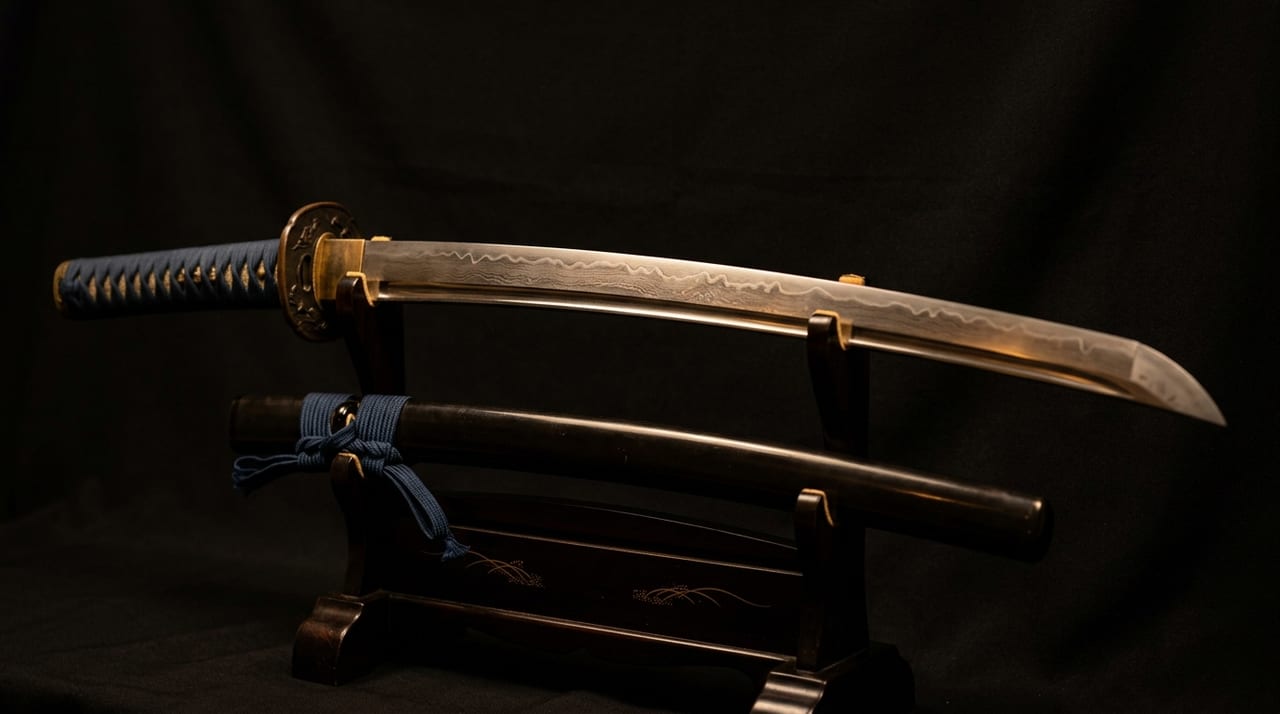
Tōkō Lineages of Etchū Province and Nōshū Swords — The Institutional Structure of Regional Schools and Post-Sekigahara Migration
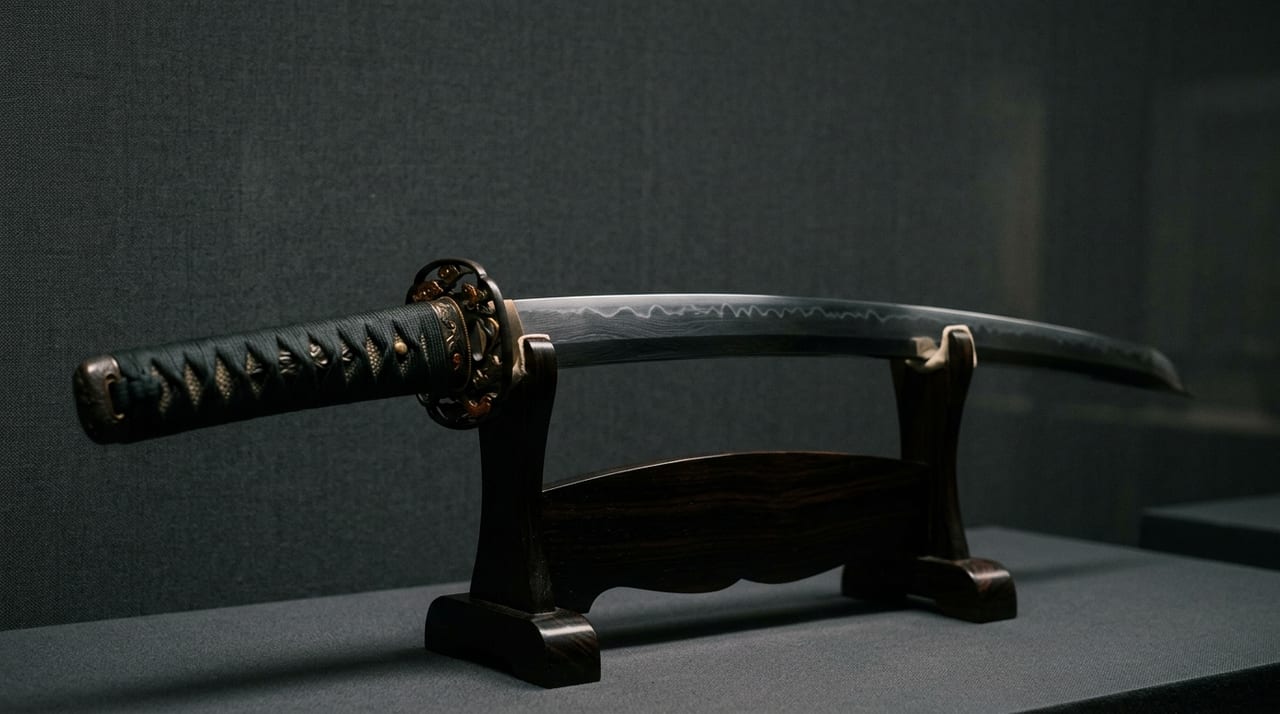 * Image is for illustrative purposes only.
Table of Contents
Sword Culture of Etchū Province, Rooted Outside the Gokaden
When discussing the production regions of nihontō, the "Gokaden" — the five traditions of Yamashiro, Yamato, Bizen, Sōshū, and Mino — are invariably named first. Etchū Province (present-day Toyama Prefecture) is a Hokuriku sword-producing region not counted among the Gokaden, and together with the neighboring provinces of Kaga and Noto (present-day Ishikawa Prefecture) it has cultivated a distinctive sword culture of its own.
The aspect in which Etchū swords differ most markedly from the famous production centers of the Gokaden lies in how the tradition was formed. Rather than a local tradition stretching back to antiquity without interruption, as in Bizen or Sōshū, the framework of the production center was built largely by groups of tōkō who migrated after acquiring their skills in other provinces. Above all, the movement of tōkō who relocated from Yamato Province to Etchū is recognized as an indispensable lineage in narrating the history of Etchū swords. The process by which smiths carrying Yamato-den techniques put down roots in the Hokuriku region, responding to the needs of local warrior clans, temples, and shrines while passing their craft from generation to generation, vividly illustrates how the techniques of nihontō spread across the country through the movement of people.
The Place of Nōshū Swords — A Regional Tradition Born in Hokuriku
The swords of Noto and Kaga are sometimes collectively called "Nōshū-tō" (Nōshū swords) or "Kashū-tō" (Kashū swords) and similar designations. However, these are not terms with a systematically established technical definition in the way Bizen-den or Sōshū-den have; rather, they function primarily as designations indicating a production area or region.
The tōkō of Nōshū swords often traced their lineage back to one of the five central Gokaden, and the styles influenced particularly by Yamato-den and Bizen-den are said to have spread throughout various parts of Hokuriku. The skill and style of individual tōkō were by no means uniform, and gradual transformation driven by the quality of iron available in the place of settlement, the type of fuel, and the local structure of demand is the general pattern in regional sword history. Among the types most commonly produced by regional tōkō are the following.
- Practical uchigatana and wakizashi: swords of sturdy construction meeting the everyday belt-wearing needs of local warrior clans
- Temple and shrine dedication swords: swords presented to local temples and shrines as votive offerings or commemorations
- Agricultural and craft blades: everyday iron implements that tōkō made to supplement their income
Unlike the lavish commission work of renowned central masters, the output of regional tōkō was sustained by the everyday needs of local society. Their trajectory, traceable only through surviving blades, reflects the life of regional communities of that era in a texture quite different from the documentary record of the Gokaden.
Goyō Kaji and the Za of Independent Smiths — Two Systems of Organization
The means by which regional groups of tōkō made their livelihood can be broadly divided into two types.
The first is the form in which a tōkō was retained by a daimyō household or a powerful retainer band as a goyō kaji (official smith) or o-kakae kaji (retained smith). Daimyō households of the Edo period sometimes employed a certain number of tōkō in order to procure weapons for their domain and to display their authority, and the tōkō who were hired were given fuchi-mai (stipend rice) and residential land. While this stabilized the artisan's livelihood, it also entailed having the content and volume of sword production tied to the domain's needs. A large domain such as the Kaga domain, which held the vast territory of Kaga, Noto, and Etchū, is considered to have been one of the environments where the goyō kaji system could function most effectively.
The second is the form in which independent tōkō who were not retained lived together in towns or along highways, forming a loose za (guild of tradespeople) as fellow practitioners. The za functioned as a mutual-aid organization that shared standards of quality and price and suppressed new entrants from outside. However, how strictly the za of early-modern tōkō were organized differed greatly by region, and it is difficult to make blanket assertions about Etchū, Noto, and Kaga as well. It is most natural to see the two modes — protection as goyō kaji, and the za-like cohesion of independent smiths — as coexisting in reality with varying degrees of emphasis.
The Sword Demand of Hokuriku Shaped by the "Kaga Hyakumangoku"
Any discussion of the three Hokuriku provinces of Etchū, Noto, and Kaga cannot avoid the Kaga domain, headed by the Maeda clan as its daimyō. Having had its holdings confirmed and expanded after the Battle of Sekigahara (1600), the Maeda clan, as the greatest tozama daimyō after the Tokugawa, formed the "Kaga Hyakumangoku" — governing the three provinces almost as a single entity.
The administration of this vast domain had two implications for sword culture. First, warrior-class demand within the domain was secured to a certain extent across all three Hokuriku provinces. Second, the consolidation of the three provinces under a single domain in administrative terms made it easier for tōkō to move and for techniques to be exchanged beyond the old provincial borders. It is thought that a flow developed whereby tōkō who had brought skills from other provinces sought the patronage of the Maeda clan and settled in Etchū and Noto, and this became one of the factors supporting the diversity of Hokuriku sword culture.
Tōkō Migration After Sekigahara — The Impact of Shifts in Daimyō Assignments
The Battle of Sekigahara and the settlement that followed reshuffled daimyō assignments across the country on a large scale. The kaiei (domain confiscation), genpō (reduction of domain), and tenpō (transfer of domain) carried out by Tokugawa Ieyasu extended broadly, centered on the western provinces, and the tōkō retained by various daimyō households were inevitably affected. If the patron domain was subject to kaiei, the retained tōkō lost their livelihood. In the case of tenpō, they faced the choice of accompanying their lord to the new domain or remaining in the land and seeking a new patron. The following types can be identified among such movements of tōkō.
- Relocating to the new domain by following one's lord on a tenpō: In some cases the tōkō inherited the position of goyō kaji in the new domain; in others, their treatment changed substantially.
- Moving after kaiei to seek patronage from another domain: Tōkō whose skills were valued are said to have found a new patron household relatively quickly.
- Turning independent and moving to a location with demand: Some tōkō chose to settle in castle towns or along highways and adapt to market demand.
- Remaining in the original territory and continuing to meet local demand: There were also tōkō who continued to make a living from demand among local warrior clans and merchants even without the patronage of a daimyō house.
Domains like the Kaga domain that expanded their holdings after Sekigahara had room to accept tōkō from other provinces. Conversely, in the former territories of daimyō who had been subject to kaiei or genpō, there were many cases where activity as a sword-producing center contracted, with no successor emerging to fill the gap left by the tōkō who had departed. The perspective that the political upheaval of Sekigahara determined the rise and fall of sword-producing centers throughout the country — through its effect on the livelihoods of tōkō — is an important point of discussion when considering the production history of nihontō.
What Regional Tōkō History Tells Us — A Reach Beyond the Central Traditions
The sword culture of Etchū, Noto, and Kaga, compared with the famous Gokaden production centers of Bizen and Sōshū, remains an area with much room for development in terms of the accumulation of systematic research. However, when the three elements are overlaid — the lineage of tōkō who moved from Yamato to Etchū, the goyō kaji system that functioned under the great Kaga domain, and the migrations of tōkō triggered by shifts in daimyō assignments after Sekigahara — what emerges is the deep connection between Hokuriku sword culture and the political and economic structures of the time.
The famous masters and renowned blades recorded in historical sources represent only a tiny fraction of all the swords ever produced. It is in the thick historical stratum — the nearly nameless regional tōkō who supported the daily lives of local warrior clans, dedicated swords to places of worship, and at times carried their techniques to other provinces — that the true depth of nihontō as a cultural asset resides. In TOUKENZA's online catalogue, swords tracing their lineage to such regional tōkō are also listed alongside works from various production regions and eras. If you have an interest in the work of regional tōkō, please take a look at the swords currently featured.