Japanese Swords in Cosplay and Pop Culture Fandom
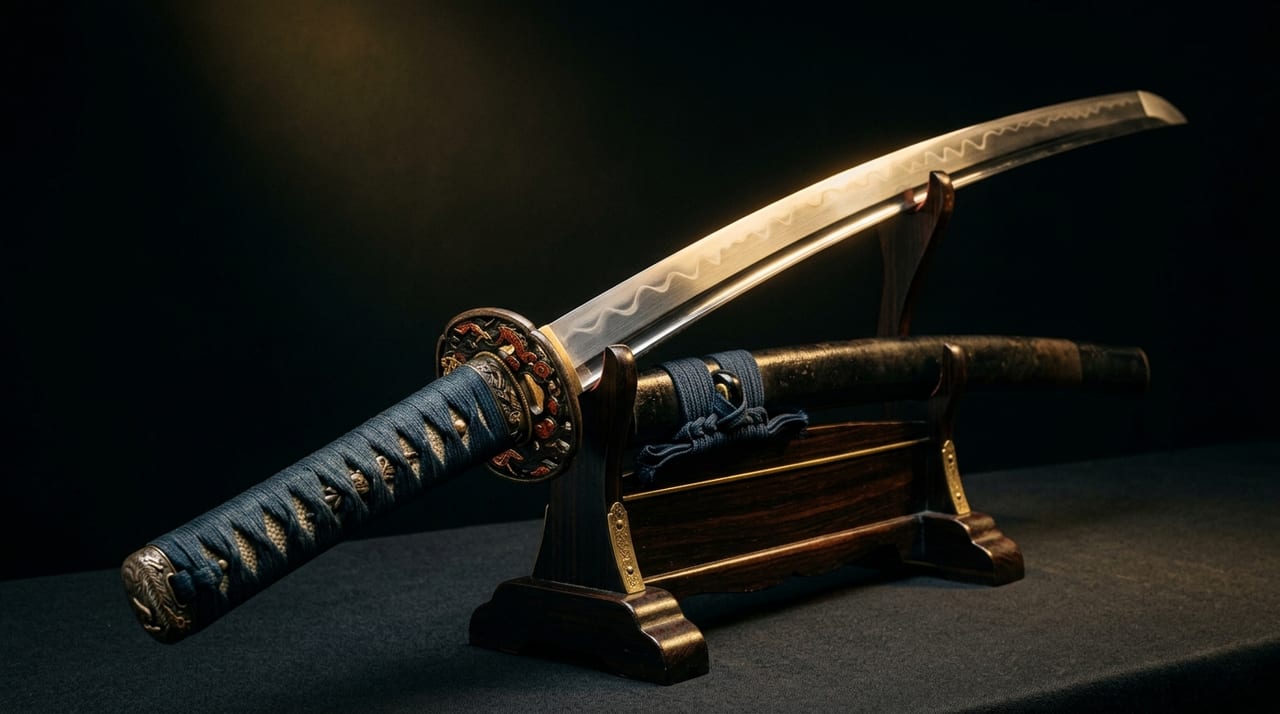 * Image is for illustrative purposes only.
Table of Contents
Japanese Swords as Pop Culture—The Birth of New Consumer Culture
Japanese swords have long been discussed within specialized cultural circles of swordsmiths, sword dealers, sword enthusiasts, and researchers. However, around 2015, this structure began to change significantly. Starting with the game "Touken Ranbu," the wave of pop culture that expanded into its stage adaptations "Touken Ranbu Musical (Touken Myu)" and "Touken Ranbu Stage (Touken Sute)" created a new pathway for young generations—particularly women in their 10s to 30s—to develop interest in Japanese swords.
This phenomenon is not merely a trend for the sword industry, but rather an event that fundamentally questions the relationship between appreciation culture and consumer culture.
The Cultural Phenomenon of "Touken Danshi" Born from Touken Myu
"Touken Ranbu Musical" (commonly known as "Touken Myu") had its trial premiere in October 2015 (the main production "Atsugashiyama Ibun" was in 2016), and has been a popular stage production with many series since then. In the format where live actors portray "Touken Danshi," personified characters of swords that appear in the game "Touken Ranbu," it has become one of the representative works of 2.5-dimensional musicals.
Many fans of Touken Myu (referred to as "Touken Myu Cluster") initially entered the work through interest in actors and narrative, but in many cases deepened their interest in the actual swords that inspired the characters. The sharp increase in fans visiting museums to see the actual national treasure and important cultural property swords that inspired the following characters is reflected in the visitor statistics of each museum.
- Mikazuki Munechika
- Yamanbagiri Kunihiro
- Heshikiri Hasebe
Sword museums have also organized special exhibitions related to "Touken Ranbu," with reports of increased young visitors.
The Connection Between Cosplay and Japanese Swords
Japanese swords are also important items in the world of cosplay (costume play). Many cosplayers who portray period drama, anime, and game characters use props modeled after swords as part of their costumes.
The market for replica swords (mozoutou) for cosplay has grown significantly in recent years. Replica swords for cosplay are made from various materials as listed below, and many products that combine realistic appearance with lightweight properties are sold.
- Polyurethane
- EVA (Ethylene Vinyl Acetate)
- Wood
- Plastic
These circulate as "replicas" outside the scope of regulation under the Act for Controlling the Possession of Firearms or Swords and Other Such Weapons (Jūtōhō).
Among cosplayers, there are those with strong interest in the precision and detail accuracy of replica swords, and who deepen their understanding of the structure of actual swords as an extension of this. The fact that evaluative knowledge such as the following is now being shared within the cosplay community is an interesting phenomenon from the perspective of promoting sword culture.
- The shape of the blade
- The position of the shinogi
- The types of hamon
Expanding Sword Awareness Through SNS and Fan Art
On SNS and creative platforms such as Twitter (now X), Instagram, and pixiv, vast numbers of fan artworks featuring Japanese swords as motifs are created and published. "Touken Ranbu" related fan art boasts tag counts exceeding several million on pixiv, and the scale of creative activities featuring swords far exceeds that of traditional sword enthusiast communities.
Among the creators of such fan art, many carefully research the structure of actual swords in order to depict sword appearance realistically. Works in which specialized knowledge is visually and accurately expressed, such as the shape of the curve (sori) of the blade, the design of the tsuba, and the wrapping of the tsuka, are not uncommon, and "fan perspective explanations" not found in traditional sword appreciation publications are spreading on SNS.
Connection and Friction with Traditional Collector Culture
The cultural sphere of those who developed interest in Japanese swords through pop culture and that of traditional sword collectors and veteran sword enthusiasts do not always intersect smoothly.
Among traditional sword enthusiasts, there are those who view the culture of consuming swords as "source material for characters" as "distinct from true appreciation culture." On the other hand, most operators of museums, sword museums, and regional sword appreciation societies are actively incorporating the new interests brought by younger generations.
There are multiple reports of cases where "Touken Ranbu" or "Touken Myu" served as a catalyst for learning about Japanese sword authentication documents and certificates, leading to the purchase of actual swords, and cases where pop culture serves as a gateway to becoming serious collectors certainly exist.
Conclusion—Diverse Entry Points Enrich Sword Culture
The consumption of Japanese swords as pop culture functions not to dilute traditional appreciation culture, but as a gateway to expand interest in swords among a broader social spectrum. The sense of familiarity with swords created by three cultural spheres—Touken Myu, cosplay, and fan art—has the potential to connect to next steps in various contexts such as special museum exhibitions, sword appreciation societies, and online sword sales.
The future of sword culture will become more diverse and enriched as both traditional sword enthusiasts and pop culture fans participate through their respective entry points.