Sword Smiths and Sword Fittings of the Azuchi-Momoyama Period — The Sword Craft Fostered by Horikawa Kunihiro, Umetada Myōju, and the Unifiers of the Realm
 * Image is for illustrative purposes only.
Table of Contents
National Unification and the Transformation of Sword Culture
The Azuchi-Momoyama period (1568–1603) was a turbulent 35-year span from Oda Nobunaga's campaign to unify the realm, through Toyotomi Hideyoshi's nationwide conquest and invasion of Korea, to Tokugawa Ieyasu's establishment of hegemony in the Battle of Sekigahara. During this era, sword culture underwent two major transformations simultaneously.
- The Ornamentalization and Luxuriation of Swords: As the overwhelmingly powerful rulers Nobunaga and Hideyoshi competed to acquire lavish koshirae and extravagant sword fittings, blades transcended their role as purely functional weapons and began to function as symbols of power, diplomatic gifts, and displays of wealth.
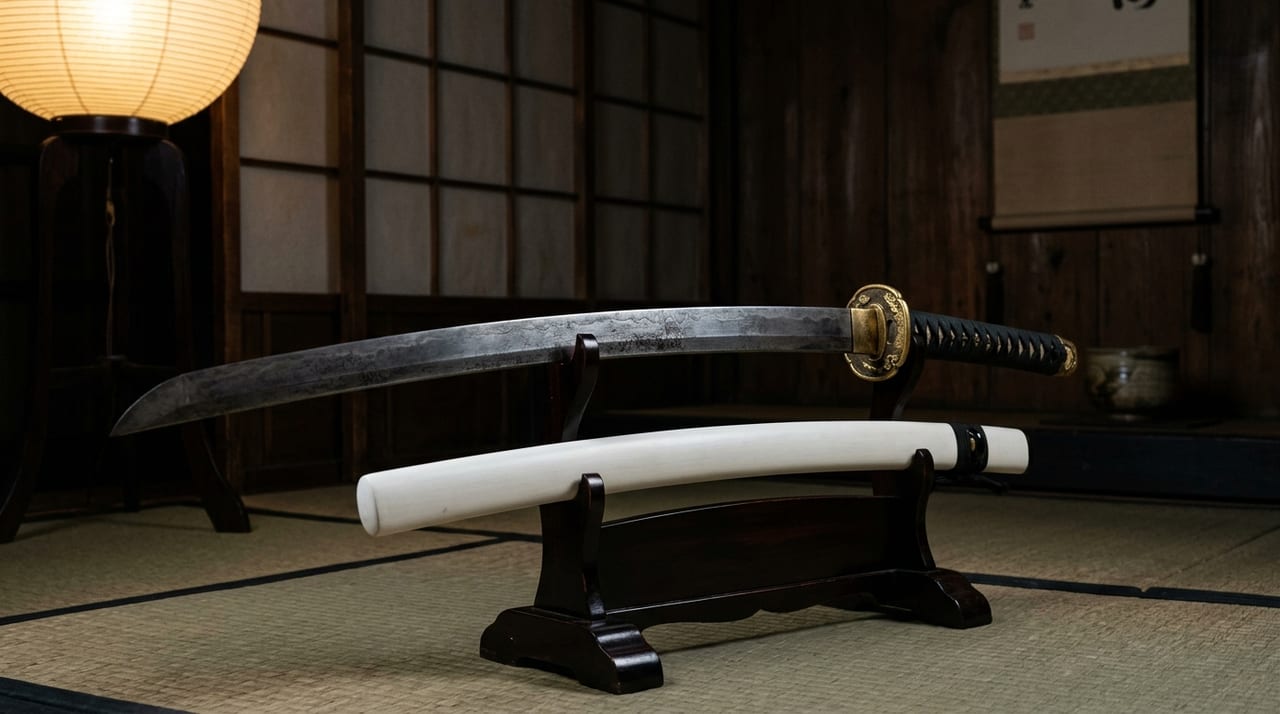
- The Complete Establishment of Uchigatana: As the battlefields of the Sengoku period saw the main combatants shift from mounted warriors to large-scale infantry formations led by foot soldiers, the uchigatana—worn at the waist while on foot—proved overwhelmingly more practical in actual combat than the tachi, which hung from the waist on horseback.
This transition would fundamentally determine the nature of Japanese swords going forward.
Nobunaga's Swords—"Meibutsu-gari" and Collections of Famous Blades
Oda Nobunaga occupies a unique position in Japanese sword history. In the course of his campaign to unify the realm, he systematically conducted "meibutsu-gari" (collecting/hunting for famous swords), actively requisitioning and acquiring celebrated blades from daimyo houses, the nobility, and temples and shrines, gathering the greatest masterpieces of Japanese swordsmanship of the time. What set Nobunaga apart was not merely being a collector, but his use of the possession of famous swords itself as a means of making power visible.
The most famous blade in Nobunaga's collection was the "Yoshimoto Samonji." This tachi, forged by the Samonji school of sword smiths during the Northern and Southern Courts period, had been the personal blade of Imagawa Yoshimoto, whom Nobunaga slew at the Battle of Okehazama in the third year of Eiroku (1560). Nobunaga renamed it "Sōza Samonji" and treasured it, and it eventually passed to Toyotomi Hideyoshi. Today it is held by Kenkun Shrine (in Kita Ward, Kyoto) and is on deposit at the Kyoto National Museum (designated as an Important Cultural Property), and continues to be transmitted to the present day as a blade connecting the lineage of rulers of the realm.
In discussing Nobunaga's sword collection, one cannot avoid the tragedy of the "Honnoji Incident" (Tensho 10, 1582). When Akechi Mitsuhide's forces attacked, most of Nobunaga's famous swords that had been brought to Honnoji were consumed in the flames. Among these swords, which later researchers would call the "Honnoji-burned blades," were said to be included the highest works of master smiths from all ages—Masamune, Norishige, the Rai school, and others. This single night's fire is remembered as one of the greatest losses in Japanese sword history.
Toyotomi Hideyoshi and the Golden Age of Sword Fittings
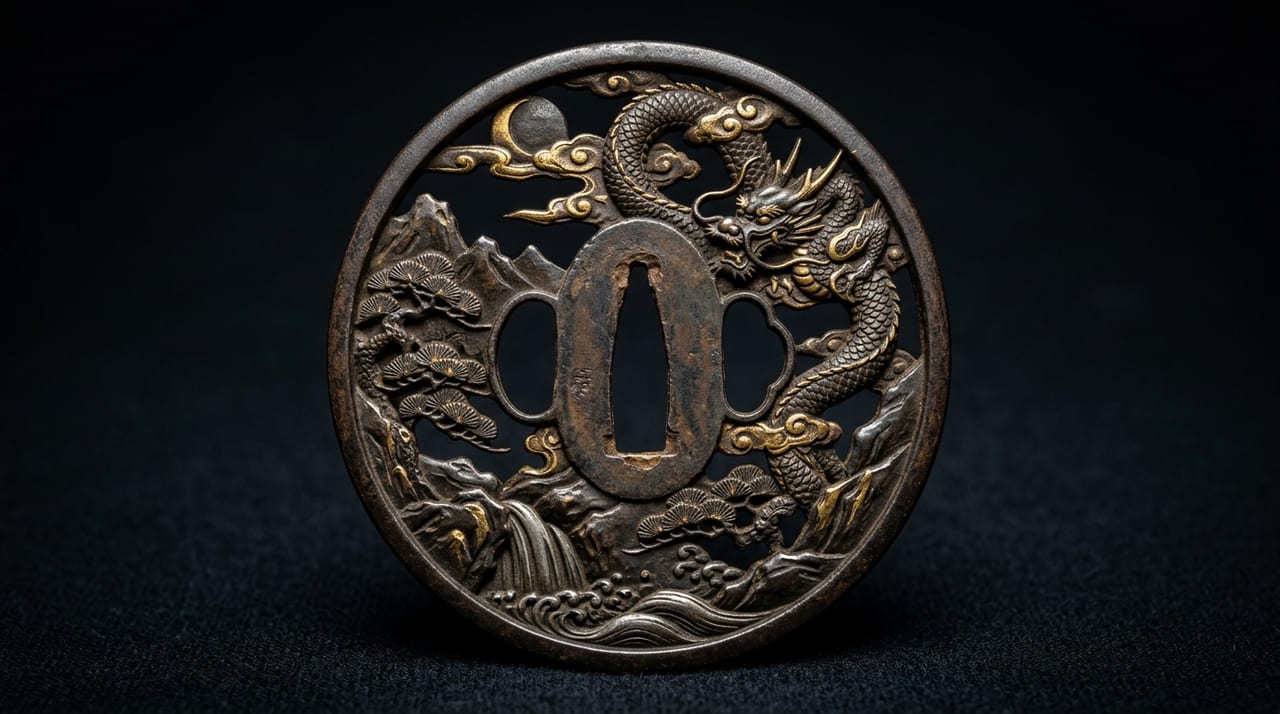
The Toyotomi Hideyoshi era marks the period when the artistic standards of sword fittings (tsuba, kozuka, kogai, fuchi-kashira, and menuki) reached their historical peak. Hideyoshi, known for his taste for gold, had master metalworkers throughout the realm compete to produce lavishly gorgeous sword fittings using gold, silver, shakudo, and suaka in every conceivable combination.
The metalworker who rose to prominence as Hideyoshi's official craftsman was "Umetada Myōju" and his workshop. The Umetada school was a rare collective that possessed both the techniques of sword smiths and metalworkers, and using diverse techniques such as sabiae, zougan (inlay), and takabori (high relief carving), they produced the pinnacle of Azuchi-Momoyama sword fittings. In the tsuba that Myōju worked on, one sees complex techniques combining thin-walled carving, hair-line carving, and gold inlay within high relief, and it would be no exaggeration to say that they established the aesthetic standards that would dominate the various schools that flourished later in the Edo period.
The "Gotō family" is also important in the history of sword-mounting metalwork. Since the first generation, Gotō Yūjō, this prestigious family served successive rulers of both the Toyotomi and Tokugawa, and their work is called "Gotō-mono." The refined artistic style of their work—animals and plants depicted in gold high relief against a shakudo ground—became the model for metalworkers throughout the Edo period. Together with the Umetada school, they exemplify how sword fittings of the Azuchi-Momoyama period reached the pinnacle of artistic achievement.
Furthermore, the invasion of Korea (the Bunroku and Keicho campaigns, 1592–1598) had unexpected repercussions for sword culture. Metalwork from Korea and Ming China brought back by invading generals sparked a vogue for foreign taste represented by nanban-tsuba, introducing new decorative vocabulary to Japanese sword fittings. Moreover, Korean blacksmiths who came to Japan (known as Koryo-kaji) settled in various regions, and it is said that they gave new stimulation to sword-smith communities in Kyushu such as Satsuma and Hizen.
Another celebrated blade treasured by Hideyoshi was the "Honebami Tōshirō." This short sword, made by Awataguchi Yoshimitsu, is now held by Toyokuni Shrine (in Higashiyama Ward, Kyoto). At the Kitano Grand Tea Gathering (Tenshō 15, 1587), Hideyoshi publicly displayed famous swords and sword fittings alongside his tea implements, presenting both tea and blades to the realm as dual pillars of his exercise of power.
Swordsmiths of the Azuchi-Momoyama Period—The Rise of New Forces
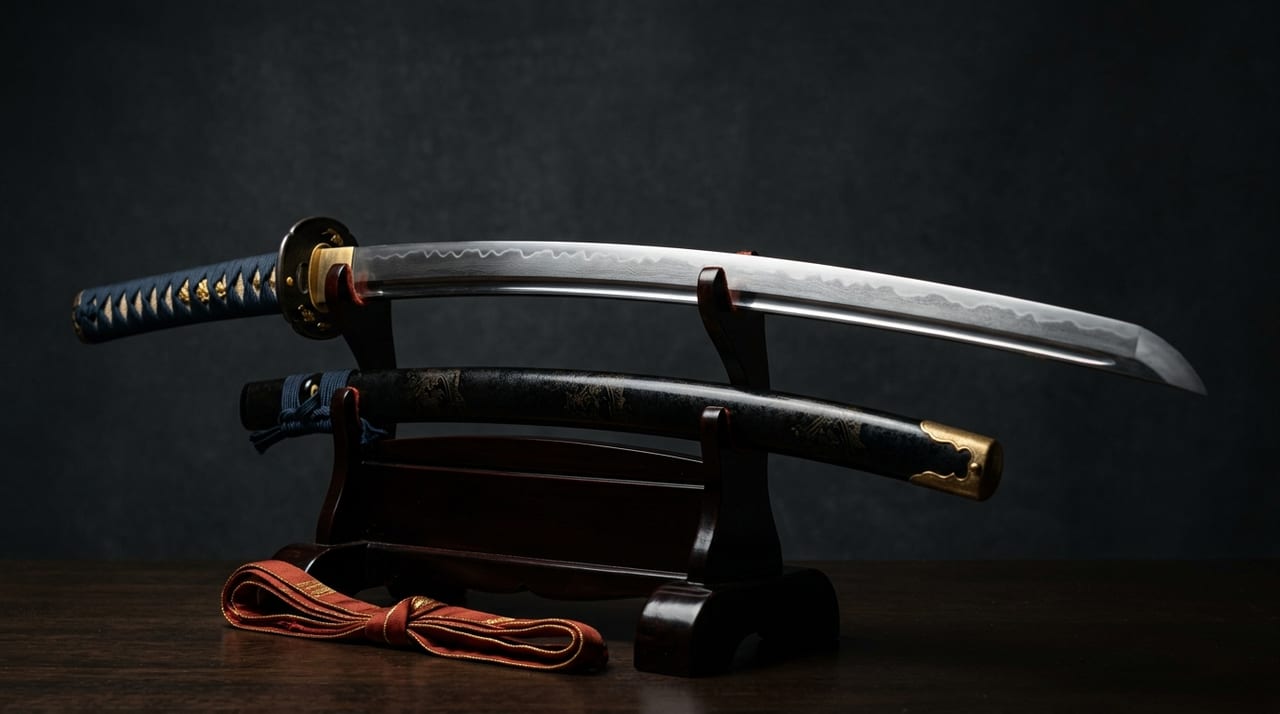
An indispensable figure among the blade smiths of this era was "Horikawa Kunihiro." Kunihiro originally served the Ito clan of Hyuga (Miyazaki) as a warrior, but through the upheaval of the Sengoku period lost his lord and chose a path as a sword smith—an unconventional career. He traveled to Kyoto in the Tensho and Bunroku eras, established a workshop in Horikawa, and created his own distinctive sword style by fusing the bold hamon of the Soshu tradition with the elegant jihada of the Yamashiro tradition.
Among Kunihiro's blades, particularly renowned are the works known as "Kijinmaru Kunishige-utsushi," copies inspired by older masterpieces. He is highly valued for having reorganized forging techniques through the restoration of ancient examples. His disciples formed the "Horikawa school," which became a principal force driving the Shinto (new sword) period of the Edo age.
- Horikawa Kuniyasu
- Echigo no Kami Kunitomo
- Dewa Daijō Kunimichi
- Izumi no Kami Kunisada
- Kawachi no Kami Kunisuke
As a workshop directly connected to Sengoku warlords, several swords forged at the command of Hosokawa Tadaoki (husband of Hosokawa Gracia) still survive, with personal connections between smiths and warlords vividly reflected in these works.
In Bizen (Okayama), the "Sukesada" family, who controlled the late period of the Osafune school, worked as a major supplier of mass-produced blades. Hideyoshi's military campaigns required vast numbers of swords, and Bizen Osafune, capable of supplying high-quality uchigatana in large quantities over short periods, played the role of the Sengoku era's greatest "military production facility." Blades bearing Sukesada's signature circulated widely as "Bizen-mono" during the Edo period, and the high number of extant examples hints at the scale of the production system of that time.
Momoyama Koshirae—The Aesthetics of Lavish Splendor
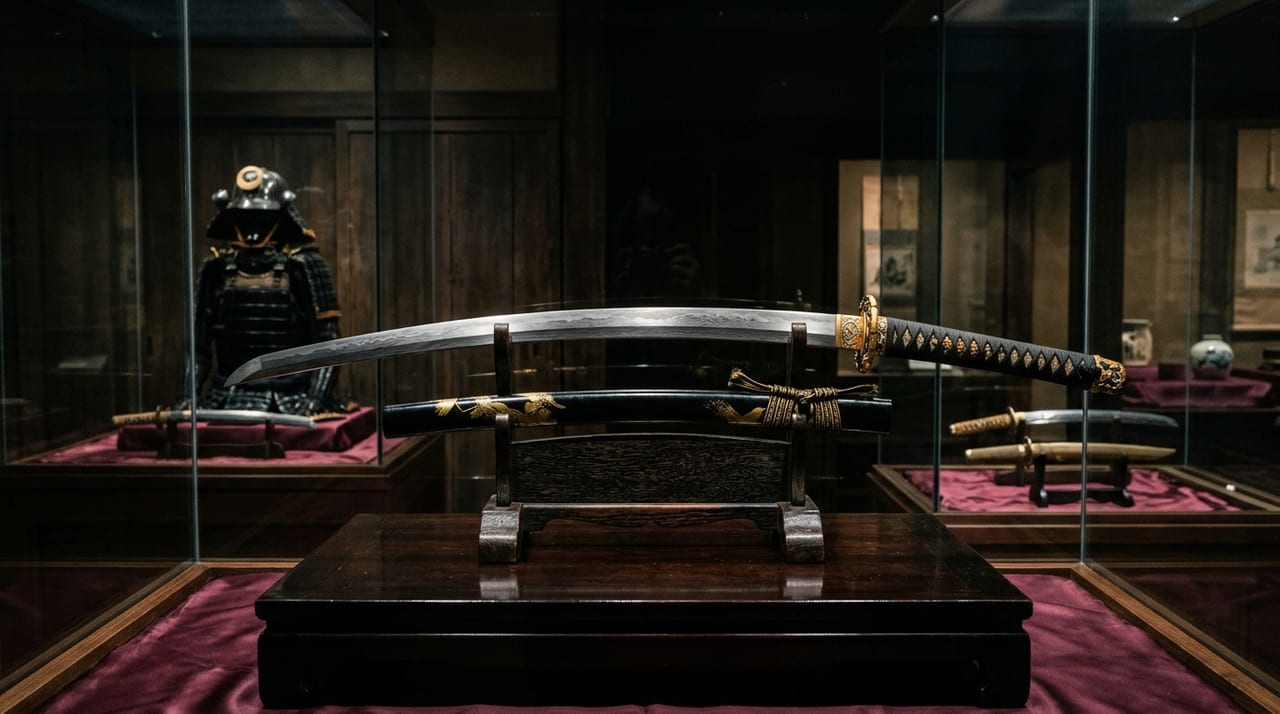
The sword fittings (koshirae) of the Azuchi-Momoyama period possessed a distinctive style collectively known as "Momoyama koshirae." The most striking characteristic is the flashy finish achieved through the lavish application of gold and silver foil pressing, rubbed-out makie, and makie decoration on lacquered scabbards.
Particularly noteworthy are scabbards finished in "black-urushi-coating gold-pear-ground" (kuro-roiro-nuri, kin-nashiji), where the contrast between the black of the lacquer and the brilliance of gold dust formed the prototype of the later "daimyo koshirae." The hilt wrapping (tsukamaki) featured cord made from gold and silver threads, and the menuki were fitted with sculptural metal ornaments carved with auspicious motifs—dragons, waves, pine and bamboo and plum—executed with utmost care by master metalworkers. The opulence of these fittings embodied directly the aesthetic sense—the political will to make overwhelming wealth and power visible—of the realm-unifying rulers Nobunaga and Hideyoshi.
Conclusion—The Legacy of Sword Culture Nurtured by Realm-Unifiers
Nobunaga's meibutsu-gari made the scarcity value of famous blades manifest; Hideyoshi's taste for gold elevated sword fittings to the realm of fine art; and the aftermath of the Korean invasion brought the influx of new designs and techniques. The sword culture of the Azuchi-Momoyama period, through the convergence of these forces, reached the apex of its transformation from "weapons of actual warfare" to "symbols of power and works of art."
- Horikawa Kunihiro laid the foundation for Edo Shinto blades
- The Umetada school established the aesthetic standards for sword-mounting metalwork
- Bizen Sukesada demonstrated the model for mass-production systems
All of these were legacies directly inherited by later generations. The intense aesthetic judgment and lust for power of the realm-unifiers paradoxically elevated the Japanese sword not only to the apex of perfection as a weapon but also to the highest standard as a work of decorative art. It is this contradiction-laden richness that remains the fundamental reason why the sword culture of the Azuchi-Momoyama period continues to captivate people to this day.