The Complete 700-Year History of the Osafune School——From Mitsutada to Sukesada and Kanemitsu, the Rise and Fall of Japan's Largest Sword-Making Center and Its Technical Legacy
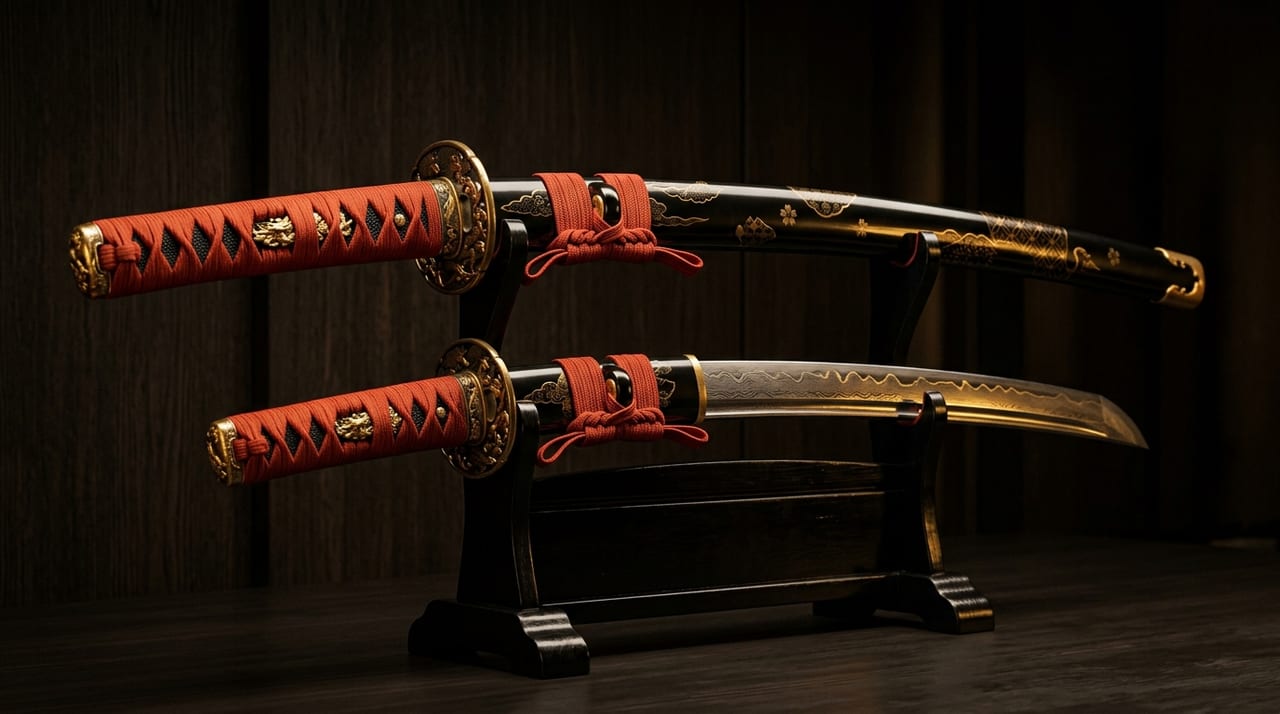 * Image is for illustrative purposes only.
Table of Contents
Osafune in Bizen——Why Japan's Premier Sword-Making Center Was Born
Osafune (present-day Osafune-chō, Setouchi City) in Bizen Province (modern Okayama Prefecture) functioned as one of Japan's premier sword-making centers from the late Heian period through the Edo period. Today the Bizen Osafune Japanese Sword Museum continues to preserve and exhibit the region's sword culture, drawing enthusiasts from across the country.
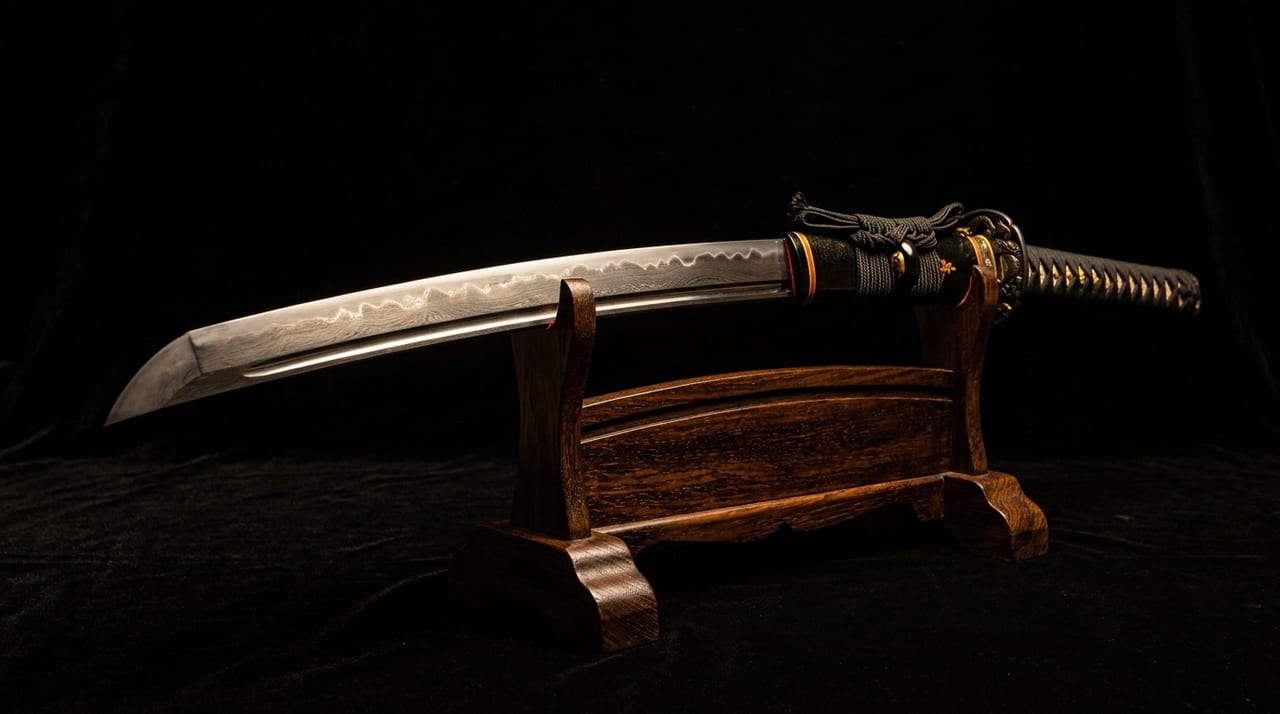
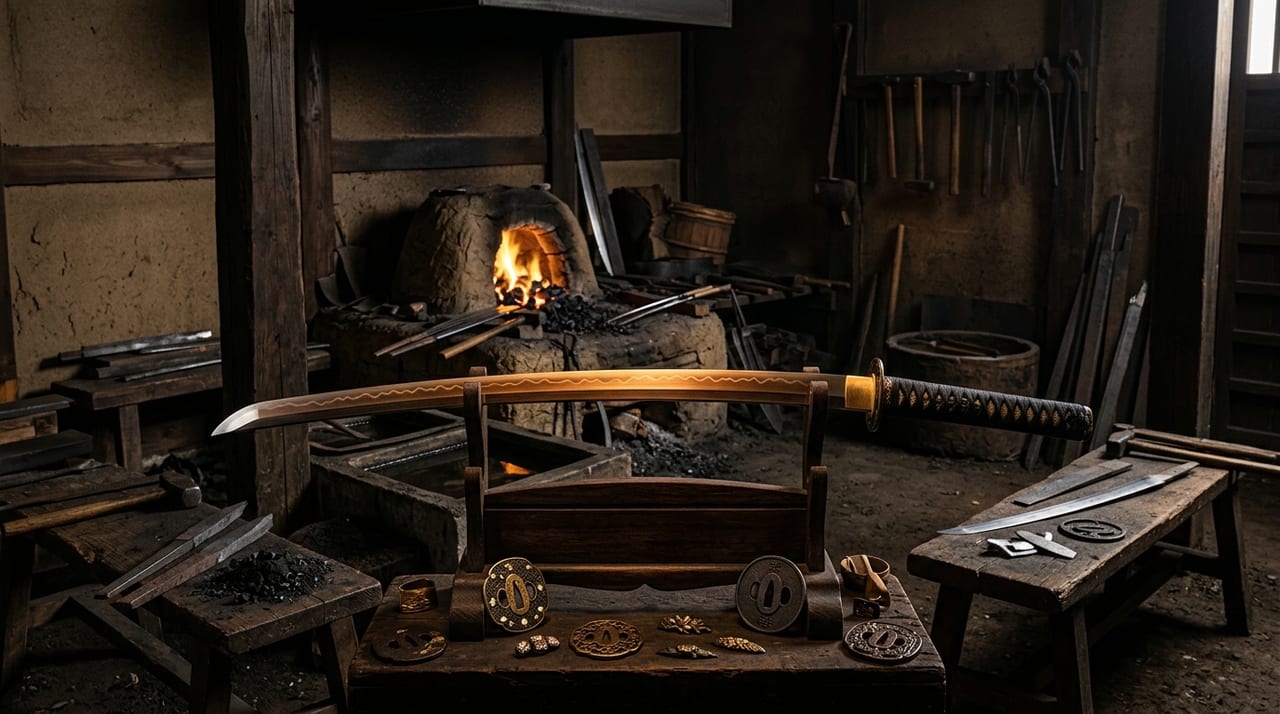
Why did Osafune remain a sword-making center for such an extended period? Several geographic factors converged to make this possible. The mountains along the Yoshii River basin yielded iron sand, and the river's waterway allowed finished blades to be transported throughout the country. The tamahagane produced from iron sand through tatara (traditional smelting) formed the foundation of the jigane from which the deep-nioi chōji hamon characteristic of Bizen-den was created. In addition, the water environment used for yaki-ire (quenching) and polishing is thought to have further supported the tōkō's work.
The Kamakura Golden Age——Competition Between the Ichimonji School and the Osafune School
The Kamakura period (1185–1333) was the first golden age of Bizen swords. In this era, the Ichimonji school and the Osafune school competed with each other while mutually advancing their techniques.
The Ichimonji school is said to have produced swords associated with the court and the shogunate, and sub-schools such as the Fukuoka Ichimonji and Yoshioka Ichimonji were known for their bold chōji hamon. Their hamon were lavish and wide in amplitude, possessing a beauty that overwhelms the viewer.
The Osafune school, by contrast, developed with Mitsutada as its de facto founder, growing around the lineage that continued through Nagamitsu, Kagemitsu, and Kanemitsu. It should be noted that Norimitsu belonged to the Ko-Bizen school as a tōkō of a separate lineage and was not the direct starting point of the Osafune school. Nagamitsu in particular is highly regarded as the tōkō who established Bizen-den, and many of his works survive to this day. The tachi of Nagamitsu are characterized by a well-maintained koshi-zori, and their form has long been described as combining aesthetic appreciation with practical use. Their hamon are fundamentally chōji with a deep, tight nioi, conveying a crisp dignity distinct from the lavishness of the Ichimonji school.
The Nanbokuchō Period to Early Muromachi——The Technical Apex Left by Kagemitsu, Kanemitsu, and Others
The Nanbokuchō period to the early Muromachi period (14th century) is considered the technical and productive peak of the Osafune school. In this era, tōkō such as Kagemitsu, Kanemitsu, Nagayoshi, and Motoshige each expressed their individual styles and left an influence on later generations.
| tōkō | Active Period / Lineage | Hamon Characteristics | Jigane and Other Characteristics |
|---|---|---|---|
| Kagemitsu | A leading tōkō of the Osafune school active from the late Kamakura period into the early Nanbokuchō period | A bold style that powerfully combines ō-chōji and gunome in an imposing composition, preserving Kamakura tradition while reflecting the spirit of the Nanbokuchō age | The fine mokume grain is densely packed, and the piece is also valued for its beautiful utsuri. It is frequently regarded as a reference work for study |
| Kanemitsu | A tōkō said to be the son of Kagemitsu | Known for a large hamon that features even larger and more turbulent disruption than his father's bold hamon. The wide, bold irregular pattern gives an imposing impression to the viewer | Considered one of the representative tōkō of the large, powerful tachi of the Nanbokuchō period, whose technical level is thought to have influenced later smiths |
| Nagayoshi | A Bizen tōkō of the Nanbokuchō period, counted among the Osafune school in the broad sense | A style said to prize the density of the jigane and the hardness of the cutting edge over the lavishness of the hamon | A combat-oriented tōkō whose reputation that "Nagayoshi's blades cut" is said to have persisted into the Sengoku era. The uniformity of the jigane is valued, and reassessment continues among researchers today |
| Motoshige | A tōkō of the Nanbokuchō to early Muromachi period | A style said to blend the chōji of the Ichimonji school with the dignified hamon of the Osafune school | Surviving works are few, but each demonstrates a high level of craftsmanship, attesting to the fact that Osafune explored diverse directions rather than converging on a single style |
Mass Production in the Sengoku Era——As a Supply Base for Kazuuchi Swords
During the Sengoku era of the mid to late Muromachi period (15th–16th centuries), Osafune took on a new role as a base for mass production. As daimyo throughout the country required weapons in large quantities, tōkō families such as Sukesada and Kiyomitsu at Osafune continued to produce kazuuchi swords through a division-of-labor system.
Kazuuchi swords prioritized practicality and mass producibility over artistic value. By modern sensibilities they may sound like "mass-produced goods," but by the technical standards of the time they were swords fully capable of withstanding actual combat, and this supply system supported battlefields throughout the country. The name of the Sukesada family is said to have circulated widely among warriors of the Sengoku period as the mei "Bizen Sukesada." The ability to flexibly shift the mode of production in response to changes in demand was one of the important reasons Osafune survived for so long as a production center.
From the Edo Period to After the Sword Abolishment Edict——Transformation in the Shintō Era and Transmission to the Present
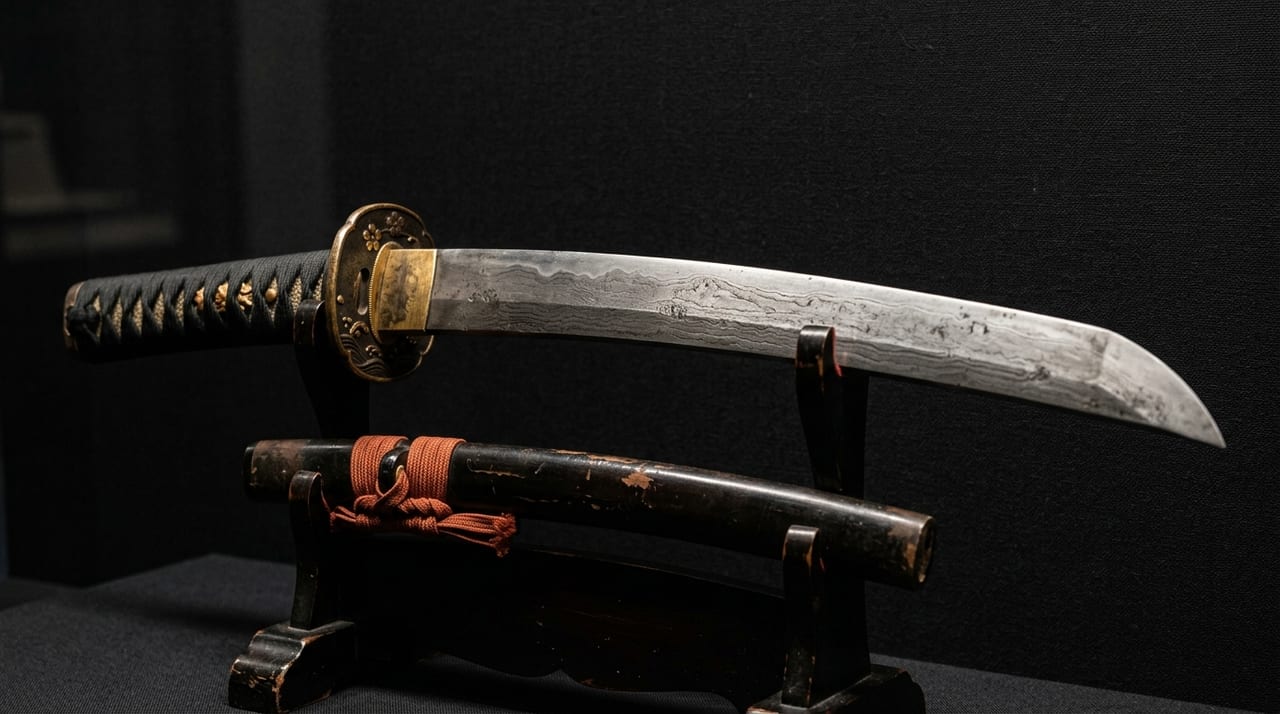
Osafune in the Edo period (1600–1868) shifted toward smaller quantities and higher quality as the intense wartime demand of the Sengoku era receded. Osafune tōkō of the Edo period — the Osafune school of the shintō era — continued to operate centered on the Sukesada lineage, but the scale contracted compared to the height of the Kamakura and Nanbokuchō periods. In keeping with a peaceful era, demand centered on uchigatana and wakizashi, and the hamon too came to require refined dignity over lavishness.
After the Sword Abolishment Edict (Haitōrei) of 1876, Osafune suffered a severe blow like other sword-making centers, but pride in the tradition and community-wide preservation efforts kept the tōkō's techniques alive. As interest in swords grew from a cultural heritage preservation perspective in the Shōwa era, contemporary tōkō now work at Osafune centered on the Bizen Osafune Japanese Sword Museum. The techniques of Bizen-den stretching back to antiquity — in particular the deep-nioi chōji hamon and the forging of uniform jigane — are inherited by contemporary tōkō and carried on in both research and practice.
Conclusion——A Rich Legacy Forged by Centuries
The long history of the Osafune school stands as one of the especially extended examples of technical transmission in the history of Japanese swords. The materials and water environment nurtured by geographic conditions, the shifting of production forms in response to era-specific demand from Kamakura to Sengoku, and the accumulated techniques of tōkō such as Kagemitsu, Kanemitsu, Nagayoshi, and Motoshige — all of these overlapping factors elevated Osafune beyond a mere production center into the "core of Japanese sword culture."
Osafune's history of producing swords across a wide range of quality and quantity, from the masterworks of Kamakura to the kazuuchi swords of the Sengoku era, embodies the richness and diversity of Japanese sword culture. Visiting the Bizen Osafune Japanese Sword Museum, which transmits that legacy to the present, and encountering hamon that shine across the centuries, would be an excellent opportunity to understand the essence of the Japanese sword.