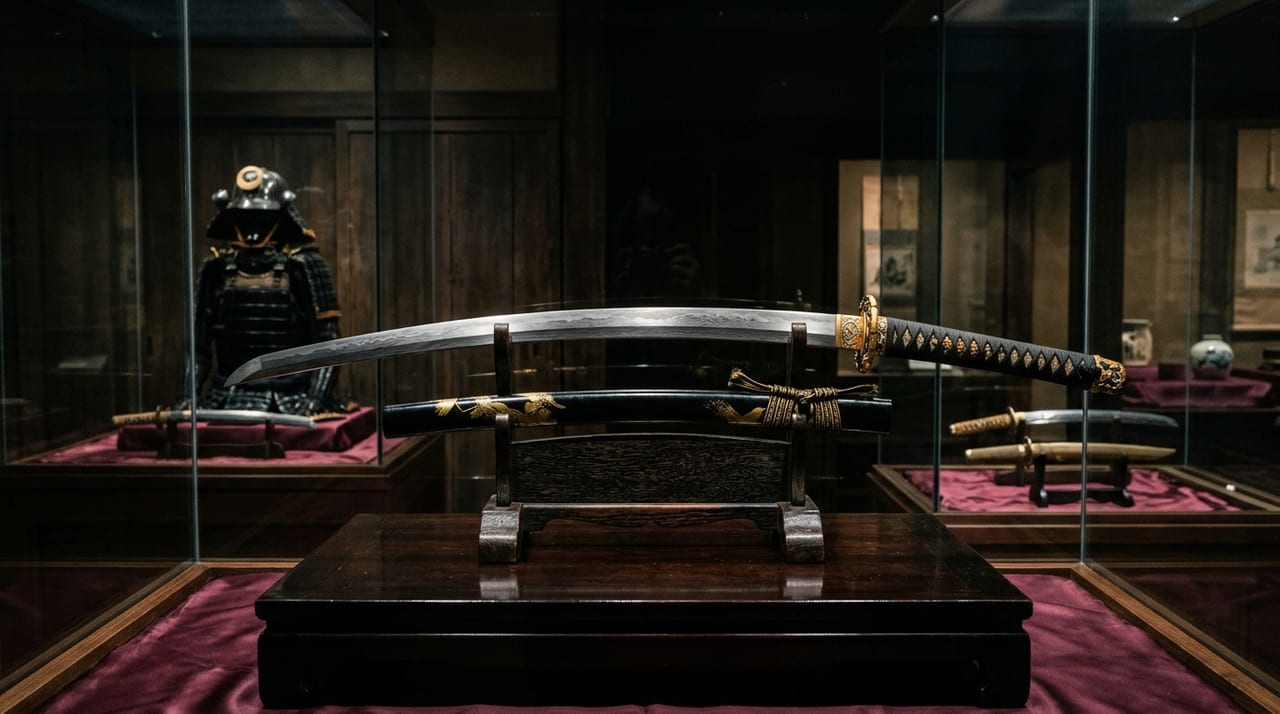
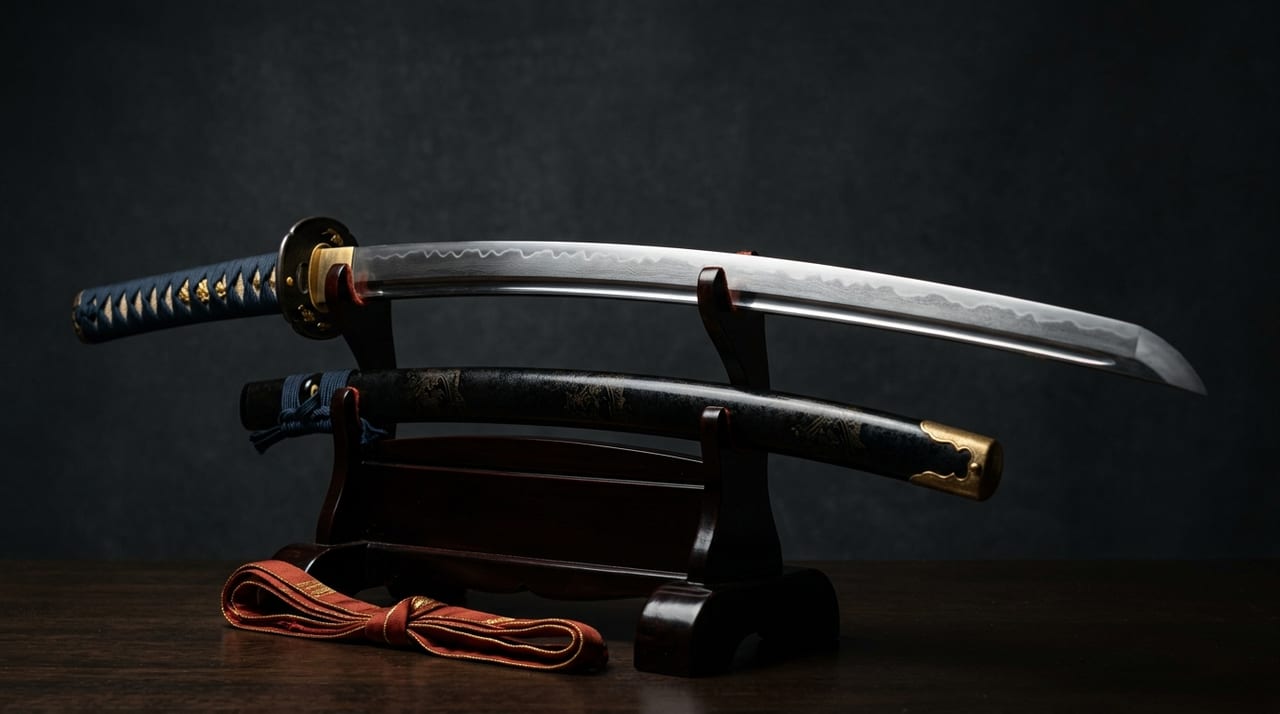
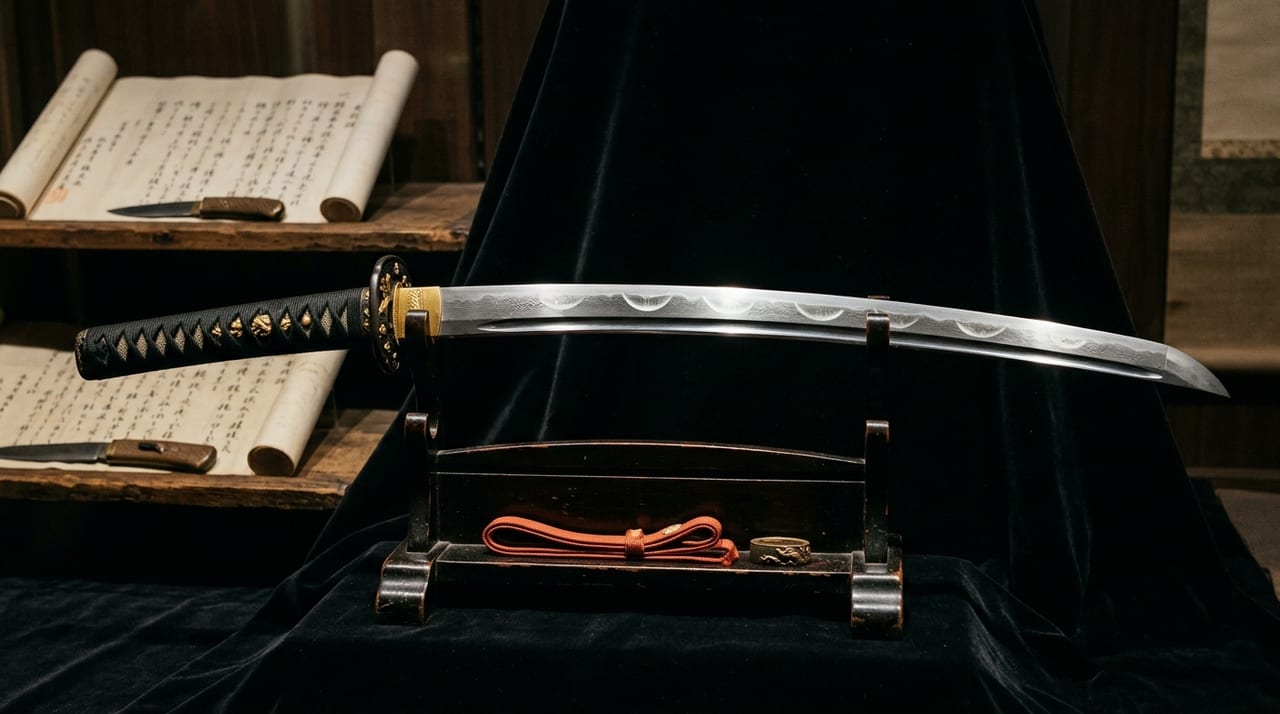
Imperial Army and Navy Sword Regulations: The Evolution of Military Sword Standards from Meiji to Showa
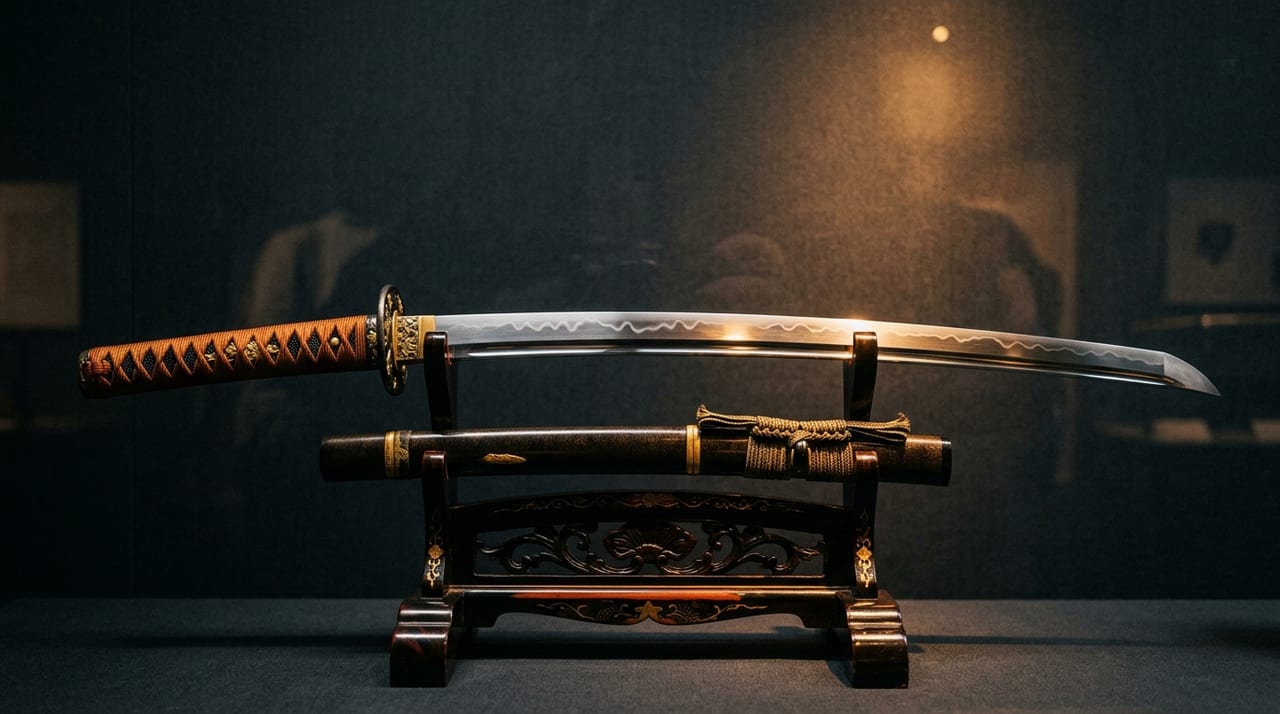 * Image is for illustrative purposes only.
Table of Contents
Early Meiji Period — Transition to Western-Style Sabers and Its Background
After the Meiji Restoration, the new government rejected the wearing of swords, which had symbolized feudal samurai society, and hastened to establish a modern military following Western powers. As discussions intensified regarding the introduction of conscription in Meiji 3 (1870), the Army organized a uniform system modeled on the French Army, and saber-type weapons were adopted as the standard for officers' arms. These sabers were strongly influenced by French and Prussian manufacture, featuring straight blades or slightly curved Western-style sword forms, with metal scabbards suspended from belts by frog-style attachments—a style completely different from the Japanese sword.
Meanwhile, the Navy modeled itself on the British Navy from the early Meiji period and adopted British-style short sword designs for officers' weapons. Because the Army and Navy each modeled themselves on different Western nations, military sword standards developed from the outset in two distinct lineages: Army-type and Navy-type.
Entering the Meiji 20s (1887–96), following battlefield experience in the Sino-Japanese War, a practical assessment that "curved blades have superior cutting ability in close hand-to-hand combat" spread among the officer corps. Concurrently, the momentum of the Meiji government's promotion of "national spirit" and reevaluation of "bushido" strengthened voices within the military calling for a return to Japanese sword-type military swords.
Model 32 Military Sword (1899) — Establishment of the "Japanese-Western Hybrid" Standard
Against this background, the "Model 32 Military Sword" was established in Meiji 32 (1899). The blade was straight-type (lacking curvature), similar to Western sabers, and the curvature and bend of Japanese swords were not adopted. The saya had a modern nickel-plated fittings specification, and the carrying method used Western-style frog attachments.
Two types were established for non-commissioned officer use:
- Type A (Cavalry use)
- Type B (Supply corps use)
Standardization for officers came later with the Model 94 Military Sword (Showa 9, 1934), and at the Model 32 stage, cases of officers privately using Japanese sword-style military swords were not uncommon.
The Model 32 continued to be used for many years afterward and was still employed on the front lines as an older model even in the early Showa period. Its continued service for approximately 40 years from its establishment reflects both the high practicality of this standard and budgetary and supply constraints within the military.
Model 94 Military Sword (1934) — Showa's "Return to Japanese Sword" Declaration
In Showa 9 (1934), the War Ministry established the "Model 94 Military Sword." This standard, which eliminated the previous Japanese-Western hybrid elements and conformed as closely as possible to the traditional style of Japanese swords, became a major turning point in military sword history.
The tsuka was wrapped in same-skin with menuki arranged, and the tsuba also adopted a design close to the traditional circular form. The saya was fundamentally finished in black lacquer, with only the carrying fittings adopting a modern specification. It was recommended that the blade contain a forged Japanese sword, and this policy was coordinated with the establishment and expansion of the "Army Commissioned Swordsmith System" (established in Showa 8).
The Commissioned Swordsmith System was a framework in which swords made by swordsmiths certified by the Army were adopted as military swords, and leading swordsmiths of the era such as Miyairi Akihira and Gassan Sadaichi participated. The establishment of the Model 94 was not merely a change in standards but also represented part of a modern revival movement for traditional forged swords.
Model 98 Military Sword (1938) — The Peak of Mass Production and Practicality
The "Model 98 Military Sword," established in Showa 13 (1938), was the most widely produced among Showa-era military sword standards. This was because the prolonged Sino-Japanese War and expanded front lines led to a rapid increase in the number of officers, requiring large-scale supplies of military swords.
The Model 98's greatest feature was the adoption of tea-leather wrapped saya, which significantly reduced manufacturing costs and labor compared to the black lacquer Model 94. The handle structure was also simplified, and the overall production efficiency of the mounts was enhanced. In addition to forged blades, industrially produced items called "Showa swords" manufactured by machine were mixed together, resulting in quality variation.
Most items currently circulating in the antique market as "military swords" have Model 98 mounts, and the abundance of inventory at the time of surrender indicates the large scale of its production. The Model 98 was collected and destroyed in large quantities following disarmament after defeat, but some pieces escaped domestically and abroad, and today they continue to attract high interest among collectors.
The Navy's Independent System — Short Swords, Command Swords, and the Chrysanthemum Crest
While the Army developed its own standards, the Navy followed a different developmental path. Naval standard weapons are broadly divided into two types: "tanjken (short sword)" and "shikitou (command sword)."
| Type | Primary Use / Position | Features |
|---|---|---|
| tanjken (short sword) | Formal dress for naval officers from the Meiji period | Overall length shorter than army military swords, with designs initially strongly influenced by Western style. From the Meiji 30s onward, forms close to Japanese style with curvature in the blade became mainstream, and chrysanthemum crests were engraved or inlaid on the tsuba and handle head. |
| shikitou (command sword) | Combining combat command and formal dress, positioned equivalent to the Army's Model 98 | The fittings form of the saya, the tying method of sageo, and the design of blade fittings differed from Army standards, reflecting the Navy's unique aesthetic standards. |
The naval short sword was an important design that visually demonstrated loyalty to the Emperor and the status of naval officers. The command sword, as a standard that combined practical design considering use aboard ship with the formal beauty that demonstrated naval dignity, was carefully maintained by officers.
The Military Sword as Spiritual Symbol — Showa's "Bushido" and Continuity into the Postwar Era
Entering the Showa 10s (1935–44), the military sword was no longer a purely functional weapon, and its spiritual significance as an "embodiment of Japanese spirit" and a "symbol of bushido" came to the foreground. Military sword handling manuals issued by the War Ministry stated that "the Japanese sword is the soul of the warrior, and its handling is nothing other than the practice of bushido," and the maintenance, carrying, and storage of military swords were positioned as part of spiritual training.
This spiritualist view of military swords both increased demand for forged blades through the Commissioned Swordsmith System and also created conceptual excess in "deifying the Japanese sword." Even after the overwhelming superiority of firearms in actual combat became evident, the fact that "drawing a military sword and charging" continued to be praised as having spiritual value was not unrelated to this era's atmosphere.
After the war, large quantities of military swords were confiscated and destroyed by GHQ disarmament and sword possession prohibition orders. However, in the context of cultural property protection from the Showa 30s onward, military swords made by forging were reevaluated as "artistic swords" and have continued to be subjects of research and collection to the present day. The transformation of military sword standards from Meiji through Showa continues to vividly reflect how modern Japan sought its own martial style within the contradictory dynamics of Westernization, return to tradition, and spiritualism.