Yoroidoshi and koshigatana — Types of tantō for piercing gaps in armor, and the samurai's art of self-defense
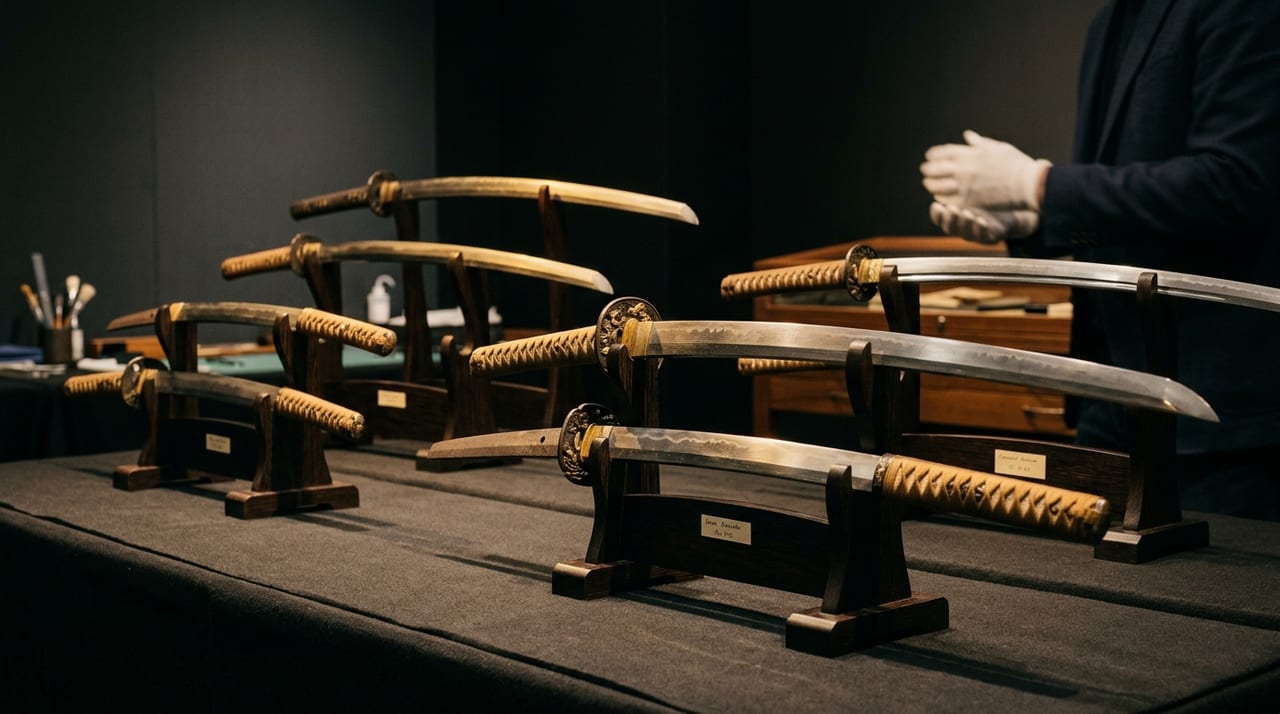 * Image is for illustrative purposes only.
Table of Contents
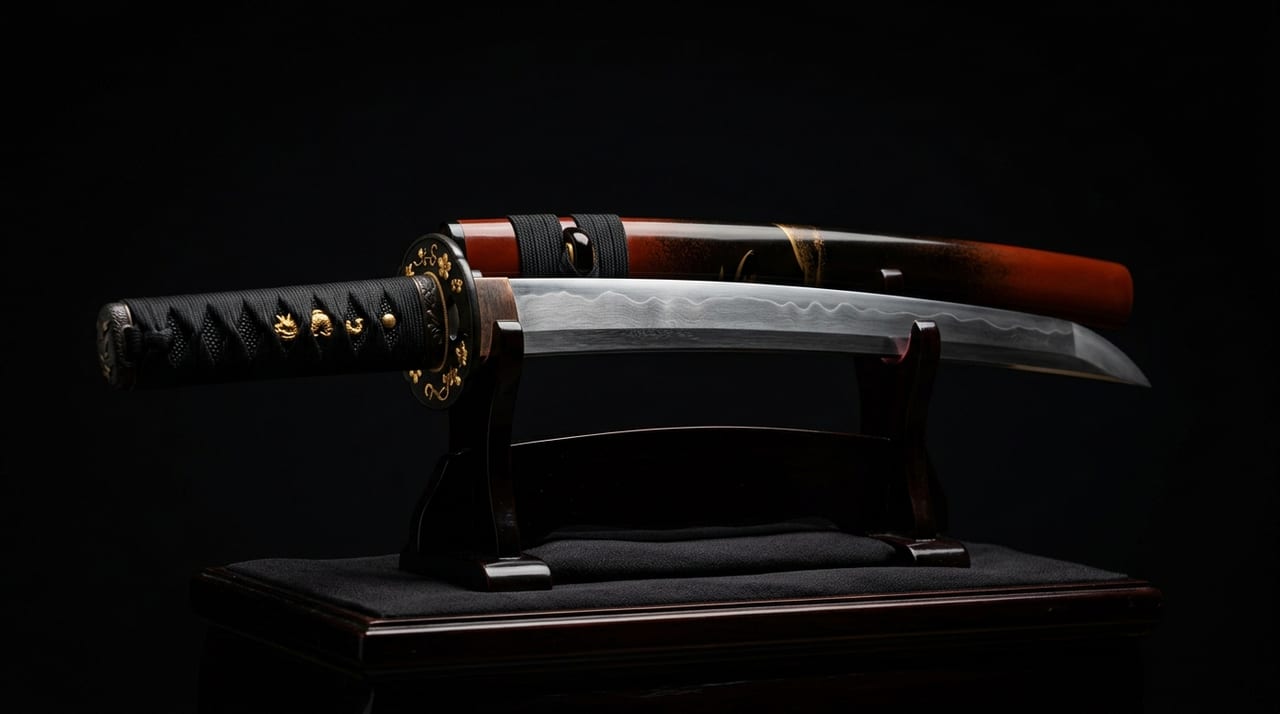
Yoroidoshi is a tantō specialized for thrusting into the gaps of armor when grappling with an armored opponent. It is one of the most combat-oriented forms of the nihontō, slender with a thick kasane, designed solely for "thrusting" rather than cutting. This article explains the structure and use of yoroidoshi, the differences between it and other short blades such as koshigatana and kaiken, the characteristics seen in examples from Sōshū-den and Bizen-den, and its cultural role as a self-defense implement for samurai.
What is yoroidoshi?
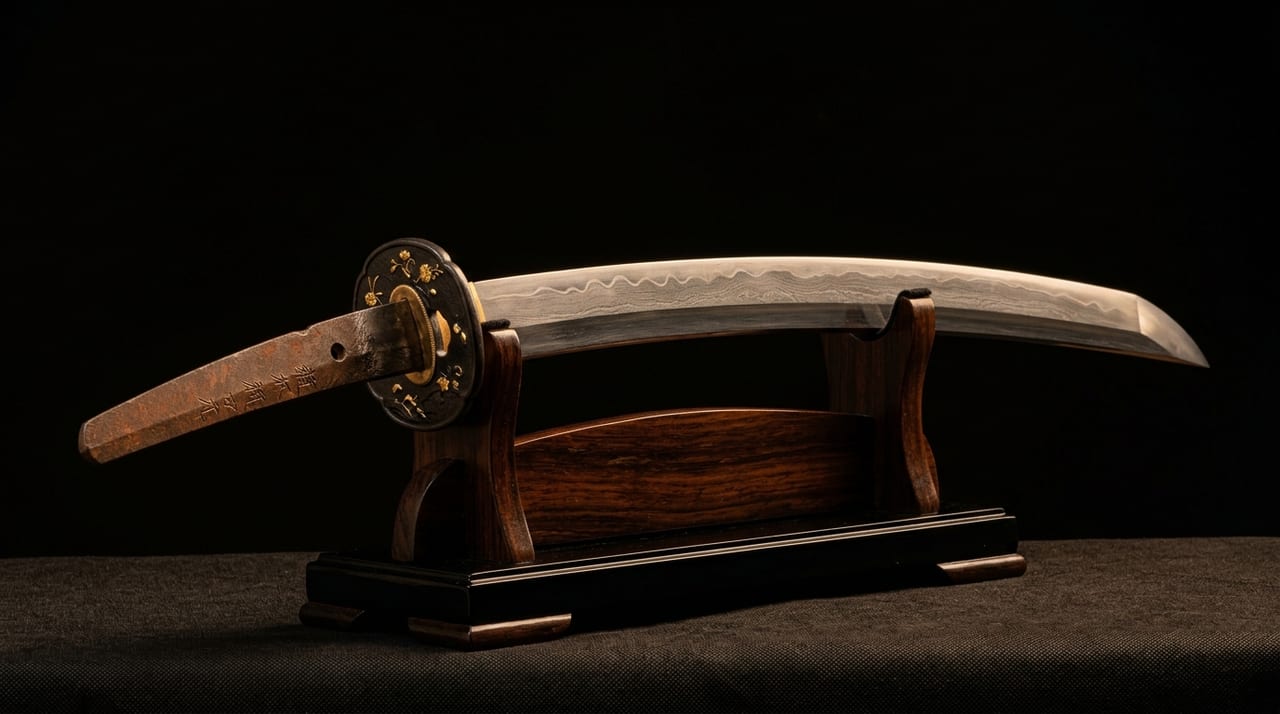
Yoroidoshi refers to tantō with a nagasa of less than one shaku (approximately 30 cm) that were made for the purpose of thrusting through the gaps in armor. The morphological characteristics are as follows.
- The kasane (thickness of the blade body) is very thick, with some examples exceeding 1.5 times that of an ordinary tantō
- The mihaba is narrow, and the cross-section approaches a triangular or diamond shape. It tapers sharply toward the tip.
- There is little or no sori, and some have uchi-zori (curving toward the edge side). This is a design that transmits force straight when thrusting.
- Most have a nagasa of around seven to nine sun (approximately 21–27 cm).
- Hira-zukuri and katakiri-ba-zukuri are more common than shinogi-zukuri, and there are examples where a hi was carved to adjust the weight.
It is also called kacchūdōshi, and the meaning is the same. The structural details are explored further in Structure and use of kacchūdōshi, and the design philosophy of blade thickness and forging in Structure and combat use of yoroidoshi.
How was it used on the battlefield?
Yoroidoshi was a last-resort weapon used when a tachi or uchigatana could not decide the outcome and one was grappling with the opponent.
- Grappling: wrestling with the opponent on horseback or on foot, and pinning them down
- Targeting gaps: armor has gaps that cannot be covered with metal plates, such as around the neck, the armpits, between the kusazuri (skirt plates), and between the kote (gauntlets) and the sode (shoulder guards)
- Thrusting: pinning the opponent with the left hand and thrusting the yoroidoshi held in a reverse grip in the right hand into a gap. The blade could also be twisted to widen the wound.
- Taking the head: tantō were also used when taking an enemy's head as proof of battle merit.
For this reason, yoroidoshi was worn on the right hip with the edge facing up, positioned so it could be easily drawn in a reverse grip with the right hand. Metezashi, a specialized tantō operated with the right hand alone on horseback, also arose from the same purpose. The carrying and use of swords on the battlefield is explained in Armor (kogusoku) and swords, and metezashi in Metezashi.
Types of tantō and the place of yoroidoshi
Tantō have many names, and the classification changes depending on whether one focuses on form, purpose, or koshirae.
| Name | Classification perspective | Characteristics |
|---|---|---|
| Tantō | Nagasa | General term for blades shorter than one shaku |
| Koshigatana | Purpose and era | Name for tantō worn at the hip in koshirae without a tsuba, chiefly in the Kamakura period |
| Yoroidoshi | Purpose and form | Thick kasane, slender body. A tantō for thrusting into the gaps of armor |
| Aikuchi | Koshirae | A tantō without a tsuba whose tsuka and saya mouth fit together flush |
| Kaiken | Purpose | A tantō carried in the breast of clothing by women of samurai families for self-defense |
| Sun-nobi tantō | Nagasa | A blade slightly longer than one shaku, at the boundary between tantō and wakizashi |
Koshigatana was a tantō that samurai of the Kamakura period always carried, and among them were some with the form of a yoroidoshi. That is, koshigatana is a name that focuses on "how it is worn," while yoroidoshi is a name that focuses on "purpose and form," and a single blade may be called by both names. The morphological differences among these three types are organized in Comparison of the three types: kaiken, koshigatana, and yoroidoshi, and tantō types in general in What are the types of tantō?.
The style of yoroidoshi as seen in Sōshū-den and Bizen-den
From the Kamakura period through the Muromachi period, the demands of actual combat were common to all schools, but the techniques used to meet those demands differed from school to school.
- Sōshū-den: The blade was hardened by yaki-ire with strong nie, creating an edge capable of withstanding the impact of thrusting. Many works feature a magnificent hamon forged onto tantō with a thick kasane, combining practicality with aesthetic appeal.
- Bizen-den: Characterized by a soft hamon based primarily on nioi and tough jigane. This can be described as a design that prioritized the toughness needed to resist breaking when thrusting.
- Yamato-den: Many smiths were affiliated with temples, and they made sturdy tantō with close-grained masame jigane.
Among surviving yoroidoshi, there are some that retain fine edge chips and traces of re-polishing on the kissaki, suggesting they were actually used on the battlefield. When appreciating them, pay attention to the thickness of the kasane, the shape of the cross-section, and the finish of the kissaki. The difference between nie and nioi is explained in Nie-deki and nioi-deki.
Tantō as a self-defense implement and samurai culture
Even after the Edo period, when practical battlefield use diminished, the tantō did not disappear from samurai life.
- Self-defense: When going to the castle or traveling, some samurai carried a tantō in their breast in addition to their uchigatana and wakizashi. It was a last resort for situations where a longer sword could not be drawn indoors.
- Ritual: Tantō were used as gifts for genpuku (coming-of-age ceremonies) and weddings, and also became implements for displaying a family's status.
- Women's kaiken: Women of samurai families carried kaiken for self-defense, and the custom of bringing them at weddings survives in changed form in modern Japanese-style wedding ceremonies. For details, see What is kaiken?.
- The rite of seppuku: Tantō were also used in the final ritual of samurai, and were inseparable from samurai spiritual culture.
The full scope of the role played by tantō is summarized in The truth about tantō, and the history of tantō in The history and beauty of tantō.
Points to check when appreciating and collecting yoroidoshi
Yoroidoshi are among the most distinctive tantō, and are popular as objects for appreciation and collecting. Check the following points.
- Kasane and cross-section: Is the kasane maintained thickly from the nakago to the kissaki? A yoroidoshi that has become thin through togi wear has lost its original form.
- Sori: If there is no sori or the blade has uchi-zori, the design specialized for thrusting is preserved.
- Mei and period: Zaimei examples from the Kamakura period through Nanbokuchō are few in number, and verifying provenance is important.
- Koshirae: If aikuchi koshirae or koshigatana koshirae are included, they serve as a record of how the blade was worn at the time.
- Registration certificate: As with other swords, possession requires a Jūhō Tōkenrui Tōrokushō (firearms and swords registration certificate). For the procedure, see Jūhō Tōkenrui Tōrokushō — the "passport" of the nihontō.
Summary
Yoroidoshi is the most combat-oriented tantō, born for thrusting into gaps during grappling with an armored opponent. The thick kasane, narrow mihaba, and straight blade with no sori are all designed solely for "thrusting." Among the tantō category — koshigatana, aikuchi, kaiken — yoroidoshi is a name distinguished by purpose and form, and the nie of Sōshū-den and the toughness of Bizen-den are the result of different techniques responding to the same practical demands. Try reading the history of how a tantō born as a tool of the battlefield gradually merged into samurai culture of self-defense and ritual from the form of a single yoroidoshi.