The Structure and Combat Use of the Yoroidōshi — The Design Philosophy of Armor Penetration as Seen Through Blade Thickness, Multi-Layer Forging, and Close-Combat Tactics
 * Image is for illustrative purposes only.
Table of Contents
What is the Yoroidōshi Tantō?
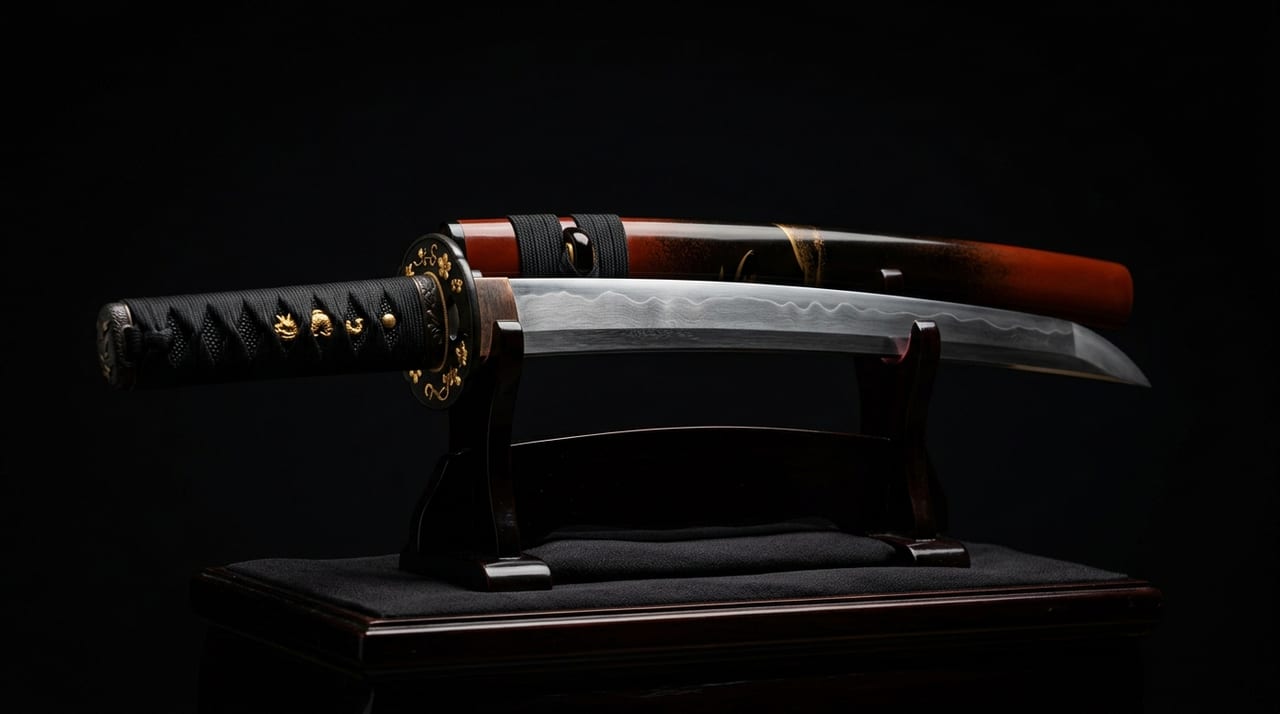
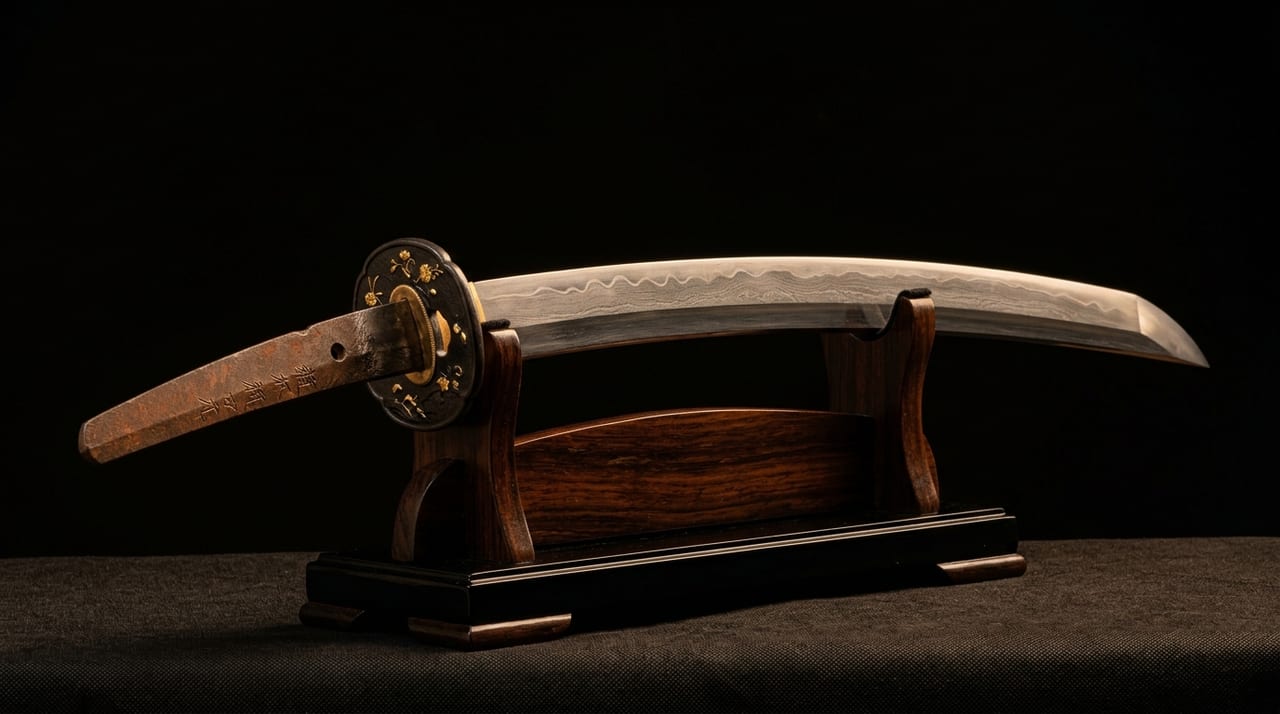
The yoroidōshi tantō was a tantō specially designed to pierce enemy armor (particularly the chest plate and shoulder armor) from the mid-Kamakura period through the Sengoku period. With a nagasa of approximately one shaku (30–35 cm), it is thicker than an ordinary tantō (kaiken or koshi-gatana) and honed to an extremely sharp point.
Its purpose is clear. When medieval warriors came to close quarters with an enemy in a situation where neither sword nor spear could be used at range, it was tactically vital to draw a tantō, drive it through a gap in the enemy's armor, and thrust the blade into a vital point (the armpit, groin, or neck). The yoroidōshi is a weapon specialized precisely for that extremely practical purpose of armor penetration.
The Secrets of Its Structural Design
The Balance Between Blade Thickness and Width
The greatest feature that distinguishes the yoroidōshi from an ordinary tantō is its kasane (blade thickness). While the kasane of an ordinary tantō is around 5–8 mm, that of a yoroidōshi can reach 10–15 mm.
This thickness enables the blade to maintain its thrusting force against enemy armor (a composite structure of iron plate, leather, and cloth) without breaking or bending. At the same time, the blade width (the distance from the base to the tip of the blade) is often kept relatively narrow.
This is because too wide a blade makes it difficult to enter the gaps in armor, and increases the risk of the blade becoming caught and left behind in the armor. In other words, reconciling the conflicting conditions of "thick yet narrow" is the very foundation of the yoroidōshi's design.
The Extreme Sharpness of the Kissaki (Point)
Another characteristic of the yoroidōshi is that the kissaki is honed to an extreme sharpness. This is a result of prioritizing penetrating power — that is, forcing a hole through the gaps in armor.
The kissaki of an ordinary tantō or long sword is often given a slight roundness to accommodate slashing and scraping motions. The kissaki of a yoroidōshi, however, is needle-sharp, designed to maximize the physical phenomenon of "penetrating" rather than "spreading apart" the enemy's armor upon thrusting.
The togi of this kissaki is highly demanding for a togishi. If unintended sori (curvature) is introduced during the polishing process, or if uneven quenching occurs, there is a risk that the tip will fracture.
The Shortness and Ease of Grip of the Tsuka (Hilt)
The tsuka of a yoroidōshi is often designed shorter than that of an ordinary tantō. This is because the weapon is intended for fighting at extremely close quarters where armor is in contact with armor; if the tsuka were too long it would snag on the opponent's armor, so a shorter tsuka improves maneuverability.
Furthermore, the yoroidōshi is generally assumed not to be "worn at the hip during carry" but rather to be "brought to the battlefield and drawn at the final stage of close combat." Accordingly, the length and shape of the tsuka are contrived to allow rapid drawing and accurate thrusting at short range.
Materials and Metallurgy
The Balance Between Hardness and Toughness
For a yoroidōshi to penetrate enemy armor, hardness in the blade is indispensable. Too little hardness, and the blade will bend upon contact with the iron plate of the armor. At the same time, excessive hardness makes the blade brittle and increases the risk of fracture.
To resolve this "hardness-and-toughness dilemma," yoroidōshi craftsmen adopted a multi-layer laminated structure. By placing hard iron (a hard edge) on the outer layer and soft iron (shingane) on the inner layer, they achieved a blade that is hard on the outside and flexible on the inside.
Advanced Polishing Techniques
The togi of a yoroidōshi demands more advanced techniques than that of an ordinary tantō. To achieve the conflicting goals of maintaining the sharpness that "maximizes penetrating power" at the tip while simultaneously preserving "toughness that resists fracture," the togishi must use fine whetstones in stages and perform extremely precise polishing.
According to records of togishi from the Edo period, togi of a yoroidōshi frequently required 1.5 to 2 times as long as that for an ordinary tantō — typically 3 to 5 days.
Methods of Use in Combat and Tactics
Downward Cuts and Thrusts in Close Combat
The combat scenarios in which the yoroidōshi was used were envisaged as follows.
- Initial stage: Ranged combat with bows and spears
- Close-in stage: Clashing with the daito (long sword)
- Final stage: Drawing the yoroidōshi and thrusting it into the enemy's armpit or groin
This use in the third stage is the yoroidōshi's true role.
Particularly important is the action, when an enemy is on the verge of falling or when one has come to grappling with an enemy, of not "stabbing" with the yoroidōshi but rather "pressing it in." That is, a technique in which one presses the entire blade against the enemy using the force of the elbow, and at the moment the tip penetrates the armor, rotates the wrist to slide the blade sideways, maximizing the lethal effect of wounding blood vessels and organs.
Distinction from the Kabutodōshi
A weapon easily confused with the yoroidōshi is the kabutodōshi. The kabutodōshi is a tantō designed to penetrate the bowl (front face) of a kabuto, and is even shorter (approximately 20 cm) with a finer tip.
However, kabutodōshi are extremely rare in number, and it is believed that their actual use on the battlefield was limited. This is because penetrating the front face of a kabuto requires the opponent to be facing forward, a condition that is seldom met in actual combat.
Famous Yoroidōshi and Their Makers
Made by Bizen Osafune Mitsutada: "The Yoroidōshi of Mitsutada"
Several yoroidōshi made by Bizen Osafune Mitsutada, the renowned tōkō of the Kamakura period, survive today in private collections and museums. These, with a nagasa of 32–35 cm and a kasane of approximately 12 mm, are "standard yoroidōshi" and are precious examples demonstrating Mitsutada's high level of craftsmanship.
Yoroidōshi by Soshu Masamune: Phantom Masterpieces
No yoroidōshi that can be definitively attributed to the legendary tōkō Soshu Masamune is known to exist at present. However, sword-related literature from the Edo period contains references to "the yoroidōshi of Masamune," and his technical excellence appears to have been greatly praised.
The Transition from the Sengoku Period to the Edo Period
The Sengoku Period: The Height of the Yoroidōshi's Practical Use
In the Sengoku period (15th–16th centuries), large-scale pitched battles increased and the role of the tantō in close combat became more important. During this period, production of yoroidōshi also increased, and the tōkō of the various daimyo competed to produce a "tantō that could pierce hard armor."
There are also records that in the age of Oda Nobunaga, even thicker yoroidōshi were produced in response to the "new-style armor" (using harder iron plates) adopted by Nobunaga's forces.
The Edo Period: From Weapon to Work of Art
When the Edo period began and the wars ended, the practical combat value of the yoroidōshi declined rapidly. However, with the hereditary transmission of samurai status, retaining a yoroidōshi as a family heirloom came to be esteemed as a symbol of a warrior's "martial capability."
During this period, old yoroidōshi came to be highly valued as works of art, and at the same time "newly made yoroidōshi" by Edo-period tōkō began to be produced. However, these Edo-period pieces no longer functioned as "weapons for actual combat," but rather as "expressions of samurai bearing and cultivation."
Conclusion
The yoroidōshi is a weapon born from the practical challenge that faced medieval warriors: "how to penetrate enemy armor." Its kasane, the sharpness of its kissaki, the shortness of its tsuka, and its multi-layer structure are all a design optimized for the single purpose of armor penetration — a masterpiece that resulted from craftsmen confronting the "realities of the battlefield."
We today tend to be dazzled by the beauty of nihontō, but we should not forget that this beauty is also grounded in such functional, combat-oriented design. The yoroidōshi is the most direct witness to the fact that the nihontō was a "weapon" before it was a "work of art."