Hatori and Keshō-togi — Whetstone Selection and Finishing Techniques Applied by the Togishi in the Final Stage
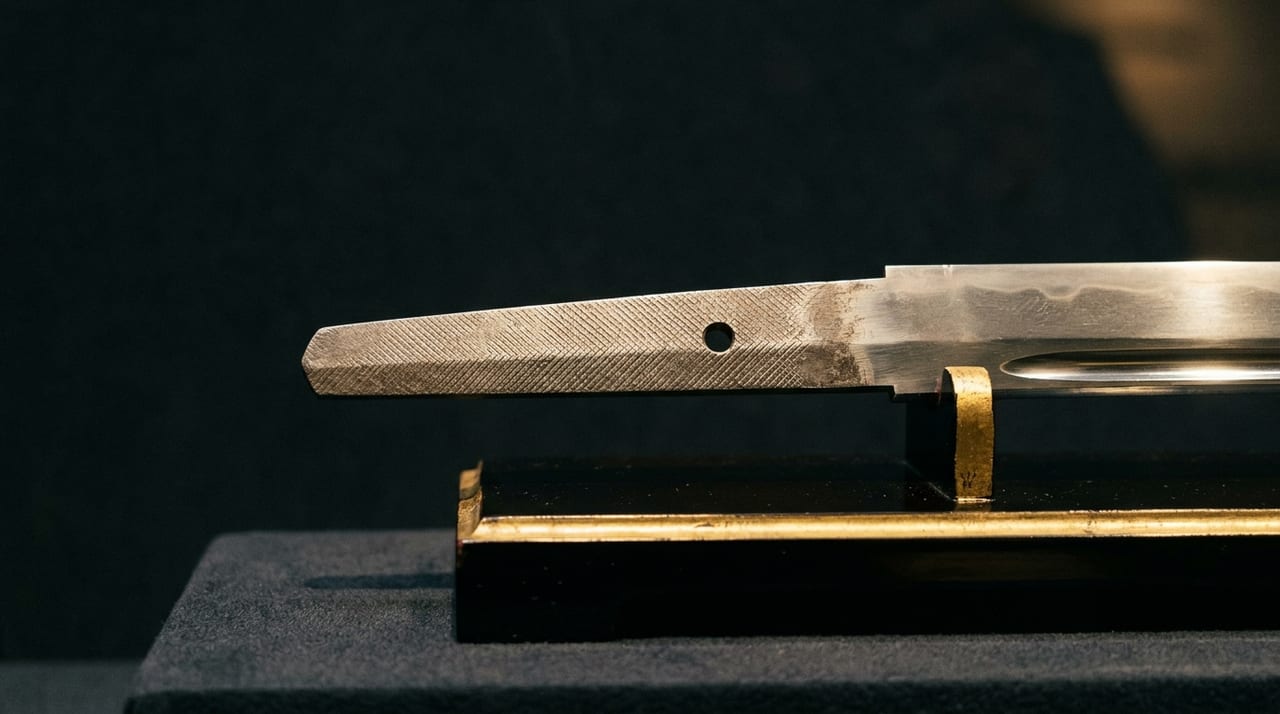 * Image is for illustrative purposes only.
Table of Contents
The Two-Stage Structure of Nihontō Polishing
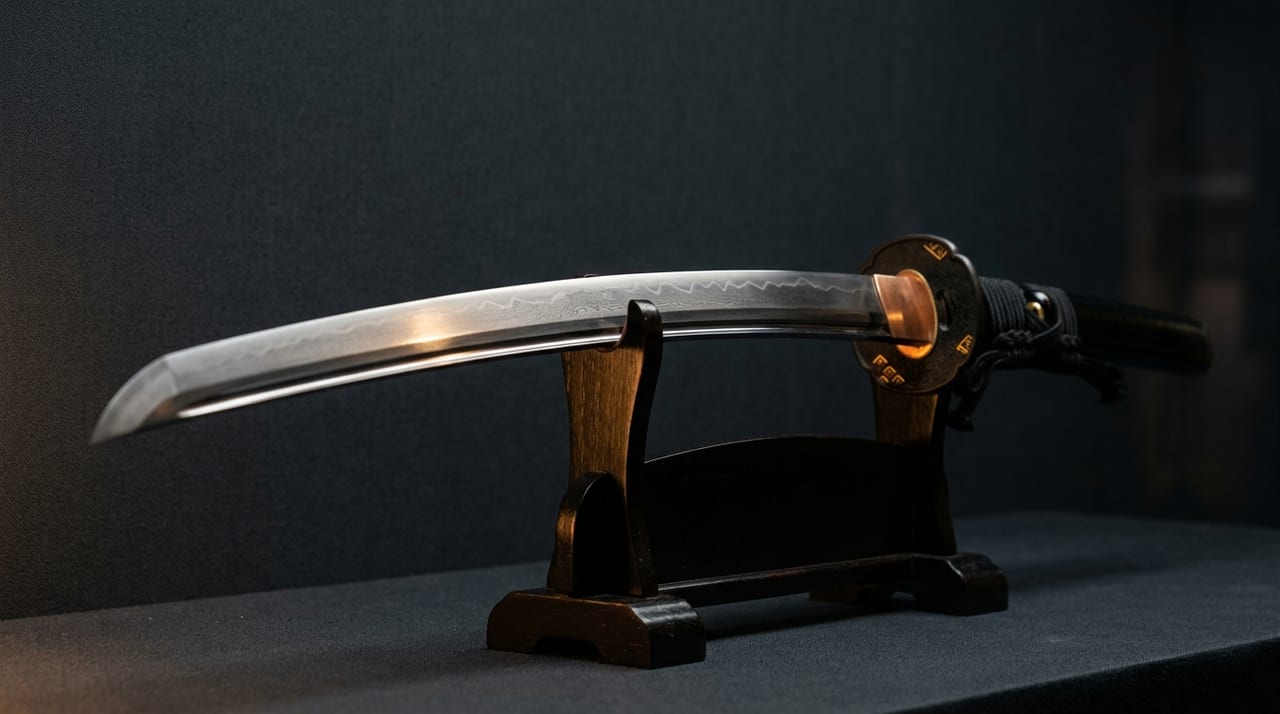
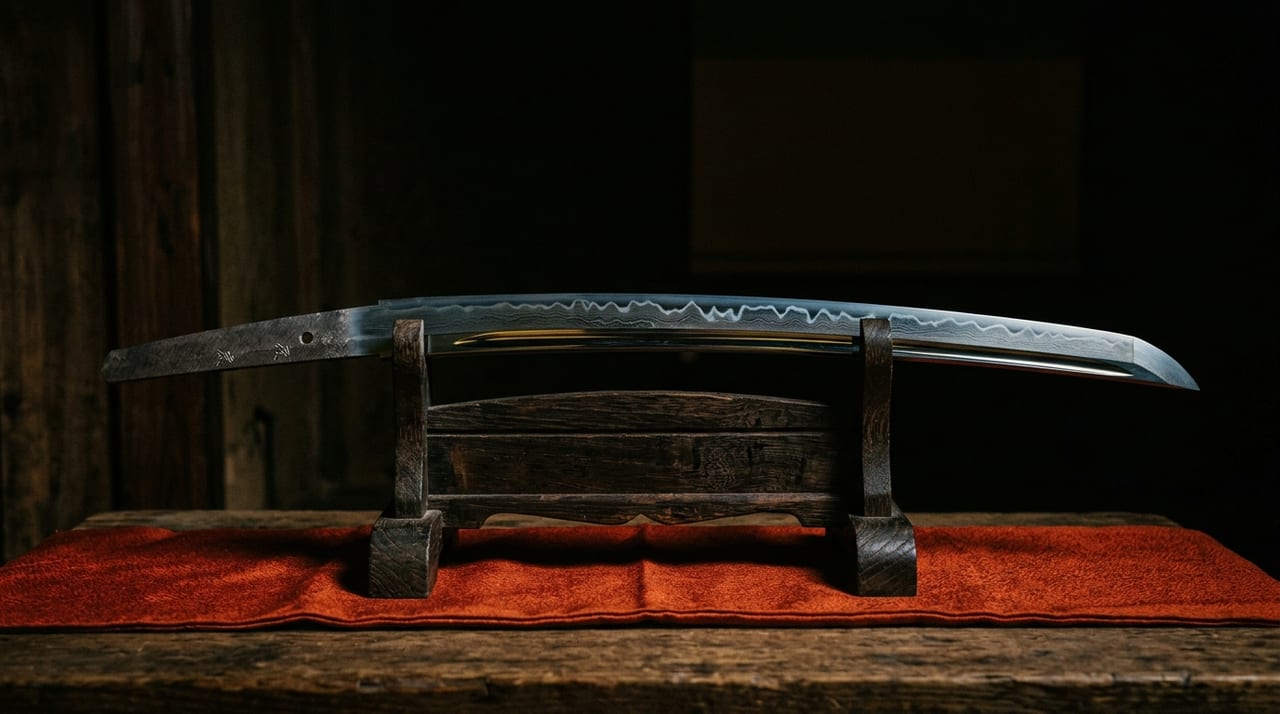
The polishing of a nihontō is broadly divided into two stages: "shitaji-togi" (foundation polishing) and "shiage-togi (keshō-togi, finishing polishing)." Shitaji-togi is the process of shaping the blade, removing rust and scratches, and accurately grinding out the surfaces of each section — the shinogi, hira (flat), mune, yokote, and so on. Shiage-togi further polishes the surfaces prepared in shitaji-togi, drawing out the activities of the jigane (jihada and utsuri) and the details of the hamon (nie, nioi, kinsuji, inazuma) to a state fit for appreciation.
In the togishi's work, shitaji-togi is judged primarily by technical precision (the accuracy of geometrically flat surfaces), whereas keshō-togi is the "art of presentation" for expressing the sword's individual character to the fullest, and the togishi's aesthetic eye and experience become decisively important.
Types of Whetstones Used in Shitaji-togi
Polishing progresses sequentially from coarser to finer whetstones. The typical order of use is as follows.
- Arato: A coarse whetstone equivalent to grit 80–120. Used to remove rust, scratches, and the marks left by previous polishing. Shape correction of the blade is also carried out at this stage.
- Nakato: Equivalent to grit 240–400. Eliminates the scratches left by the arato while improving the flatness of the surfaces.
- Komato: Equivalent to grit 600–1000. The stage at which the surfaces of the shinogi and hira begin to come together.
- Uchigumori-do: The "Kyoto-produced uchigumori-do," regarded as the finest quality natural whetstone. Its fine surface particles create a uniform matte finish, causing the pattern of the jigane (jihada) to become visible. Used in the step immediately before shiage-togi.
The Core Processes of Keshō-togi
Uchi-gumori
The process of carefully polishing the jigane (hira, shinogi-ji, and mune) using "nugui-gamido," thin slices of uchigumori-do whetstone adhered to paper (shōji paper or washi). This gives the jigane a uniform matte finish, causing the structure of the jihada (itame, masame, mokume, etc.) to rise to the surface in a state suitable for appreciation.
The difficulty of uchi-gumori lies in the fine adjustment of pressure and speed. If the force is too strong, the matte finish becomes uneven; if too weak, the particles of the uchigumori-do do not transfer sufficiently. The togishi makes minute adjustments for each section while monitoring the feel at the fingertips and the changes in the blade's reflected light.
Hatori and Hazuya
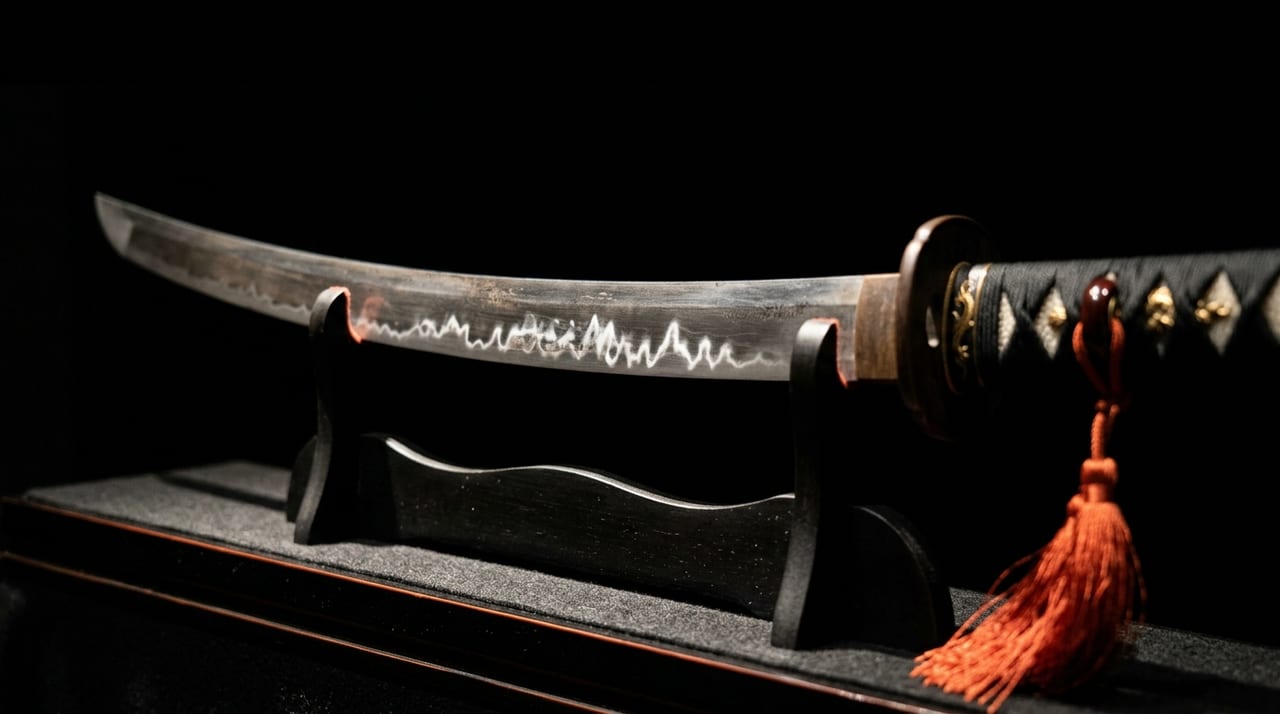
"Hatori" is the process of bringing out the hamon (the area near the edge) from the hamachi to the kissaki. In hatori, in contrast to the matte finish of the jigane, the nie, nioi, kinsuji, and sunagashi of the hamon are brought to a bright, lustrous state.
The whetstone used is a small-piece natural whetstone called "hazuya," which selectively polishes only the edge. Unlike ordinary whetstones, hazuya has extremely uniform particles and high hardness. They are distinguished by their place of origin — "Tsushū-san" (from Tsushima) and "Tanba-san" (from Tanba), among others — and are selected according to the character of the hamon (whether it is nie-deki or nioi-deki).
Through hatori, a contrast is created between the "matte" of the jigane and the "brilliance" of the hamon, and this forms the core of the aesthetic beauty unique to the nihontō. When a Heian-period court noble wrote the verse "a sword takes matte to its ground and brilliance to its edge," it was this aesthetic contrast that was being described.
Yubikakari (Nugui)
As the final step of keshō-togi, there is "yubikakari (nugui)," in which the togishi uses their own nails or fingertips to make final adjustments to the junctions of the mune, shinogi, and hira (the shinogi-suji and mune-kado). This technique, which uses a part of the togishi's own body as the abrasive material rather than a whetstone, is the final adjustment step for eliminating minute steps and uneven polishing.
As a material for nugui, some togishi use, in addition to nails, thin slices of an ultrafine-grained natural stone called "hadado" adhered to the fingertips. The ultimate uniformity of the surface depends on the precision of this step.
Whetstone Selection Logic
The selection of whetstones used in keshō-togi varies according to the sword's style, the character of the jigane, and the type of hamon.
- Nie-deki swords (Sōshū-den and sue-kotō types): A slightly softer hazuya with somewhat coarser particles is effective for bringing out the large nie crystals. A whetstone that is too hard risks crushing the nie.
- Nioi-deki swords (Bizen-den and Yamashiro-den): An uchigumori-do and hazuya that are uniform and fine-grained are used so as not to eliminate the minute nioi particles. Excessive polishing causes a loss of depth in the nioi.
- Jihada of the jigane (itame, masame, mokume): For kotō with widely opened itame, the jihada is easily emphasized by slightly uneven uchi-gumori. For Yamashiro-den swords whose masame flows, a uniform matte finish is important, and the quality of the uchigumori-do's uniform particle size determines the outcome.
Togishi Qualifications and Present-Day Training
To become a sword togishi, organizations such as the "Bijutsu Tōken Tōshō Gijutsu Hozon Kensan-kai (Bitō-kai)" and the "Zen Nihon Tō Togiishi-kai" conduct practical skill examinations as mechanisms for certifying the skills of sword togishi.
The general benchmarks relating to training and practice are as follows.
| Item | Benchmark |
|---|---|
| Training period | At least 5 years as a guideline |
| From apprenticing under a master to completing all processes independently | Close to 10 years (as it is said) |
| Number of togishi in the present day (estimated) | Approximately 200 |
| Time to finish a single sword from shitaji-togi through keshō-togi | 2–4 weeks |
| Approximate cost (depending on condition, nagasa, and difficulty) | Approximately 100,000–600,000 yen (as a general market rate) |
Of these, those skilled enough to handle keshō-togi are an even smaller number. In recent years, demand for polishing has grown along with the revitalization of the sword market, but an absolute shortage of skilled togishi has become a challenge for the industry as a whole.