A Comparison of Three Types — kaiken, koshigatana, and yoroidōshi: Morphological Differences Among tantō-like Blades and Their Distinct Roles in Warrior Culture
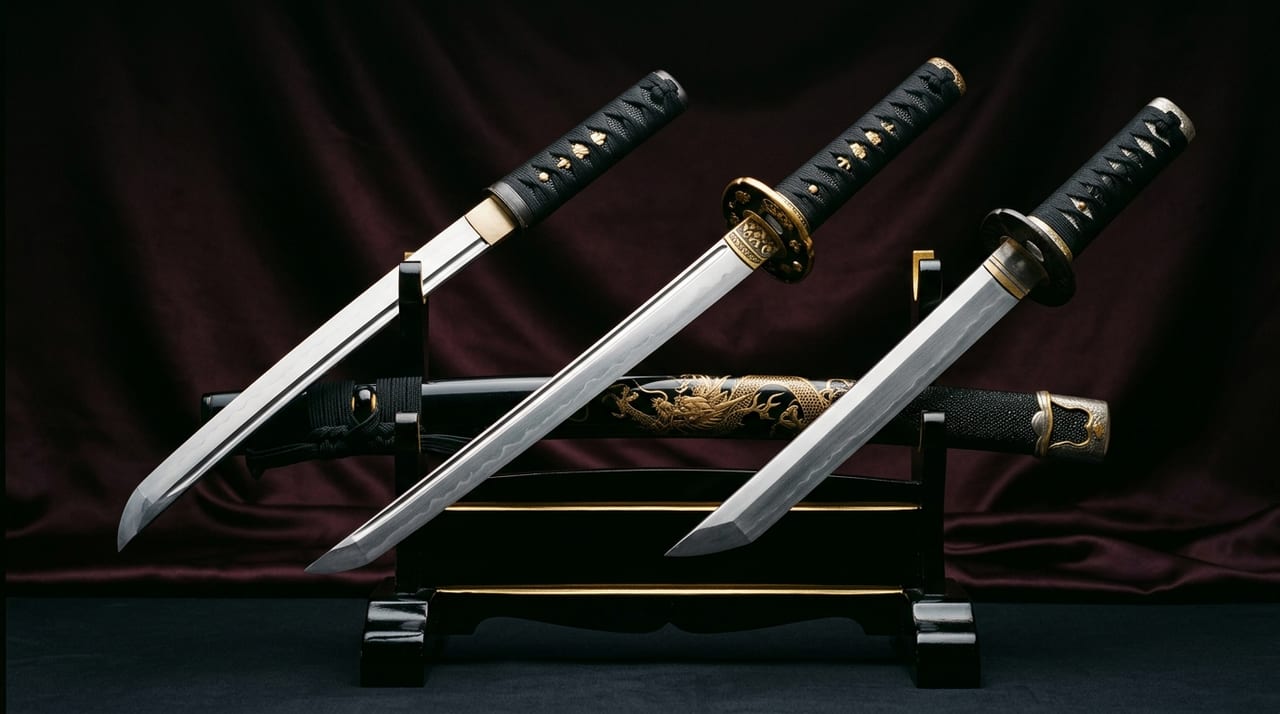 * Image is for illustrative purposes only.
Table of Contents
The Complex World of "Blades Similar to the tantō"
In the classification system of Japanese swords, it is conventional to define the tantō as any blade with a nagasa of less than one shaku (approximately 30 cm). In practice, however, warrior society featured a wide variety of short blades that did not fit neatly within this definition. Kaiken, koshigatana, and yoroidōshi are all easily confused with the tantō, but each possesses distinct characteristics in terms of form, purpose, and social significance.
Clarifying these distinctions is also important in the context of Japanese sword collecting and appraisal. In practical settings — from the notation of type on a kanteisho to classification in auctions and specialist publications — the differences among these three types can determine how an object is assessed.
Kaiken — The Protective Blade of Warrior Women and Its Ritual Significance
Kaiken is a small blade carried by women of the warrior class in the fold of the kimono (futokoro) or tucked into the obi. The nagasa is generally 3 to 5 sun (9–15 cm), even shorter than the lower limit of the tantō.
The most distinctive feature of the kaiken is the form of its koshirae. It is generally made in the style known as aikuchi-zukuri — a smooth form without a tsuba — and was carried stored in a brocade pouch (kaiken-bukuro). The blade body is most often hira-zukuri, with a thin, flat cross-section that makes it difficult to detect the shape even when concealed within clothing.
Its purposes fall broadly into two layers: self-defense and ritual. In the context of self-defense, it was understood to serve as a means of jigai in the worst circumstances; it was the custom at warrior-class weddings for the bride to bring a kaiken as a keepsake. In ritual contexts, it was also sometimes presented to daughters of warrior families as a token of adulthood.
In the modern day, kaiken is widely recognized as the "sword of warrior women," but there are also records of male members of warrior families carrying one for self-defense. Because kaiken is subject to registration under the Firearms and Swords Control Act (Jūtōhō), a registration certificate is required to possess an antique kaiken today.
Koshigatana — A Versatile Short Blade Poised Between Utility and Ornament
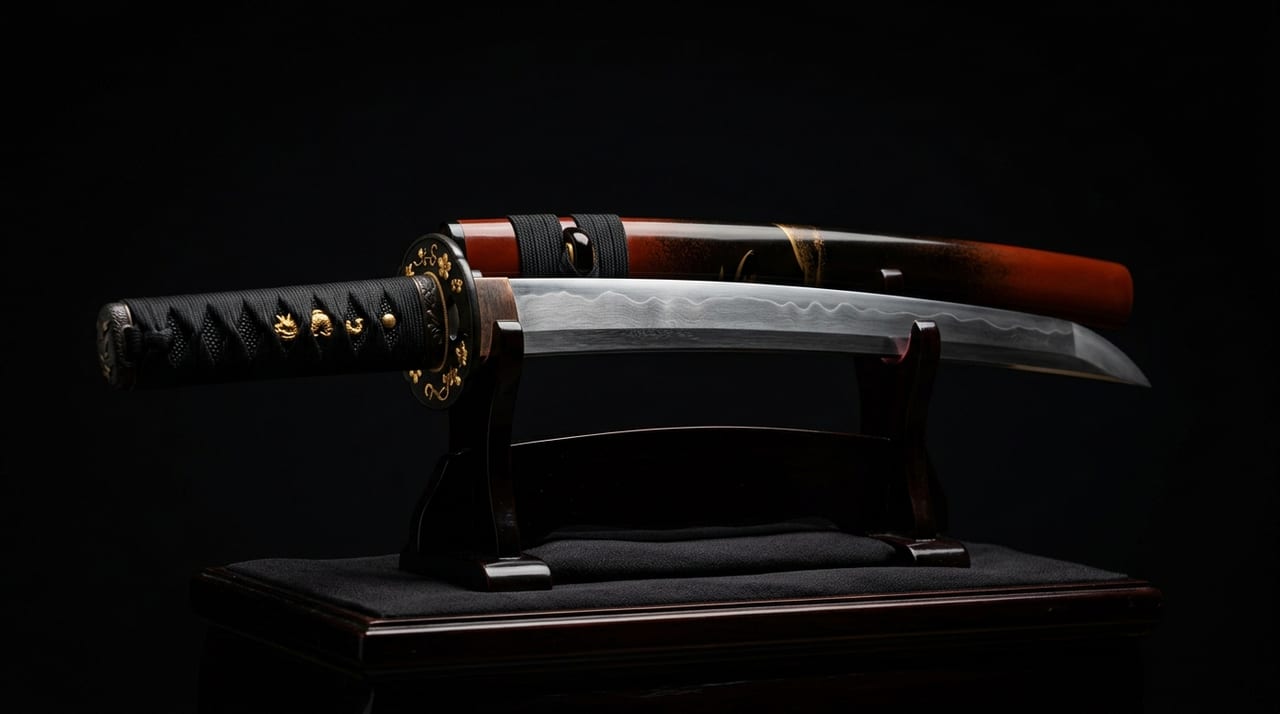
Koshigatana refers broadly to "small blades worn at the hip in general," but in a narrower sense denotes a short-bladed sword of specific form. The nagasa is approximately 4 to 8 sun (12–24 cm), and it often falls between the tantō and the kaiken.
The defining characteristic of koshigatana is the diversity of its forms. Various configurations exist — with or without a tsuba, hira-zukuri or yoroi-zukuri — making a single definition of "this is koshigatana" difficult. It is more appropriate to understand it as a classification by use and function: the functional definition of "a small blade worn at the hip for daily use" comes closest to the reality.
From the Heian through Muromachi periods, there are records of high-quality koshigatana forged by tōkō being used as gifts to the imperial court and powerful warrior families. Koshigatana fitted with elaborate tōsōgu — tsuka, saya, and metal fittings — also carried an artistic dimension that prioritized ornament over function.
From the Edo period onward, more clearly defined categories such as the razor, wakizashi, and tantō became established, rendering the term "koshigatana" itself archaic. In the modern sword market, the classification koshigatana may still be applied to examples predating the Edo period.
Yoroidōshi — The Distinctive Form of a Battlefield Implement
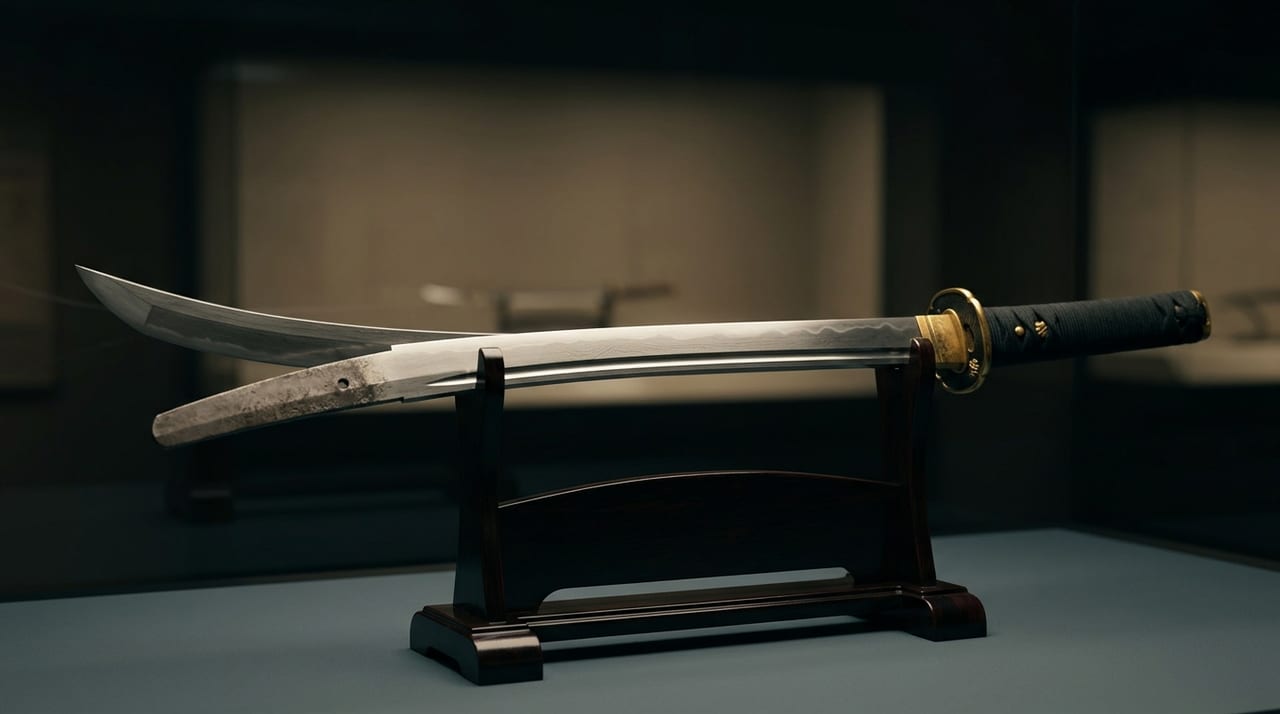
Yoroidōshi is a short-bladed sword intended, as its name literally states, to "thrust through the gaps of armor." The nagasa is approximately 3 to 6 sun (9–18 cm), and it has a distinctive cross-sectional shape that embodies its name.
Whereas ordinary tantō are made in hira-zukuri or shinogi-zukuri, yoroidōshi most often feature heavy constructions with a triangular cross-section (sanryō-zukuri) or square cross-section (kaku-zukuri), resulting in a thick kasane. This form is optimized not for cutting with the blade but for the "pushing in" action when inserting into the small openings or joints of armor.
Many examples have no hamon, or a very inconspicuous one — a feature attributed to the fact that the design of the yaki-ire hardening process prioritized the rigidity of the entire blade body over the edge. The character of the yoroidōshi as a battlefield implement — used by armored mounted warriors to take the head of an opponent on horseback or on the ground — is clearly reflected in its form.
With the end of the Sengoku period, demand for yoroidōshi in actual combat declined sharply. Examples from the Edo period are few, and most surviving yoroidōshi are older works from the Muromachi through Sengoku periods. As a result, they command considerable rarity in the modern sword market, and well-preserved antique examples are often highly valued.
Comparing the Three Forms — Key Points for Appraisal and Identification
The following observation points are useful when distinguishing these three types in an actual appraisal setting.
- Nagasa and proportions: Kaiken is 3–5 sun and the koshirae is invariably aikuchi-zukuri. Koshigatana is 4–8 sun with diverse forms. Yoroidōshi is 3–6 sun with a distinctive cross-sectional shape.
- Cross-sectional shape: The triangular (sanryō) or quadrilateral (yonryō) cross-section of yoroidōshi can be clearly distinguished from the other two types. Kaiken and koshigatana are often hira-zukuri, but there are cases where the cross-section alone does not permit identification.
- Nakago shape and mei: Blades forged specifically as yoroidōshi may bear a mei on the nakago explicitly stating "yoroidōshi." Koshigatana of Heian–Muromachi workmanship show period characteristics in the shape of the nakago and the yasurime.
- Form of koshirae: Kaiken are by rule aikuchi-zukuri. Yoroidōshi most often have koshirae without a tsuba and a slender form. Koshigatana show the greatest diversity of form, ranging from elaborate kinko koshirae to plain wooden saya.
The Division of Roles in Warrior Culture — How They Were Differentiated
Organizing how these three types were differentiated within warrior society reveals a division by class, gender, and situation.
Kaiken belonged primarily to the domain of women and ritual, serving both self-defense and ceremonial functions. Koshigatana had two faces — everyday utility and gift-giving — and particularly in the Heian through Muromachi periods, differences in quality reflecting social rank were evident in surviving examples. Yoroidōshi was a specialist weapon for the extreme conditions of the battlefield, and demand for it vanished during the peaceful Edo period.
For modern sword enthusiasts, understanding the differences among these three types provides a perspective that resists lumping them together as mere "short swords," instead approaching each through its own historical context and setting. The comparison of these three types succinctly demonstrates that the diversity of Japanese swords is inseparable from the diversity of their social contexts.