Material Selection by Contemporary Tōshō — How Tamahagane, Watetsu, and Western Steel Are Used and Their Impact on Forging Technique
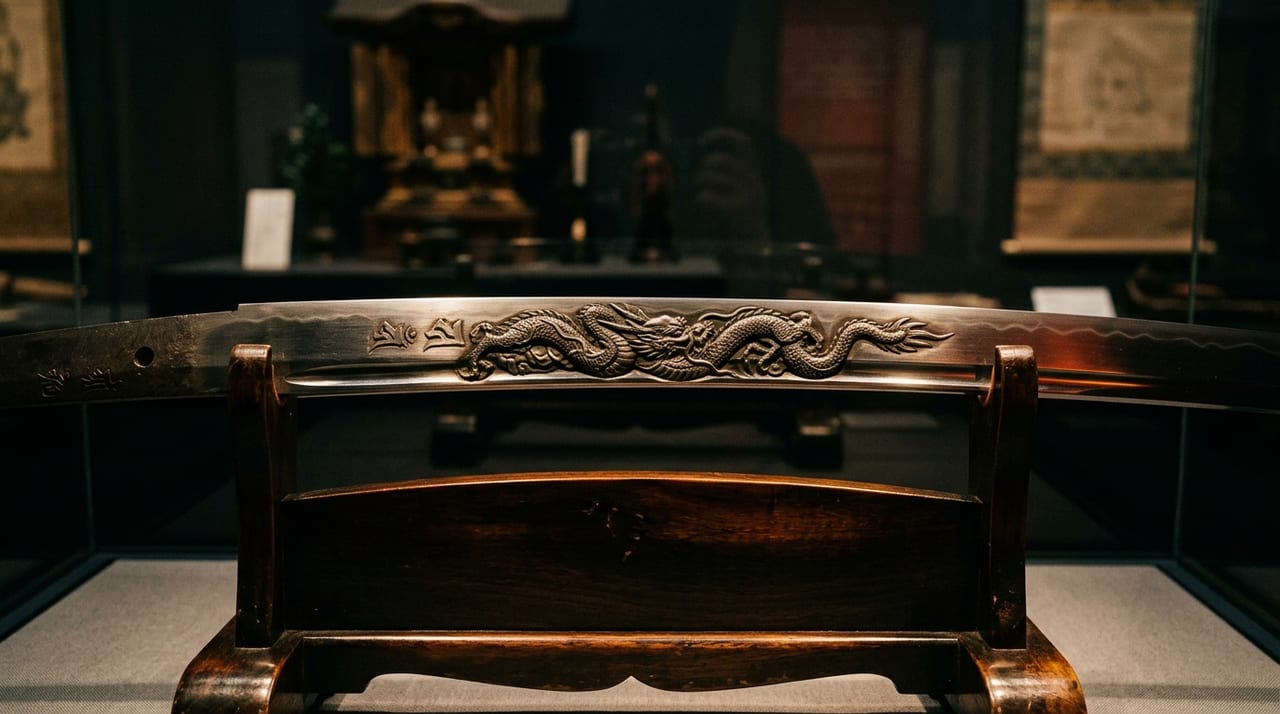 * Image is for illustrative purposes only.
Table of Contents
The Question of Nihontō Materials — Challenging "Tamahagane Absolutism"
Nihontō means tamahagane — this equation has become an unshakeable common wisdom among nihontō enthusiasts. Tamahagane, produced through tatara smelting in the Okuizumo region of Shimane Prefecture, is held to be the only material for a "genuine nihontō," and swords made from any other iron are not to be recognized as nihontō — this understanding is widely shared.
Yet the reality of material selection among contemporary tōshō is far more complex than this "tamahagane absolutism" would suggest. The Agency for Cultural Affairs does stipulate in its licensing standards for nihontō production that "tamahagane or other watetsu must be used," and the use of Western steel (industrial steel) produced by steel manufacturers is not permitted for registered swords made by officially licensed tōshō. However, behind the absolutist claim that "only tamahagane is correct" lies a question of cultural identity far more than one of technical fact. This article examines the actual material choices of contemporary tōshō and the concrete effects each material has on forging technique. The tatara smelting process itself is explained in detail in From Tatara Smelting to Tamahagane.
The Properties of Tamahagane and Its Impact on Forging
Tamahagane is a product of tatara smelting — an inhomogeneous steel bloom obtained by smelting iron sand with charcoal over three days and three nights. This inhomogeneity is tamahagane's defining characteristic, and at the same time its greatest source of difficulty for the tōshō.
The carbon content of tamahagane is distributed across a range of roughly 0.3% to 1.5%, and an indispensable step is the tōshō's selection — by visual inspection and the feel of each hammer blow — of high-carbon portions (suited for kawagane and the cutting-edge side) and low-carbon portions (suited for shingane). Through this sorting process and the subsequent orikaeshi tanren, the inhomogeneity of tamahagane is converted into a distinctive visual texture known as kitae-hada. Surface grain patterns in the jigane — itame, masame, mokume — appear as "traces" of the process of removing impurities from the tamahagane and homogenizing its carbon distribution.
The forging advantage of tamahagane is that the "uncertainty" of a chemical composition that differs every time draws out the tōshō's craftsman-like power of judgment. The capacity to sense "how will this iron move" — unnecessary with homogeneous and predictable industrial steel — is honed in the forge.
On the other hand, tamahagane's drawbacks are limited production volume and cost. Tatara operations are restricted to a few times a year, and the NBTHK manages the centralized supply of tamahagane. Production is unstable relative to the demand of working tōshō, and the quantity that an apprentice tōshō can obtain is often restricted.
Types of Watetsu and Their Current Use
"Watetsu" is a collective term for iron materials obtained from traditional Japanese ironmaking methods, and encompasses multiple types besides tamahagane.
| Type | Characteristics | Use and Current Status |
|---|---|---|
| Oroshigane | Iron produced by once melting and refining tamahagane at high temperature; more homogeneous than tamahagane | Relatively easy to control carbon content, so often used as material for shingane |
| Hōchōtetsu (also kitae-tetsu) | Low-carbon soft iron obtained as a byproduct of tatara smelting | Used historically for the low-carbon portions of shingane and kawagane |
| Furugane | Iron recovered from old farm implements, old nails, or iron nails from demolished old buildings | Records show that tōshō of the past used it as a substitute material during periods when tatara steel was difficult to obtain. It is barely used today, but is important as evidence of "material diversity" in the analysis of kotō |
The Problem of Western Steel (Industrial Steel) and Its Unofficial Use
Western steel is not permitted in nihontō — those that are produced by officially licensed tōshō under Agency for Cultural Affairs authorization and issued a registration certificate. However, tōshō who use industrial high-carbon steel (high-speed steel, bearing steel, carbon tool steel, etc.) as material for the production of unlicensed "decorative swords" and "iai practice swords" do exist.
The advantages of industrial steel for sword production are clear. Because its composition is homogeneous and its quenching characteristics are predictable, heat treatment is more stable and quality control of breakage and bending is easier. In Western sword-making (bladesmithing), the use of industrial steel is standard, and there is a culture in the international sword market where swords are evaluated on finish, cutting performance, and balance rather than on material.
However, swords made from industrial steel do not develop kitae-hada. Even when orikaeshi tanren is applied, because the industrial steel is homogeneous, the distinctive surface patterns that tamahagane produces do not appear. This means the absence of one of the greatest aesthetic elements in nihontō appreciation, and the evaluation of such a sword as a "nihontō as an object of aesthetic appreciation" falls significantly.
The Tōshō's View of Materials — Between Technical Choice and Cultural Responsibility
For the contemporary tōshō, material selection is not a purely technical question; it is also a matter of cultural and ethical judgment. Using tamahagane is an act that embodies an identity as a "successor to traditional nihontō production," and is also a social responsibility of the licensed tōshō. Contemporary Swords and Contemporary Tōshō offers a broader portrait of tōshō who bear the responsibilities of such successors.
At the same time, among younger tōshō and aspiring swordsmiths, voices can be heard saying that "a fundamental understanding of forging technique is more important than material purity." They do not deny that there is a beauty in kitae-hada that can only be born from tamahagane, but take the practical view that foundational forging skills — fire-shaping, yaki-ire, polishing — can be trained regardless of material. These differences in style across schools are also compared in Contemporary Tōshō Styles and a School-by-School Comparison.
The triangular relationship of tōshō, material, and tradition is one of the essential questions that nihontō culture faces in the modern era. Ensuring that tamahagane is produced stably throughout the year and that a system for supplying sufficient material to the next generation of tōshō is maintained is the practical challenge that will guarantee the cultural value of "tamahagane absolutism" into the future.