Test tanren by Modern Tōshō to Assess Material Suitability — Practical Procedures for Kogatana Prototyping, Carbon Estimation, and Yaki-ire Testing
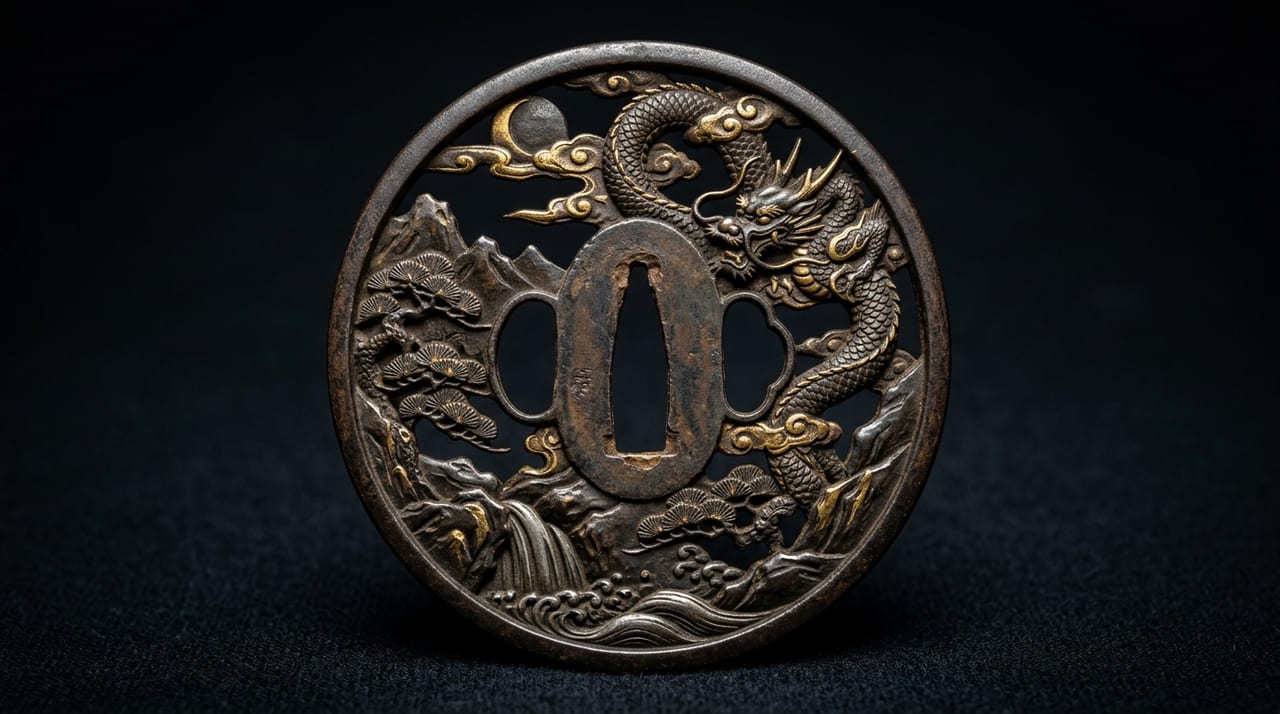 * Image is for illustrative purposes only.
Table of Contents
Why tōshō conduct "tests"
For modern tōshō, accurately assessing the material suitability of tamahagane when it arrives is the starting point of sword-making. Tamahagane supplied by the NBTHK tatara varies subtly in carbon content, impurities, and structural homogeneity depending on the conditions during smelting, the state of the furnace, and the origin of the iron sand. Because no specification sheet is attached as with industrial steel, tōshō must evaluate each piece of material by combining experience with experimentation.
This process of "material evaluation" in the world of craftsmen is called "test tanren." The more carefully the individual character of each piece of tamahagane is assessed, the greater the precision of the subsequent sword-making plan. This article explains the specific procedures and criteria for judgment.
Initial evaluation of tamahagane — looking, splitting, striking
When the material arrives, the first step is "visual evaluation." This is the process of observing the fracture surface of the tamahagane (the cross-section when the steel is split) to check the condition of its structure.
- Grain size: Fine, uniform grains indicate steel with an appropriate carbon content suited to forging. Coarse grains may indicate hypereutectoid steel (excess carbon) or segregation.
- Color: A cross-section with a silver-grey luster is ideal. A yellowish tint raises concerns about sulfur-based impurities.
- Presence of bubbles and inclusions: Slag (mineral residue) contamination causes poor forge welding, so the material is visually checked for any major defects.
In the subsequent "striking test," a small piece is lightly struck cold and the way it breaks is observed. High-carbon, brittle steel tends to break cleanly with a snap when cold, while low-carbon, soft steel tends to deform.
Kogatana prototyping — a scaled-down test before the real thing
Once the initial evaluation is complete, the process moves on to "kogatana prototyping." Before forging the actual sword, a kogatana or test piece is made from the same material to confirm its actual forging behavior.
Checking behavior during orikaeshi tanren
The kogatana material is heated in the forge and subjected to several rounds of orikaeshi tanren. During this process, the following are observed closely.
- Ease of forge welding: Whether uniform forge welding occurs at the appropriate temperature. Material prone to poor forge welding (forging cracks) may contain high levels of impurities.
- Spark pattern: The pattern of sparks flying from heated steel serves as a simple indicator of carbon content and impurities. The higher the carbon content, the more brilliant the sparks (the same principle as a "spark test").
- Presence of forging cracks: If the material cracks easily at certain temperature ranges, the cause (overheating, impurities, rapid cooling) is identified.
Creating yaki-ire test pieces
The kogatana is shaped and subjected to yaki-ire testing. The same material is processed at multiple water temperatures and clay thicknesses, and the resulting hardness and hamon tendencies are compared.
Hardness measurement combines the traditional "file test," in which a yasuri (file) is applied and the degree of resistance judged by feel, with the modern method of numerical measurement using a Rockwell hardness tester. The post-yaki-ire hardness of sword steel is generally targeted at around HRC 60, though the exact target varies by tōshō.
Carbon estimation — combining craftsman experience and modern analysis
There are two approaches to estimating the carbon content of tamahagane: traditional methods and modern analytical techniques.
Traditional estimation involves combining "charcoal consumption," "behavior during forge welding," and "hardness after yaki-ire" to grasp the general carbon content. Because higher carbon content makes it easier to achieve hardness through yaki-ire but reduces toughness, tōshō assess the balance through a sense of "too hard / too soft."
Modern analytical methods include cases where tōshō collaborating with research institutions and universities use X-ray fluorescence (XRF) analysis and carbon/sulfur analyzers for elemental analysis. When carbon content (weight %), phosphorus, sulfur, and other impurity levels can be quantified, the stability of the material and the precision of the forging plan improve. However, equipment costs are high, and not all tōshō workshops have introduced such instruments.
Assigning materials to kawagane and shingane
Once the material properties have been clarified through test tanren and analysis, the assignment of materials to "kawagane" and "shingane" for sword-making is determined.
- For kawagane: Material with relatively high carbon content (approximately 0.8–1.2%) that is highly homogeneous and produces stable hardness after yaki-ire.
- For shingane: Material with low carbon content and high toughness (0.5% or below) that provides the blade's flexibility (resistance to breaking).
Even within the same lot of tamahagane, carbon content varies. Tōshō observe each piece and make piece-by-piece judgments — "this piece for kawagane, this piece for shingane" — to allocate accordingly. The precision of this assignment directly determines the quality of the finished sword.
Trends in 2026 — digital recording of material information
Among modern tōshō, efforts to digitally record and database the test results of each lot of tamahagane are spreading. By accumulating information such as "this tatara lot number has high carbon content and is best suited for shingane," a framework that can be utilized in future sword-making plans is gradually taking shape.
In addition, through deeper collaboration with the NBTHK tatara, efforts are underway to cross-reference data from the smelting process with evaluations after sword completion, feeding back improvements to tatara (traditional smelting) itself. The fusion of traditional craft and data utilization is opening new possibilities for the transmission of nihontō techniques.
Summary — the technique of "knowing" invisible materials
Test tanren by modern tōshō is a scientific and experiential process for engaging with tamahagane as a non-homogeneous natural material. From visual evaluation to kogatana prototyping, yaki-ire testing, and the use of modern analytical instruments, material suitability is assessed through a combination of multiple approaches. The technique of "knowing invisible materials" is the starting point for creating excellent swords, and is also one of the most important forms of tacit knowledge passed carefully from master to apprentice.
Works made by modern tōshō can be viewed online at toukenza.jp. Please take the time to discover a sword imbued with the craftsman's skill and philosophy — from material selection through to completion.