Heat Treatment That Determines the Precision of Sori — The Effects of Cold Climates, Seasons, and Humidity on Blade Shape and Corrective Techniques
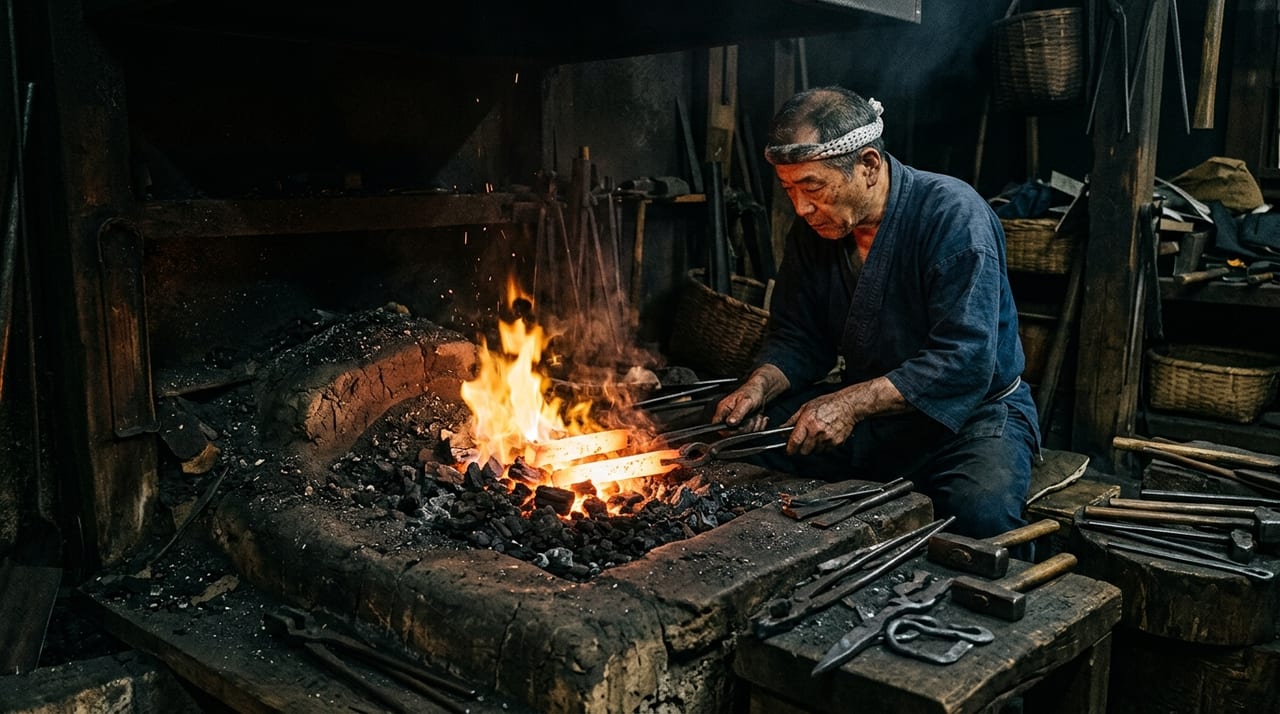 * Image is for illustrative purposes only.
Table of Contents
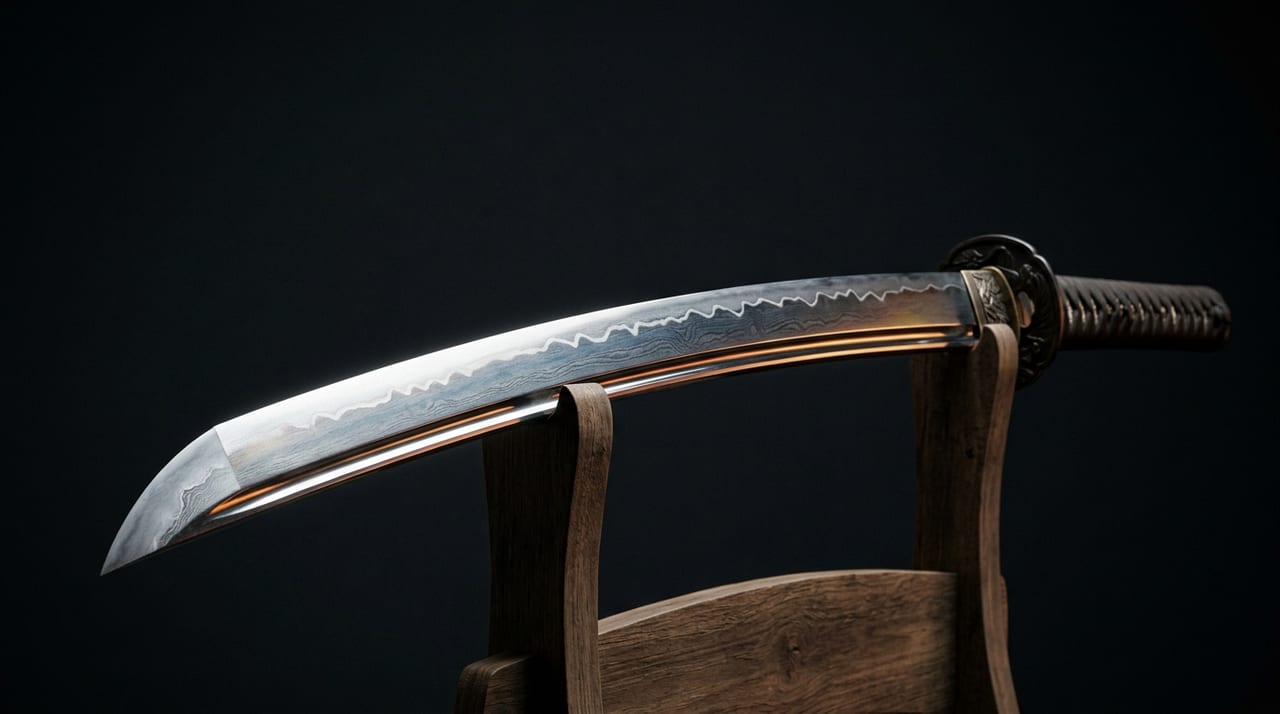
One of the essential qualities of a Japanese sword's beauty is its "sori." The distinctive curved shape of the blade, flowing like a wave, is not merely an aesthetic quality — it is a functional curve that distributes the force of a cutting strike and stabilizes the edge. Yet producing and controlling this sori with precision is one of the most demanding disciplines in the art of sword forging. The effects of environmental conditions during yaki-ire — temperature, humidity, season — on blade shape are far greater than one might imagine, and tōkō have spent centuries addressing this challenge.
Why Does Sori Form?
The sori of a Japanese sword arises automatically during the cooling process of yaki-ire. Because the surface of the blade (the cutting-edge side) and the back (the mune side) cool at different rates, internal stresses of differing magnitudes are generated. The edge side is quenched more rapidly, the martensitic transformation proceeds fully, and a greater volumetric expansion occurs. The mune side, by contrast, cools more slowly, making it more likely to retain ferrite components. Because the expansion and elongation of the edge side is greater than that of the mune (back) side, the blade curves toward the mune.
From the kotō period through the Edo period, tōkō understood this mechanism intuitively and modulated the sori by choosing their quenching medium and adjusting the speed of yaki-ire. However, environmental changes caused by weather and season were always a challenge, as a persistent factor capable of upsetting this delicate balance.
The Effects of Season and Ambient Temperature on Sori
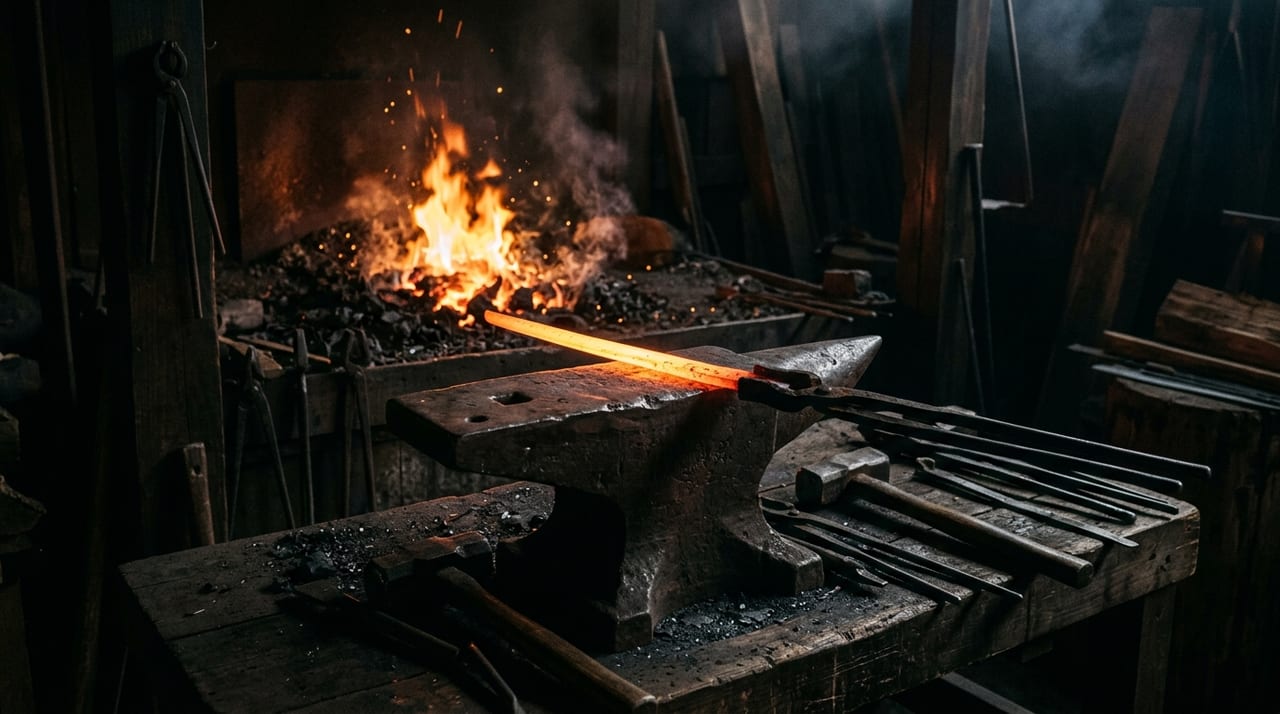
Yaki-ire is an instantaneous process in which the heated blade is plunged into a quenching medium. At that moment, the ambient temperature affects the temperature of the quenching medium itself.
| Season | Temperature of the quenching medium | Effect on sori |
|---|---|---|
| Winter | Around 5°C for well water; around 15°C even for tap water | The temperature differential between the edge side and the mune side becomes more pronounced, resulting in stronger sori |
| Summer | Even well water can exceed 20°C | The quenching rate slows, the temperature differential becomes relatively smaller, and only weak sori results |
Among old swords, many described as "fuyu-yaki" (winter-quenched) exhibit strong sori, reflecting the characteristics of yaki-ire performed in winter. Tōkō of the Edo period devised measures to produce strong sori in summer — such as pre-chilling the quenching medium (packing it with ice) or performing yaki-ire at night.
Environmental Effects of Humidity During the Tempering Stage
A further, more subtle factor is humidity. Immediately after yaki-ire, the blade is in an extremely hard martensitic state, while simultaneously the internal stresses are at their maximum. It is known that when those stresses are relieved during the subsequent tempering (yaki-modoshi) stage (heating at 200°C to 400°C), the surrounding humidity affects the tempering process.
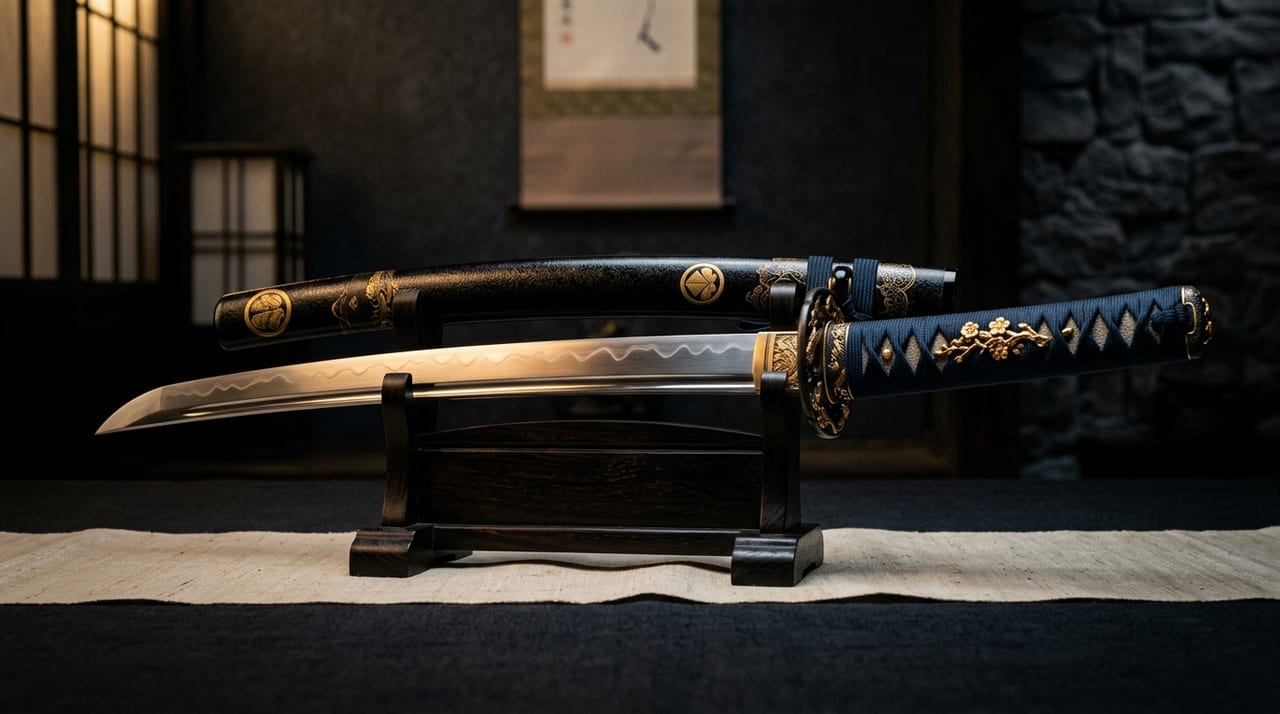
In high-humidity environments, the blade surface tends to carry a fine film of condensation, slightly altering heat conduction. This is a change so small as to appear negligible to the eye, but it can produce a difference of 0.5 mm to 1 mm in the final sori shape after tempering. Because such a difference of 1 mm is conspicuous in short swords such as the koshigatana, tōkō took humidity into account as well.
Regional Climate Differences and the Ingenuity of Tōkō
The climatic variation across the Japanese archipelago also influenced the techniques of tōkō.
| Region | Climate conditions | Tōkō responses and characteristics |
|---|---|---|
| Cold regions (Aizu, Etchū, etc.) | Low temperatures can be turned to advantage | Less effort is required to manage the temperature of the quenching medium; natural conditions alone yield ideal quenching rates, allowing tōkō to aim for strong and precise sori. Swords from Aizu and Etchū in the kotō period are known for their strong and beautiful sori |
| Warm regions (Kyoto, Osaka, etc.) | Environmentally disadvantaged | Tōkō developed practices such as digging deep wells to keep the water temperature constant and concentrating yaki-ire during the coolest hours of the day (early morning) |
Environmental Control and Corrective Techniques of Present-Day Tōkō
Present-day artisan tōkō use thermometers, hygrometers, and even infrared cameras to exercise precise control over the yaki-ire environment.
Workshop facilities that maintain a constant room temperature, cooling systems that regulate the temperature of the quenching medium, and records of the temperature curves in electric furnaces used for tempering — all of this is now made visible. Even so, present-day tōkō know that a 1°C seasonal variation can affect the final sori, and their corrective techniques represent a scientific validation of skills refined over many years of craftsman intuition.
The Wisdom of Traditional Corrective Techniques
Tōkō of the Edo period made minute adjustments to the blade before yaki-ire in order to correct "sori-gure" (sori distortion) caused by environmental conditions.
- In winter: Knowing that strong sori was likely to form, they adjusted the blade at the forging stage so it would come out with slightly weaker sori in advance.
- In summer: Anticipating a reduction in sori during yaki-ire, they forged the blade with stronger sori in advance.
Moreover, many tōkō performed "sori adjustment" immediately after yaki-ire — while the blade had not yet fully cooled — by gently bending it in a specific direction. This was an extremely subtle technique based on experience. Even today, master artisan tōkō retain this same technique and hold it in high regard as a domain that no machine can replace.
In Closing
Sori is one of the elements that most expresses the character of a sword. Its formation is not merely the physical result of yaki-ire; it is itself the process through which a tōkō engages in dialogue with the natural environment. Seasonal adaptations, responses to regional climate, and refined corrective techniques — all of these were polished through centuries of trial and error by generations of tōkō. Even today, the finest swords are born only through a fusion of this traditional knowledge and modern science.