How the Choice of Quenchant Determines Blade Hardness — Differences in Yaki-ire Effect Between Water, Oil, and Brine, and the Ingenuity of Tōkō
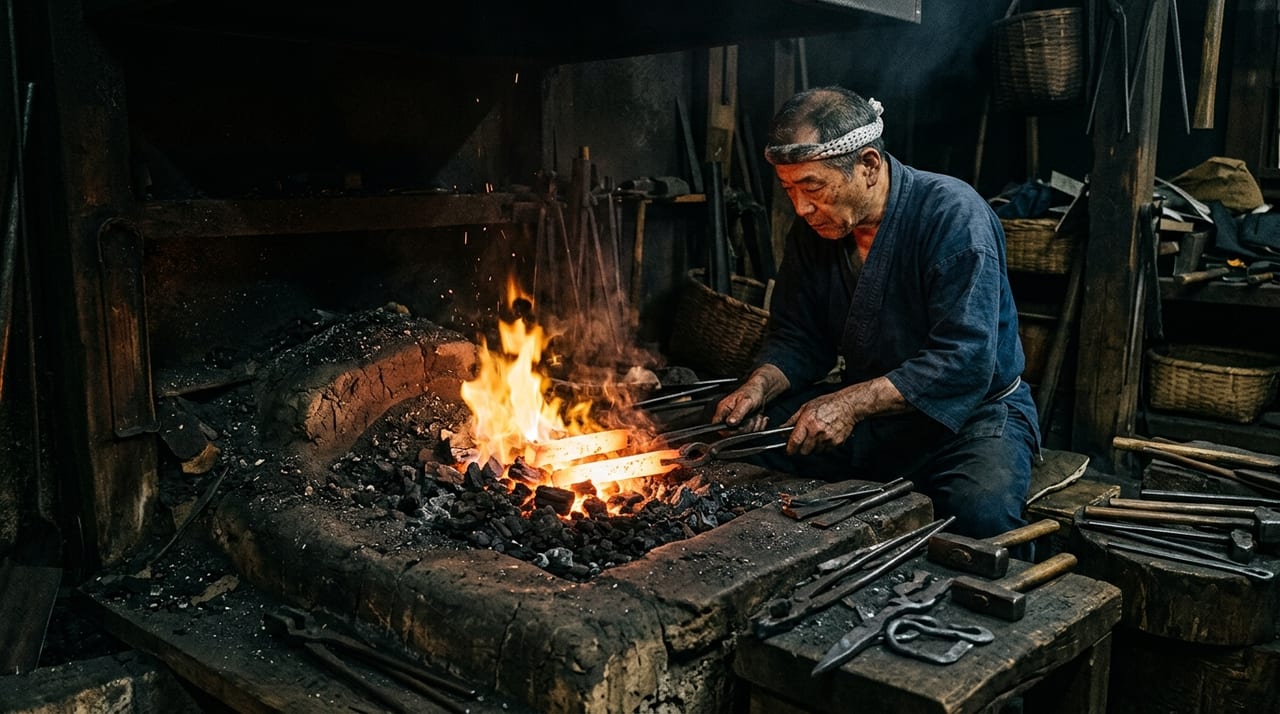 * Image is for illustrative purposes only.
Table of Contents
Yaki-ire of the nihontō is the process by which a hard edge is first created by quenching red-hot steel all at once. The choice of quenchant used at this moment is an exceptionally delicate and critical decision that directly determines the final hardness, toughness, and formation of sori in the blade.
Basic Mechanism of Yaki-ire and Quenchants
The scientific basis of yaki-ire lies in the phase transformation that converts austenite (the crystal structure of iron at high temperature) into martensite (a hard, low-temperature crystal). This phase transformation is highly sensitive to cooling rate; rapid quenching exceeding 100°C per second drives martensite formation to near-completion. However, the "speed" and "uniformity" of this process vary greatly depending on the type of quenchant.
Quenchants fall broadly into three categories. First, water quenching achieves the highest cooling rate (100°C per second or more). From ancient times, many tōkō used well water, rainwater, or brine. Brine has greater penetrating power than plain water and allows more thorough rapid quenching of the cutting edge, making it especially valued when pursuing hardness in thicker blades.
By contrast, oil quenching (using camellia oil, rapeseed oil, and similar oils) reduces the cooling rate to roughly one-third that of water, but because the temperature gradient during cooling is more gradual, it greatly reduces quench cracking (yakewari). Uniform hardness is more easily achieved throughout the entire blade, and many tōkō working on longer tachi choose oil quenching.
Differences in cooling rate also affect the amount of retained austenite — the untransformed structure remaining in the steel. Faster quenching drives the transformation more rapidly, tending to reduce retained austenite, but at the same time stress accumulates more easily within the blade. When tōkō choose a quenchant, the perspective of how to manage this internal stress is just as indispensable as hardness.
Criteria Tōkō Use When Choosing a Quenchant
In practical tōkō work, the choice of quenchant is governed by the sword's intended use and dimensions.
- When water quenching is chosen: Swords that are short and where hardness is the top priority — spear tips, tantō, and certain military fittings. The majority of kotō were finished with water quenching, and such swords have been praised by later generations as "well-quenched." However, because of the rapid quenching, internal stress builds up and there is a risk of fine cracks developing over time. The quench cracking seen in kotō after several hundred years can be regarded as the price of the original water quenching.
- When oil quenching is chosen: Long tachi and koshigatana. The tōkō of the Edo period in particular made extensive use of oil quenching to achieve both practicality and durability. From the shintō period through the Edo period, oil-quenching technique evolved, and adjustments down to the type of oil (camellia, rapeseed, linseed) and temperature management became increasingly refined.
Partial Cooling Control Through Tsuchioki
Alongside the choice of quenchant type, the thickness of the clay applied to the blade (tsuchioki) is also a critical factor governing cooling rate. By applying thin clay near the edge and thick clay near the mune, tōkō create differences in cooling rate depending on location even when the blade is immersed in the same quenchant. Through this technique, the edge section develops into a hard martensite-dominant structure while the mune section becomes a softer structure, and the pattern known as hamon is produced. The choice of quenchant type only acquires meaning in combination with the effects of tsuchioki; the two cannot be considered in isolation from each other.
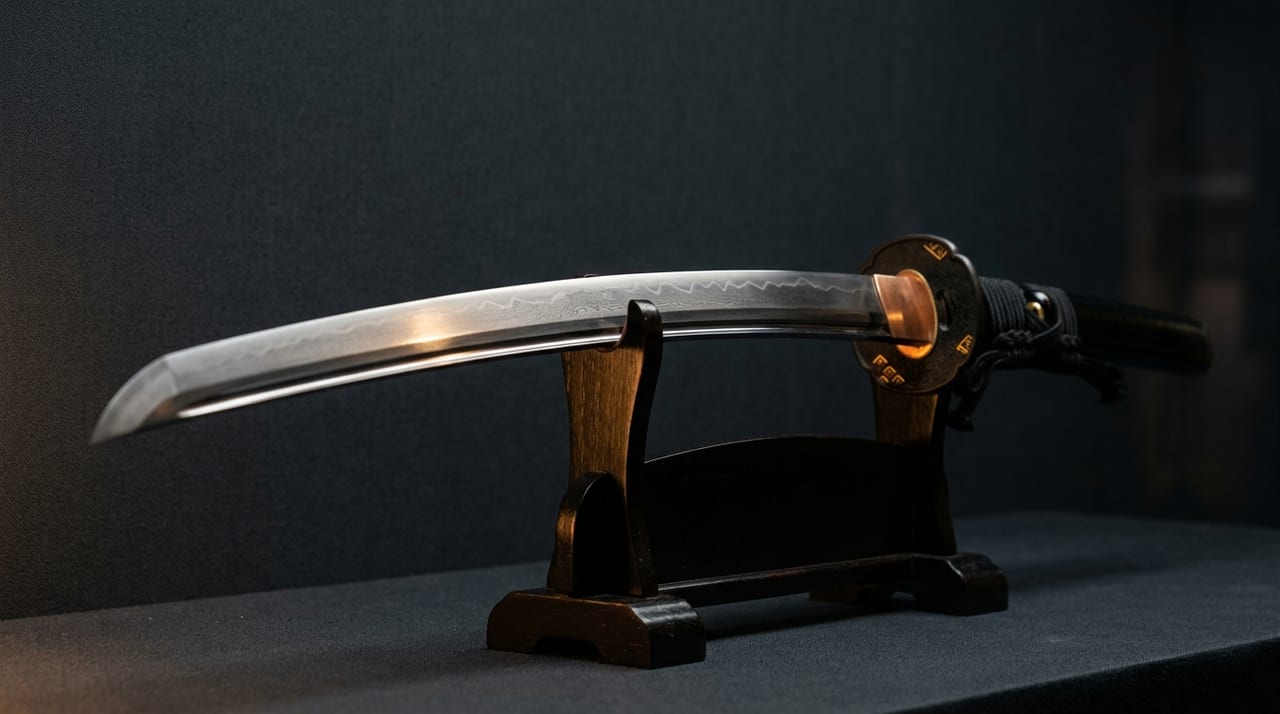
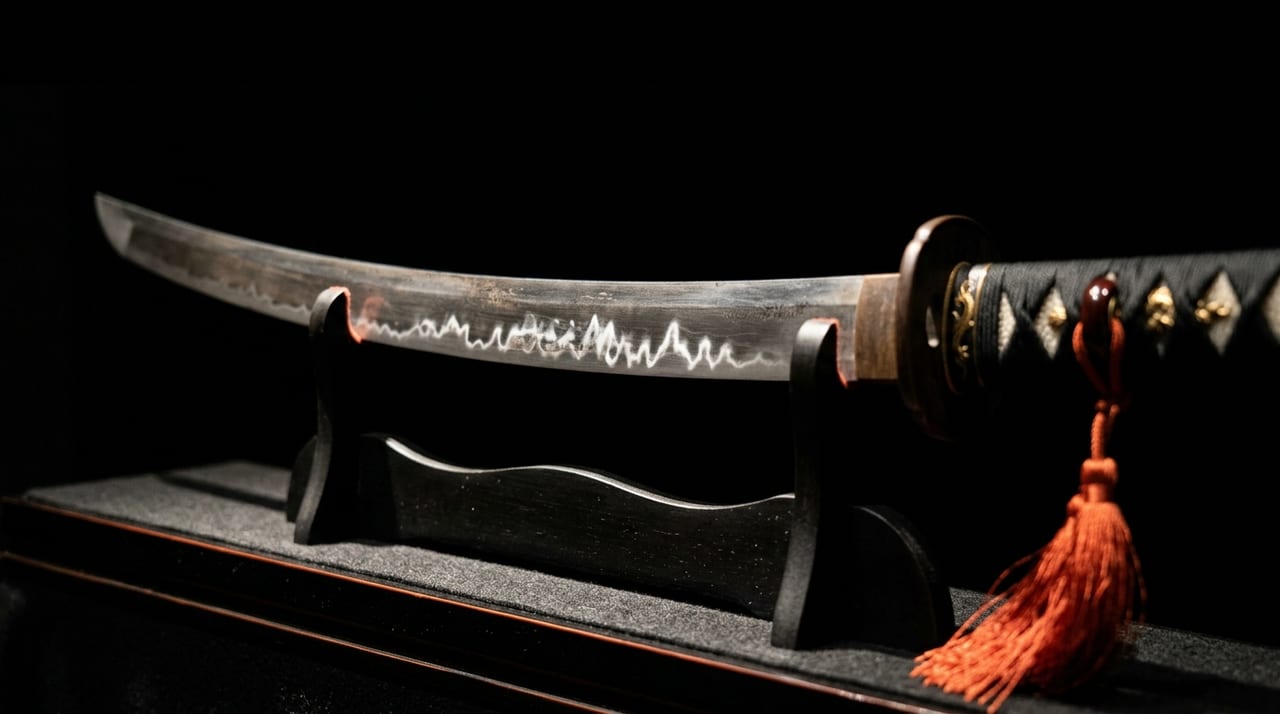
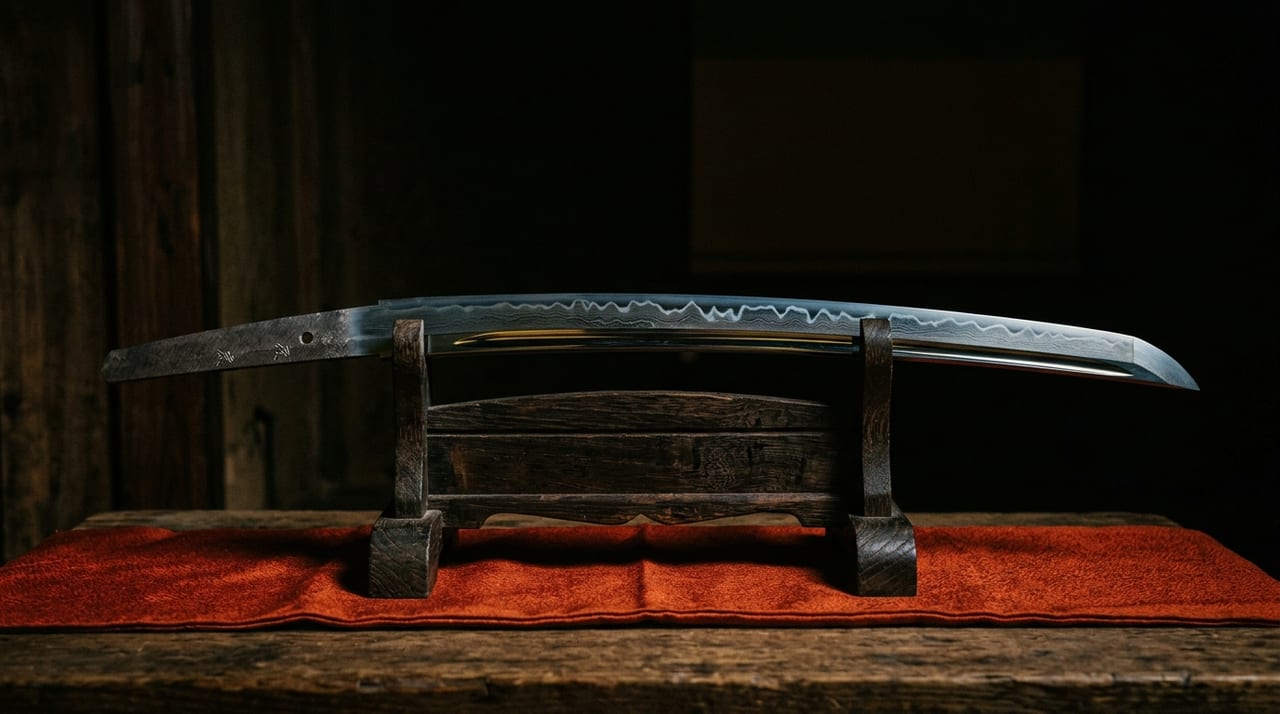
When one actually holds a nihontō, differences in quenchant choice tend to show in the character of the hamon as well. A sword quenched rapidly by water-dominant quenching tends to have a hamon with a distinct, sharply defined boundary, while a sword cooled more gradually by oil-dominant quenching tends to give an impression of a soft, diffuse boundary. When appreciating or selecting a sword, paying attention to the sharpness of the hamon's outline becomes a clue to estimating what type of quenching was used to finish that sword.
Temperature Management and the Influence of Season and Region
On a more precise note, the fact that ambient air temperature directly affects the efficacy of quenchants cannot be overlooked. In cold regions (northern areas), because the ambient temperature is low, the cooling rate is faster with the same water quenching than in warmer regions. Conversely, tōkō in Kyoto and Osaka in summer devised ways to keep the quenchant cooler than in winter. Adapting to the natural environment — chilling well water in advance, performing yaki-ire at night — was also part of a tōkō's skill.
Practices of Contemporary Tōkō and Scientific Verification
Contemporary tōkō make full use of thermometers and microscopes in pursuing the optimization of quenchants. By measuring the surface temperature during yaki-ire with an infrared thermometer and plotting the temperature drop curve produced by the quenchant as a graph, it has become possible to objectively grasp the progress of martensite formation.
Experiments have also confirmed that even within "water," the cooling curve differs depending on whether pure water, tap water, seawater, or brine is used. Some research-minded tōkō practice "differentiated quenching" — making the edge hard while retaining toughness in the mune — by varying the salt concentration of the quenchant in stages.
Failures in Yaki-ire and Countermeasures Against Them
While water quenching with its rapid cooling makes it easy to achieve hardness, it carries the risk of cracks and distortion occurring in the blade. To prevent this, tōkō carefully gauge the timing and angle at which they immerse the uniformly heated steel in the quenchant. Even the slightest deviation in the angle or speed of immersion can produce uneven cooling progression inside the blade, leading to unintended sori or, in the worst case, cracks.
As countermeasures against such risks, tōkō meticulously check the thickness and dryness of the tsuchioki before yaki-ire and repeatedly refine their methods to eliminate uneven heating inside the furnace. The ability, cultivated through many years of experience, to judge temperature from changes in the color of the blade is also an important factor in deciding the right moment to immerse the blade in the quenchant. In the event that distortion does occur, there are cases where, within the limited window before the blade has cooled completely, work is carefully done to push it back into shape and correct it. This entire sequence of steps is supported by the tōkō's experience and concentration, and determines the final quality just as much as the choice of quenchant itself.
The Fusion of Tradition and Science
The tōkō of the Edo period chose their optimal quenchant through experience and intuition, without any scientific terminology. Yet when their choices are verified through modern materials science, they prove to have been extremely rational. The judgment to use water quenching for short swords where hardness was prioritized, and oil quenching for long practical swords where durability was prioritized, was scientifically correct in its outcome even if it started out as a craftsman's intuition.
Looking at the diversity of yaki-ire in nihontō today, one is reminded anew of how greatly a single decision — the choice of quenchant — shapes the entire character of a sword. Even with the finest steel, the fate of a sword is decided by a split-second judgment at the moment of yaki-ire.