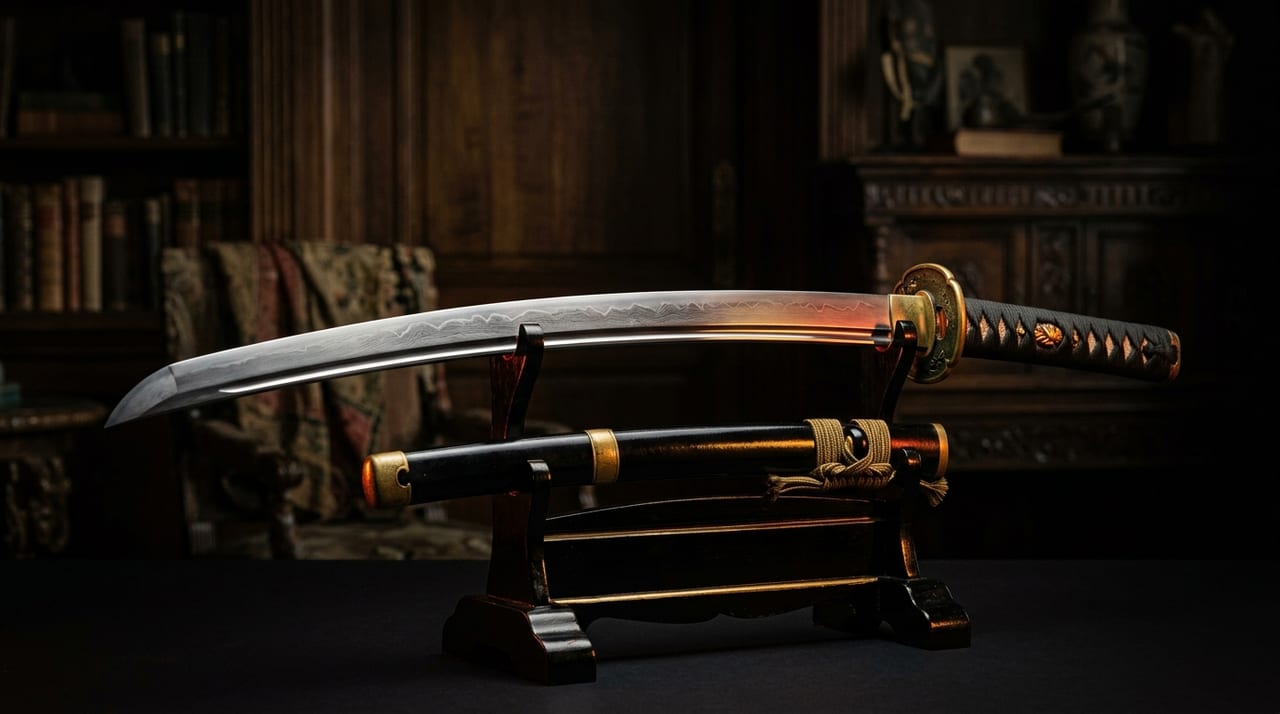
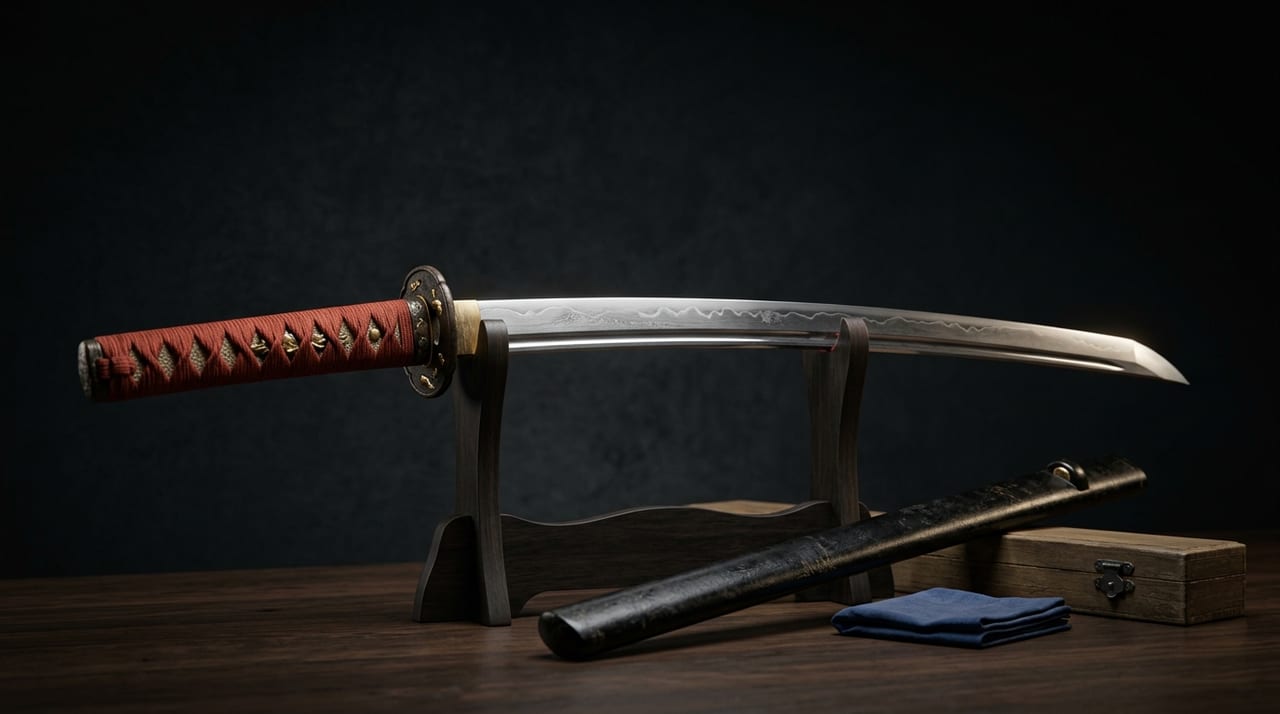
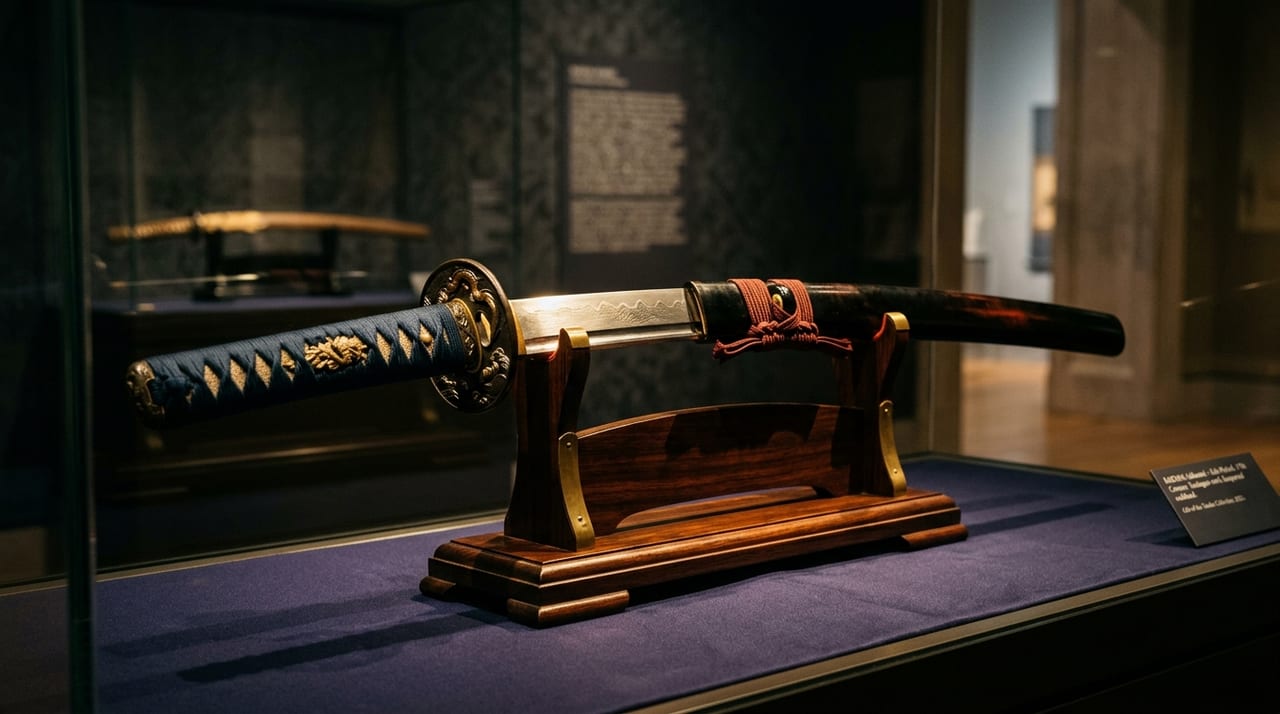
The Definition and Value of Ubu — the Academic and Market Premium of Unaltered Swords and the Realities of Appraisal
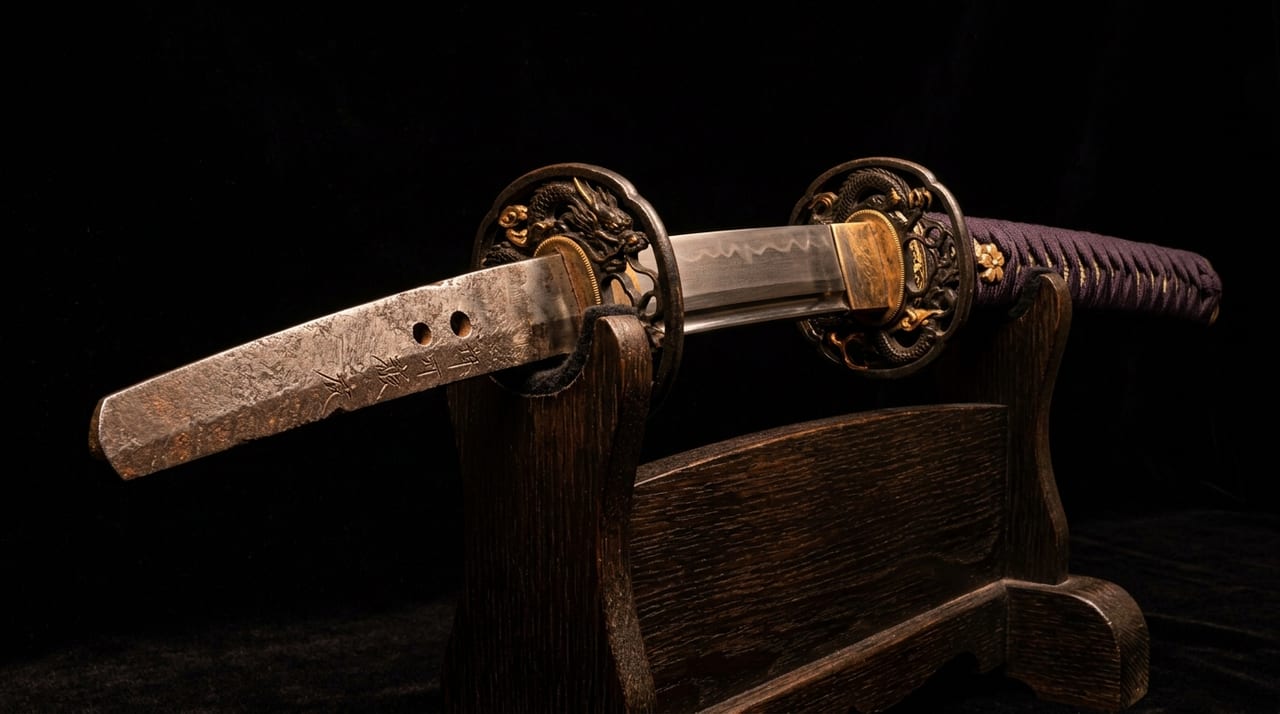 * Image is for illustrative purposes only.
Table of Contents
What Is Ubu — the Finest Condition of a Nihontō
The concept of ubu is an important marker placed at the very top of the quality assessment of nihontō. Simply put, it refers to the condition in which a sword has never been sent for togi since it left the hands of the tōkō — in other words, its "original, unaltered form." Yet ubu contains a depth of meaning that cannot be fully expressed in a single phrase.
Ubu and Altered Swords — a Sword's Provenance Determines Its Value
In the appraisal of nihontō, the judgment of "ubu or not ubu" carries enormous weight. An ubu sword is one in which the shape, dimensions, and hamon of the blade as the tōkō intended have been preserved intact. By contrast, an altered sword (araitemono) is one that has been changed from its original form through polishing or fittings replacement by a previous owner.
The most common form of alteration is togi-beri (reduction through polishing). Because nihontō require regular maintenance, successive owners have polished the blade over the generations. As a result, the blade may have become several centimeters shorter than its original dimensions, the sori may have changed, or part of the mei may have been worn away. A sword on which part of the mei has been lost to togi is referred to as having its "mei cut" (mei ga kireru), and its value diminishes substantially.
An ubu sword has undergone none of this togi-beri. That is to say, the entire blade as it existed at the moment the tōkō inscribed the mei is still preserved today. This is an exceptionally rare condition. For a sword from before the Sengoku period to be ubu, its rarity and academic importance are incomparably high.
Academic and Market Premium
The academic value of an ubu sword derives above all from the fact that it is "a surviving object that conveys the true intention of the tōkō." The nagasa, the degree of sori, the course of the hamon, the shape of the nakago — all of these remain visible today as traces of the tōkō's design. In an altered sword, such subtle intentions are lost.
Being ubu is also evidence of a "history of preservation." From the Sengoku period through the Edo period and into modern times, the sword reflects how carefully it was kept and in what environment. An ubu sword that is free of rust and whose same-hada surface has been well brought out by togi tells a story of "storage in a good environment" and enhances the credibility of its provenance.
In market terms, the fact of being ubu alone can result in an appraisal value three to five times that of a comparable altered sword. In particular, an ubu sword whose mei is fully intact (the entire inscription remaining) can command a price even at the dealer's purchase price (approximately 40–50% of the market rate) that matches the asking price of an altered sword.
The Realities of Ubu Appraisal
Determining whether a sword is ubu is far more difficult than it appears. Even if the blade looks generally sound and seems free of togi-beri, there are many cases in which it has in fact undergone one light togi in the past. The judgment requires deep knowledge of the standard sword dimensions for the tōkō's period, experience with how the hamon and hada (the wood-grain-like surface pattern) progress with togi, and an assessment of how well the period suggested by the mei matches the actual object.
For a sword dealer or appraiser to definitively declare a sword "ubu," multiple lines of evidence are normally combined. For example: an old yuisho-gaki (a document recording provenance at the time of purchase) explicitly states "ubu throughout"; the dimensions of each part of the blade match the standard values for the tōkō's period; and the degree of rust is consistent with a condition of "maintained but never sent for togi."
Certifying a single sword as "ubu" can involve one to two hours of detailed microscopic examination and the taking of takuhon (rubbings of the hamon transferred onto paper). In particular, when a kotō bears a clearly stated mei, comparison with known authenticated works by that tōkō is also carried out, and only once the sword is confirmed to be a genuine work by the tōkō's hand is it granted the designation of a "genuine ubu work."
Key Points for Distinguishing Ubu from Altered
The following indicators are used as practical means of distinction.
- Completeness of the mei: Ubu swords on which the mei is completely intact (the entire inscription remaining) are extremely rare, but in such cases it is strongly suggested that togi-beri is minimal.
- Condition of the nakago: If the nakago shows no trace of togi and the tōkō's hammer marks (tsuchime) remain visible as-is, the likelihood that the sword is ubu is high.
- Uniformity of the hamon and hada: In an ubu sword, the hamon and hada are uniformly consistent overall, with no "directional bias" from togi.
- Conformity of dimensions: When the sword's dimensions match the standard measurements for the tōkō of the forging period, the likelihood of it being ubu increases.
However, none of these indicators is 100% certain; reliability increases only when multiple indicators are combined.
Points to Note When Purchasing and Owning an Ubu Sword
Owning an ubu sword entails an extremely great responsibility. Once it has been sent for togi, the condition of being ubu is lost forever. From that point on, both its academic and market value diminish substantially.
Therefore, when considering the purchase of an ubu sword, one must resolve "not to send it for togi." Instead, regular wiping maintenance and storage in a dry environment are required. If one wishes to handle a sword actively, procuring a separate altered sword is the proper practice for an owner who wishes not to damage an ubu sword.
It is also important to retain the yuisho-gaki and kanteisho that attest to the sword's ubu status. When the sword is sold in the future, these documents will significantly affect its value assessment.