Naginata-gata Wakizashi: Form and Appraisal — Morphological Differences from Naginata-naoshi and How to Identify Custom-Forged Examples
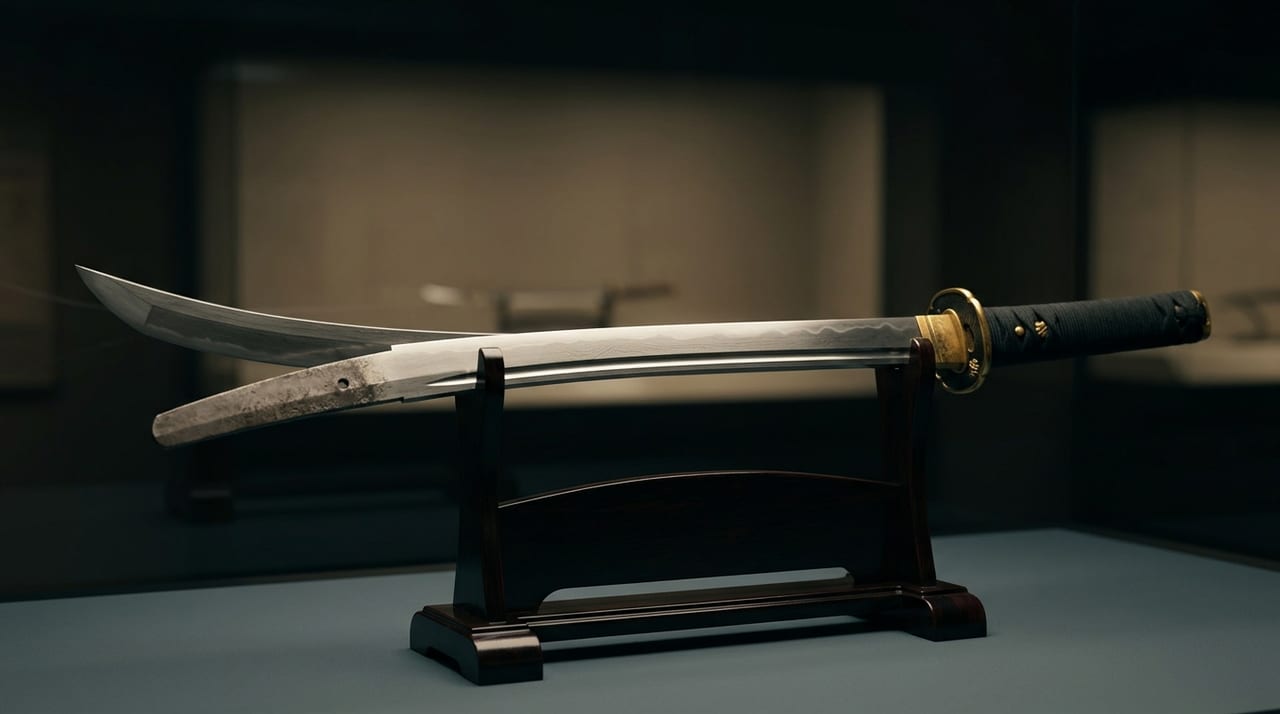 * Image is for illustrative purposes only.
Table of Contents
What Is a Naginata-gata Wakizashi?
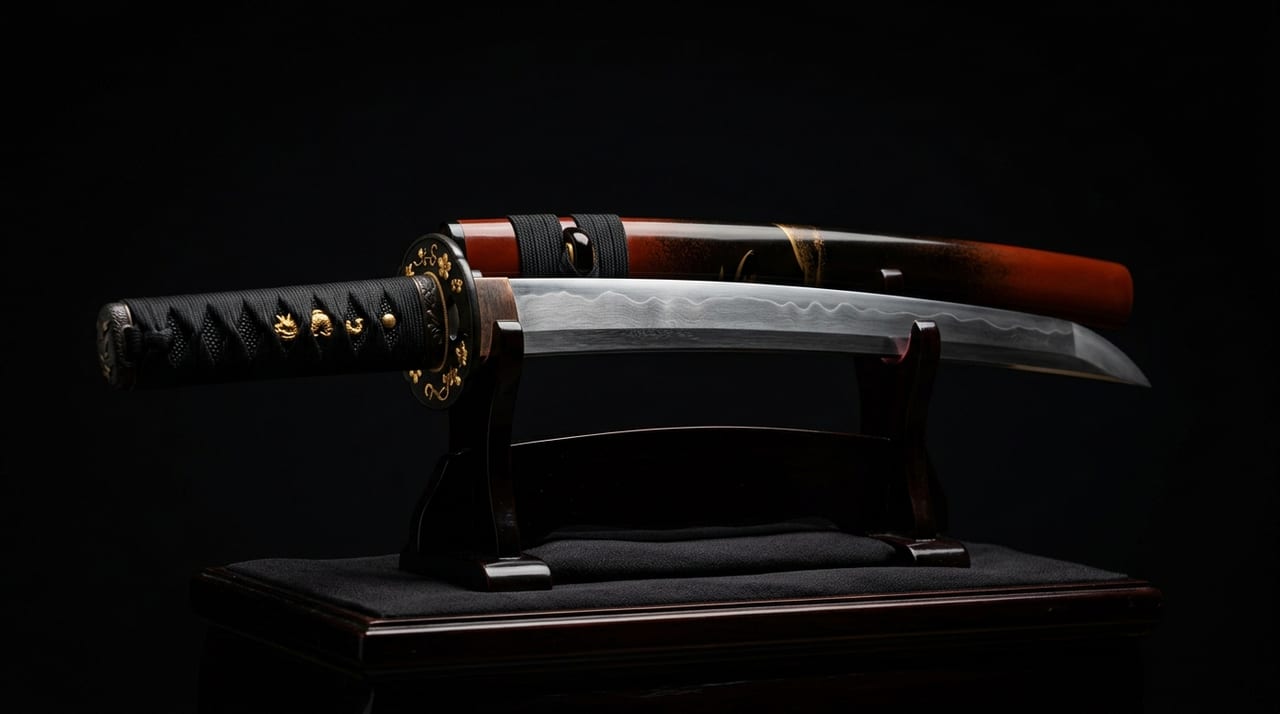
A naginata-gata wakizashi refers to a sword deliberately fashioned to wakizashi size with intentional reference to the morphological characteristics of the naginata — in particular, kata-kiriha-zukuri, a slender sori, and a long nakago ratio. This is fundamentally distinct from naginata-naoshi, the practice of shortening a naginata through togi and repurposing it as a wakizashi.
Naginata-naoshi are reworked pieces, whereas a naginata-gata wakizashi is "forged from the outset as a wakizashi" — yet its design was deliberately conceived with the naginata's form strongly in mind.
A question readers often raise is whether it is possible to distinguish a naginata-gata wakizashi from a naginata-naoshi based solely on the description in a shop or illustrated catalogue. In practice, the first visual impression alone makes this difficult to judge, and the process of examining the nakago and machi condition described later is indispensable.
Detailed Morphological Characteristics
The following are typical morphological characteristics of the naginata-gata wakizashi.
Cross-sectional blade geometry (tsukurikomi): The most typical is kata-kiriha-zukuri, a variant of kiriha-zukuri, in which the shinogi on only one side of the blade is raised, producing an asymmetrical cross-section. This follows the traditional tsukurikomi of the naginata. This is in contrast to ordinary wakizashi, which are based on hira-zukuri or shinogi-zukuri.
Position and depth of the sori: The naginata-gata wakizashi has a pronounced tendency toward saki-zori, with the curvature concentrated at the tip of the blade. This derives from the design of the naginata, whose shape was premised on the motion of the tip sweeping a wide arc during a cutting stroke.
Shape of the kissaki (point): Many examples have a large kissaki, or the forward-projecting shape characteristic of naginata sori. This is intended to achieve both thrusting and cutting capability.
Shape of the nakago (tang): In the naginata-gata wakizashi, the nakago is relatively long and may retain traces of the form premised on the attachment of the naginata's long haft. The finish of the nakago (yasurime) is also a useful reference.
These characteristics are not individually decisive; it is necessary to make a comprehensive judgment by combining multiple elements. Because the cross-sectional blade geometry and nakago shape are difficult to grasp from photographs alone, examination of the actual object is recommended.
Appraisal Differences from Naginata-naoshi
Distinguishing a naginata-gata wakizashi from a naginata-naoshi in appraisal is considered difficult work even for experienced togishi and appraisers. However, several indicators exist.
Ratio of motohaba to sakihaba: In the case of naginata-naoshi, because the original naginata has been reduced through polishing, the ratio of motohaba to sakihaba differs from that of a natural wakizashi, with a tendency for the blade to taper sharply toward the tip. Because a naginata-gata wakizashi was designed from the outset as a wakizashi, this ratio is natural.
Shape of the machi: If the machi-okuri (the position of the ha-machi and mune-machi) is large, the likelihood of naginata-naoshi is high. In a naginata-gata wakizashi, the machi is preserved close to its original position.
Nakago rust (nakago-sabi) and yasurime (file marks): In naginata-naoshi, old layers of rust from the original naginata may remain deep in the nakago. Also, if the yasurime pattern differs from wakizashi convention, this can serve as evidence of reworking.
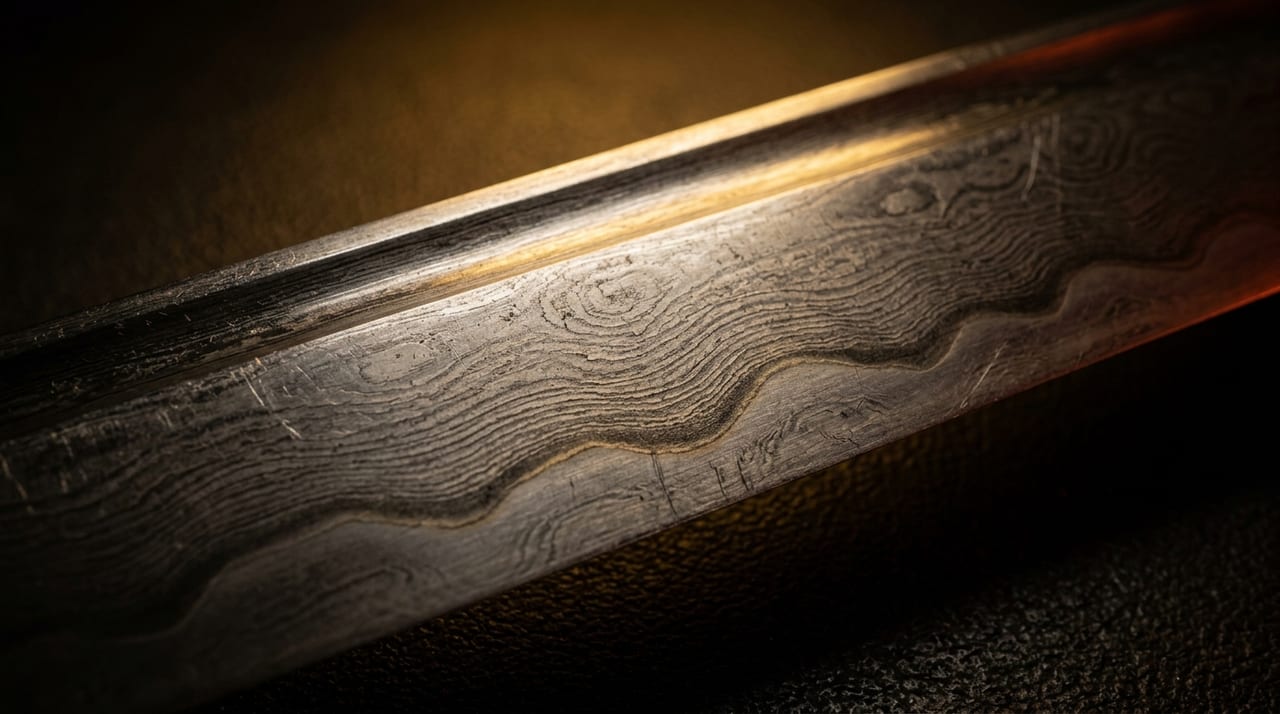
Continuity of the hamon (temper line): In naginata-naoshi, the hamon may be unnaturally interrupted during the process of shortening. In a naginata-gata wakizashi, the hamon continues as originally designed.
All of these indicators require specialist training, and definitive determination of naginata-naoshi versus naginata-gata wakizashi by layperson judgment alone should be avoided. When in doubt, it is advisable to consult a trustworthy appraisal institution or an experienced sword dealer.
Custom Orders for Naginata-gata Wakizashi in the Edo Period
Custom-forged (chūmon-uchi) naginata-gata wakizashi — forged from the outset in naginata form — were most prevalent from the mid-Edo period onward. In an era of prolonged peace, demand for swords as practical weapons declined, and interest in "diversity of design" grew.
There were orders placed for the purpose of martial arts training and self-defense by women of warrior households, and cases of individual schools of classical martial arts commissioning pieces specially for practice and kata training. There are also records of the sentimental motivation of commissioning a wakizashi in a later generation to resemble the "keepsake naginata" of a military commander.
Behind such custom orders, it can be inferred that there existed a sword culture of bespoke pieces that reflected not merely utilitarian function but design sensibility and the patron's personal intentions. The naginata-gata wakizashi stands as one representative example of this.
Among the accomplished tōkō responsible for extant naginata-gata wakizashi, multiple examples by tōkō of the Bizen and Edo schools from the late Edo period have been confirmed.
Appreciation and Evaluation in the Modern Era
The naginata-gata wakizashi occupies a distinctive position among collectors. Because it is rarer than an ordinary wakizashi and its morphological individuality is pronounced, it tends to be valued as a kind of rarity among sword enthusiasts.
In examinations by major appraisal bodies such as NBTHK, a determination of whether the piece is a naginata-gata wakizashi or a naginata-naoshi may be recorded; the designation "naginata-naoshi" is not necessarily a negative evaluation but is objectively documented as the historical background of the reworking. However, when compared with ordinary wakizashi by the same tōkō from the same period, naginata-naoshi may sometimes receive a somewhat lower evaluation from the standpoint of hamon completeness.
In the sword market, confusion between "naginata-naoshi" and "naginata-gata wakizashi" occasionally occurs, leading to discrepancies in price valuation. The existence of an accurate kanteisho (appraisal certificate) greatly affects the reliability of transactions in this area.
Practical Points for Purchase and Ownership
When purchasing or owning a naginata-gata wakizashi, the following points are reassuring to verify.
- Check the content of the kanteisho (appraisal certificate): Always confirm the wording on the kanteisho — whether it records "naginata-gata wakizashi" or "naginata-naoshi." If the wording is ambiguous, contacting the issuing institution is one option.
- Inspect the nakago and machi condition in person: Where possible, confirm directly — not just from photographs — the rust and yasurime of the nakago and the presence or absence of machi-okuri.
- Inquire about provenance (denrai): Asking the seller or previous owner about provenance to the extent known will be useful for future reappraisal or resale.
- Pay attention to storage conditions: Like all nihonto, the naginata-gata wakizashi requires storage in a humidity-controlled environment and regular maintenance.
These are basic points of verification applicable to nihonto in general, not only to the naginata-gata wakizashi, but their importance is especially heightened for the naginata-gata wakizashi given its distinctive tsukurikomi.