Kirihazukuri Sword Form — From Yoroi-tōshi to Wakizashi, the Practical Aesthetics Revealed by a Distinctive Blade Cross-Section
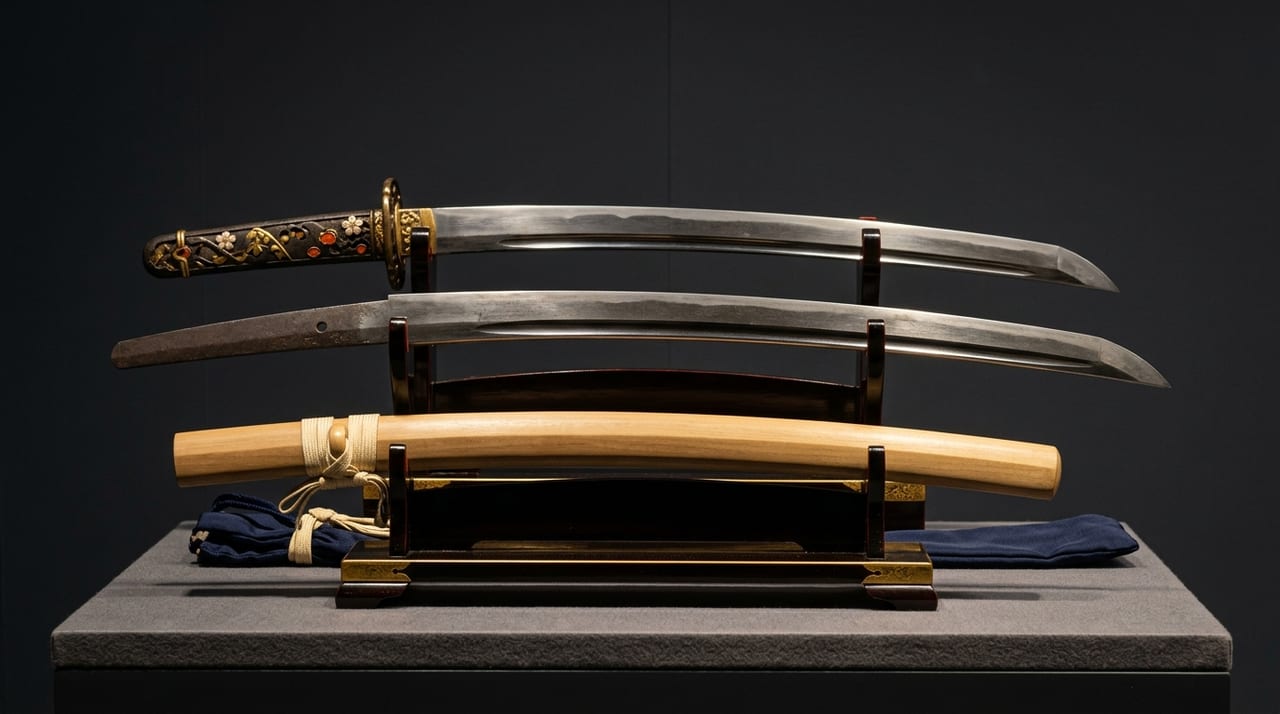 * Image is for illustrative purposes only.
Table of Contents
The term "tsukuri-komi" describes the cross-sectional shape of a blade. Compared to the most common shinogi-zukuri, kirihazukuri has a distinctive cross-section in which the shinogi is positioned close to the cutting edge, making the shinogi area wide and the hira area narrow. It is commonly seen in the straight blades of the Kofun and Nara periods, and was later carried on in tantō, some wakizashi, and in naginata-naoshi blades — swords reworked from naginata. This article explains the structure and history of kirihazukuri, its relationship with practical use in the Nanbokuchō period, a comparison with naginata-naoshi, and points to appreciate when viewing extant kirihazukuri swords.
Kirihazukuri — Cross-Sectional Differences in Tsukuri-komi
Comparing tsukuri-komi types by cross-section makes the characteristics of kirihazukuri clear.
| Tsukuri-komi | Position of the shinogi | Cross-sectional characteristics | Main period and use |
|---|---|---|---|
| Shinogi-zukuri | Slightly toward the mune from the center of the blade | The shinogi area and hira area are nearly equal in width. The most common form | Standard for tachi and uchigatana from the Heian period onward |
| Kirihazukuri | Very close to the cutting edge | The shinogi area is wide and the hira area is extremely narrow. Close to a wedge shape | Straight blades of the jōkotō era; some tantō and wakizashi |
| Katakiri-hazukuri | Only one side near the edge | Asymmetrical: kirihazukuri on one face, hira-zukuri on the other | Tantō and wakizashi. Popular in the Edo period |
| Hira-zukuri | No shinogi | A flat surface continues to the edge | Standard for tantō |
| Shōbu-zukuri | Near the center | No yokote; the shinogi runs through to the kissaki | Wakizashi and tantō |
| Unokubi-zukuri | Near the center | Material on the mune side is removed, creating a constriction like a cormorant's neck | Tantō of the Kamakura and Nanbokuchō periods |
In kirihazukuri, the thickness increases sharply near the cutting edge, making the edge angle obtuse and giving the entire blade a wedge-like shape. The design prioritizes durability against chipping and efficient force transmission in pressing cuts, over sharpness. For the full range of tsukuri-komi types, see Reading Sword Tsukuri-komi; for katakiri-hazukuri, see What Is Katakiri-hazukuri?; shōbu-zukuri and unokubi-zukuri are explained in What Is Shōbu-zukuri? and What Is Unokubi-zukuri? respectively.
History of Kirihazukuri — From Straight Blades to Tantō
The history of kirihazukuri goes back to a time before Japanese swords acquired sori.
- Kofun through Nara periods: Many of the straight blades influenced by continental styles were kirihazukuri. Examples can be seen in the swords preserved at Shōsōin and in blades excavated from burial mounds.
- Heian period: Once the curved tachi was established, the mainstream tsukuri-komi shifted to shinogi-zukuri, and kirihazukuri gradually declined.
- Kamakura through Nanbokuchō periods: Kirihazukuri and katakiri-hazukuri reappear in tantō and small wakizashi. The background is the demand for robust blades in close-quarters grappling combat against armored opponents.
- Muromachi through Edo periods: Naginata-naoshi — naginata blades shortened and reworked into swords or wakizashi — became more common, and because their cross-sections resemble kirihazukuri, the two are often discussed together.
The straight blades of the jōkotō era are covered in What Is Jōkotō?; the chronological development of kirihazukuri tantō is examined in detail in Kirihazukuri Tantō: Form and Historical Development.
Practical Demands of the Nanbokuchō Period and Kirihazukuri
The Nanbokuchō period was an age when ōdachi and nodachi became fashionable, while tantō used in grappling combat were also required to have practical, function-first designs. The reasons kirihazukuri and katakiri-hazukuri tantō were made can be explained as follows.
- Because the kasane is thick and the edge angle obtuse, the edge is less likely to chip when thrusting into gaps in armor.
- The wedge-shaped cross-section transmits force more efficiently in pressing-cut and prying motions.
- The narrow hira area makes the blade more resistant to togi wear, standing up to field maintenance.
In other words, kirihazukuri is a tsukuri-komi that answers the same practical demands as the yoroi-tōshi — "thrusting and prying" — through the shape of its cross-section. For the relationship with yoroi-tōshi, see Yoroi-tōshi and Koshi-gatana; for the overall blade forms of the Nanbokuchō period, see Blade Form Development of the Nanbokuchō Period.
Comparison with Naginata-naoshi
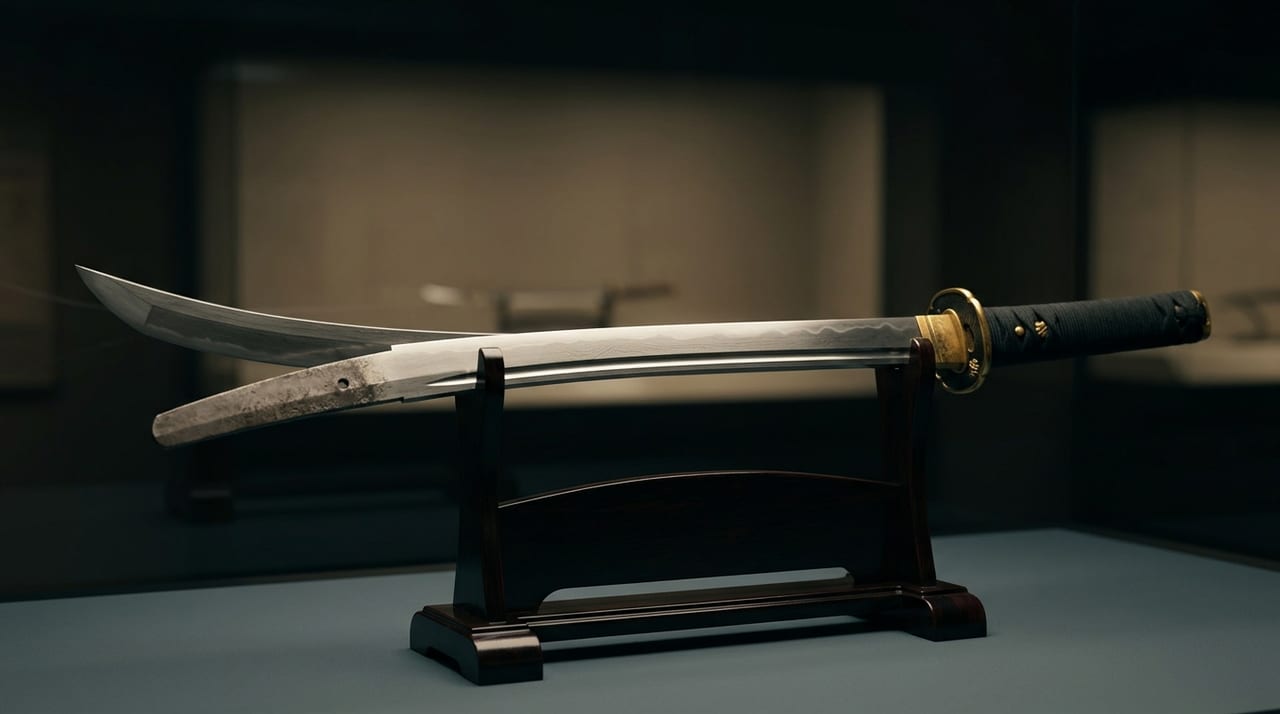
Naginata-naoshi are blades in which a naginata has been shortened and the nakago remade to create a sword or wakizashi. Because they resemble kirihazukuri in appearance, kantei requires a discerning eye to distinguish between the two.
| Point of observation | Kirihazukuri (original tsukuri-komi) | Naginata-naoshi |
|---|---|---|
| Shinogi | Runs close to the edge and is consistent through to the nakago | The original naginata shinogi remains; its position may shift partway |
| Hi (groove) | May be carved, but integral to the tsukuri-komi | The naginata-hi distinctive to naginata (a hi that curves at the tip) often remains |
| Mune | The form of the mune is consistent | Traces of material removed from the mune side to adjust sori tend to appear |
| Kissaki | Presence or absence of the yokote depends on the tsukuri-komi | The kissaki has been shortened from the naginata's strongly curved tip; the yokote tends to sit low |
| Mihaba and kasane | Width and thickness as designed | Because the original was a naginata, the mihaba is wide and the kasane thick |
| Nakago | Mei may remain on an ubu nakago | The nakago has been remade by suriage, and the mei is often lost |
Naginata-naoshi wakizashi and tantō retain the characteristics of their original naginata form. The wide mihaba and thick kasane generate "pressing-cut" performance, concentrating in a short blade the power that naginata of the Nanbokuchō and Muromachi periods possessed. The history of naginata-naoshi is explained in Naginata-naoshi; how to distinguish naginata-naoshi from purpose-made naginata-shaped wakizashi is covered in Naginata-gata Wakizashi: Form and Kantei.
Appreciation Points for Extant Kirihazukuri Swords
When viewing kirihazukuri and naginata-naoshi swords, pay attention to the following points.
- Visualize the cross-section: in an exhibition it is not possible to see the cross-section straight on. Read whether the cross-section is wedge-shaped from the position of the shinogi and the width of the shinogi area.
- Width of the shinogi area: in kirihazukuri the shinogi area occupies most of the blade. Observing the jigane texture reflected in the shinogi area gives a clear picture of the forging.
- Edge angle: because the hira area is narrow, the edge angle appears obtuse. Also check whether togi wear has thinned the edge.
- Shape of the hi: if a naginata-hi remains, the blade is likely a naginata-naoshi; if the hi is integral to the tsukuri-komi, it can be considered an original kirihazukuri.
- Condition of the nakago: whether the nakago is ubu or has been shortened by suriage provides a clue as to whether the blade was made as kirihazukuri or reworked at a later date.
- Kissaki and yokote: the presence or absence of the yokote and its position indicate the type of tsukuri-komi and whether the blade has been altered.
For tsukuri-komi types of wakizashi in general, see Complete Classification Guide to Wakizashi Tsukuri-komi; the geometric significance of the shinogi is explored in The Geometry of the Shinogi.
The "Aesthetics of Practicality" Revealed by Kirihazukuri
Kirihazukuri embodies an aesthetic sensibility distinct from the balanced beauty of shinogi-zukuri. The wedge-shaped cross-section, wide shinogi area, and obtuse edge angle are all the result of prioritizing "resistance to breaking" and "efficient force transmission" over sharpness. The tactical demands of Nanbokuchō warriors are, one might say, inscribed directly into the shape of the cross-section. Naginata-naoshi, too, are products of practical wisdom — naginata that had finished their role as polearms were not wasted but put to use as swords. Those who wish to trace the development of blade form period by period should also see Reading the "Sugata" of a Sword.
Summary
Kirihazukuri is a wedge-shaped tsukuri-komi with the shinogi positioned close to the cutting edge. It began with the straight blades of the jōkotō era and was used again as a function-first design in tantō and wakizashi of the Nanbokuchō period. Naginata-naoshi are reworked blades that retain the original naginata characteristics; while they share a similar cross-section with kirihazukuri, traces of the conversion appear in the hi, kissaki, and nakago. By examining in order the position of the shinogi, the width of the shinogi area, the shape of the hi, and the condition of the nakago, one can determine whether a given blade is an original kirihazukuri or a sword reborn from a naginata.