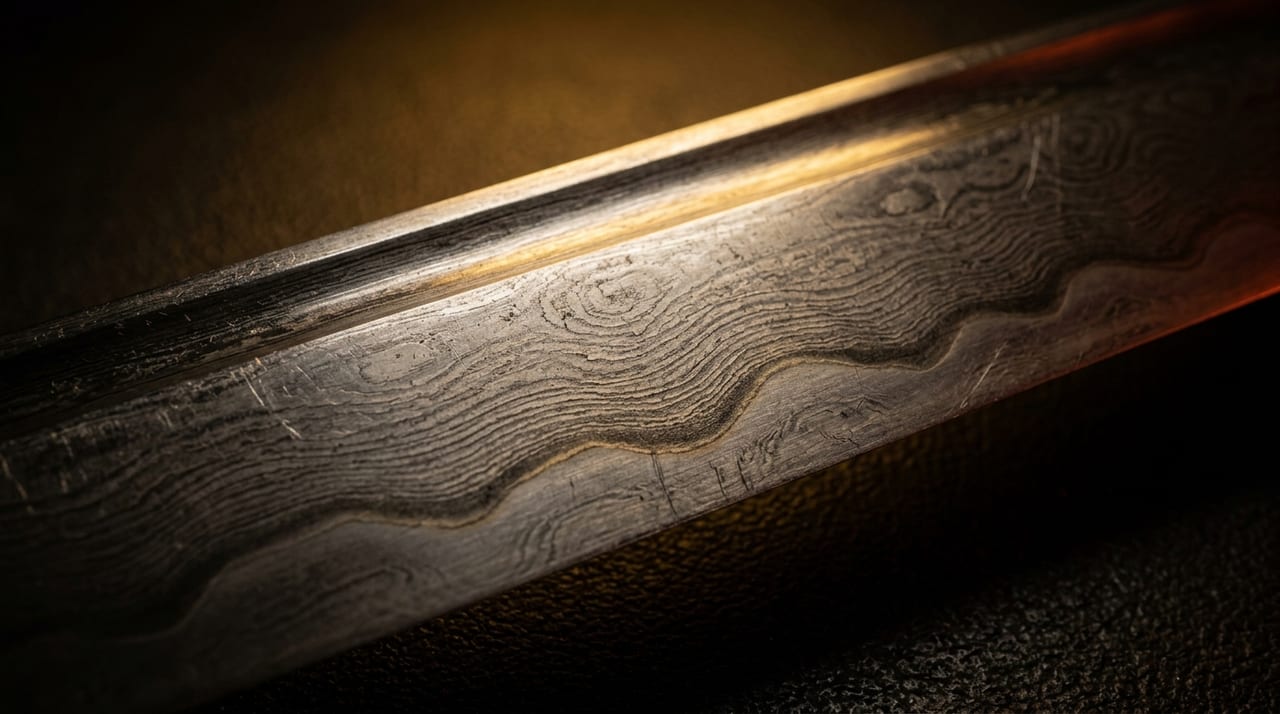
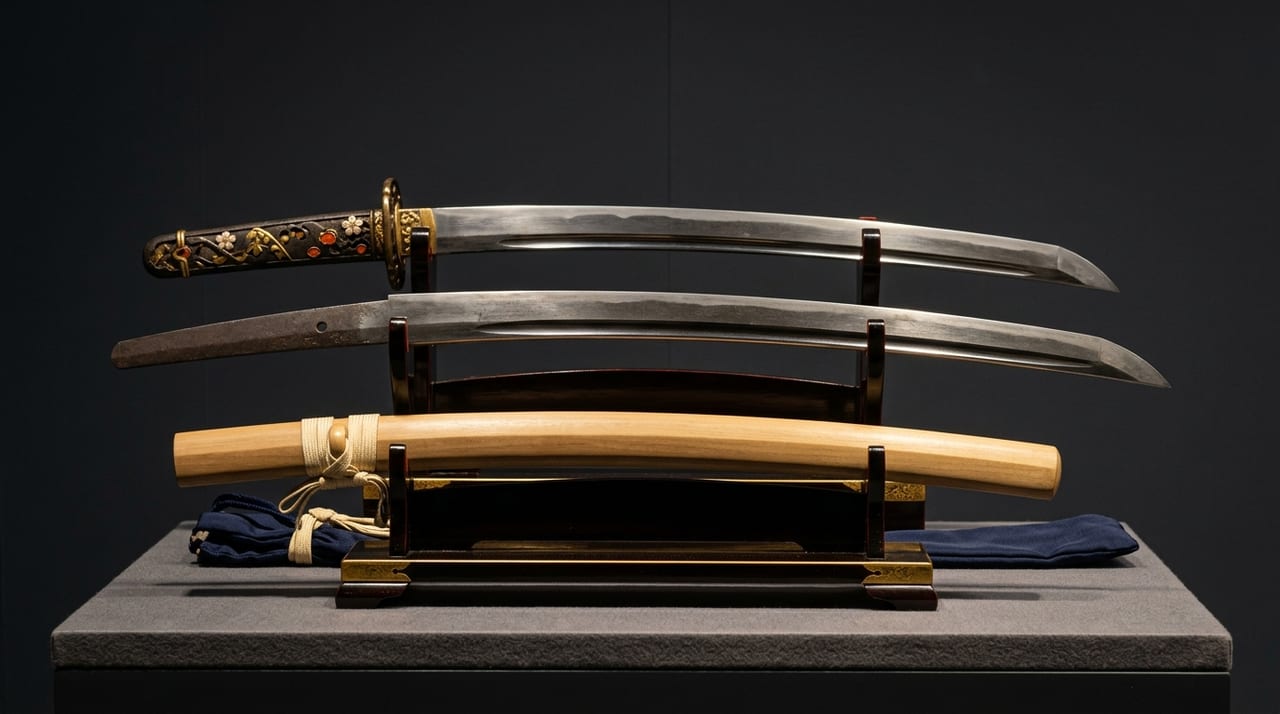
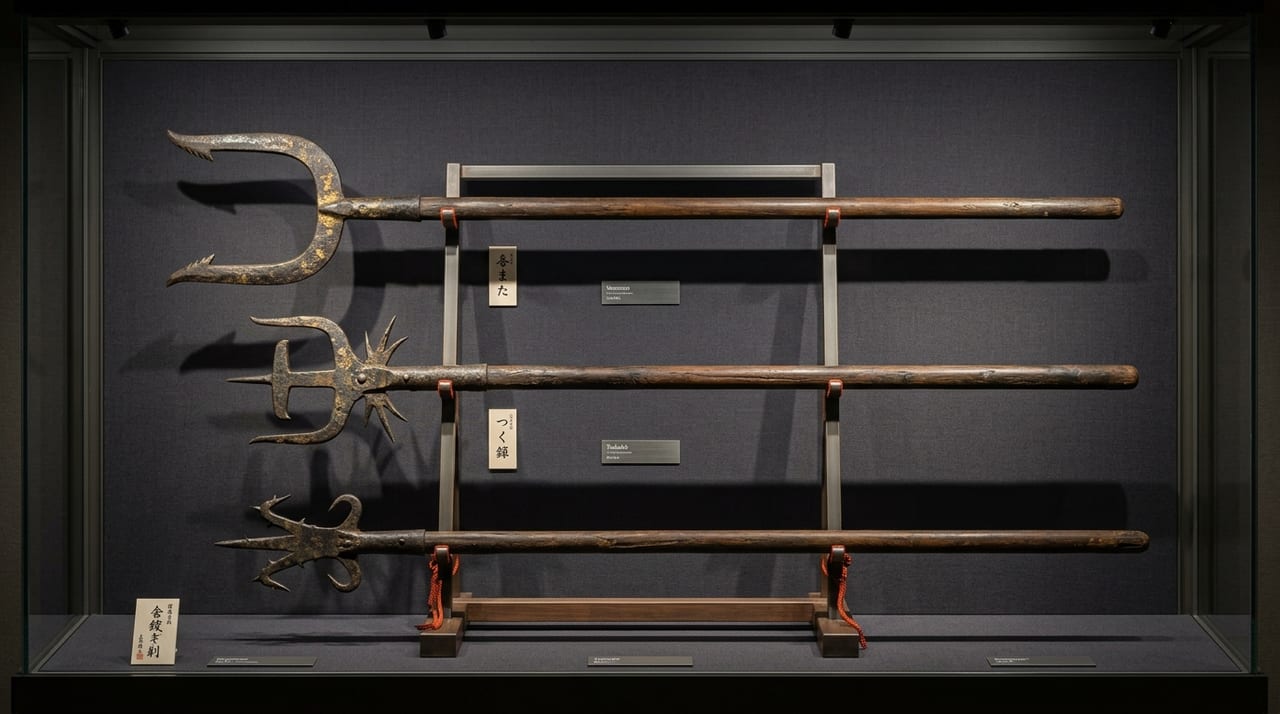
Kakuuchi Tantō — A Rare Sword Form with a Square Cross-Section and Surviving Cultural Properties
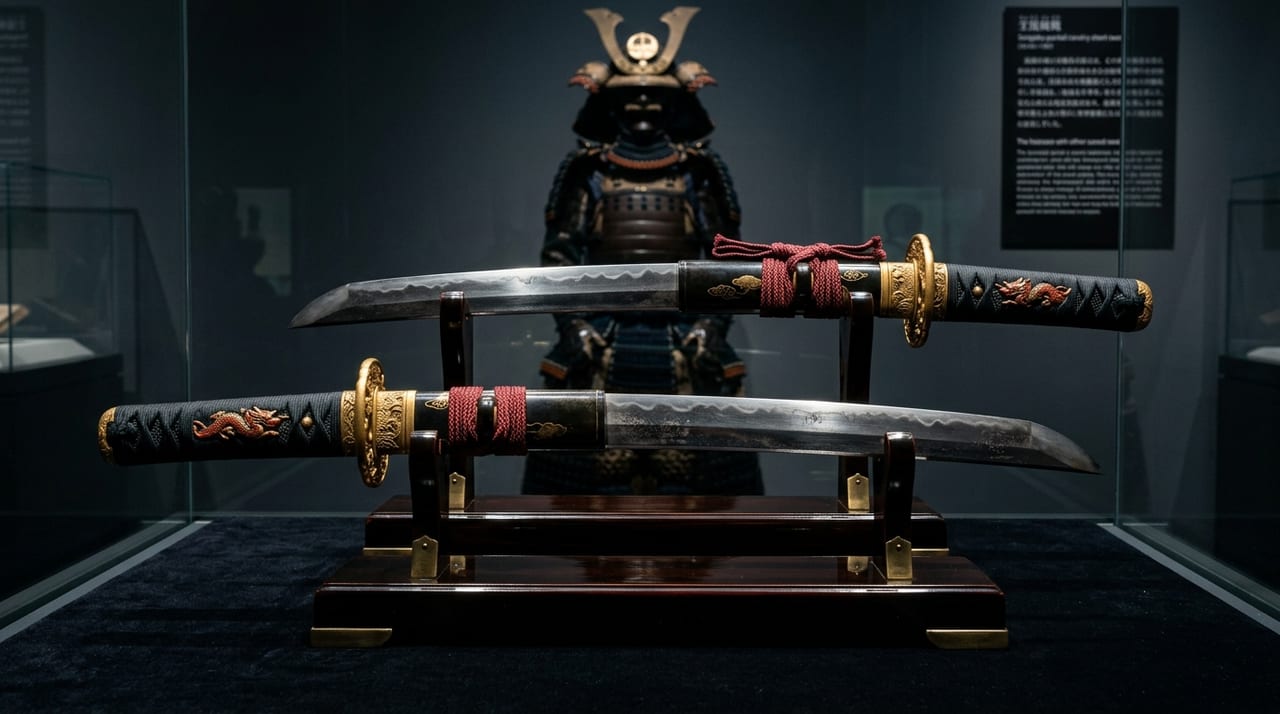 * Image is for illustrative purposes only.
Table of Contents
What Is Kakuuchi?
The tsukurikomi of a Japanese sword refers to the cross-sectional shape of the blade. A typical Japanese sword takes the form known as shinogi-zukuri, in which the cross-section forms a convex lens shape centered on the shinogi ridge. By contrast, kakuuchi is a specialized tsukurikomi in which the blade's cross-section takes a shape close to a square or rectangle.
Kakuuchi is particularly rare among Japanese sword tsukurikomi classifications and is almost never seen on ordinary uchigatana or tachi. It is a form applied mainly to tantō, where it is called a kakuuchi tantō or kakugata tantō.
Formal Characteristics
The defining feature of the kakuuchi tantō is that the cross-section maintains a quadrilateral shape from the hamachi (blade notch) to the kissaki. Whereas a hira-zukuri tantō is composed only of flat surfaces on the front and back, in kakuuchi the lateral faces of the blade (the surfaces connecting the mune side and the edge side) are also finished flat, giving the whole piece a prismatic appearance.
The mune is finished with an even more pronounced edge than a standard kaku-mune. The kasane (blade thickness) is relatively great, and the design has also been interpreted as intended for practical use thrusting through gaps in armor, as with yoroidōshi-type tantō. Yoroidōshi is a general term for tantō specialized for inserting into gaps in armor to deliver the decisive blow in close combat, and its design philosophy is closely aligned with that of kakuuchi, which maintains a thick and sturdy cross-section.
Historical Background and Period of Production
The production of kakuuchi tantō is said to have been most prevalent from the late Kamakura period through the Nanbokuchō period. This era saw the flourishing of large blades such as ōdachi and nodachi, while tantō for close-quarters combat also diversified. As purpose-specific tantō such as yoroidōshi, koshigatana, and kaiken developed, it is thought that the kakuuchi form was adopted with the aim of maximizing frontal thrusting performance.
There is a strong affinity with the "thrust-specialized" design philosophy favored by Sōshū-den tōkō, and kakuuchi tantō attributed to Sōshū-den workmanship do exist. Some kakuuchi tantō by Yamato-den tōkō have also been confirmed, and surviving examples show that production was not limited to any specific regional school.
Surviving Cultural Properties
The number of surviving kakuuchi tantō is extremely small, and some have been designated as jūyō bunkazai (Important Cultural Property) or Tokubetsu Jūyō Tōken. They are held in the collections of multiple museums and art galleries across Japan and are occasionally displayed at special exhibitions. Specific designated cultural properties can be searched and verified in the Agency for Cultural Affairs' National Designated Cultural Properties Database (kunishitei.bunka.go.jp).
In NBTHK appraisals as well, kakuuchi is frequently noted as a rare form, and it is explicitly stated as "kakuuchi" in the tsukurikomi entry of the kanteisho. Complete examples in undamaged condition with minimal reduction from polishing receive especially high evaluation.
Appraisal Points
When appraising a kakuuchi tantō, the following points should be checked.
- Cross-sectional shape: Check whether the cross-section as viewed from the mune direction clearly forms a quadrilateral.
- Kasane thickness: A characteristic feature is that it is thicker and heavier than hira-zukuri or shinogi-zukuri.
- Relationship between hamon position and kakuuchi: How the tsuchioki of the yaki-ire is applied with respect to the square cross-section is where the craftsman's skill is on display.
When there is a suspicion of later alteration, another check point is whether there are any unnatural filing marks in the shape of the mune or in the finish near the shinogi. Whether the "square" of a kakuuchi was added later through polishing or was intentionally formed from the production stage is said to be determinable to some degree from the iron composition and the flow of the kitae-hada.
Revival by Contemporary Tōshō
In recent years, kakuuchi tantō have also become the subject of revival and research by contemporary tōshō. Because it is a rare form, there is a situation in which "opportunities to produce one are themselves scarce," and some tōshō have taken on the task of rediscovering the techniques and producing restorations. Some tōshō choose kakuuchi as the piece they present at exhibitions, and this ancient rare form is bringing a new context to contemporary Japanese sword art.
The cross-sectional structure of the kakuuchi tantō is also valuable evidence of the diversity of Japanese sword forging techniques. The fact that such markedly different tsukurikomi emerged within the same category of "tantō" depending on purpose, era, and school demonstrates that Japanese swords are the product of a craft and technical inquiry that transcends mere weaponry.
The Relationship Between Kakuuchi and Yoroidōshi — The Lineage of a Combat-Oriented Design
Yoroidōshi is a general term for tantō designed to thrust into gaps in armor, characterized by a narrow mihaba, an extremely great kasane, and a cross-section close to triangular or angular in shape. Yoroidōshi are also called metezashi, yatezashi, and kubikakigatana, and proved their worth in kumiuchi — a form of combat in which one grapples at close range with an armored enemy and delivers a lethal thrust.
The kakuuchi tantō can be understood as one manifestation of this yoroidōshi design philosophy. By maintaining a square cross-section, stress on the blade is distributed, realizing a structure in which the blade is unlikely to break during kumiuchi. This is a purely combat-oriented tsukurikomi that stands at the opposite end of the spectrum from thinly ground ceremonial tantō.
Furthermore, the cross-sectional design of kakuuchi represents an approach different from the conventional weight-reduction method of carving a hi (groove) into the blade, and can be called a unique solution that emerged from the tōkō's exhaustive pursuit of the material's properties and its combat application. The fact that many surviving kakuuchi tantō were produced during the late Kamakura through Nanbokuchō periods — the height of large, heavy armor — is consistent with this combat-oriented background.