The Structure and Standards of Naginata — Classification of Nagasa, Nakago, and Sori, and Its Modern Place as a Women's Martial Art
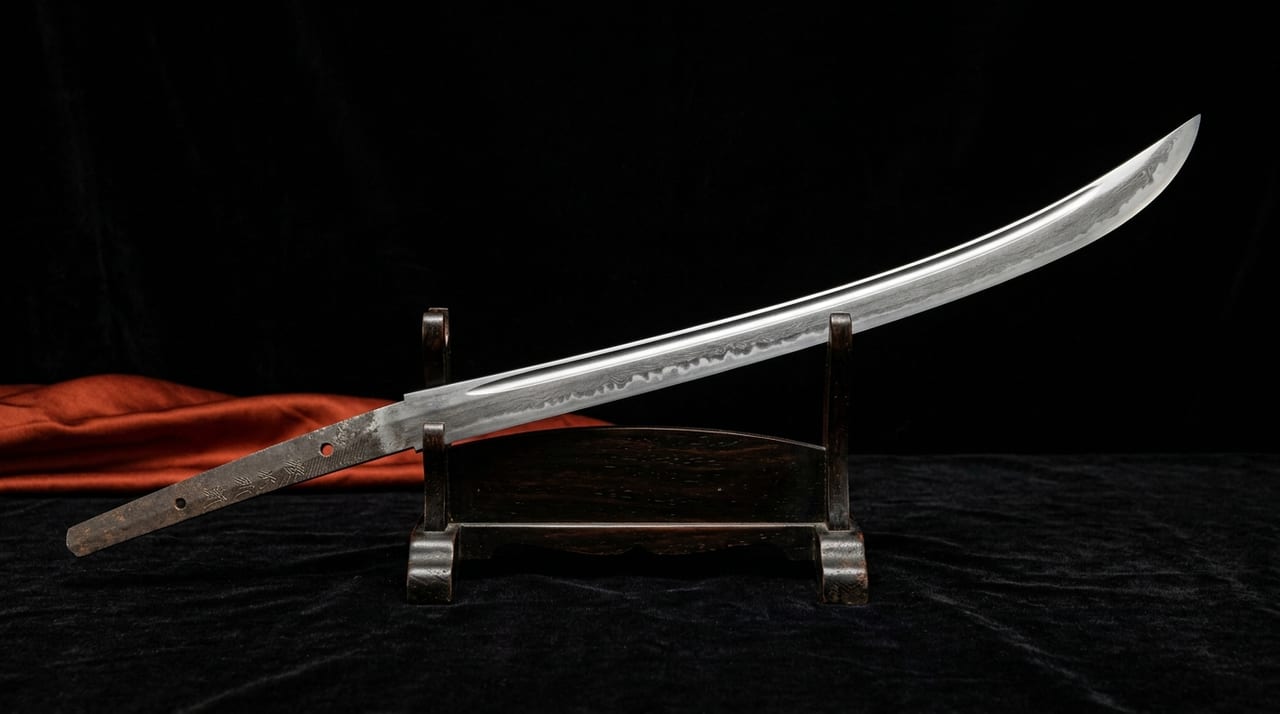 * Image is for illustrative purposes only.
Table of Contents
What Kind of Sword Is the Naginata?
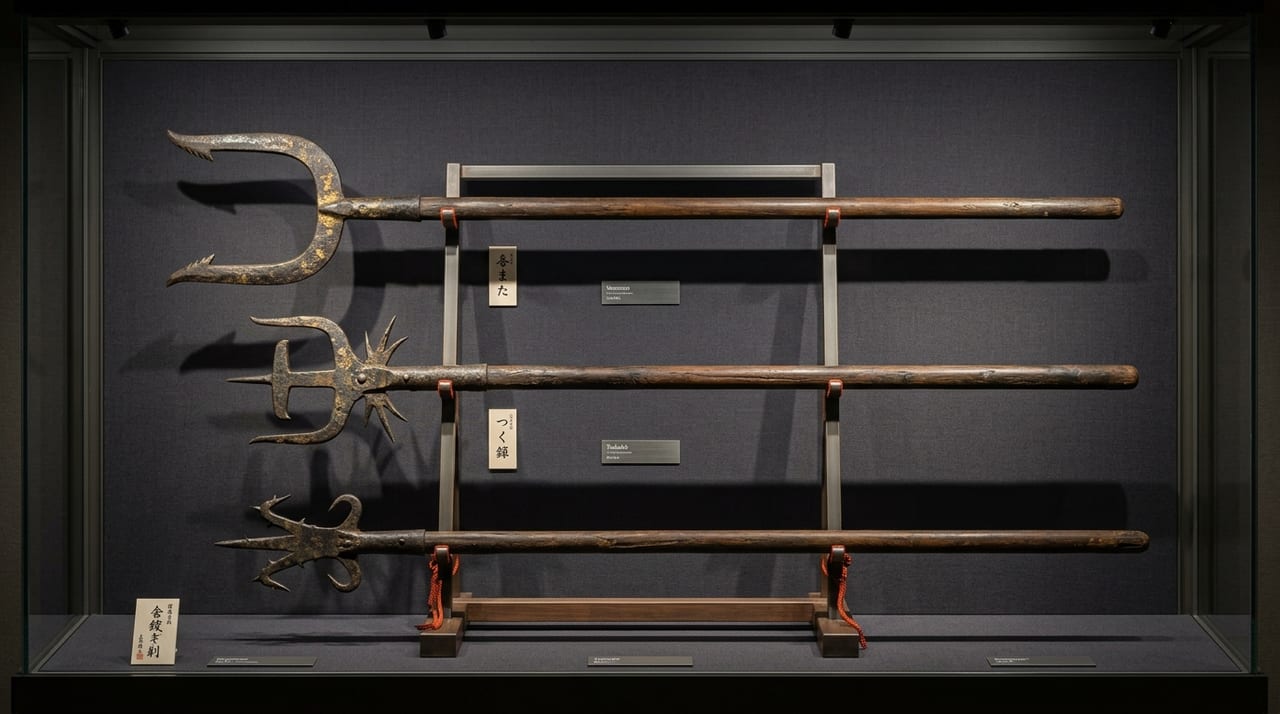
The naginata is a Japanese pole weapon with a large curved blade mounted on the end of a long shaft (e), and its manner of use is fundamentally different from that of the katana or tachi — it is a pole weapon specialized for different purposes. The prevailing theory holds that the name "naginata" derives from the action of "nagi-harau" (sweeping mow), and it has a structure specialized for slashing attacks from horseback and sweeping strikes by infantry.
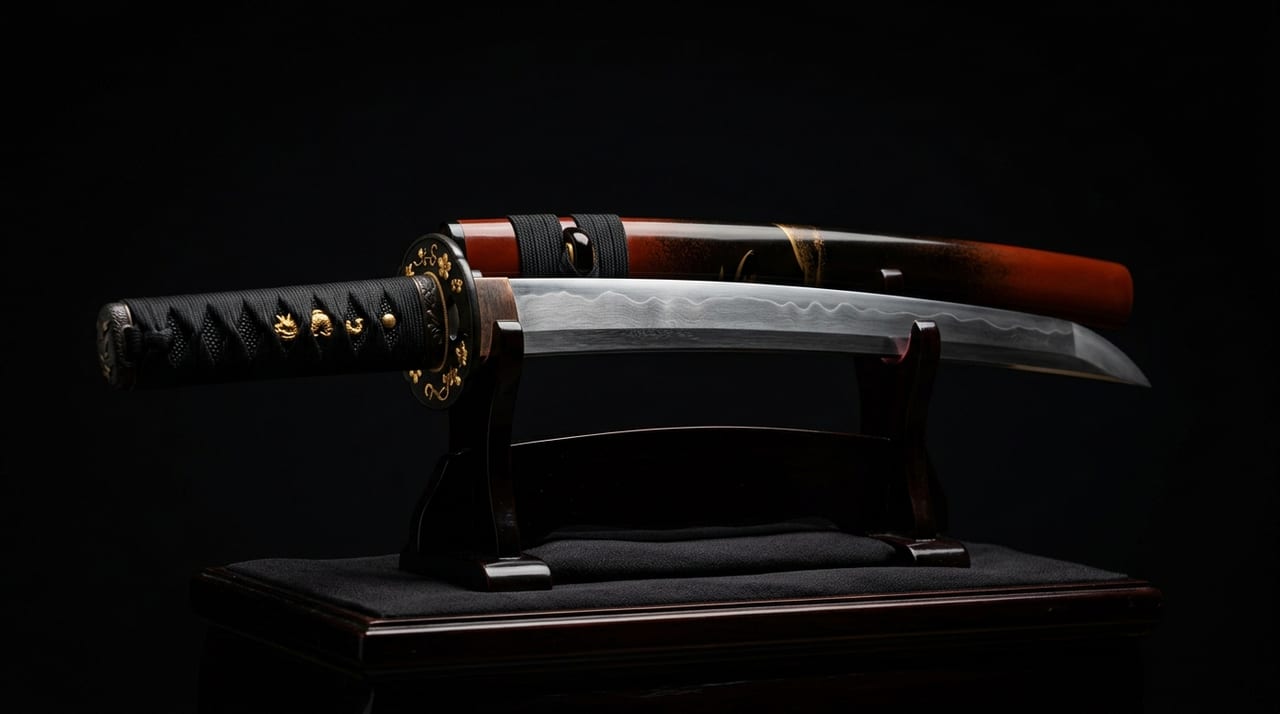
From the perspective of sword collectors, the naginata blade (the cutting portion) is evaluated as an independent work of art. The nakago has a characteristically great length, and appreciation of the hamon and jihada is carried out from the same standpoint as with Japanese swords.
Basic Structure of the Naginata — Names and Roles of Each Part
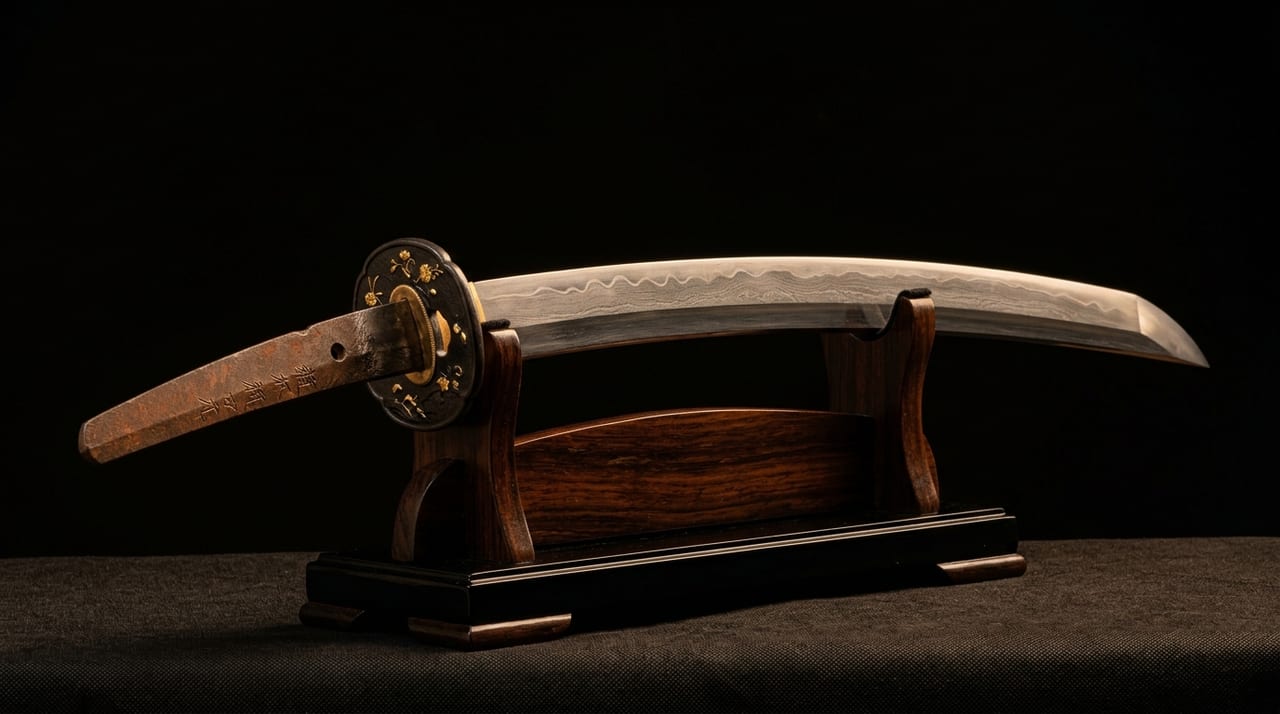
The naginata blade is broadly divided into the "mi" (body) and the nakago (tang). The most distinctive feature compared to the katana is that the nakago is exceptionally long — sometimes reaching more than one-third of the total length — and a long wooden shaft (from the butt end to the blade-mounting section) is inserted into it.
Nagasa refers to the length of the cutting portion; historical naginata commonly measure around 60 to 90 centimeters, although the great naginata (o-naginata) of the Nanbokuchō period include examples exceeding one meter. For competition naginata used in the modern martial art (hereafter referred to as "naginata" in the modern competitive sense), strictly regulated standards for nagasa are set.
Regarding sori, naginata blades frequently have a greater inward curvature than the tachi. This pronounced curve is optimized for the sweeping motion characteristic of a pole weapon, increasing the striking power of the blade as it traces a wide arc while receiving centrifugal force. For a general overview of sori classifications in Japanese swords, see also "Japanese Sword Sori — Types and Functional Meaning of koshi-zori, naka-zori, saki-zori, and uchi-zori."
The groove known as hi is commonly found on naginata blades, serving to reduce weight while maintaining rigidity. The position, shape, and number of hi vary by school and period of manufacture, making them an important point of appreciation.
Naginata Forms by Era — From the Heian to the Early Modern Period
The naginata appeared in warrior society in the late Heian period, and figures of warriors bearing naginata appear frequently in illustrated battle scrolls from the late Heian through the Kamakura period. Naginata from this period (ko-naginata, or old naginata) are extremely rare as surviving examples, and the great majority were converted in later ages into tachi or katana through what is known as "naginata-naoshi" (discussed below).
From the late Kamakura through the Nanbokuchō period, the naginata grew larger in scale, and examples with enormous blades called "o-naginata" appeared. In this era, long blades were considered advantageous in battle, and the naginata followed that trend. Most of the swords currently in circulation as "naginata-naoshi" are conversions of the o-naginata from this period.
In the late Muromachi through the Sengoku period, the rise of the spear (yari) diminished the naginata's role on the battlefield. This was because the "yari-busuma" tactic — massed infantry fighting in close formation with rows of yari — became widespread, and the long naginata was considered disadvantageous in close-quarter fighting.
With the advent of the Edo period, the naginata was redefined for use in self-defense and martial arts practice by women of samurai households, becoming a symbolic fixture of female martial arts in samurai residences. This tradition of the "onna-naginata" (women's naginata) continues unbroken into the modern naginata martial art.
What Is Naginata-naoshi? — How to Identify Converted Swords
"Naginata-naoshi" refers to a sword that has been converted from a naginata blade into a katana (or wakizashi or tachi), and it is an important concept in Japanese sword collecting. Most commonly, naginata from the Kamakura through Nanbokuchō period were trimmed to a more practical length and refashioned into katana or wakizashi. The technical background of the conversion and its cultural significance are treated in detail in "Naginata-naoshi — The Technique and Cultural Background of Converting Naginata into Uchigatana from the Muromachi through the Edo Period."
A characteristic feature of naginata-naoshi is its distinctive sori direction, known as "uchi-zori" (inward curve). In ordinary swords, the sori curves away from the edge (toward the mune), but when converted from a naginata, what is called "naginata-zori" — curving toward the edge — may remain. There is also a tendency for the sakihaba to be narrower relative to the motohaba, giving the overall sword a slender impression.
When a NBTHK kanteisho explicitly states "naginata-naoshi," the blade's provenance as a naginata is officially certified. Among notable naginata-naoshi, there are many pieces made by outstanding kaji of the late Heian through Kamakura period, and they are especially popular with kotō collectors.
Standards for the Modern Martial Art "Naginata"
The modern martial art competition "naginata" is based on the standards of the All Japan Naginata Federation, and uses bamboo or wooden practice naginata (for training) in matches and kata performances. These refer to competition standards that differ from those of actual naginata as Japanese swords.
Under All Japan Naginata Federation standards, the total length of a competition naginata is approximately 210 to 225 centimeters for both men and women, with prescribed ratios and weights for the shaft and blade sections. In performance kata, actual cutting movements are practiced as set forms, while in matches, competitors wear protective armor and engage in striking competition using the "shinai" (bamboo practice naginata).
Modern naginata is overwhelmingly dominated by female competitors, with considerable numbers of participants in high school and university club activities. The tradition passed down through history as "a weapon for women" lives on in the present.
Appreciation Points for Naginata — Advice for Collectors
Here we organize the key points for appreciating and collecting naginata blades as works of art.
- Position and type of hi — confirm these. The condition of the "bohi" (single wide groove) and "soehi" (accompanying groove) commonly found on naginata is an indicator of polishing quality and wear from use.
- Shape and length of the nakago — examine these. The nakago of a naginata is longer than that of a katana, and the shape often features distinctive yasurime. When a mei is inscribed, it is often cut toward the lower center of the nakago.
- Hamon — naginata display a wide variety of hamon, from the gentle suguha type to vigorous midare-ha types. Naginata influenced by the Bizen-den and Yamato-den of the Kamakura period are particularly prized for the refinement of their jihada and hamon.
When collecting naginata, market values are difficult to gauge because they circulate in smaller numbers compared to katana. Differences in examination standards and reliability by kanteisho issuing body are summarized in "Types of Sword Kanteisho and Their Reliability." In the case of naginata-naoshi in particular, the presence or absence of records documenting the original form before conversion affects value assessment, so these should be checked alongside the kanteisho. Actual naginata and naginata-naoshi of interest can be browsed in the works list, and details can be confirmed via the inquiry form.