The Curvature of Japanese Swords: Types and Functional Significance of Koshi-zori, Naka-zori, Saki-zori, and Uchi-zori
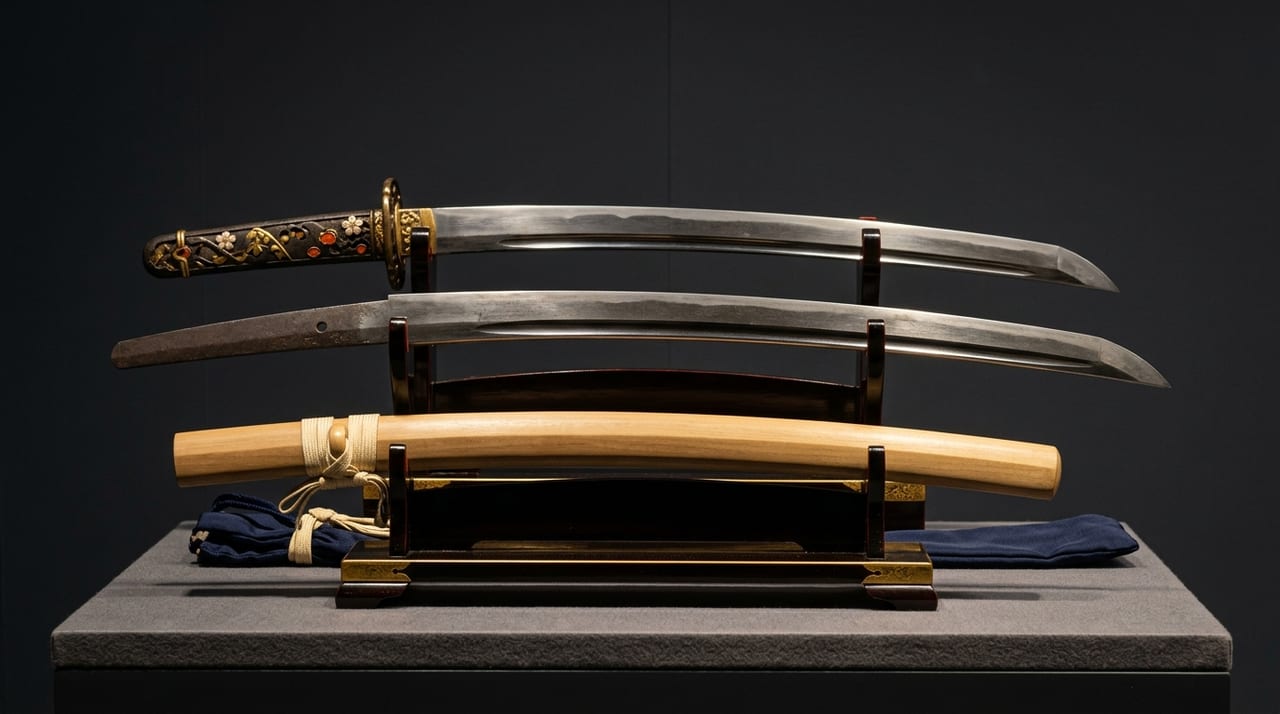 * Image is for illustrative purposes only.
Table of Contents
What is Sori? — The Element Defining Japanese Sword Form
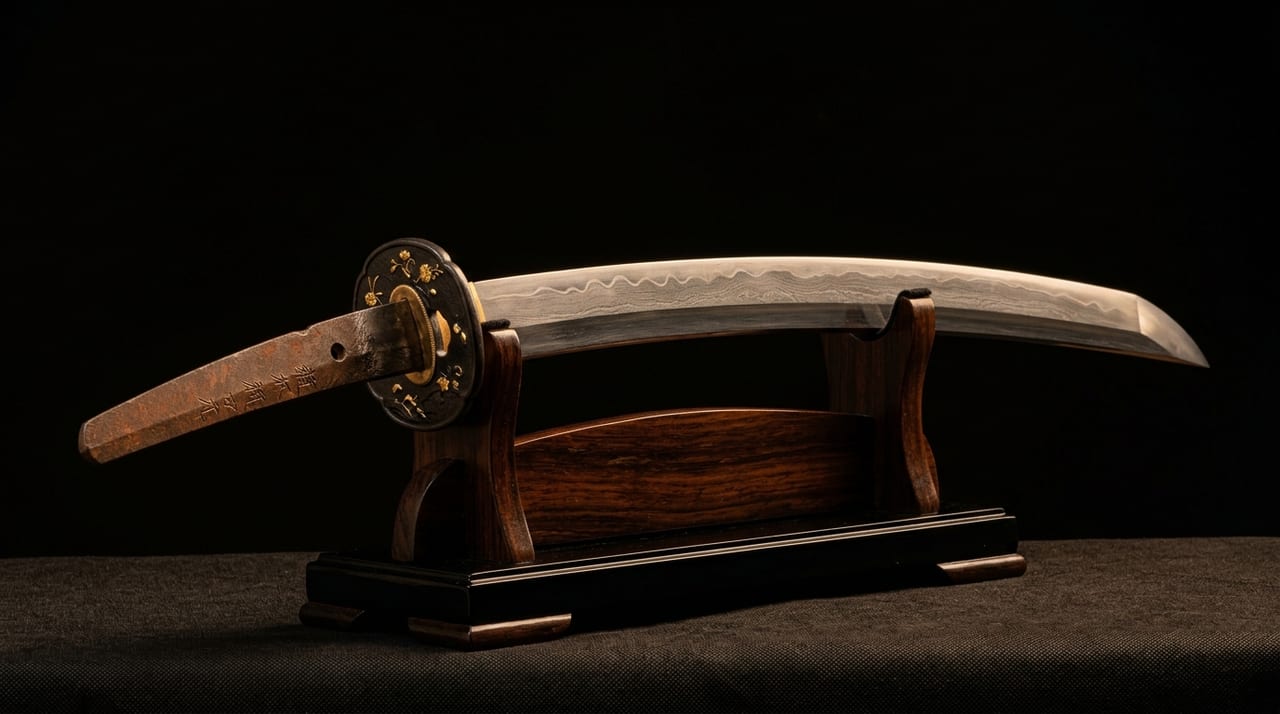
When discussing the form of a Japanese sword, "sori" (curvature) is one of the most fundamental and important elements. Sori refers to the degree to which the edge curves in an arc shape, measured against a straight line on the spine side of the blade. The sori value is measured as the vertical distance from the hamachi (the boundary between the edge and the nakago) to the point of maximum curvature on the blade, and is expressed in centimeters.
The guideline for sori values is as follows.
- Uchigatana: Approximately six-bu (about 1.8 cm) to eight-bu (about 2.4 cm) is standard
- Tachi: It is not uncommon for tachi to have deep curvature of one sun (about 3 cm) or more
The sori value is always listed in certification documents (such as preservation sword certificates issued by the NBTHK).
Swords with no curvature — those where the edge and spine are nearly parallel and have no curvature — are called "chokuto" (straight swords). Swords derived from the continent before the Asuka and Nara periods were almost entirely chokuto form, and the establishment of the curved tachi during the Heian period gave birth to the distinctive form of the Japanese sword.
Koshizori (Hip Curvature) — The Sori Type Created by Heian-Era Cavalry Combat
Koshizori refers to the style of sori where the point of maximum curvature on the blade is located near the nakago, that is, in the "hip" position. When viewed as a whole blade, the area near the base has the most pronounced curvature, and the curvature becomes more gradual toward the kissaki (point).
Koshizori is a sori type frequently seen in tachi from the Heian period through the early Kamakura period. It is considered a shape suited to the cavalry tactics established during the Heian period — the fighting method of firing arrows from horseback before striking with the tachi. When drawing the tachi from a position where it is hung at the hip while mounted (worn with the edge facing downward), the curvature in the hip region is optimized to the mechanics of the blade sliding out from the koiguchi (scabbard mouth), enabling quick draw.
Among extant tachi from the Heian and early Kamakura periods, typical examples of koshizori are numerous. Representative examples include tachi from the Sanjo and Gojo schools of Yamashiro Province (Kyoto), and tachi from the Ko-Bizen school of Bizen Province (Okayama). The tachi of Sanjo Munechika and Tomonari are evaluated as the complete form of the Heian sword style, unified with the formal beauty of koshizori curvature.
Nakazori (Middle Curvature) — The Blade Style of Kamakura Warriors
Nakazori is a sori type where the point of maximum curvature is located at approximately the center of the blade. Compared to koshizori, the curvature is distributed more evenly across the entire blade, and visually appears to be a more "regular" curve.
Nakazori is frequently seen in tachi from the middle to late Kamakura period. As cavalry combat developed further and opponents became primarily armor-clad warriors, the functional demands on the blade increased. Compared to koshizori, nakazori, with more uniform cutting efficiency across the entire blade and less prone to edge chipping, is believed to have become widespread as a style better suited to practical combat.
Many of the tachi and tanto by Masamune (Soshu Kamakura, late Kamakura period) and Sadamune have shapes close to nakazori, demonstrating the perfection of Kamakura-era sword style. Additionally, numerous nakazori-shaped tachi from the mid-Kamakura period by Bizen masters such as Yoshioka Ichimonji are confirmed.
Sakizori (Tip Curvature) and Uchizori (Inner Curvature)
Sakizori is a sori type where the point of maximum curvature is located near the kissaki, with the area near the blade base relatively straight, and curvature becoming stronger toward the kissaki. It is a sori type frequently seen in uchigatana from the Muromachi and Sengoku periods, while during the Edo Shintō period, shallow curvature overall became mainstream, with koshizori to nakazori tendencies predominating.
As a functional characteristic of sakizori, its adaptation to "sashikoshi-haki" (thrust-hip wearing) of the uchigatana, where the edge is worn facing upward, is noted. The tachi is worn in the "haku" form, with the edge hanging downward, but the uchigatana is worn in the "sasu" form, with the edge facing upward. There is a practical consideration that in the thrust position, sakizori works advantageously for the direction of the kissaki after drawing. It should be noted that Edo-period uchigatana tend to have overall shallower curvature, with many possessing koshizori or nakazori rather than sakizori.
Uchizori is the reverse of normal curvature, with the curvature facing toward the edge side (concave side). In typical Japanese swords, the edge side curves convex (outward), but in uchizori, the spine side becomes convex. Uchizori is primarily seen in tanto and yoroidoshi (armor-piercing swords), and is considered a shape that makes it easier to control the direction of the kissaki when piercing through gaps in armor. Examples of uchizori are found in materials from some time periods referred to as "sunnobi tantō" (slightly lengthened tanto) and "koshimoto no tantō" (hip-area tanto).
Organizing the sori types mentioned so far yields the following.
| Sori Type | Location of Maximum Curvature Point | Main Period/Classification | Representative Examples/Related Information |
|---|---|---|---|
| Koshizori | Base area near the nakago | Tachi from Heian through early Kamakura period | Sanjo and Gojo schools, Ko-Bizen (Sanjo Munechika, Tomonari) |
| Nakazori | Approximately the center of the blade | Tachi from mid to late Kamakura period | Masamune and Sadamune, Yoshioka Ichimonji |
| Sakizori | Near the kissaki | Uchigatana from Muromachi and Sengoku periods | Adaptation to sashikoshi-haki wearing |
| Uchizori | Edge side (concave side) | Tanto and yoroidoshi | Examples found in materials from some periods referred to as "sunnobi tantō" and "koshimoto no tantō" |
Control of Sori in the Forging Process — The Sword Smith's Technical Judgment
The sori of a blade is created during the forging and quenching process. During the stage of "orikaeshi-kitae" (fold-and-hammer forging), where iron is folded multiple times and hammered out, and "hizukuri" (fire-shaping), where the blade is formed, the sword smith consciously advances the forging with an awareness of the target sori type and amount.
During the quenching process, the blade is heated with clay applied to its surface (clay placement) and then rapidly cooled in water. At this point, a natural sori is created in the blade due to the difference in shrinkage rates between the edge side (where clay is thin and cooling is rapid) and the spine side (where clay is thick and cooling is gradual). The sword smith deliberately pre-shapes the blade before quenching to have a slight reverse curvature (curved in the opposite direction to normal sori), so that after quenching it settles into the target sori.
The final state of the sori is the result of multiple factors intertwining, and the sword smith's experience and technical judgment are tested.
- Properties of the material
- Thickness of clay placement
- Heating temperature
- Water temperature
The fact that works by sword smiths called "meikō" (master craftsmen) possess beautiful sori is also proof of their technical ability to precisely control these complex variables.
Changes in Sori and Value Assessment — Transformation Through Polishing and Use
As swords age over time, their sori can change due to polishing, use, and storage conditions. Repeated polishing thins the blade, and changes in weight balance cause subtle changes in sori. Additionally, drying and changes in temperature and humidity can cause the wooden shirasaya to deform, and in some cases affect the blade's sori during long-term storage.
In appraisal, changes in sori become one element in evaluating a sword's "temporal consistency." It is not uncommon for tachi from the Heian and Kamakura periods to have undergone polishing and changes in sori in later eras, and estimating the original sori type based on such changes is the skill of an experienced appraiser.
For modern sword collectors, sori is also one of the first items to verify when confirming consistency between the certification document and the physical object. When the sori value listed on a registration certificate or appraisal document differs significantly from the measured value of the physical object, there is a possibility that questions may arise regarding the identity of the sword in question, making pre-transaction verification essential.