Naginata Hamon and Jigane — A Togishi's Perspective on Polishing Long Blades and the Material Character of Old Naginata
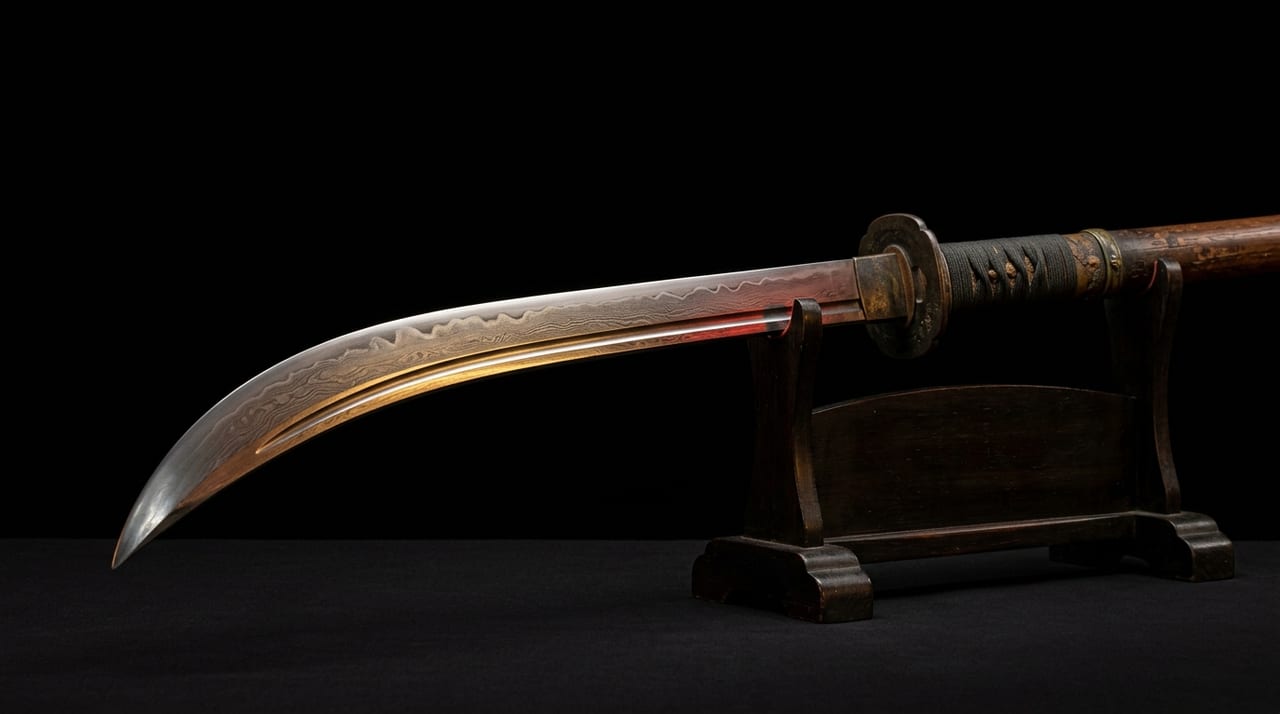 * Image is for illustrative purposes only.
Table of Contents
Naginata Hamon — Formal Differences from Tantō and Tachi
The hamon of a naginata carries unique constraints and possibilities arising from the length and shape of the blade. The nagasa (blade length) of a naginata varies greatly depending on the period.
- Old naginata of the Kamakura to Nanbokuchō period: many had blades of approximately 60–90 cm (ō-naginata exceeded even that), rivaling or surpassing the tachi in length
- Suriage pieces from the Edo period onward and modern naginatadō blades: approximately 30–60 cm in length (most surviving old naginata were subjected to suriage (shortening) in later periods)
Their shape features a distinctive curvature known as "naginata-zori," in which the blade curves sharply from a straight body.
The influence of this shape on hamon formation is by no means small. What is particularly observed in naginata hamon is the change in the hamon at the curved portion of the blade. During yaki-ire (quenching), the temperature distribution in the sharply curved area at the edge differs from that of the straight section, making the hamon pattern prone to change. Skilled tōkō (swordsmiths) design the tsuchioki (applying the clay coating) with an understanding of this characteristic, but controlling the hamon at the curved section is considered more difficult than with a hira-zukuri tantō or a typical tachi.
As for the types of hamon, the following tendencies are observed in naginata.
- Suguha and ko-midare: these are frequently seen, both for the practical reason that there are many areas where hamon control is difficult, and for the historical background that a practical hardness distribution was valued over excessive ornamental hamon in the naginata's original use (deployment in sweeping cuts)
- Chōji-midare and gunome-midare: complex hamon seen on high-grade commission naginata of the Muromachi period, serving as evidence that they were forged with artistic intent
Jigane Characteristics of Old Naginata — The Relationship Between Period and Material
The jigane of old naginata (naginata made before the Edo period) tends to show a generally coarser itame jihada compared to tachi and tantō of the same era. This is sometimes interpreted as suggesting that naginata were regarded as a step below tachi during certain periods, and that higher-quality tamahagane was given priority to tachi production, though there is no definitive proof.
In old naginata of the Kamakura and Nanbokuchō periods, the jigane characteristic of each of the Bizen-den, Yamashiro-den, and Yamato-den traditions can be observed, and the jigane alone provides clues for identifying provenance.
| Tradition | Jigane Characteristics |
|---|---|
| Bizen-den | Itame with areas of mokume, mixed with nie |
| Yamashiro-den | Tends toward a fine, closely packed ko-itame |
| Yamato-den | Some examples show a strong masame |
Among the large naginata (ō-naginata) of the Nanbokuchō period, some possess a magnificent jigane comparable to that of tachi from the same era, and together with their long hamon they make for impressive objects of appreciation. However, most surviving large naginata were subjected to suriage (shortening) in later periods and converted into wakizashi or uchigatana, and the number of old naginata surviving in complete form is small.
The Distinctive Nature of Naginata Polishing as Faced by Togishi
Naginata polishing, even among "long blades," presents technical challenges different from those of tachi or uchigatana. The main difficulties that togishi (polishers) face are as follows.
- Polishing the curved section: a naginata has a nearly straight back half (the moto side) with a sharp curve toward the tip. The transition from the straight section to the curved section is technically difficult for applying the whetstone evenly; if uneven polishing pressure is applied, there is a risk of the boundary between the hamon and the jigane collapsing. Skilled togishi pay particular attention to this transition, continuously adjusting how the whetstone is applied in order to maintain overall harmony
- Polishing the tip (the kissaki equivalent): the tip of a naginata differs in shape from the kissaki (point) of a sword, and the orientation of the edge also differs. The polishing pattern for the portion corresponding to the bōshi (temper line in the point) must be appropriately adapted to the naginata's shape, and sword-polishing technique cannot simply be applied as-is
- Securing the blade during polishing: because a naginata is a long blade, securing it during polishing is even more difficult than with a tachi. The design of the polishing stand and the method of supporting the blade are critical, and proper polishing cannot be performed without a togishi possessing specialist equipment and technique
Because of these distinctive challenges, togishi with specialist polishing skills for naginata remain few even today, and finding a suitable practitioner for high-quality naginata polishing is a challenge for sword owners.
Appreciation Points for Old Naginata and Notes for Collectors
From an appreciation standpoint, old naginata offer the following highlights.
- Sugata: the dynamic sculptural beauty produced by the combination of straight body and sharp sori (curvature) carries a tension entirely different from that of a straight tantō or a uniformly curved tachi
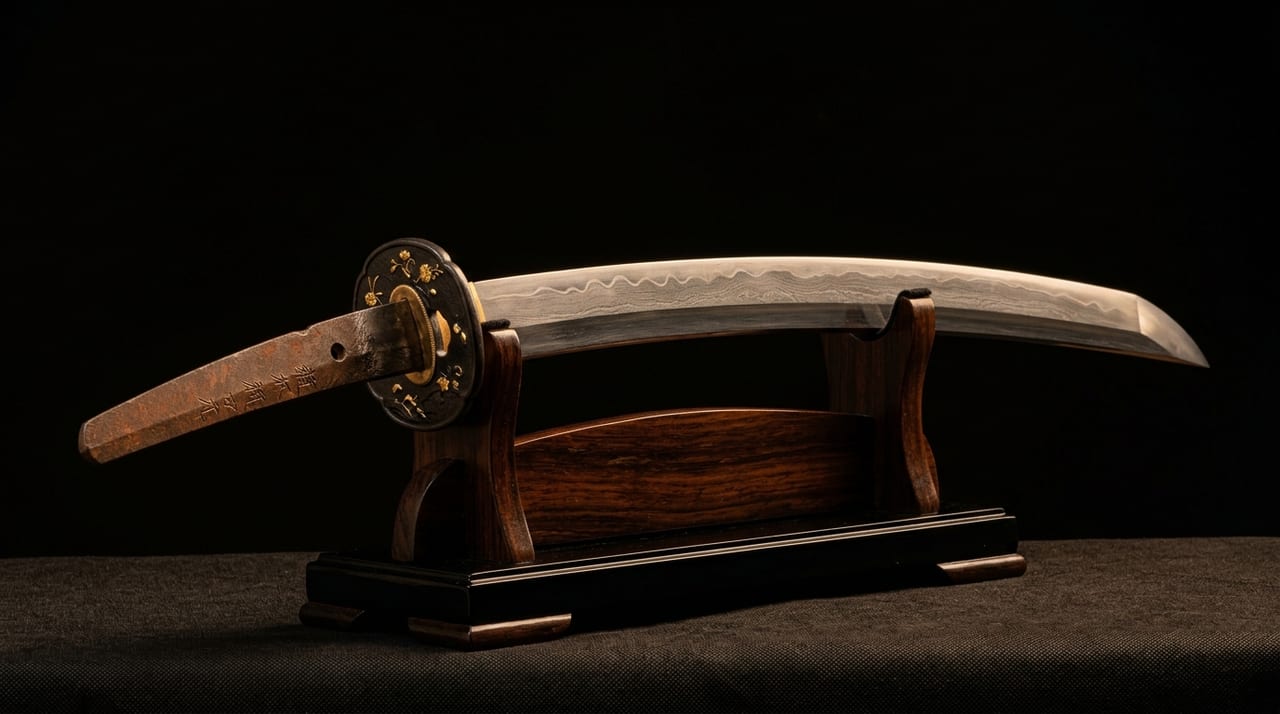
- Jigane: the jihada pattern appearing on the broad hiraji of the moto side is particularly rewarding to observe, and the fact that the width is great enough to allow the jigane pattern to be appreciated in full is one of the great attractions of naginata connoisseurship
- Hamon: tracing the changes in the hamon at the curved section is one of the central pleasures of appreciation, and the way the hamon subtly shifts along the blade in accordance with the blade's shape is direct evidence of the tōkō's skill
As a note for collectors, it is important to distinguish between old naginata and swords that have been converted into naginata-naoshi. Naginata-naoshi are naginata that have been shortened by suriage to the length of an uchigatana or wakizashi and no longer retain their original form; however, they can be identified by the sori (curvature) characteristic of naginata and the ratio of motohaba to sakihaba. Naginata-naoshi possess an intermediate beauty between a naginata and a sword, but their valuation differs from that of pieces for which a kanteisho (appraisal certificate) has been issued as a naginata.
Many surviving old naginata have been designated as cultural properties, and some examples preserved as votive offerings in regional shrines and temples have had limited opportunity for formal appraisal. The study of naginata is a niche field within sword connoisseurship with few specialists, but it is a domain that, by virtue of its distinctiveness, merits deep inquiry.