Armor (Kogusoku) and Swords — How the Koshigatana, Uchigatana, and Wakizashi Were Carried and Used on the Battlefield
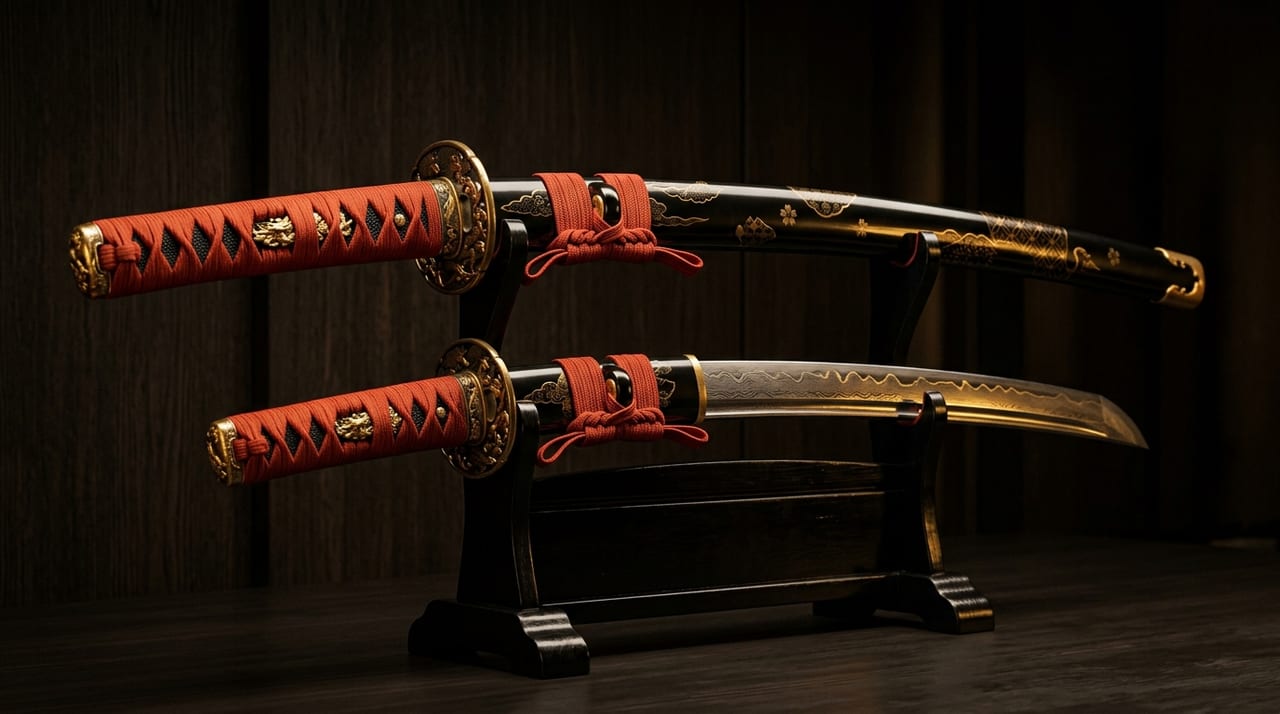 * Image is for illustrative purposes only.
Table of Contents
What Is Kogusoku — The Place of Swords within the Armor System
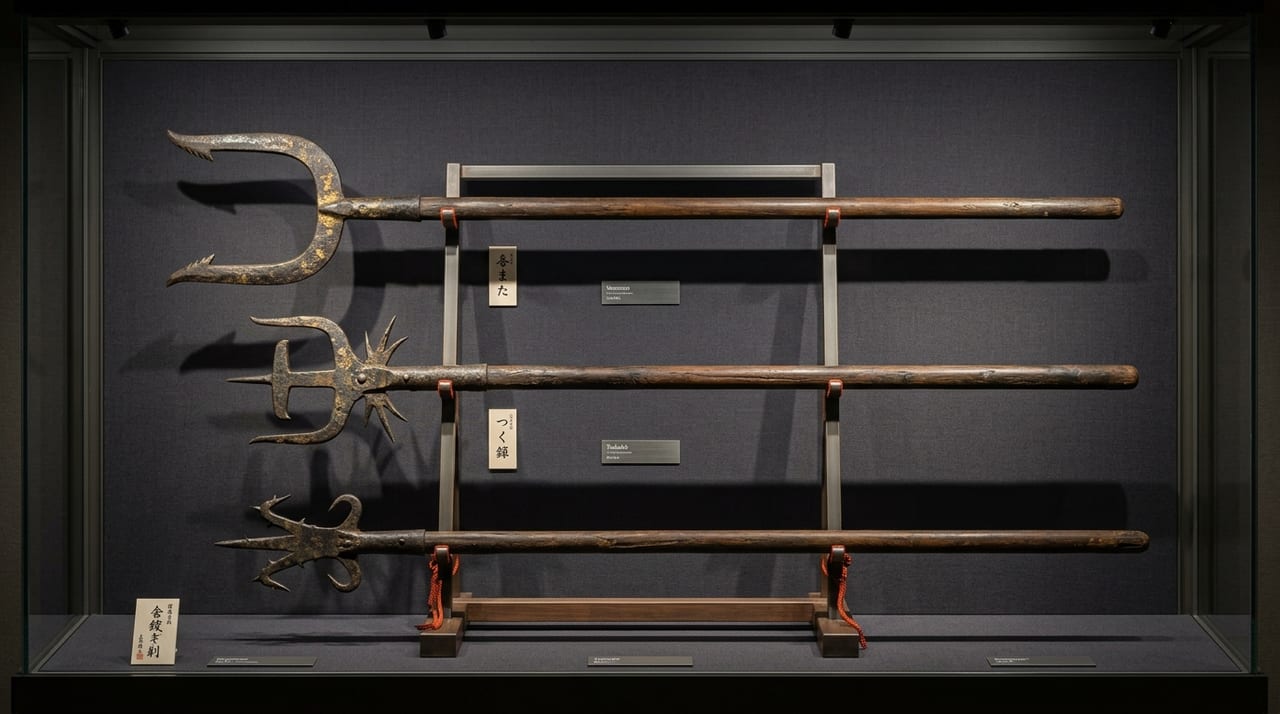
"Kogusoku" is the collective term for the small-scale protective gear and weapons that warriors of the Sengoku period carried alongside their main armor set ("ōgusoku") when wearing full armor. Kogusoku includes the following items.
- Small protective gear such as kote, suneate, and haidate
- Swords such as koshigatana, uchigatana, and wakizashi
Understanding the concept of kogusoku is essential for grasping how Sengoku warriors actually carried and used their swords. In films and period dramas, warriors in armor are often shown drawing the uchigatana with fluid elegance, but this frequently differs greatly from actual battlefield conditions. Because wearing heavy armor created physical constraints on drawing and using swords, distinctive methods of carrying swords suited to each battlefield purpose developed on their own.
The range of protective gear and weapons included in kogusoku varies by era, school, and the historical sources consulted, and is not uniformly defined. What is common, however, is the understanding that it constitutes equipment supplementing the movable parts and gaps of the body that the main armor — ōyoroi or tōsei gusoku — alone cannot fully address. When swords too are understood as incorporated into this practical extension of "filling the gaps," it becomes clear why armor-clad warriors relied on the koshigatana rather than the uchigatana.
Koshigatana — The Primary Sword When Wearing Armor
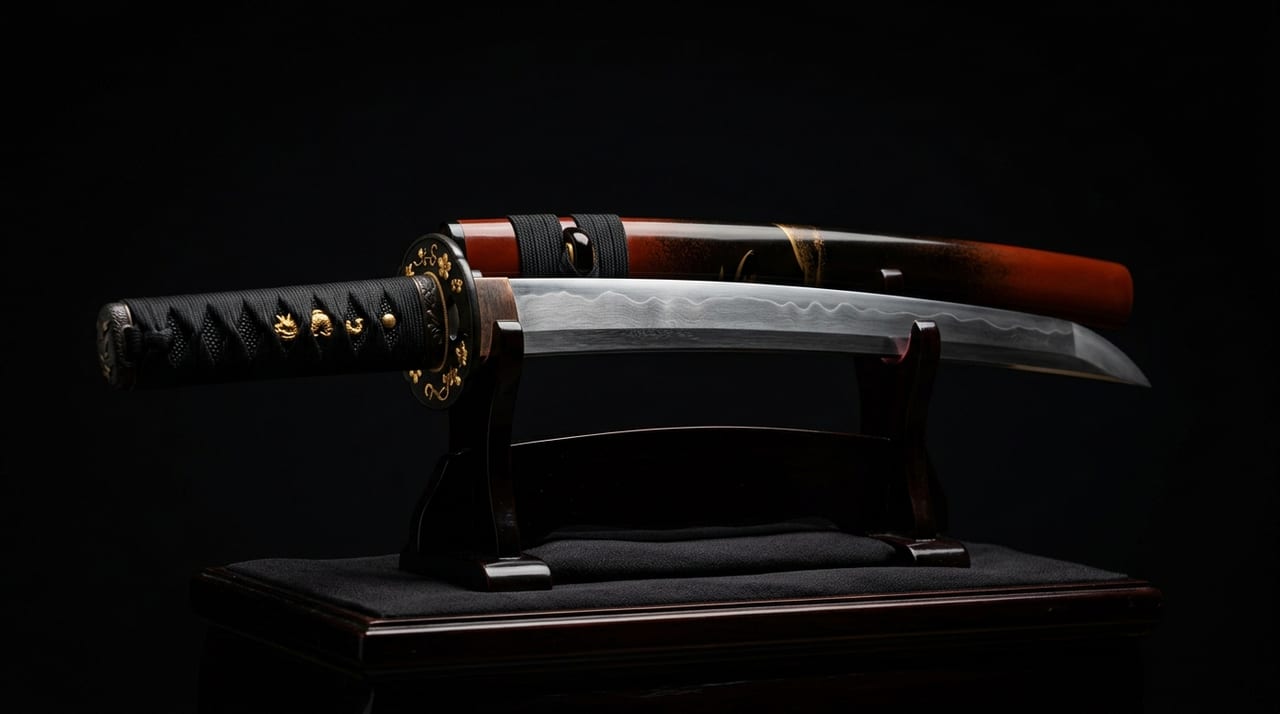
It is believed that the sword warriors in armor primarily used on the battlefield was not the uchigatana but the "koshigatana." The koshigatana refers to a relatively short sword of roughly 30–60 cm in blade length, close in modern classification to the tantō or wakizashi, and was carried either hanging below the hip section (kusazuri) of the armor or tucked at the side.
When wearing heavy ōyoroi or tōsei gusoku, drawing a long uchigatana of 60 cm or more in blade length was difficult because the various parts of the armor restricted the movement of the arms and body. For defeating an enemy in close combat (kumiuchi), the short and easily handled koshigatana was advantageous, and for thrusting into the gaps in an opponent's armor — the underarm, throat, and head — a tantō-style koshigatana specialized in thrusting technique was the rational choice.
For the koshigatana's koshirae, a style called "aikuchi koshirae," which has no tsuba, was often used. Because it had no tsuba, the saya and tsuka appeared unified, it was not bulky when carried, and it is thought to have had the practical advantage of being less likely to catch on the opponent's or one's own armor during kumiuchi.
The "yoroidōshi," a type of koshigatana, is a short, slender sword specialized for stabbing enemies through the gaps in armor. It had a double- or single-edged blade, was constructed for thrusting rather than cutting, and was designed with a tsuka easy to grip even while wearing kote. The yoroidōshi is said to have sometimes been carried at the hip opposite to the side where the regular sword was worn, as "metezashi," and it is thought that having a backup blade on the side opposite the dominant hand when delivering the killing blow to a pinned opponent allowed one to respond without disrupting one's stance.
The Role of the Uchigatana on the Battlefield — Close Combat and Open Terrain
The uchigatana is a sword carried thrust into the belt while sheathed in its saya, with a blade length generally of around 60–75 cm. It is shorter than the tachi and longer than the wakizashi.
The very manner of wearing the tachi and uchigatana at the hip differed from the start.
| Item | Tachi | Uchigatana |
|---|---|---|
| Wearing method | Haiyō: suspended from the hip with cords | Taitō: thrust directly into the belt |
| Blade orientation | Edge downward | Edge upward |
| Primary use | On horseback or in ceremonies | Close combat on foot or everyday carrying |
By carrying the uchigatana edge upward, it became easier to transition into an upward-cutting motion simultaneously with clearing the saya, making it suited to situations requiring rapid drawing. These differences between the tachi and uchigatana are also linked to the histories of each developing as swords suited to the respective situations described above.
The uchigatana was used during the Sengoku period as well, but rather than being actively used by heavily armored warriors, it was more often used by ashigaru or lightly armed warriors on open terrain. Without armor, the uchigatana's mobile drawing action and successive cuts function effectively.
From the late Muromachi period through the Sengoku period, collective yari-ashigaru tactics developed, and combat centered on dense yaribusuma rather than individual sword technique. With these changes in battlefield conditions, the role the uchigatana played on the battlefield was often limited to a supplementary one, secondary to bows and arrows, spears, and firearms.
Wakizashi — The Development of the Two-Sword Set and Its Significance Beyond the Battlefield
The wakizashi is a shorter sword (generally 30–60 cm in blade length) carried in combination with the uchigatana. In the Edo period, carrying the wakizashi together with the uchigatana in "nitōzashi" was institutionalized as formal attire for warriors. During the Sengoku period, however, the concept of the wakizashi had not yet been established, and a variety of shorter swords were used selectively according to the situation.
The practice of carrying the uchigatana and wakizashi together as a pair came to be called "daishō" and became the most fundamental mark of status for warriors of the Edo period. The fact that non-warrior classes faced certain restrictions on carrying swords, and that the very act of carrying a sword was tied to status and privilege, also demonstrates that carrying the wakizashi carried meaning beyond mere practicality.
Behind the consolidation and institutionalization of warrior-class sword-carrying into the two swords — the daitō (uchigatana) and wakizashi — in the Edo period was a political intent to control weapons. It reflects the shogunate's intent to maintain order by making warrior status visible through the form of sword-carrying and socially establishing a certain standard of armament.
From the Battlefield to the Streets of Edo — A Historical Transformation in the Form of Carrying
The transition from the Sengoku period to the Edo period brought a major change in the forms of sword-carrying for warriors. The shift from battlefield sword-carrying centered on the koshigatana — suited to heavy armor — to nitōzashi as formal attire in a peaceful urban society was not merely a change in sword form but an event symbolizing a fundamental transformation in the very nature of the warrior.
In the course of this transition, values surrounding koshirae and care also changed, shifting from swords as tools subjected to harsh use in actual combat to swords for which craftsmanship capable of withstanding appreciation and formal display was demanded. The sword's social meaning changed from "a tool for killing" to "the soul of the warrior and proof of status," and the form of carrying it came to reflect that change. When considering the nihontō today, bearing in mind this duality — the coexistence of practical utility as a weapon and symbolic significance as a social sign — leads to a deeper understanding of nihontō culture.
What Can Be Read from Extant Koshigatana, Uchigatana, and Wakizashi
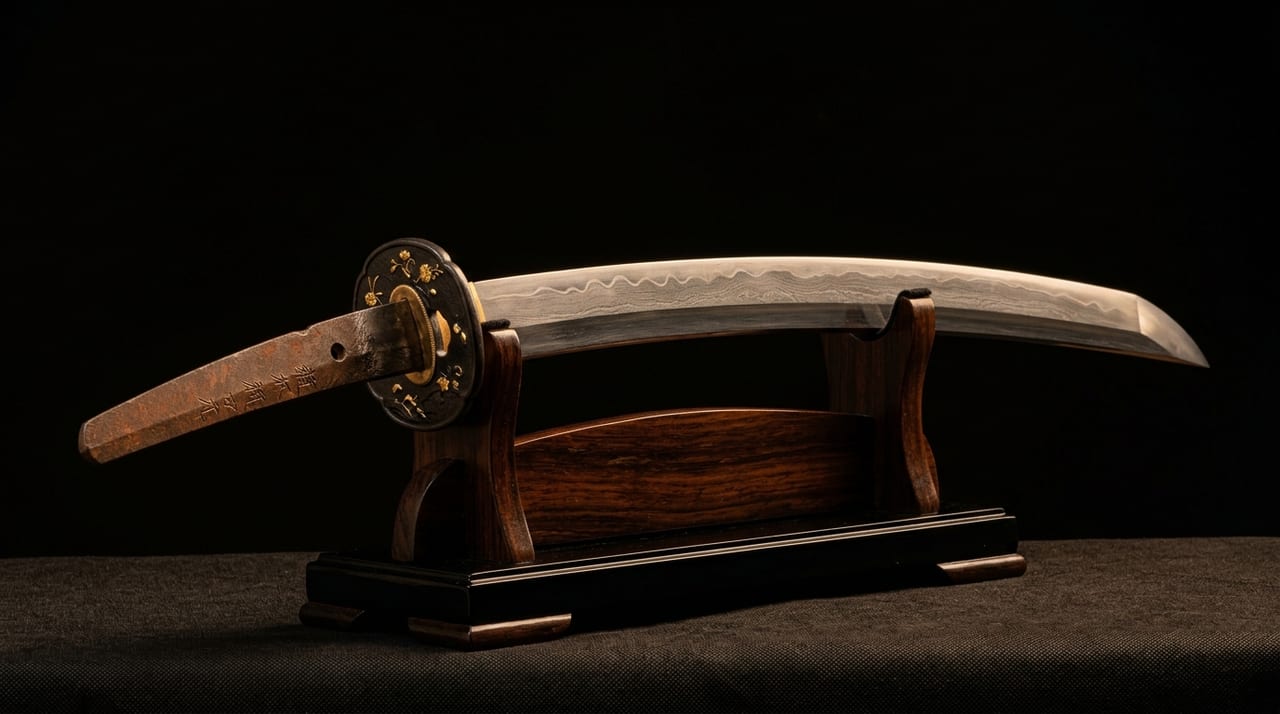
Today, many koshigatana, uchigatana, and wakizashi bearing kanteisho from NBTHK have had their koshirae and handling refined from the Edo period onward and have been preserved as art objects and heirlooms. The original form at the time of manufacture does not necessarily remain intact, and there are many examples in which the habaki, saya, and tsuka assembly have been refitted in later years.
In addition to the quality of the blade itself, the jigane, and the hamon, grasping the history of a single sword in light of such transitions in its koshirae becomes a perspective for appreciating swords from the era when they were used as kogusoku. The classification of koshigatana, uchigatana, and wakizashi reflects not merely differences in length but what role each carried within the system of armor, and knowing that background allows a deeper understanding of both the practical and formal aspects that a single sword possesses.