The World of Kumihimo and Sageo Craftsmen — The Skills, Materials, Dyeing Processes, and Contemporary Demand of Artisans Who Make Decorative Cords for Swords
 * Image is for illustrative purposes only.
Table of Contents
What is a Kumihimoshi — The Thread Artisan Who Supports the Sword Mounting
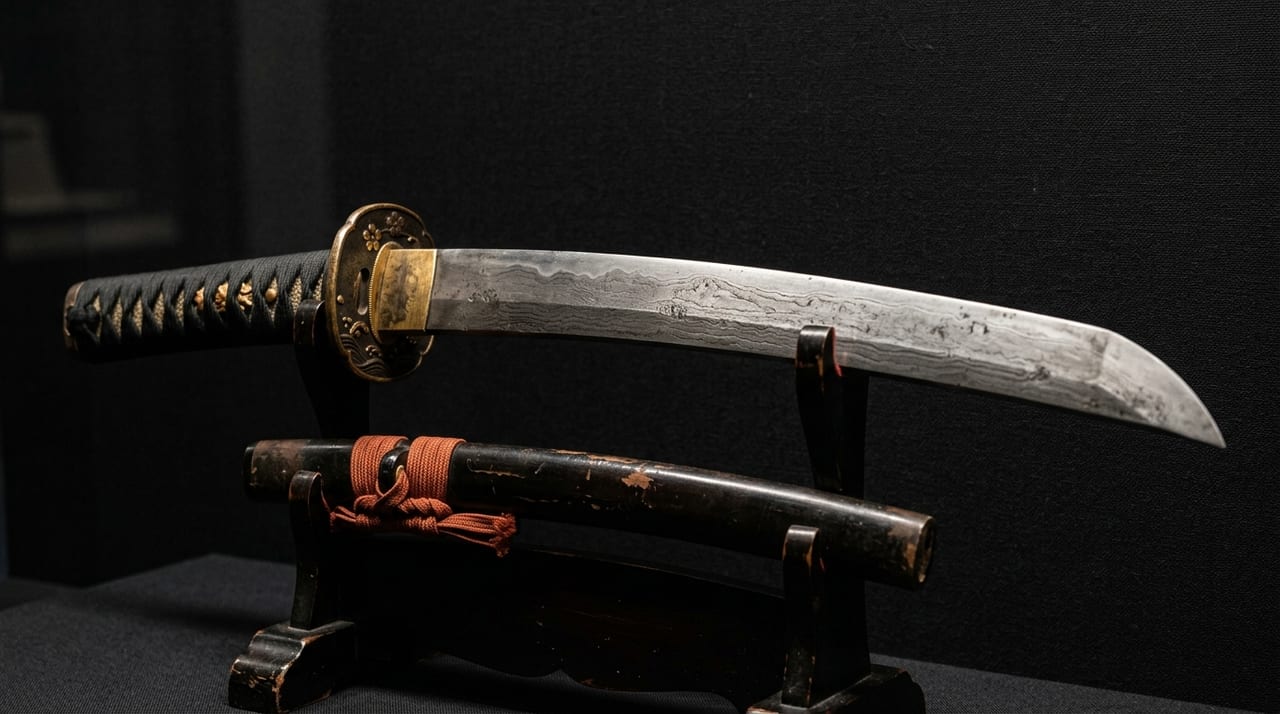
The beauty of the Japanese sword does not end with the blade alone — its jigane and hamon. The sageo hanging from the saya, the tsuka-ito binding the tsuka, the obi-himo threaded through the belt — these kumihimo support the aesthetic harmony of the entire koshirae. The specialized artisans who produce these are the "kumihimoshi," occupying a unique position within the craftsman ecosystem of tōsōgu production.
Kumihimoshi not only produce kumihimo dedicated to swords but frequently handle a wide range of kumihimo products, including obi cords, bag cords, costume cords, and decorative cords for shrines and temples. However, kumihimo for swords requires specifications suited to specific uses — the iai draw stroke, formal dress, and practical sword-wearing — making it a specialized field in which coordination with tōsōgu craftsmen (tsukamaki craftsmen, saya craftsmen, and the like) is indispensable. How the color and pattern of the kumihimo harmonizes with the color and design of the saya and tsuka affects the overall impression of the koshirae, so communication between the kumihimoshi and other tōsōgu craftsmen greatly influences the quality of the finished work.
The Craft of Kumihimo — The Art of the Braiding Stand and Interlacing
At the heart of kumihimo production is a specialized tool called the "kumidai" (braiding stand). There are multiple types of kumidai, each used to produce cords with different braiding structures.
- Marudai
- Kakudai
- Takadai
- Ayatakedai
The simplest kumihimo is the "8-strand braid," in which eight silk threads are interlaced, and it is known as the introductory technique. High-quality kumihimo for sageo and tsuka-maki, on the other hand, employs complex braiding structures using 16, 32, or 64 or more threads. The more threads used, the finer and more uniform the braid, and the better the texture, luster, and strength.
During the braiding process, the weight of the kumidai maintains tension on the threads while the craftsman's hands cross the threads at a steady rhythm. Within this seemingly repetitive motion, three variables are intricately intertwined — the number of threads, the interlacing pattern, and the control of tension — and mastery requires several years of experience or more. If tension is uneven, looseness or twisting occurs in the braid, and the cross-section of the finished cord becomes irregular; in the work of a skilled kumihimoshi, the density of the braid is uniform and the surface luster is consistent. This uniformity is the benchmark for assessing the quality of a finished piece.
Material Selection — From Pure Silk to Modern Materials
The primary material handled by kumihimoshi is "shōken" — that is, pure silk thread. Silk thread has long been considered the premier material for kumihimo, valued for its luster, suppleness, and high receptivity to dyeing. The texture of the finished braid differs in particular between "kiito" (raw silk thread) and "yoriito" (twisted thread), and they are used selectively according to the intended application.
Both natural dyes (indigo, beni, kihada, and the like) and chemical dyes are used in dyeing. Dyeing with natural dyes is time-consuming and labor-intensive, but the depth of color and the beauty of its change over time hold a value that chemical dyes cannot replace. An ai-zome sageo undergoes a distinctive fading and change in texture over years of use, and this is highly prized by enthusiasts as "the beauty of a well-used tool."
In modern times, kumihimo made from synthetic fibers (polyester and nylon) have also become widely used. These are superior in terms of durability, uniformity, and low cost, and are used for iai practice and for popular-grade tōsōgu. However, they are considered inferior to shōken in terms of luster, texture, and color development after dyeing, and shōken remains in the top position from the perspective of sword aesthetics. When distinguishing between shōken and synthetic fibers, clues lie in the change in sheen according to how light falls on them and in the difference in suppleness and weight when held in the hand. Synthetic fibers offer uniform color and superior durability, but they do not develop the kind of age-worn character that shōken does.
Special Specifications for Kumihimo Used in Sword Mountings
Kumihimo used in sword mountings requires special specifications that differ from ordinary kumihimo.
Sageo must have a thickness and strength that can pass through the saya's "sageo-toshi," as well as an appropriate length that does not impede the draw stroke — generally around 5 shaku (approximately 150 cm) to 160–170 cm. Lengths, thicknesses, and colors are specified by the school, and when a master gives specifications to a disciple they are observed strictly.
The tsuka-ito (tsuka-maki cord) is a flat-braided kumihimo used to wrap the tsuka over the same-gawa, and it is required to have friction for grip and strength sufficient to withstand long-term use. The width, thickness, and braid density of the tsuka-ito determine the finish and practicality of the completed wrapping.
Choosing and Caring for Sageo and Tsuka-ito
When choosing kumihimo for sword mounting, the first thing buyers are likely to be uncertain about is the combination of color and material. The color of the sageo is generally chosen based on harmony with the lacquer color of the saya and the color of the tsuka-ito. Subdued hues such as black, dark blue, and brown match easily regardless of the saya color and are considered the standard choice for a first order. On the other hand, some schools and dojos have specified colors, so when using them for iai and similar practices it is advisable to confirm the conventions of one's own affiliation before placing an order.
Kumihimo are consumables and will progressively show abrasion, fraying, and fading with use. To keep them in a beautiful condition for a long time, the basic practice is to remove sweat and moisture after use before storing them and to avoid places exposed to direct sunlight. Kumihimo dyed with natural dyes in particular are prone to fading from ultraviolet light, and care during storage is what determines how long the finish lasts. When wear becomes noticeable, it is also possible to replace only the sageo or tsuka-ito while preserving the saya and tsuka themselves; consulting a tōsōgu shop or kumihimoshi will enable a response tailored to the individual condition.
When placing an order, there are two options: choosing from ready-made products or commissioning a kumihimoshi by specifying the color, length, and braiding method. While a bespoke order can reflect the specifications of one's school and personal preferences, it should be kept in mind that a certain amount of time is required before the finished product is ready.
Contemporary Demand and the Successor Problem
Demand for sword-mounting kumihimo fluctuates in tandem with trends in the overall Japanese sword market. While the growth in the number of iai practitioners supports domestic demand, demand from overseas collectors and foreign iai practitioners has also been increasing year by year, and kumihimoshi who accept orders in English and Chinese have begun to appear.
However, the successor problem is serious. Manual kumihimo production using a kumidai has been partially supplanted by machine production, but high-quality kumihimo for sword mounting is still considered possible only through skilled handwork. The training period requires a minimum of three to five years, and it takes additional time beyond that to secure a stable income. Currently, no more than several dozen craftsmen throughout the country are active as kumihimoshi specializing in swords. The transmission of the craft requires the presence of a master who can provide consistent instruction covering everything from thread selection to dyeing to adjusting braiding tension, and it is said that finding a place of apprenticeship is itself a barrier to securing successors.
The skills of kumihimoshi are an important craftsman art that determines the aesthetic completion of the Japanese sword. In a culture of swords in which attention tends to be drawn to the blade and saya, we must not forget that understanding and support for these craftsmen — who serve as the "unsung heroes" of the craft — are indispensable to the transmission of Japanese sword culture as a whole.