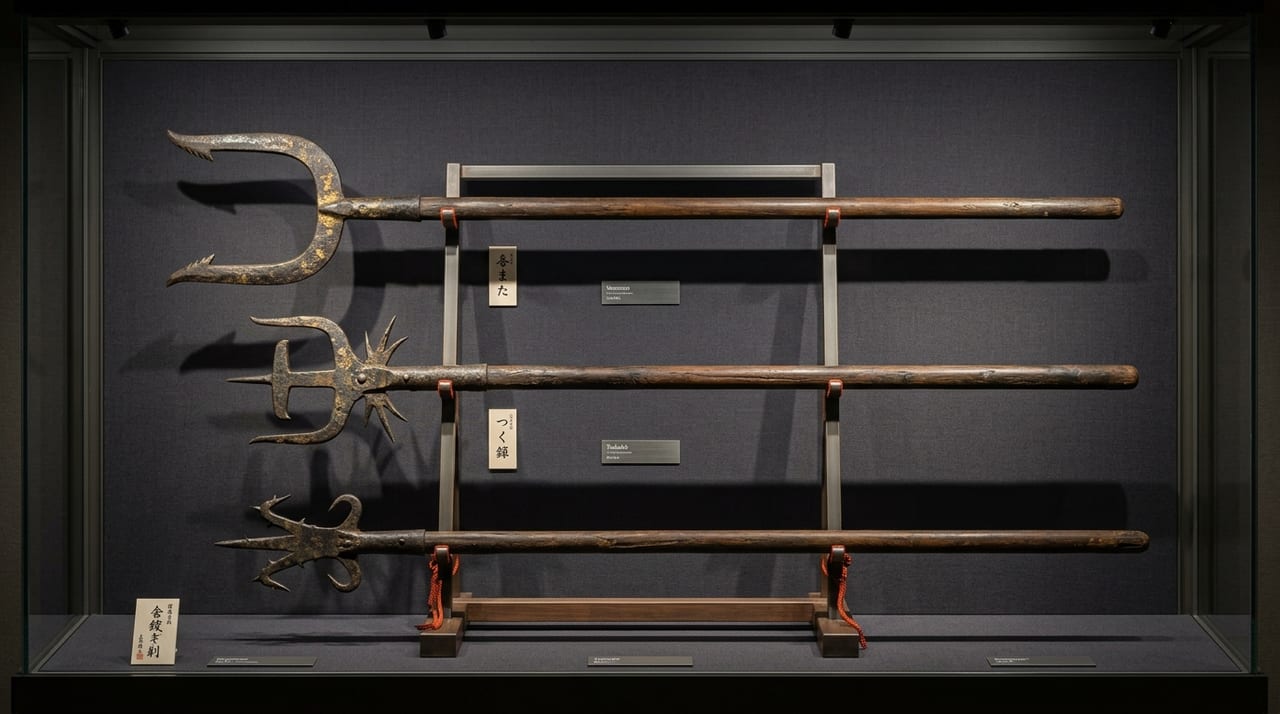
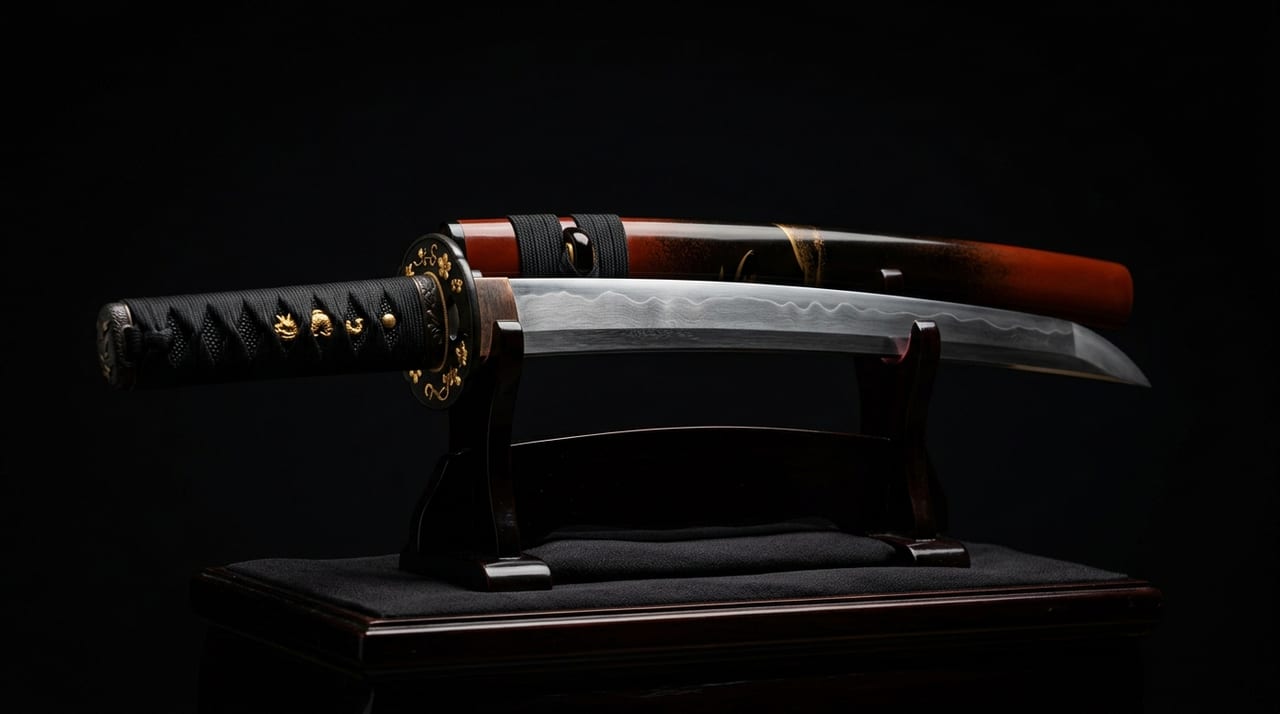
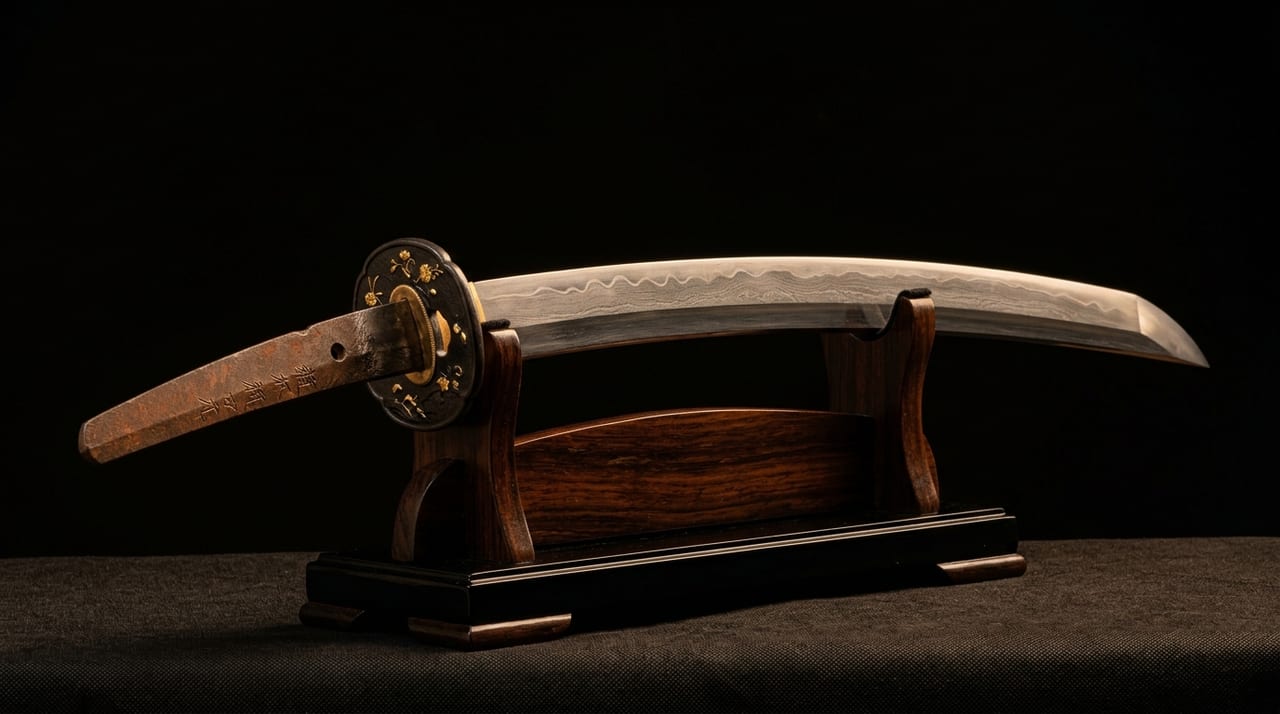
Types of Tantō: A Complete Guide to the Differences Between Aiguchi, Yoroidōshi, Koshigatana, Kaiken, and Kōgai
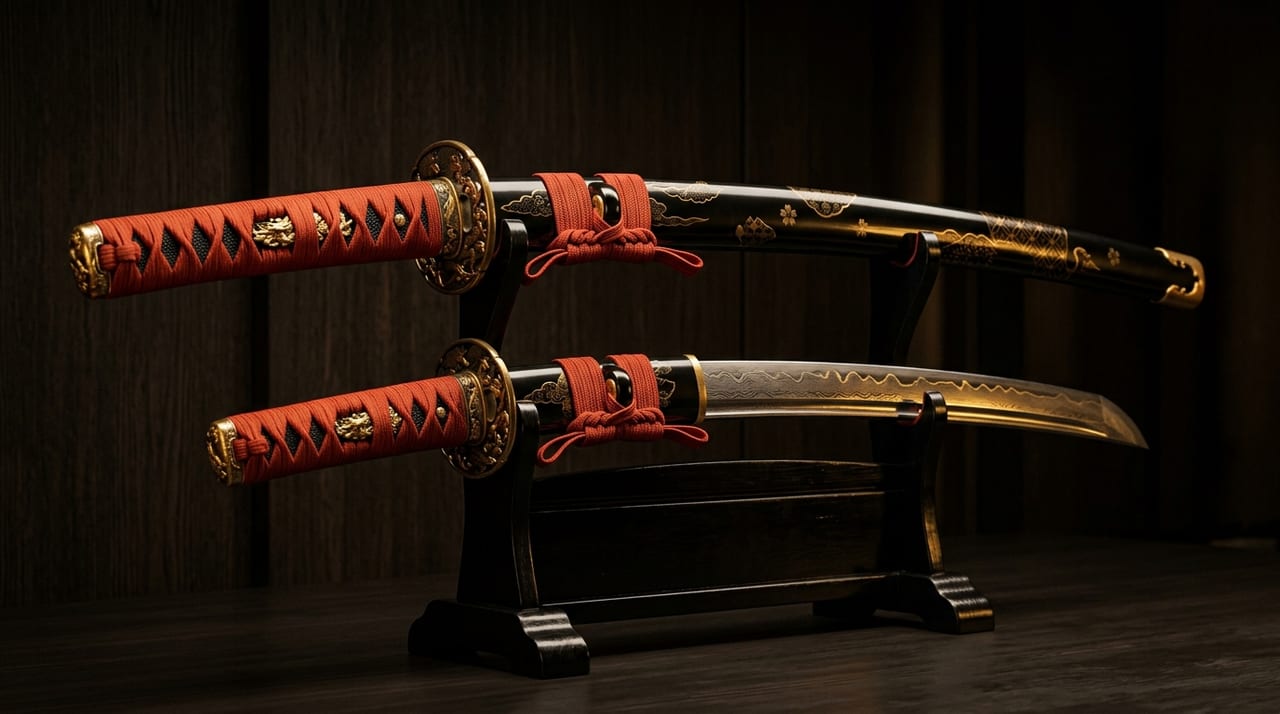 * Image is for illustrative purposes only.
Table of Contents
What Is a Tantō? — The Nagasa Standard and Definition
In the classification of nihontō, "tantō" is the general term for a blade with a nagasa of less than 1 shaku (approximately 30.3 cm). In practice, however, the word "tantō" is an umbrella term for multiple forms and types, each with its own distinct name and characteristics.
This article examines each form under the "tantō" umbrella in detail from the perspectives of structure, use, and historical background.
Aiguchi — The Quintessential Guardless Self-Defense Blade
Definition and Structure Aiguchi is the representative form of tantō without a tsuba. The name "aiguchi" derives from the way the junction between the blade and the tsuka meets without a tsuba, as if the mouths were "pressed together." With no tsuba at the joint between blade and tsuka, it has a streamlined appearance in which the koiguchi and handgrip fit snugly together.
Period and Use Aiguchi became widespread particularly in the Edo period as a self-defense implement for women of samurai households and upper-class townspeople. Because it lacks a tsuba it has limited striking power, but it fits easily in the breast of a garment and allows a quick draw. It was prized as an indispensable self-defense item in the oku (women's quarters) of samurai residences.
Decorative Quality In addition to their function as self-defense implements, many aiguchi feature a high degree of ornamentation. Aiguchi decorated with chinkin (carved lacquer inlaid with gold), makie (gold lacquer sprinkled design), and raden (mother-of-pearl inlay) were treasured as bridal furnishings and gifts. Fine examples with elaborate decoration are especially highly regarded in collections.
Yoroidōshi — A Combat Weapon Designed to Exploit Gaps in Armor
Definition and Structure Yoroidōshi is a tantō designed to be thrust into the gaps of armor. Its cross-section is triangular or close to a diamond-shaped rhombus, with a narrow blade width and high rigidity. Many examples are moroha (double-edged). The structural details are explained in The Structure and Use of Kacchūdōshi.
Technical Background Ordinary swords are built primarily for slashing with a thin, sharp edge, but the yoroidōshi is designed with thrusting as its foremost priority. It is a sword specialized for the highly practical purpose of finishing an enemy by thrusting into the gaps between the iron plates of armor — the armpit, the gap between the neck and helmet, and the eye openings.
Historical Background Yoroidōshi were most in demand during the Nanbokuchō through Sengoku period (14th–16th centuries), when armor and armaments were at their most developed. In this era, when warriors took to the battlefield in full armor such as dōmaru, ōyoroi, and tōsei-gusoku, demand arose for weapons capable of penetrating that armor. After the Edo period, as the wearing of armor became ceremonial, practical demand declined, but the value as collectibles remains high today.
Assessment in the Modern Market The sharp decline from the Edo period onward is directly attributable not only to the formalization of armor-wearing but also to the fact that the "thrusting-only" function lost its commercial appeal in a time of peace. Because so few survive, rarity tends to be highly valued in today's sword market, and intact examples with a clearly defined diamond-shaped cross-section command especially high prices.
Koshigatana — The Everyday Carried Sword of the Muromachi and Sengoku Periods
Definition and Use Koshigatana is a sword with a nagasa in the intermediate range between tantō and wakizashi (roughly 1 shaku to 1 shaku 5 sun), worn at the waist for everyday use. In current classification it falls in the boundary zone between "tantō" and "wakizashi."
Historical Position In the Muromachi period the custom of wearing "daishō" — that is, tachi or uchigatana together with a wakizashi — became widespread, but in the transitional period before that culture was established, the koshigatana functioned as the everyday sidearm of the warrior. The name "koshigatana" itself reflects a descriptive functional naming of "a sword thrust at the waist," and it can be seen as a product of an era in which function took precedence over form.
Kōgai — A Unique Object Serving as Both Military Accessory and Practical Tool
Definition and Structure Kōgai is a slender metal rod in the form of a hair-dressing implement, stored as a matched pair with the kozuka in a pocket on the side of the saya. Its function as a blade is secondary; it functioned primarily as a multi-purpose carry item used to arrange the hair or as a practical tool.
Relationship to Swords Kōgai is not an independent "sword" but an accessory stored in the saya of a wakizashi or uchigatana. Because it is classified as sword fittings, however, it is often traded as a "complete set with kōgai" in the context of sword collecting. Whether a kōgai is present is an important evaluation point when assessing the completeness of a koshirae.
Period and Decoration Kōgai underwent decorative development during the Azuchi-Momoyama through Edo periods. Kōgai bearing elaborate engraved metalwork by kanakōshi (metal craftsmen) are still highly valued today as important works of art that form part of a sword's koshirae.
Kaiken — The Self-Defense Blade Carried by Women
Definition and Characteristics Kaiken is a self-defense tantō that women concealed in the breast of their garments, also called "futokoro-gatana." Most are of the aiguchi (without tsuba) form and have an elegant exterior finish — either a shirasaya or one decorated with makie, raden, and similar techniques. Its origins and modern status are also treated in detail in What Is a Kaiken.
Wedding Ceremonies and Kaiken In samurai society the kaiken was one of the items in a bride's trousseau (bridal furnishings). Kaiken used in wedding ceremonies such as the sangon no gi ceremony carried the symbolic meaning of expressing the bride's chastity and resolve. Even today, in traditional Japanese Shinto weddings, the custom of the bride in white shiromuku wearing a kaiken continues, and this cultural inheritance remains alive.
As Preparation for Jigai In addition to its aspect as a bridal furnishing, the kaiken also had the aspect of a preparation for "jigai" — the act by which a samurai woman would take her own life rather than fall into enemy hands. Kaiken with a narrow, short tsuka survive to this day, and the design philosophy of a practical self-defense implement is embedded beneath the decoration.
Size The nagasa of a typical kaiken is approximately 5 to 8 sun (15–24 cm), making it relatively small even among tantō. It is designed to fit compactly from tsuka to saya as a single unit, and its defining characteristic is a compactness that does not impede carrying.
Gomabashi and Nakiri — Ceremonial and Utilitarian Tantō
These are low in status as "swords," but they represent the breadth of Japan's sword culture.
Gomabashi: A ceremonial tantō-shaped implement used in Buddhist goma rituals. It has almost no edge and carries religious meaning rather than practical cutting function. It is strongly characterized as a Buddhist implement and is positioned as a religious symbol in the form of a sword.
Nakiri: A tantō-shaped cutting tool derived for culinary use. It is not a "nihontō" in the strict sense, but it is an important testament to the fact that Japan's kaji techniques were also applied to domestic blades.
Comparison Table of Each Type
| Type | Tsuba | Primary Use | Primary Users | Peak Period |
|---|---|---|---|---|
| Aiguchi | None | Self-defense, gifts | Samurai women, upper-class townspeople | Edo period |
| Yoroidōshi | Present/absent | Combat (thrusting) | Warriors (in armor) | Nanbokuchō–Sengoku |
| Koshigatana | Present | Everyday carry | Warriors in general | Muromachi–Sengoku |
| Kōgai | — | Hair-dressing, carry | Warriors, upper-class townspeople | Azuchi-Momoyama–Edo |
| Kaiken | None | Self-defense, weddings | Samurai women | Edo–present |
The Reading of Koshigatana and Its Difference from Wakizashi
Koshigatana is read "koshigatana," not "yōtō." It is a term that appears frequently in medieval texts and referred broadly to any practical short blade worn at the waist.
The difference between koshigatana and wakizashi is, in essence, a "difference in terminology across eras." Everyday sidearms up through the Muromachi period were called koshigatana, and aiguchi koshirae without a tsuba was the mainstream form. When the system of wearing two swords (daishō) was established in the Edo period, swords of 1 shaku or more but less than 2 shaku paired with the long sword came to be called "wakizashi," and koshirae with a tsuba became the norm. In short, wakizashi can be understood as an early-modern term that became institutionalized, while koshigatana is its medieval antecedent.
What Is the Name for a Sword Intermediate in Length Between a Sword and a Tantō? — Sunnobi Tantō and Ko-wakizashi
If you are looking for "a sword of intermediate length between a sword and a tantō," the relevant terms are sunnobi tantō, with a nagasa of around 1 shaku (approximately 30.3 cm), or ko-wakizashi, which slightly exceeds 1 shaku. Under the legal classification, less than 1 shaku is a tantō and 1 shaku or more but less than 2 shaku is a wakizashi, but in form they exist on a continuum, and during the Nanbokuchō period many large-scale tantō of around 1 shaku were made. Further details on sunnobi tantō are explained in the Sunnobi Tantō Types Guide.
The Difference Between Aiguchi and Dosu
"Dosu" is a colloquial term derived from the argot of gamblers and outlaws, and it refers in most cases to a crudely made tantō with aiguchi koshirae. In form it is the same "tantō without a tsuba" as an aiguchi, but the craftsmanship and value of a fine aiguchi koshirae tantō as an art sword and a mass-produced mumei utilitarian tantō are entirely different. Under current law, possession of a tantō registered as a work of art is lawful, but carrying an unregistered blade is subject to regulation under the Firearms and Swords Control Act (Jūtōhō) and the Minor Offenses Act.
The Difference Between Kaiken and Futokoro-gatana
Kaiken and futokoro-gatana (also read kaitō) both refer to a self-defense tantō concealed in the breast of a garment, and in practice they are nearly the same thing. "Kaiken" is used in ceremonial contexts such as wedding attire, while "futokoro-gatana" is also used metaphorically to mean a trusted aide, as in "the lord's futokoro-gatana." The tradition of providing samurai women with a shirasaya or brocade-wrapped kaiken as part of their bridal trousseau lives on in modern Japanese wedding dress ceremonies.
Conclusion — The Layers of Japanese Culture Reflected in the Diversity of Tantō
Each form of tantō is a product of Japan's blade culture, optimized for its respective era, social class, and use. Rather than simply defining them as "swords with a nagasa of less than 1 shaku," understanding the historical context and function of each form makes the depth of nihontō all the more vivid.
For collectors and enthusiasts, grasping the characteristics of each form is the first step toward broadening the enjoyment of appreciation. Aiguchi and kaiken in particular have high artistic value, and many outstanding examples with elaborate koshirae survive.