The Nine Blade Cross-Sections of Tsukuri-komi—Complete Guide to Shinogi-zukuri, Hira-zukuri, Kiriha-zukuri, and Others by Era and Purpose
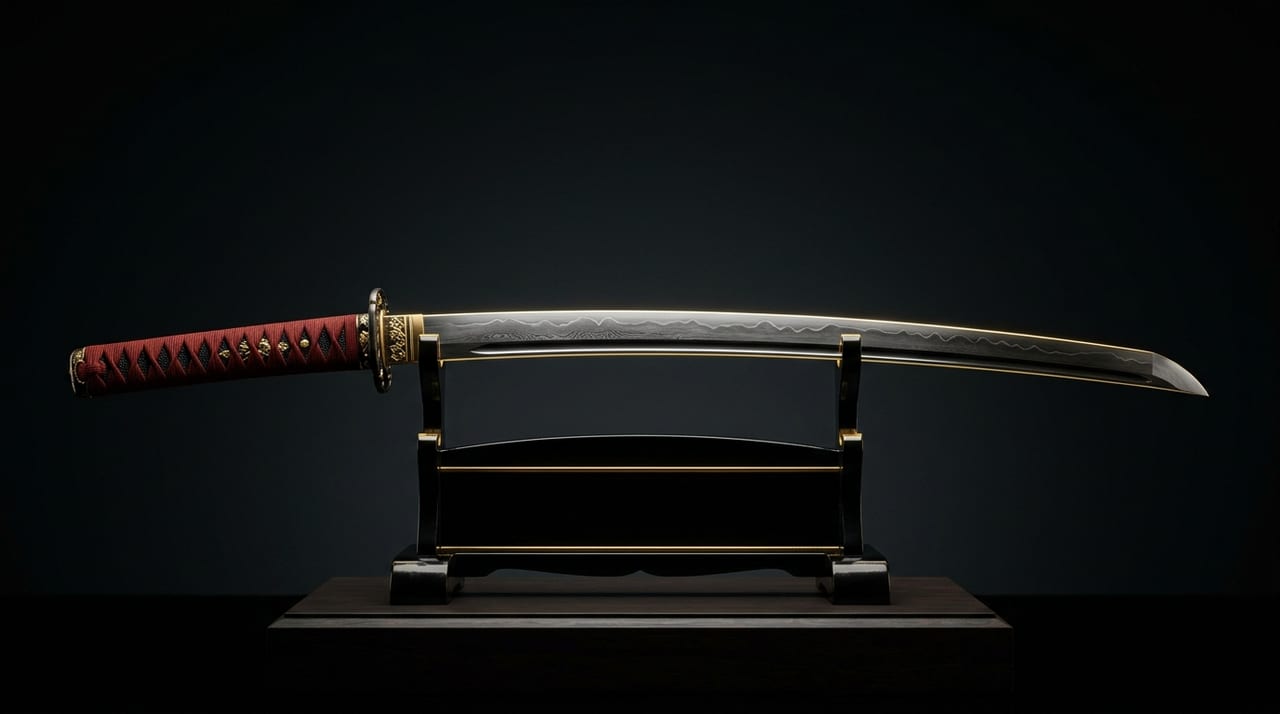 * Image is for illustrative purposes only.
Table of Contents
What is tsukurikomi: Classification of blade shape
"Tsukurikomi" refers to the classification of blade shape that combines the blade's outline when viewed from the side and its cross-section when cut horizontally. Japanese sword tsukurikomi is broadly divided into shinogi-zukuri and hira-zukuri, with other styles organized as forms derived from these two (Ginza Seiyudo "Types of Tsukurikomi and Various Variations").
Note that the term "tsukurikomi" is also used to refer to the combination of steels inside the blade, such as soft core steel wrapped in hard outer steel (Touken World "How Japanese Swords Are Made"). This article covers tsukurikomi as the shape visible from the outside; internal structure types are covered in Types of Tsukurikomi: Shihōzume, Honsammai, and Kōbuse, and material principles are covered in Composite Structure of Outer and Core Steel.
Terminology for reading tsukurikomi
- shinogi-suji (shinogi ridge): the ridge line dividing the blade's side surface into the edge side and back side
- shinogi-ji (shinogi field): the surface from the shinogi ridge to the back
- hira-ji (flat field): the surface from the shinogi ridge to the blade's edge; the hamon appears on this surface
- yokote (crossbar): the ridge line that stands at the boundary between the point and the blade
- mune (back): the spine opposite the edge
The differences in tsukurikomi primarily appear in the presence or absence of shinogi ridge and yokote, the way the shinogi field is ground down, and the differences between front and back.
Nine major types of tsukurikomi
The following definitions and trends by era and sword type are based on Touken World "What is Japanese Sword Construction and Form" and Ginza Seiyudo's commentary.
1. Shinogi-zukuri
A tsukurikomi featuring shinogi ridge and yokote, which most tachi, uchigatana, and wakizashi adopt. By raising the shinogi, the blade becomes stronger and less prone to breaking, and it is considered the most standard tsukurikomi of Japanese swords.
2. Hira-zukuri
A flat tsukurikomi without shinogi or yokote. Most tanto have hira-zukuri, with little or no curve (Nagoya Sword Museum "Tanto"). A representative example is the National Treasure "Tanto Inscribed Yoshimitsu (Famous Sword Atsu Tōshirō)" held by the Tokyo National Museum (Kamakura period, 13th century, length 27.6 cm, no curve). It was called "Atsu Tōshirō" because the blade was extremely thick (e-National Treasure). Details of hira-zukuri are also covered in Complete Guide to Hira-zukuri.
3. Kirihazukuri
A tsukurikomi with the shinogi ridge shifted significantly toward the edge side. It is common in straight swords of the Nara period and is believed to be a form that preceded shinogi-zukuri from the Heian period onward.
4. Katakirihazukuri
A tsukurikomi with hira-zukuri on one side and shinogi on the other side, with different shapes on front and back. It appears in works from the Soshu tradition of the Nanboku-cho period and from the early Edo period and late Edo period, with known examples by Osafune Kagemitsu and Horikawa Kunihiro.
5. Morohazukuri
A tsukurikomi with edges on both sides of the blade, with the tip curved in one direction. It is common in the Muromachi period, with examples found in late Bizen works.
6. Shobu-zukuri
A tsukurikomi that removes the yokote from shinogi-zukuri, with the shinogi ridge running to the point. It gets its name because its shape resembles an iris leaf. It is common from the middle to late Muromachi period and is often seen in nagamaki that have been resharpened and reworked into swords (nagamaki-naoshi).
7. Kanmuriotoshi-zukuri
A tsukurikomi with the meat of the upper half near the back removed. It is common in tanto and has many examples in the Yamato tradition of the ancient sword period.
8. Unokubi-zukuri
A tsukurikomi that retains the point area and the back of the lower half of the blade while removing the shinogi field between them. When viewed from the back side, it looks like a cormorant's neck. It is common in tanto and wakizashi from the Kamakura to Nanboku-cho periods, with known examples in ancient swords by Shintōgo Kunimitsu and Awataguchi Yoshimitsu.
9. Osoraku-zukuri
A tsukurikomi where the yokote extends down to about the middle of the blade and the point becomes large and sharp. A short sword of this style by Sukemune, a swordsmith of Suruga in the Muromachi period, had "osoraku" inscribed on it, which is said to be the origin of the name.
Tsukurikomi beyond the nine types
- Kogarasu-maru-zukuri: A form resembling an elongated unokubi-zukuri with an edge on the back near the point. Named after the tachi "Kogarasu-maru"
- Nagamaki-zukuri and naginata-zukuri: Forms seen in the blades of long-handled weapons. Nagamaki appeared in the Muromachi period and became more common in the Sengoku period
- Ken (sword): Regardless of length, objects with edges on both sides with symmetrical front/back and left/right
The shape of the back is a separate point of interest from tsukurikomi
The cross-section of the back is also divided into roof-shaped iori-mune, trapezoidal three-faced mitsu-mune, semi-circular maru-mune, and flat kaku-mune. Kaku-mune is the oldest form and is common in ancient swords (Touken World "What is the Back of a Japanese Sword"). The types of back and era trends are covered in detail in Comparison of Back Types.
Correspondence of tsukurikomi with era and sword type
| Tsukurikomi | Main sword types | Common eras |
|---|---|---|
| Shinogi-zukuri | Tachi, uchigatana, wakizashi | All eras |
| Hira-zukuri | Tanto | All eras |
| Kirihazukuri | Straight sword | Nara period |
| Katakirihazukuri | Katana, wakizashi, tanto | Nanboku-cho period, early Edo period, late Edo period |
| Morohazukuri | Tanto | Muromachi period |
| Shobu-zukuri | Nagamaki-naoshi swords, etc. | Mid-Muromachi to late Muromachi period |
| Kanmuriotoshi-zukuri | Tanto | Ancient sword period (Yamato tradition) |
| Unokubi-zukuri | Tanto, wakizashi | Kamakura to Nanboku-cho period |
| Osoraku-zukuri | Tanto | Muromachi period |
How to distinguish tsukurikomi in physical swords
- View from the side: Check for the presence or absence of shinogi ridge and yokote (distinguishing shinogi-zukuri, hira-zukuri, and shobu-zukuri)
- View from the back side: Check how the shinogi field has been ground down (distinguishing kanmuriotoshi-zukuri and unokubi-zukuri)
- Compare front and back: If shinogi is present on only one side, it is katakirihazukuri
Tsukurikomi is one clue to understanding the trends of an era or school, but it alone does not determine the maker or era. The basic approach to appreciation is to view tsukurikomi together with form, jigane, hamon, and nakago. Tsukurikomi common in tanto is also compared in Complete Classification of Tanto Tsukurikomi, and for wakizashi in Complete Guide to Wakizashi Tsukurikomi Variations.