Steel Structure Types in Blade Construction—What Shihozume, Honsammai, and Kabusae Reveal About Kawagane and Shingane Lamination Design
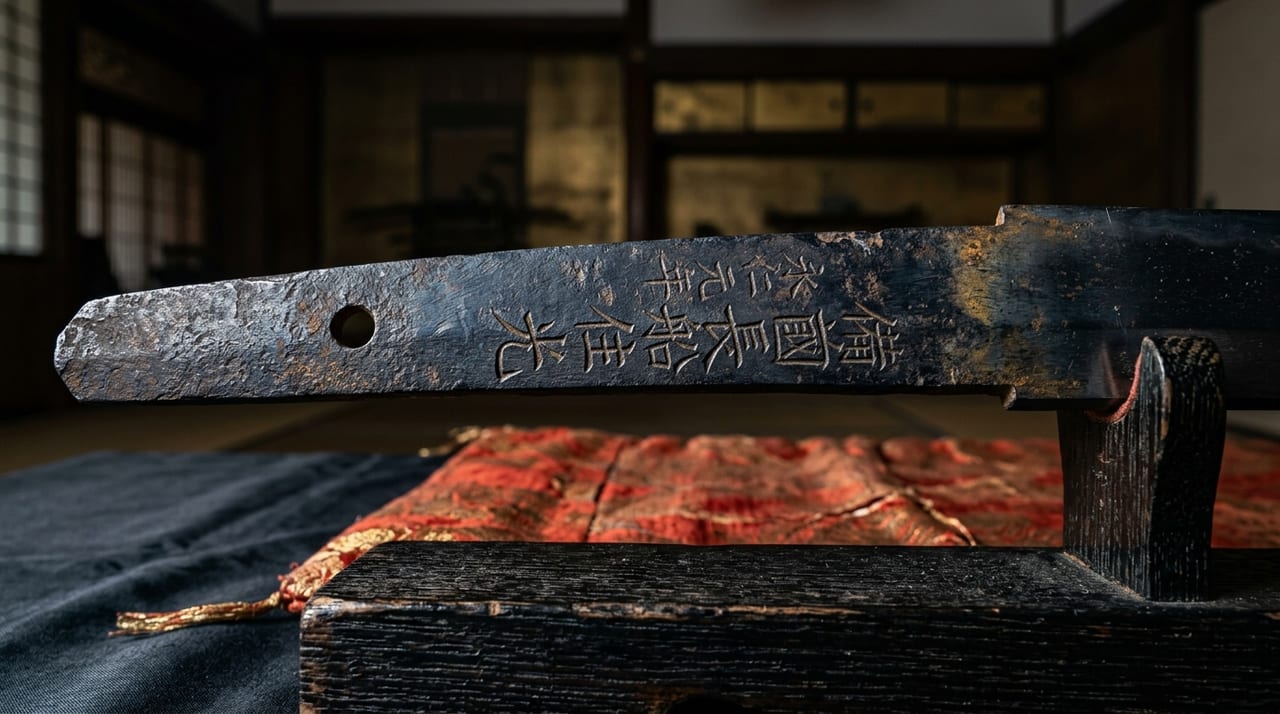 * Image is for illustrative purposes only.
Table of Contents
What is Tsukurikomi? — Japanese Sword Structure Design Through Combined Steels
"Tsukurikomi (造り込み)" is the technical answer to simultaneously meeting the seemingly contradictory requirements of Japanese swords being "hard yet not brittle." Because a single steel cannot achieve both hardness and toughness simultaneously, Japanese sword smiths skillfully combined multiple types of steel with different carbon contents and devised a composite structure that distributes function throughout a single blade.
The basic concept of tsukurikomi is simple.
- Edge (hasaki): Hard high-carbon steel is placed to ensure sharpness and wear resistance
- Core or spine (mune) side of the blade: Soft low-carbon steel is positioned to provide impact absorption and toughness
This structure realizes an ideal blade that is resistant to breaking while maintaining a sharp edge. The forms of tsukurikomi developed diversely according to school and period, and numerous variations exist among the major types.
- Shihotsume
- Hon-sanmai
- Koubuse
- Sanmai-awase
Koubuse — The Simplest Two-Layer Structure
Koubuse is the most fundamental form of tsukurikomi, a two-layer structure where soft core steel (shingane) is wrapped from above by hard surface steel (kawagane). In cross-section, it takes the form of U-shaped surface steel placed over an iron rod that forms the core. The surface steel (high-carbon steel) handles the edge and front and back of the blade, while the core steel (low-carbon steel) is exposed on the sides and interior of the blade.
- Advantages: With fewer joining surfaces between materials and relatively lower difficulty in forge welding (tansetsu), it is considered suitable even for apprentice smiths in their early training. Koubuse structures are seen in ancient and medieval tachi, and are often positioned as the prototype of tsukurikomi technique
- Disadvantages: Because the core steel is easily exposed on the blade's sides, its resistance to breaking is inferior in some respects to the shihotsume described later
Hon-sanmai — Composed of Independent Steels for Edge, Core, and Spine
Hon-sanmai is a structure using three types of steel — surface steel, core steel, and spine steel (munegane) — dividing the blade cross-section into three layers vertically.
| Section | Steel Used |
|---|---|
| Edge side (hagane) | Hardest high-carbon steel |
| Middle (core steel) | Steel with moderate carbon content |
| Spine side (spine steel) | Low-carbon soft iron |
The characteristic of hon-sanmai is that by placing independent soft iron on the spine side, it allows precise control of the blade's center of gravity balance and bending properties. Because the steel quality of the edge, toughness of the core, and flexibility of the spine can be individually designed, smiths can adjust the carbon content of each section according to the intended use (whether prioritizing cutting or thrusting). From the Edo period onward, during the shinto and shinshinto periods, an increasing number of smiths adopted hon-sanmai as the technique became more refined.
Shihotsume — The Highest Form of Structure: Core Steel Wrapped in Surface Steel from All Four Sides
Shihotsume is the most advanced form of tsukurikomi, a structure where surface steel surrounds core steel from all four directions (top, bottom, left, right). Regardless of the direction of the blade's cross-section, the surface steel (hard steel) forms the outer perimeter, and the core steel is completely enclosed within.
Realizing this structure requires advanced technique. Not only must surface steel be placed over the core, but surface steel must be uniformly forge welded to all four sides of the core steel, and the boundaries must be forge welded to maintain even thickness even after polishing. If gaps or defects exist at the joining surfaces, cracks will propagate from these weak points, so the precision of forge welding greatly affects performance.
The reason shihotsume is chosen is for its durability. Regardless of the direction from which impact is received, the hard surface steel absorbs it first, and the soft core steel resilently absorbs the energy. The superiority of shihotsume is especially evident in situations where the blade receives strong impacts from the side, such as when striking or deflecting blows against armored enemies. Shihotsume is said to have developed in Mino Province in the late Muromachi period, and there are various theories about which school or period it belongs to.
Sanmai-awase — Armor-Plating Structure Sandwiching Core Steel
Sanmai-awase is a structure where core steel is sandwiched from left and right by two pieces of surface steel, and in the smithing world is sometimes called "warikomi" (割り込み). While the form of sandwiching core steel between surface steel from both sides can be considered a variation of hon-sanmai, it differs in that it does not clearly distinguish between the edge side and spine side, but places surface steel equally on both left and right.
Sanmai-awase is often used particularly in the manufacture of naginata and large tachi-like blades with near-double-edged applications. Because the blade's cross-section becomes left-right symmetrical, it has aesthetic and functional characteristics different from conventional single-edged blades with the edge on only one side. Additionally, there is a manufacturing advantage in that the joining area between surface steel and core steel is large, making forge welding strength more stable.
Identifying Tsukurikomi — The Perspective of Polishers and Appraisers
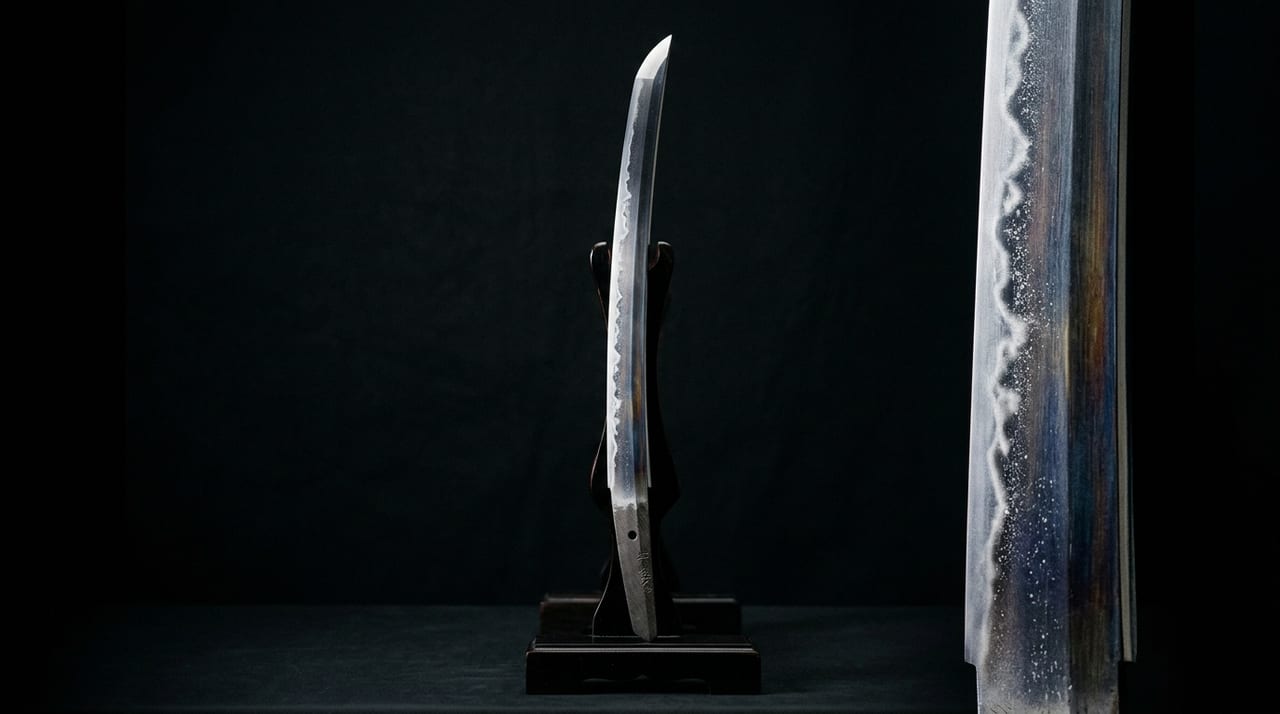
The type of tsukurikomi can be read by skilled polishers (togishi) and sword appraisers from the blade surface after polishing. The boundary between surface and core steel appears as thickness changes in the "spine flesh" (muneniku) or changes in the texture pattern of the base steel (jigane). Particularly in shihotsume, the change in steel quality from the spine's ridge line (shinogi) to the spine can be clearly observed even after polishing.
In appraisal, the type of tsukurikomi becomes useful information for identifying the smith and estimating the period. For example, it is said that smiths of the Yamashiro tradition (Kyoto lineage) tend to prefer hon-sanmai, but it is dangerous to definitively identify a school based solely on tsukurikomi type, and the fundamental approach to appraisal is to judge comprehensively by considering the base steel, hamon, dimensions, and shape.
Tsukurikomi is the clearest evidence that Japanese swords transcend being mere weapons and are precision crafted objects that connect materials science and structural engineering. From the perspective of modern materials engineering, the tsukurikomi of Japanese swords as a composite steel structure using tatara tamahagane is highly regarded as the pinnacle of pre-modern iron manufacturing technology.