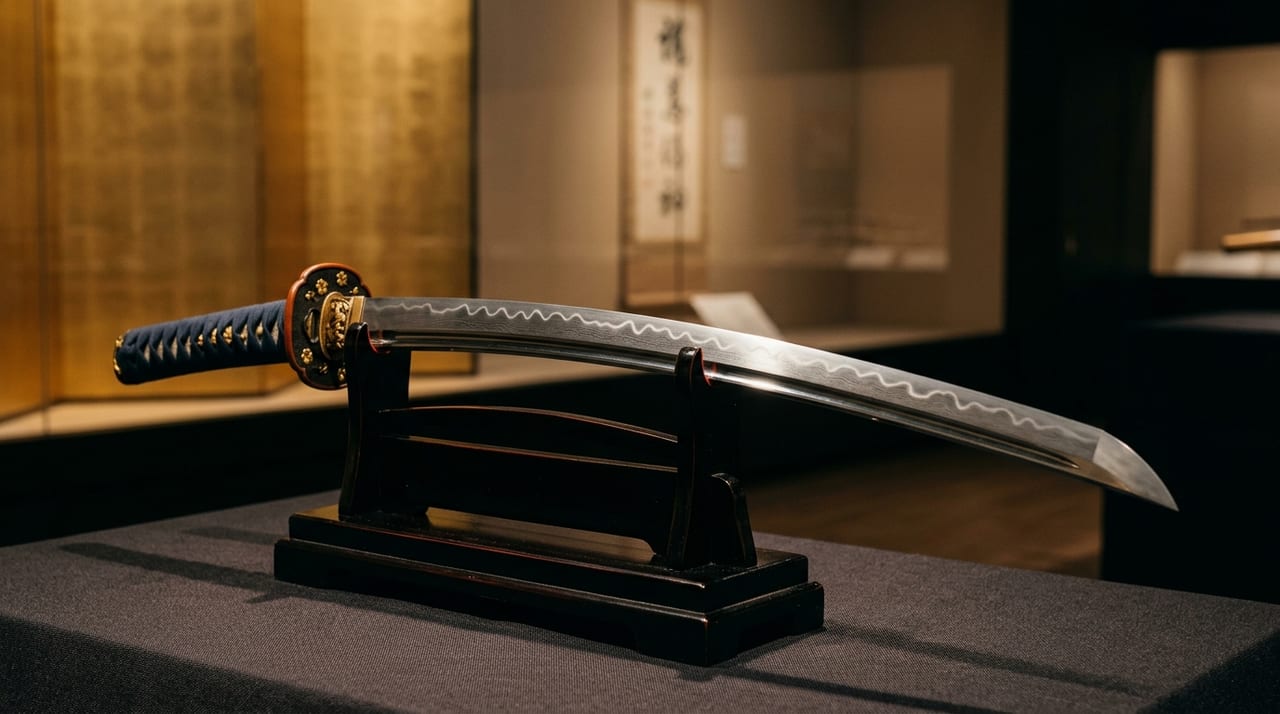
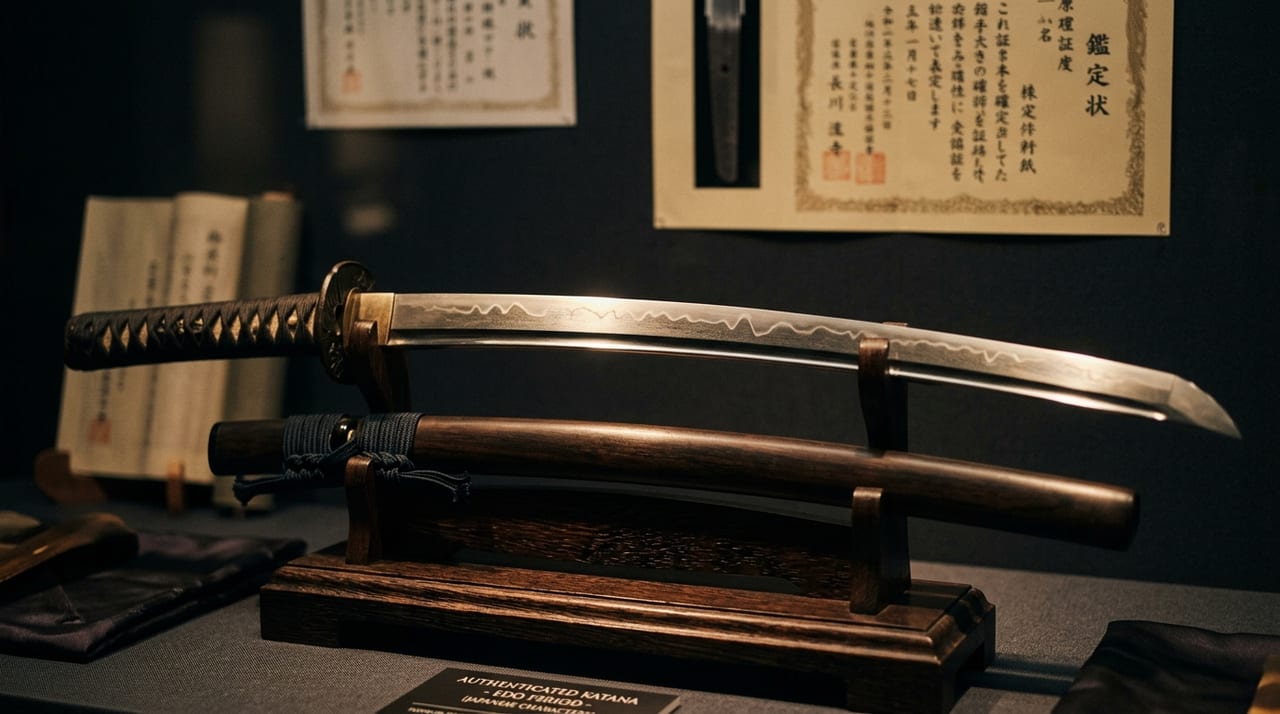
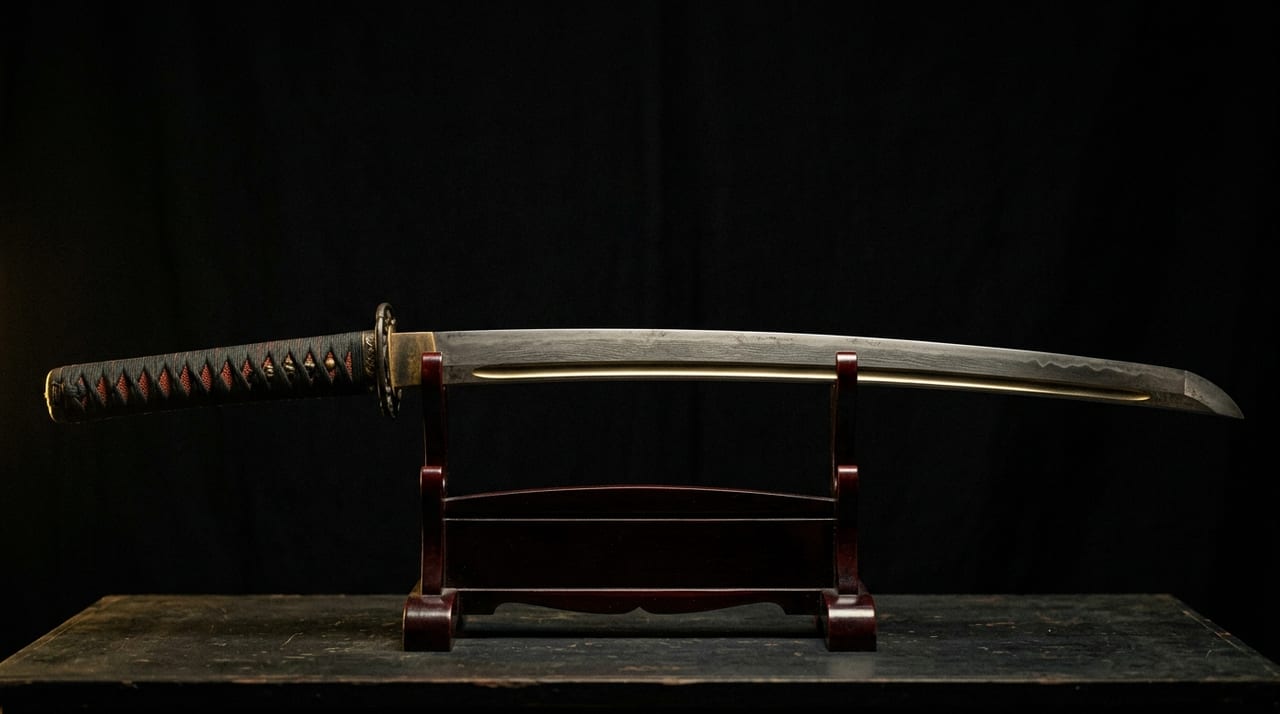
The Evolution of the Uchigatana: From Sengoku Combat Sword to Edo Period Dress Sword
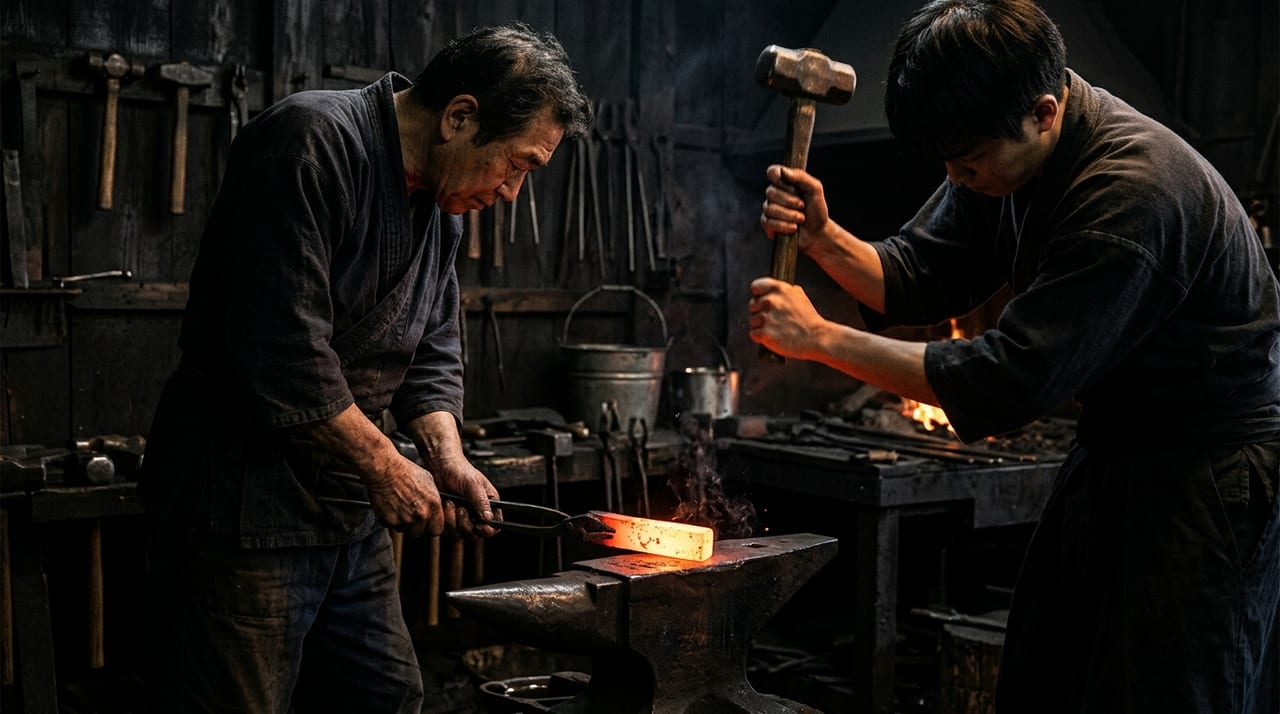 * Image is for illustrative purposes only.
Table of Contents
The Birth of Uchigatana——From Tachi to Uchigatana
From the Heian through Kamakura periods when the tachi was the main sword, the uchigatana replacing it as the primary weapon occurred from the middle of the Muromachi period (15th century) onward. This transition was prompted by a fundamental change in combat style. For more detailed historical background, please also refer to 'Muromachi Sword Transition——From Tachi to Uchigatana, An Age of War and Beauty'.
Battles in the Kamakura period were centered on mounted warriors (samurai on horseback), with the dominant tactic being striking downward with the tachi from horseback. However, from the Nanboku-chō period (14th century) through the Sengoku period (15th-16th centuries), large-scale ground combat involving infantry units (pedestrian warriors and ashigaru foot soldiers) became predominant.
It was inefficient for infantry to use the tachi suspended from the waist in the same way as horsemen. Thus the format of 'inserting the blade upward into the waist belt'——the uchigatana format——became widespread. By inserting the blade upward, 'drawing and cutting simultaneously' (the prototype of iaijutsu) became possible, and quick drawing at close range became a fundamental samurai technique.
Sengoku-Period Uchigatana——The Ultimate 'Practical Combat Type'
Uchigatana from the Sengoku period (16th century) had an appearance somewhat different from what modern people imagine as a 'Japanese sword.'
Characteristics of Sengoku-Period Uchigatana
- Blade length: Most were relatively long at 2 shaku 5 sun to 2 shaku 8 sun (75-85 cm). Sengoku warlords preferred long swords
- Kasane (thickness): Relatively thick; durability was prioritized even if heavier
- Sori (curve): Middle curve (chu-zori), with a pronounced curvature relative to the thickness at the base, giving a 'grand and bold appearance.' Details on types and functions of sori are explained in 'The Sori of Japanese Swords——Types and Functional Meanings of Koshi-zori, Chu-zori, Saki-zori, and Uchi-zori'
- Hamon (blade pattern): Most had showy and large hamon patterns, such as 'gunome' and 'choji'
On the battlefield, blade breakage and chipping (blade damage) occurred easily, so forging that prioritized durability was required.
Representative Sengoku-Period Master Swordsmiths and Masterpieces
Master swordsmiths of the Soshu line: The lineage of Shintōgo Kunimitsu, Hiromitsu, and Masamune was popular among Sengoku warlords and left many grand uchigatana.
Mino line and Seki swordsmiths: Centered on Seki in Gifu, the Mino line was known for mass production of practical uchigatana, and 'Seki no Mago-roku' maintained its reputation throughout later periods.
Kotetsu: Nagasone Kotetsu (born 1605 [Keicho 10] and died 1678 [Enpo 6]) was a master swordsmith of the early to middle Edo period. In 1656 (Meireki 2), he transitioned from armor maker to swordsmith. Though not directly related to the Sengoku period, he was active during the peaceful era from the early to middle Edo period, and his uchigatana are evaluated as the pinnacle of Edo shinto.
Early Edo Uchigatana——'Keicho Shinto'
Uchigatana made around the time of the Battle of Sekigahara (1600), that is, from the late Sengoku period to the early Edo period, formed a distinctive style called 'Keicho shinto' (new swords of the Keicho era).
Characteristics of Keicho Shinto
- Blade length: A tendency to become slightly shorter than in the Sengoku period (2 shaku 3 sun to 2 shaku 5 sun became the standard)
- Sori: Shallow to moderate with an orderly chu-zori
- Jigane (steel surface): The characteristics of 'shinto jigane' appear, with mokume-hada and itame-hada in orderly patterns
- Hamon (blade pattern): Orderly suguha and gunome, more 'well-mannered' than those of the Sengoku period
At this turning point, the Japanese sword began its transition from 'a tool for combat' to 'a craft object with emphasis on artistic value.'
From the Middle Edo Period Onward——Completion as 'Ceremonial Sword'
As the peaceful Edo period continued (1600-1868), the uchigatana moved away from practical combat, and its meaning as 'samurai formal wear' and 'symbol of status' came to the fore.
Characteristics of Middle to Late Edo Uchigatana
- Blade length: Standardized around 2 shaku 3 sun (approximately 70 cm) as 'jousun' (standard length). Excessively long swords were considered 'lacking refinement'
- Sori: Shallow chu-zori was considered 'refined'
- Kitae (forging method): Emphasis was placed on homogeneous and beautiful jigane with fine ji-nie
- Koshirae (sword fittings): The tendency for the luxury and artistry of the koshirae to be valued over the blade itself grew stronger. Differences in koshirae production by sword type are summarized in 'Koshirae Production by Sword Type——Structural Differences and Materials Selection Practice for Uchigatana, Wakizashi, and Yari'
In this era, swordsmiths began to compete more in artistry than practicality, and swords from the 'shinshin-to' (new new sword) era (late 18th century to 19th century) achieved extremely high levels of completion as art objects.
Late Edo Period Uchigatana——'Return to Practical Combat'
In the late Edo period (1850s-60s), as practical combat became a concern again due to external pressure and internal turmoil, swordsmiths emerged who sought 'return to ko-to (old swords)' and 'return to a practical combat appearance.'
Late Edo period swordsmiths such as Suishinshi Masahide, Minamoto no Kiyomaro, and Koyama Munetsugu departed from the 'art sword' style of the middle Edo period, researched ko-to from the Kamakura and Nanboku-chō periods, and sought to reclaim 'a form usable in practical combat.'
Summary——The Uchigatana as 'Japan's Mirror of Time'
The form of the uchigatana mirrors Japanese society of the era in which it was made. The grand appearance demanded by Sengoku practical combat, the refined artistry demanded by Edo peace, the return to ko-to demanded by late Edo turmoil——through the uchigatana, Japanese history comes into view. Tracing the evolution of blade length, sori, jigane, and hamon is itself tracing the evolution of the samurai era's values. Those who wish to actually compare uchigatana and koshirae from different periods can view them online from the works list.